

P0603 on 2015-2019 Hyundai Sonata: Keep Alive Memory (KAM) Error Causes and Fixes
On a 2015-2019 Sonata, P0603 almost always means there was a power interruption to the engine computer. Before replacing any parts, check that your battery is healthy and the terminals are clean and tight. If you recently replaced the battery, jump-started the car, or let the battery die, simply clearing the code may be the only fix needed.
- P0603 is a memory loss code, not a critical failure. It's most often caused by a simple power interruption.
- Always check the battery first. Test its voltage, clean the terminals, and ensure connections are tight before considering other repairs.
- If you recently disconnected or replaced the battery, the code is expected. Clear it with a scanner and drive the car; it will likely not return.
- Do not replace the PCM unless all other possibilities—battery, alternator, fuses, and wiring—have been professionally ruled out.
What's Unique About the 2015-2019 Hyundai Sonata
For the 2015-2019 (LF generation) Sonata, the P0603 code does not point to a common, model-specific defect. Instead, its appearance is most often tied to universal automotive issues, primarily the vehicle's battery health and electrical connections. Owners typically encounter this code after replacing a battery, jump-starting the vehicle, or after the battery has gone completely dead. In these cases, it's a normal and expected consequence of power loss and not a sign of a deeper fault. Unlike some vehicles where P0603 can be a precursor to PCM failure, on the Sonata it is overwhelmingly a power supply issue.
Symptoms You May Notice
- Check Engine Light is on
- Harsh or erratic transmission shifting
- Rough idle
- Hesitation when accelerating
- Reduced fuel economy
- Engine is hard to start or won't start (in cases of a completely dead battery)
- Other warning lights may be illuminated, such as ABS or traction control
- Replacing the PCM first. A faulty PCM is rarely the cause. The issue is almost always related to the power supply (battery, terminals, alternator, wiring) to the PCM.
Most Likely Causes
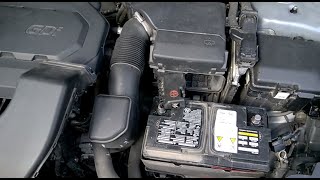
- Weak, Failing, or Recently Disconnected Battery 🔴 High Probability → Shop Vehicle Battery This is the most common cause for a KAM error on any modern vehicle. The PCM requires constant voltage to retain its memory; any interruption, such as from a battery replacement, jump-start, or a battery simply dying, will trigger this code.
How to confirm: Test the battery voltage with a multimeter. A healthy, fully charged battery should read at least 12.4-12.6 volts with the engine off. With the engine running, the voltage should be between 13.7-14.7 volts, indicating a healthy alternator. Most auto parts stores offer free battery and charging system testing.
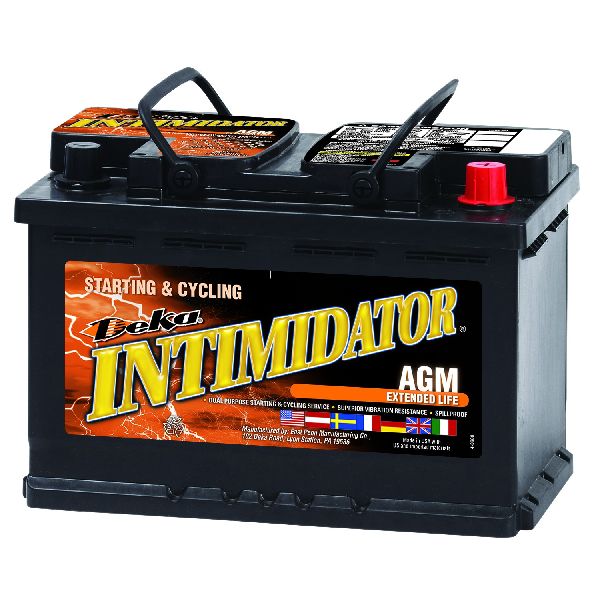
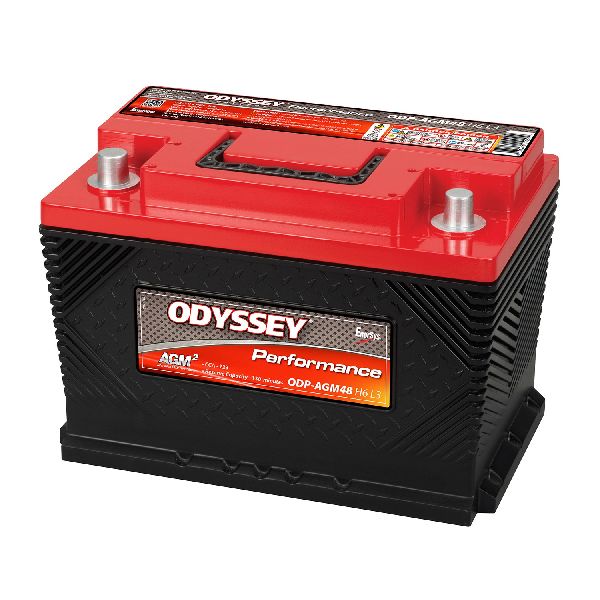
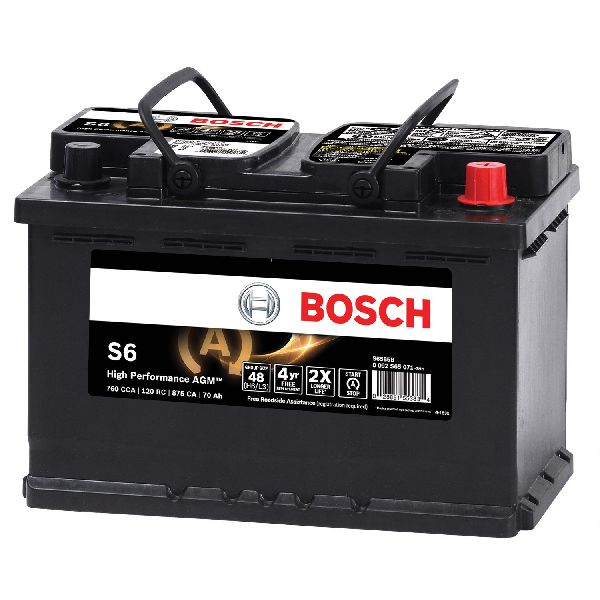
Typical fix: If the battery was recently disconnected for service, simply clear the code with a scanner. If the battery is weak or older than 4-5 years, replace it. The common battery group size for this Sonata is Group 48 (H6). 🎬 Watch: Step-by-step battery replacement for 2015-2017 Sonata models.
Est. part cost: $150-$300 - Loose or Corroded Battery Terminals 🟡 Medium Probability → Shop Vehicle Battery
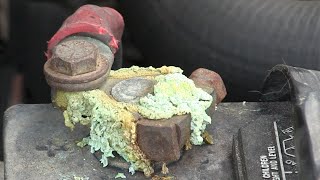
How to confirm: Visually inspect the battery terminals for white or blue-green corrosion. Attempt to twist the terminals by hand; they should not move. A poor connection here is equivalent to disconnecting the battery.
Typical fix: Disconnect the terminals (negative first), clean them and the battery posts with a wire brush or terminal cleaning tool, apply anti-corrosion grease, and reconnect them securely (positive first). 🎬 See how to properly clean and tighten your battery terminals.
Est. part cost: $5-$15 - Faulty Alternator / Charging System Issue ⚪ Low Probability → Shop Alternator
How to confirm: With the engine running, check the battery voltage. If the voltage is below 13.5V, above 15V, or fluctuating wildly, the alternator may be failing to charge the battery properly, causing intermittent power loss to the PCM.
Typical fix: Replace the alternator if it is confirmed to be faulty.
Est. part cost: $250-$500
Rare But Worth Checking
- Blown Fuse for PCM Memory: A blown fuse can cut the keep-alive power circuit. On the LF Sonata platform, there can be multiple fuses for the ECU/PCM. Check the fuses labeled 'ECU', 'PCM', 'TCU', or 'Memory' in the fuse boxes in the engine bay and the driver's side dash. A video for a 2013 Sonata shows multiple potentially relevant fuses ('ECU 4', 'Wiper', 'TCU 1', 'ECU 3') in the engine bay fuse box.
- Damaged Wiring or Poor Ground Connection: A chafed wire or loose ground strap for the PCM can cause an intermittent power loss. Key grounds to check are the main battery-to-chassis ground and the engine-to-chassis ground strap. One owner found a broken CAN bus wire in the trunk harness that caused widespread electrical issues misdiagnosed as a PCM failure. This is unlikely but worth considering if all battery and charging system checks pass.
- Faulty Powertrain Control Module (PCM): → Shop Engine Control Module (ECM) This is the least likely cause. The PCM itself can fail, but all other power, ground, and wiring issues must be ruled out first before condemning the module. A professional diagnosis is recommended before replacement, as it requires programming to the vehicle.
Diagnosis Steps
- Check for other codes: Use an OBD-II scanner to see if any other codes are present that could point to a related issue.
- Consider recent history: Have you recently replaced the battery, jump-started the car, or had any electrical service performed? If so, the code is likely a direct result. Clear the code and see if it returns after a few drive cycles.
- Inspect battery terminals: Visually inspect the battery terminals for corrosion and ensure they are tight. Clean and tighten as needed.
- Test the battery and charging system: Use a multimeter to test the battery's state of charge and the alternator's output. A reading below 12.4V (engine off) indicates a weak battery. A reading outside 13.7-14.7V (engine running) suggests a charging system problem.
- Inspect PCM-related fuses: Check the fuses for the ECU/PCM in both the interior and engine bay fuse panels. Referencing a diagram for your specific model year is crucial.
- Inspect PCM wiring and grounds: If the code persists, perform a visual inspection of the wiring harness leading to the PCM and check for secure ground connections from the battery to the chassis and from the engine block to the chassis.
- Check for Parasitic Draw: If the battery repeatedly dies, perform a parasitic draw test with a multimeter to see if a component is draining power when the car is off, causing the voltage to drop low enough to trigger P0603. 🎬 Watch: The easiest way to test for a parasitic battery draw.
- Professional Diagnosis: If all of the above steps do not resolve the issue, a professional technician may be needed to perform advanced diagnostics on the PCM and its circuits.
Parts You'll Likely Need
- Automotive Battery — This code is most frequently caused by a weak or failing battery that cannot maintain the constant voltage required by the PCM's Keep Alive Memory.
Trusted brands: Bosch, Interstate, DieHard
OEM price range: $200-$350
Aftermarket price range: $150-$250 - Battery Terminal Cleaner — Corroded or dirty battery terminals can cause a poor connection, interrupting power to the PCM and triggering a P0603 code.
OEM price range: $5-$15
Aftermarket price range: $5-$15
Platform-Specific Known Issues
- On Hyundai-Forums.com, multiple threads confirm that P0603 is a common and benign code after a battery change on the LF Sonata. The consensus fix is to clear the code and drive, with no parts needed.
- A user on a Sonata forum reported a persistent P0603 that was finally traced to a faulty cell in a relatively new battery. The battery passed a simple voltage test but failed a load test, highlighting the importance of comprehensive battery testing.
Mechanic-Grade Diagnostic Values
- Parasitic Current Draw — expected: Less than 35 milliamps (0.035A). Failure: A reading higher than 35mA after the vehicle's modules have entered sleep mode (approx. 4 minutes) indicates a component is not shutting down and is draining the battery, which can cause a P0603.
- PCM Power Ground Voltage Drop — expected: Max. 50 mV. Failure: A voltage reading higher than 50mV between the PCM ground pin and the negative battery terminal indicates a poor ground connection, which can cause intermittent power loss to the module.
- PCM Constant Battery Power Pins (at PCM connector) — expected: Battery Voltage (Approx. 12.6V with engine off). Failure: Voltage significantly lower than battery voltage indicates a problem in the wiring or fuse supplying constant power for the Keep Alive Memory.
Scan Tool Commands That Help
- Hyundai GDS (Global Diagnostic System): Reset Adaptive Values — After fixing the root cause of the power loss (e.g., replacing the battery, fixing a ground), this function can be used to clear all learned data and force a complete relearn cycle. This ensures the vehicle starts fresh without any potentially corrupted data from the power interruption event.
- Generic OBD-II Scanner: Hard Reset (Manual Procedure) — If the P0603 code returns immediately after clearing, even with a new battery, a hard reset can be performed. Disconnect both battery terminals and hold the positive and negative cable ends together for 5-10 minutes. This drains residual voltage from all modules, forcing a complete system reboot. This should be done before suspecting a faulty PCM.
Wiring & Ground Locations
- PCM Power Ground Pins — On the main PCM connectors. For the 2.4L engine, constant power is on Connector B, pins 58 and 75. Grounds are on Connector B, pins 1, 2, and 4. For other engines/years, consult the specific wiring diagram.. These are the specific pins where a technician must test for constant battery voltage and a solid ground to confirm the PCM has the power it needs to maintain its Keep Alive Memory. A voltage drop here points to a wiring issue, not a bad PCM.
- GE01 Ground — Located on the left front of the engine compartment.. This is a primary engine bay ground point. Corrosion or looseness here can affect multiple systems, including the PCM's power supply and grounding, potentially causing a P0603.
- GF01 Ground — Located under the center console.. This is a key interior ground point. While less likely to be the primary cause, issues here can create electrical noise and intermittent problems for various control modules.
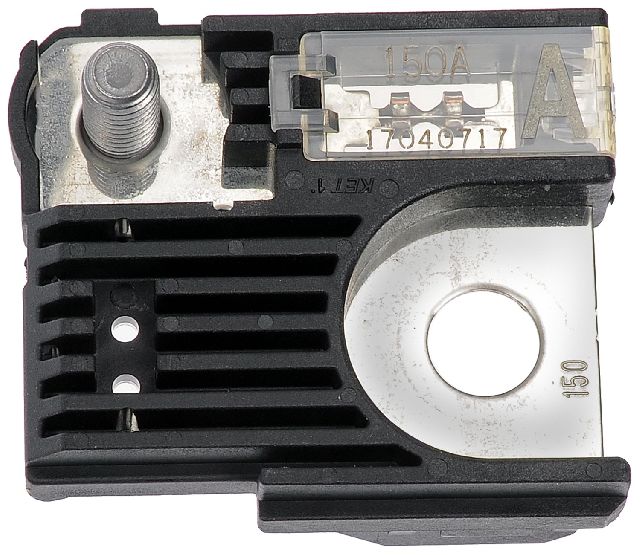
- PCM/ECU Memory Fuse — Located in the engine compartment fuse box. Often labeled 'ECU', 'Memory', or part of a multi-fuse block. For the LF Sonata, check the large multi-fuses as well as standard blade fuses.. This fuse provides the specific, constant power feed for the Keep Alive Memory. If this fuse is blown or has a poor connection, the P0603 code will set, even if the main PCM power appears to be working when the key is on.
Real Owner Repair Stories
- YouTube video by 'gofasthavefun' (2009 Hyundai Sonata (Similar YF platform)) — Parasitic battery drain, battery dies after about 3 days.
❌ Tried (didn't work) Initial diagnosis pointed to a general parasitic draw.
✅ What actually fixed it The Homelink (garage door opener) module in the overhead console was causing a 200 milliamp (0.2A) parasitic draw. Unplugging the module resolved the battery drain. This type of draw is sufficient to slowly discharge the battery and cause a P0603 code upon the next startup.
Diagnostic Flowchart
Other Known Issues on This Vehicle
Issues unrelated to this code that are worth knowing about as an owner of this generation:
- Theta II GDI Engine Failure (Connecting Rod Bearing) 🔴 High — Widespread across 2.0L and 2.4L GDI engines. Subject to multiple recalls and a class-action lawsuit settlement providing a lifetime warranty for the engine short block for original and subsequent owners. Failure can occur at various mileages. (Ref: NHTSA Recalls 15V568, 17V226; Service Campaign 953 (TSB 19-01-002H-1) for knock sensor detection software update.)
- Excessive Oil Consumption 🟠 Medium — Common on the 2.4L and 2.0T engines, often becoming noticeable after 60,000 miles. Can lead to carbon buildup and, if oil level is not maintained, premature engine wear or failure. (Ref: Hyundai TSB 23-EM-006H provides guidelines for dealers to inspect and repair vehicles with oil consumption concerns.)
- Worn Steering Coupler 🟡 Low — A clicking or thud noise from the steering column when turning. Caused by a small, flexible rubber coupler in the power steering motor wearing out. Very common across many Hyundai/Kia models. The part is inexpensive but labor can be significant. (Ref: TSB 17-ST-002 extended warranty coverage for this part on earlier Sonatas (YF generation), but the same part (56315-2K000-FFF) and issue persist on the LF.)
- Engine Knock Sensor Detection Software 🟠 Medium — Not a failure itself, but a factory software update campaign (Service Campaign 953) designed to detect early signs of engine bearing failure. If triggered (DTC P1326), it puts the car in limp mode to prevent catastrophic failure. (Ref: TSB 19-01-002H-1, TSB 19-01-006H-3)
Used vs. New Parts: Buying Guide for This Vehicle
When a used part is the smart pick: For a P0603 code, buying used parts is generally not recommended for the primary suspects (battery, alternator). However, if a rare PCM failure is confirmed, a used PCM from a reputable salvage yard can be a cost-effective option, but it MUST be professionally reprogrammed/coded to your vehicle's VIN and options.
Donor-vehicle mileage cap: roughly under 80000 miles for the part to have meaningful remaining life.
What to inspect on the donor part:
- For a used PCM, ensure there is no physical damage, corrosion, or signs of water intrusion on the case or connectors.
- Verify the part number on the used PCM exactly matches the original part number.
- Obtain the VIN of the donor vehicle to cross-reference its original equipment and options.
OEM-only on this vehicle (don't cheap out):
- Powertrain Control Module (PCM) - While a used OEM part can work, it requires dealer-level or specialized programming. Aftermarket 'remanufactured' PCMs can be unreliable; sticking with a used OEM or new OEM part is safest.
Aftermarket brands forum-validated for this vehicle:
- For the battery: Interstate, DieHard, Bosch, Duralast Gold/Platinum.
- For the alternator: Denso (often the OEM supplier), Bosch.
Brands owners have reported issues with on this vehicle:
- Avoid no-name, unbranded, or suspiciously cheap 'rebuilt' alternators and PCMs from online marketplaces, as they often have high failure rates.
Real Owner Stories
Aggregated from forums and TSBs cited above. Mileages and costs reflect what owners reported in those sources.
2015-2019 Hyundai Sonata (LF)
Symptoms: P0603 appeared immediately after a battery disconnect or replacement.
What fixed it: Cleared the code with a scanner and drove the vehicle; the code did not return.
Source hint: Hyundai-Forums.com (Sonata LF Section)
2015-2019 Hyundai Sonata
Symptoms: Persistent P0603 code despite the battery showing correct voltage.
What fixed it: Replaced the battery after it failed a comprehensive load test, which revealed a faulty cell.
Source hint: vehicle_specific_issues
Related OBD-II Codes
Frequently Asked Questions
I just replaced the battery in my LF Sonata and now P0603 is showing. Is my PCM failing?
My Sonata is in limp mode and showing P1326; is this related to the P0603 KAM error?
Will the lifetime warranty for the Theta II engine cover a P0603 code?
What battery should I buy for my 2015-2019 Sonata to avoid power interruptions to the PCM?
Can a worn steering coupler cause electrical codes like P0603?
My battery passed a voltage test but I still have a persistent P0603. What else should I check?
Helpful Videos
![How to [EASILY] Replace the Battery - Hyundai Sonata (2015-2017)](https://img.youtube.com/vi/t_zzcjOqyno/mqdefault.jpg)

We Have This Part in Stock


The information in this article is provided for general reference and educational purposes only. Vehicle specifications, procedures, and part compatibility can vary by production date, trim level, and region. Always consult your vehicle's factory service manual and verify part numbers before purchasing or performing repairs. Safety-critical components such as airbags, seat belts, and braking systems should be installed by a qualified professional.
- Hyundai Sonata:
- 🧭 Diagnostic Flowchart
- 🎬 Helpful Videos
- 🛍️ Shop This Part
- What's Unique About the 2015-2019 Hyundai Sonata
- Symptoms You May Notice
- Most Likely Causes
- Rare But Worth Checking
- Diagnosis Steps
- Parts You'll Likely Need
- Platform-Specific Known Issues
- Mechanic-Grade Diagnostic Values
- Scan Tool Commands That Help
- Wiring & Ground Locations
- Real Owner Repair Stories
- Other Known Issues on This Vehicle
- Used vs. New Parts: Buying Guide for This Vehicle
- Real Owner Stories
- 2015-2019 Hyundai Sonata (LF)
- 2015-2019 Hyundai Sonata
- Related OBD-II Codes
- Frequently Asked Questions
- 🎟️ Get 5% Off