

P0603 on 2002-2006 Nissan Altima: Keep Alive Memory (KAM) Error Causes and Fixes
On a 2002-2006 Nissan Altima, P0603 almost always means there was an interruption in power to the engine computer. This is most commonly caused by a weak battery, loose terminals, or a recent battery disconnection. The fix is usually to address the battery issue and clear the code; do not replace the ECM.
- P0603 on your Altima is a power supply code, not an ECM failure code.
- Always start by checking if the battery was recently disconnected. If so, just clear the code, potentially using the 10-cycle ignition procedure.
- The most common actual fault is a weak or dying battery. Get your battery tested before buying any parts.
- Ensure battery terminals AND chassis/engine ground straps are clean and tight, as this is a simple and frequent cause.
- Do not replace the ECM unless all other power and ground-related possibilities have been professionally ruled out.
What's Unique About the 2002-2006 Nissan Altima
On Nissans of this era, the P0603 code is extremely common and often benign. It frequently appears after any power interruption, such as disconnecting the battery for service or after a jump-start. While a Nissan TSB for later models confirms that low battery voltage is the primary trigger, the principle holds true for the 2002-2006 Altima. Owners should not be alarmed by this code unless it appears without a known power loss and is accompanied by drivability issues, as it rarely indicates a faulty ECM.
Symptoms You May Notice
- Check Engine Light is on
- No noticeable symptoms in many cases
- Rough or unstable idle, especially after starting the engine
- Slight hesitation during acceleration
- Decreased fuel economy
- Difficulty starting the engine or prolonged cranking
- Engine stalling
- Illuminated ABS or traction control light in some instances
- Replacing the Engine Control Module (ECM). The ECM is almost never the cause of a P0603 code. The problem is nearly always in the power supply TO the ECM, such as the battery, cables, or grounds.
Most Likely Causes
- Recent Battery Disconnection or Jump-Start 🔴 High Probability → Shop Vehicle Battery This is the designed function of the code; it reports any interruption to the ECM's keep-alive memory.
How to confirm: Ask yourself if the battery has been disconnected, replaced, or jump-started recently. If so, this is the expected cause.
Typical fix: Clear the diagnostic trouble code with a scanner. A specific Nissan procedure involves turning the ignition ON for 1 second, OFF for 10 seconds, and repeating 10 times to ensure the code does not return as a '1st trip' fault.
Est. part cost: $0 - Weak or Failing Battery 🔴 High Probability → Shop Vehicle Battery A battery that drops below the required voltage (e.g., under 11V) during cranking or while sitting can cause the ECM to lose its memory. This is the most common fault-related cause.
How to confirm: Test the battery voltage with a multimeter. A healthy battery should read ~12.6V with the engine off and should not drop below ~10V while cranking. Nissan's TSB specifies checking for at least 11V with the ignition ON, engine off. A professional load test is the most definitive test.
Typical fix: Replace the vehicle's battery.
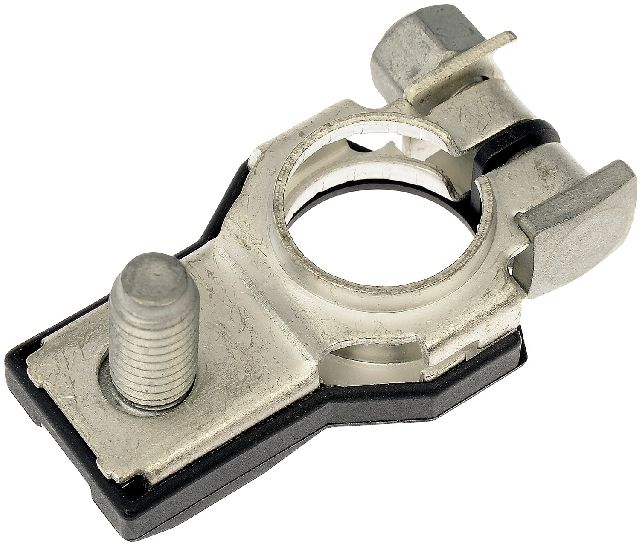
Est. part cost: $120-$250 - Loose or Corroded Battery Terminals/Cables 🟡 Medium Probability → Shop Vehicle Battery
How to confirm: Visually inspect the battery terminals for white or blue-green corrosion. Physically try to twist the terminals; they should not move at all. Check where the negative cable bolts to the chassis and the positive cable connects to the fuse box.
Typical fix: Disconnect the terminals (negative first), clean them and the battery posts thoroughly with a wire brush, and reconnect them securely (positive first). Apply a dielectric grease or anti-corrosion spray.
Est. part cost: $1-$10 for a terminal brush and protectant spray. - Failing Alternator ⚪ Low Probability → Shop Alternator
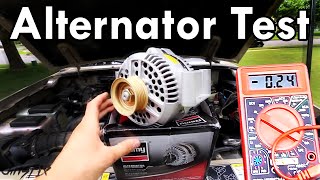
How to confirm: With the engine running, test the voltage at the battery terminals. 🎬 Watch: A quick guide on how to test your alternator A healthy alternator should provide between 13.5V and 14.5V. If the voltage is low, high, or fluctuating wildly, the alternator is suspect.
Typical fix: Replace the alternator.
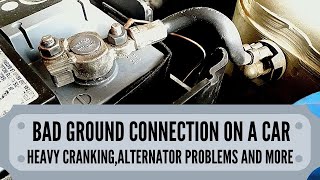
Est. part cost: $150-$400 - Poor ECM/Chassis Ground Connections ⚪ Low Probability Over time, main ground straps can corrode or loosen, creating intermittent power supply issues to the ECM that mimic a failing battery. 🎬 Learn how to diagnose symptoms of a bad ground connection
How to confirm: Inspect the main ground straps. Key locations are the negative battery cable connection to the vehicle body and the ground strap from the engine block or transmission to the chassis/frame rail. 🎬 See how to properly clean and fix your ground connections Check for corrosion, fraying, or looseness.
Typical fix: Remove, thoroughly clean, and securely re-attach the ground connections. In cases of heavy corrosion or broken wires, replace the ground strap.
Est. part cost: $10-$50 for a new ground strap.
Rare But Worth Checking
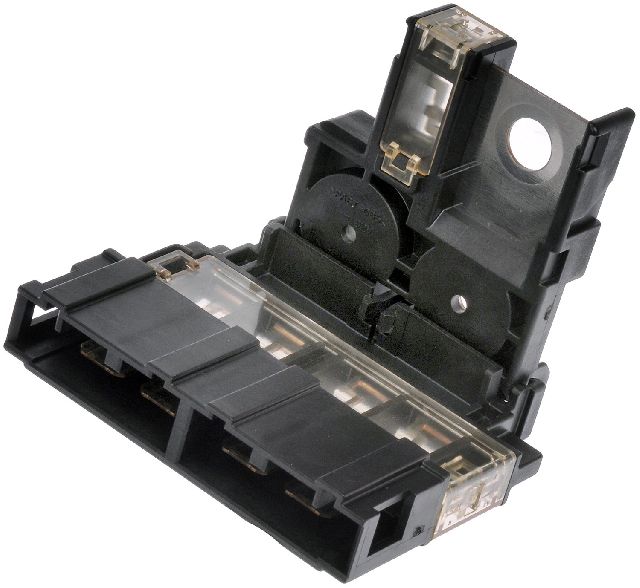
- Blown Fuse for ECM Memory: A fuse, often located in the Intelligent Power Distribution Module (IPDM) in the engine bay, provides the keep-alive power. If this fuse blows, P0603 will set. Check the fuse diagram for a fuse labeled 'ECM' or similar.
- Aftermarket Engine Performance Tuners/Chips: If an aftermarket performance chip or programmer has been installed, it can sometimes interfere with the ECM's self-test procedures and trigger a P0603 code. Removing the device may resolve the issue.
- Faulty Engine Control Module (ECM): → Shop Engine Control Module (ECM) This is extremely rare for a P0603 code. Nissan's own service bulletins emphasize that power supply issues are the cause in the vast majority of cases. All other power supply, wiring, and ground possibilities must be exhausted before considering the ECM as the cause.
Diagnosis Steps
- Check if the battery was recently disconnected or if the car was jump-started. If yes, clear the code. Consider performing the Nissan-specific 10-cycle reset procedure to confirm it doesn't return.
- If the code returns, perform a full battery health check. Use a multimeter to check static voltage (~12.6V) and cranking voltage (should stay above 10V). Per Nissan TSB NTB16-018D, confirm voltage is above 11V with the ignition ON and engine off. Have the battery professionally load-tested.
- Thoroughly inspect the battery terminals and cable ends for any signs of corrosion or looseness. Clean and tighten as necessary.
- Inspect the main chassis and engine ground straps for security and corrosion. These are common failure points that cause intermittent power loss.
- With the engine running, test the alternator's output voltage at the battery. It should be stable and in the 13.5V-14.5V range.
- Check the fuses related to the ECM and memory backup circuit. Consult your owner's manual or the IPDM (engine bay fuse box) cover for fuses labeled 'ECM' or similar.
- If all power and ground sources are confirmed to be good and the code still persists, inspect the wiring harness for the ECM power supply for any damage. Only after this step should a faulty ECM be considered.
Parts You'll Likely Need
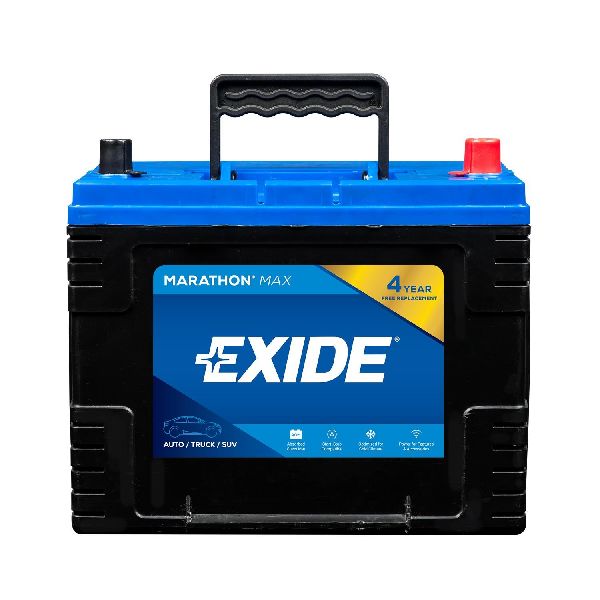
- Car Battery
(OEM #24410-9B900)— A weak or failing battery is the most common fault that triggers a P0603 code by failing to provide consistent keep-alive voltage to the ECM.
Trusted brands: Interstate, DieHard, Duralast, ACDelco, NAPA The Legend
OEM price range: $140-$200
Aftermarket price range: $120-$250
Technical Service Bulletins (TSBs) & Recalls
- NTB16-018D: While this TSB applies to newer Nissans, it confirms the manufacturer's diagnostic logic that P0603 is primarily caused by low battery voltage (below 11V with ignition on) or power disconnection, not a faulty ECM. It also outlines a specific 10-cycle ignition reset procedure to confirm the fix.
- TSB Bulletin #NTB21-027: This bulletin addresses instances where the MIL is ON with DTC P0603 (ECM BACK UP/CIRCUIT) stored, often in conjunction with DTC P062F.
- TSB Bulletin #NTB16-018c: A manufacturer service bulletin noting that the MIL may be ON with P0603 stored for the ECM back up circuit, providing updated diagnostic guidance for this specific code.
- TSB Bulletin #NTB16018: This record instructs technicians to confirm if the battery voltage is 11 volts or more with the ignition ON and engine OFF when P0603 is present.
Platform-Specific Known Issues
- Corroded Ground Straps: → Shop Engine Ground Strap Beyond the main battery terminals, owners on forums frequently report that a corroded or loose ground strap between the engine/transmission and the chassis is the hidden cause of a persistent P0603. This creates a poor ground path, causing the ECM to lose memory intermittently. A visual inspection and cleaning of these grounds is a critical diagnostic step.
- ECM Location: On the L31 Altima, the ECM is typically located in the engine bay, mounted to the firewall, or inside the cabin near the passenger-side footwell. This is relevant if you need to perform advanced wiring checks or, in the very rare case, replace the module.
Mechanic-Grade Diagnostic Values
- Battery Voltage, Key On Engine Off (KOEO) — expected: 11.0V or more. Failure: Less than 11.0V indicates a discharged or weak battery that must be addressed before further P0603 diagnosis.
- Battery Voltage, Engine Off (Static) — expected: ~12.6V. Failure: Below 12.4V suggests the battery is not fully charged or is failing.
- Alternator Charging Voltage, Engine Idling — expected: 13.2V to 14.8V. Failure: Voltage below 13.2V or above 14.8V indicates a faulty alternator or charging system issue.
- Voltage Drop at ECM Power Supply — expected: Within 0.5V of battery voltage. Failure: A voltage drop greater than 0.5V between the battery and the ECM power pin indicates excessive resistance in the wiring or a faulty ECM relay.
Hidden / Shadow Codes Worth Checking
- 1st Trip DTC: This is not a separate code number, but a status shown on the Nissan CONSULT scan tool. After clearing P0603, if it immediately returns as a '1st trip DTC' following the 10-cycle reset procedure, it indicates a hard fault in the ECM's power or ground circuit that needs further diagnosis. If it does not return, the issue was likely a temporary power loss. (see via Nissan CONSULT-II or CONSULT-III/plus dealer-level scan tool.)
Scan Tool Commands That Help
- Nissan CONSULT: Self-Diagnostic Results — Used to check for the presence of a '1st trip DTC' for P0603 after performing the 10-cycle ignition reset. This confirms whether the fault is persistent or was a one-time event.
- Nissan CONSULT: IPDM Auto Active Test — This self-test function commands the IPDM to cycle various components (lights, wipers, fans). While not directly for P0603, a failure of the IPDM to perform this test can indicate broader power distribution problems originating from the module, which could be a root cause.
Wiring & Ground Locations
- ECM Backup Power Fuse — Located in the IPDM E/R (Intelligent Power Distribution Module Engine Room), the main fuse box in the engine bay, typically near the battery.. This fuse provides the constant battery power to the ECM for its Keep Alive Memory. If this fuse is blown, the P0603 code will set every time the ignition is cycled.
- Engine/Transmission to Chassis Ground Strap — A woven metal strap connecting the engine block or transmission housing directly to the vehicle's chassis or frame rail. On V6 models, one key point is a bolt on the transmission just in front of the starter.. This is a primary ground path for the entire engine management system. Corrosion or looseness at this point is a very common, and often overlooked, cause of intermittent power loss to the ECM, triggering a persistent P0603.
- Negative Battery Cable to Chassis Ground — The point where the main negative battery cable bolts directly to the vehicle's body, usually on the inner fender or strut tower near the battery.. This is the master ground point for the entire vehicle's electrical system. Corrosion or a loose connection here will cause widespread electrical issues, including the P0603 code.
- ECM Relay — Located inside the IPDM E/R module in the engine bay. On many Nissans of this era, it is an integrated, non-serviceable relay.. This relay controls the main power supply to the ECM when the ignition is on. A failing relay can cause intermittent voltage drops or complete power loss to the ECM, which can manifest as a P0603 code among other issues.
Real Owner Repair Stories
- Reddit user in r/MechanicAdvice (Nissan Altima (year not specified, but behavior is typical for L31)) — Check engine light came on after installing an aftermarket radio, which required disconnecting and reconnecting the battery several times. After clearing codes, P0603 remained stored but the check engine light did not return.
❌ Tried (didn't work) N/A - user was seeking diagnosis.
✅ What actually fixed it The consensus from the community was that this is normal behavior. The code was set by the repeated battery disconnections. The fix is to simply clear the code and ensure the battery connections are secure. If the check engine light does not return, no further action is needed. - Forum user on NissanClub (2005 Nissan Altima 2.5S) — Persistent P0603 code, rough idle, and occasional stalling, even after replacing the battery.
❌ Tried (didn't work) Replacing the battery, Cleaning the battery terminals
✅ What actually fixed it The user found the main ground strap from the transmission to the chassis was severely corroded. After removing the strap, cleaning the contact points on the transmission and chassis with a wire brush, and re-installing it securely, the code was cleared and did not return. The idle and stalling issues were also resolved.
Diagnostic Flowchart
Used vs. New Parts: Buying Guide for This Vehicle
When a used part is the smart pick: For this code, used parts are a good option for the alternator or main ground cables/straps. These parts are robust and their condition can be visually verified.
Donor-vehicle mileage cap: roughly under 120000 miles for the part to have meaningful remaining life.
What to inspect on the donor part:
- For an alternator, spin the pulley by hand to check for smooth bearing operation and ensure no grinding noises.
- For ground cables, inspect for any corrosion, especially under the insulation at the terminal ends. The cable should be flexible, not stiff or brittle.
- For an IPDM (if the ECM relay is suspected), inspect all connector pins for any signs of green or white corrosion from water intrusion. Avoid any module that looks like it has been exposed to moisture.
OEM-only on this vehicle (don't cheap out):
- While not a common failure for P0603, if the ECM itself is condemned, using a new or professionally remanufactured OEM unit is highly recommended. Used ECMs may have programming/immobilizer conflicts that are difficult to resolve.
Aftermarket brands forum-validated for this vehicle:
- For batteries: Interstate, DieHard, Duralast Gold/Platinum.
- For alternators: Denso (often the OEM supplier), Bosch.
Brands owners have reported issues with on this vehicle:
- Avoid no-name, white-box alternators and cheap, unbranded ground straps, as they often use inferior materials that can lead to premature failure.
Real Owner Stories
Aggregated from forums and TSBs cited above. Mileages and costs reflect what owners reported in those sources.
Nissan Altima (year not specified)
Symptoms: After disconnecting and reconnecting the battery several times to install an aftermarket radio, the P0603 code appeared. The Check Engine Light came on initially but then went off, leaving only the stored code. The car drove fine with no issues.
What fixed it: The code was cleared with a scanner. The P0603 was simply a record of the intentional power interruptions and did not indicate a vehicle fault.
Source hint: Reddit r/MechanicAdvice
2002-2006 Nissan Altima
Symptoms: A persistent P0603 code that would not go away, sometimes accompanied by an unstable idle or engine stalling, even after confirming the battery was good.
What fixed it: The cause was found to be a corroded ground strap between the engine/transmission and the vehicle chassis. Cleaning and securing this ground connection resolved the issue permanently.
Source hint: Forum reports cited in vehicle-specific issues
Related OBD-II Codes
Frequently Asked Questions
I just replaced the battery in my 2004 Altima and now the Check Engine Light is on with a P0603 code. Is my ECM bad?
My mechanic says the P0603 on my Altima means I need a new computer, but the car runs fine. What should I check first?
The context mentions TSB NTB16-018D for newer Nissans. Does its advice on P0603 apply to my 2002-2006 Altima?
Where are the common ground straps I should check for a persistent P0603 code on my Altima?
Is there a special procedure to clear the P0603 code on my Nissan Altima to make sure it's fixed?
Can a bad alternator cause the P0603 code on my Altima?
My Altima has a P0603 code and the ABS light is also on. Are these related?
Helpful Videos

We Have This Part in Stock


The information in this article is provided for general reference and educational purposes only. Vehicle specifications, procedures, and part compatibility can vary by production date, trim level, and region. Always consult your vehicle's factory service manual and verify part numbers before purchasing or performing repairs. Safety-critical components such as airbags, seat belts, and braking systems should be installed by a qualified professional.
- Nissan Altima:
- 🧭 Diagnostic Flowchart
- 🎬 Helpful Videos
- 🛍️ Shop This Part
- What's Unique About the 2002-2006 Nissan Altima
- Symptoms You May Notice
- Most Likely Causes
- Rare But Worth Checking
- Diagnosis Steps
- Parts You'll Likely Need
- Technical Service Bulletins (TSBs) & Recalls
- Platform-Specific Known Issues
- Mechanic-Grade Diagnostic Values
- Hidden / Shadow Codes Worth Checking
- Scan Tool Commands That Help
- Wiring & Ground Locations
- Real Owner Repair Stories
- Used vs. New Parts: Buying Guide for This Vehicle
- Real Owner Stories
- Nissan Altima (year not specified)
- 2002-2006 Nissan Altima
- Related OBD-II Codes
- Frequently Asked Questions
- 🎟️ Get 5% Off