

P0603 on 2015-2017 Nissan JUKE: ECM Backup Circuit Fault Causes and Fixes
On a 2015-2017 Nissan JUKE, code P0603 almost always means there's been a power interruption to the engine computer, most often from a weak battery or loose terminals. Before replacing any expensive parts, fully test the battery and clean the connections. This is a known issue addressed by Nissan TSBs.
- P0603 on your JUKE almost always points to a battery problem, not a computer problem.
- Always start by checking the battery's health and cleaning the battery terminals before considering any other repairs.
- This code is expected to appear if you have recently disconnected or replaced the battery. Simply clear the code and drive.
- Do not replace the expensive Engine Control Module (ECM) unless the battery, alternator, and all related connections have been proven to be in perfect condition.
What's Unique About the 2015-2017 Nissan JUKE
Nissan is well-aware of this issue across many of its models from this era, including the JUKE. They have issued multiple Technical Service Bulletins (TSBs), with NTB16-018d being a key document that directly addresses code P0603. These bulletins confirm that the code is frequently a result of low battery voltage or battery disconnections, rather than a faulty ECM. This indicates the JUKE's electronics are sensitive to power supply issues, making P0603 a common and often minor code to resolve by following a specific diagnostic procedure outlined by Nissan.
Diagnostic Flowchart
Tap your situation to follow the diagnostic path that matches what you're seeing on this vehicle.
Symptoms You May Notice
- Check Engine Light (MIL) is on.
- Rough or unstable idle, especially after starting.
- Hesitation or sluggish acceleration.
- Reduced fuel economy.
- In some cases, the engine may be hard to start or may stall.
- In rare cases, the vehicle may start but not accelerate at all.
- Replacing the Engine Control Module (ECM) without first thoroughly testing the battery and charging system. This is an expensive and usually unnecessary repair for this specific code.
Most Likely Causes
- Weak or Failing Battery 🔴 High Probability → Shop Vehicle Battery Nissan TSBs like NTB16-018d explicitly call out low battery voltage as a primary cause for this code on numerous Nissan vehicles. The ECM requires a constant voltage above 11V with the ignition on to maintain its Keep Alive Memory.
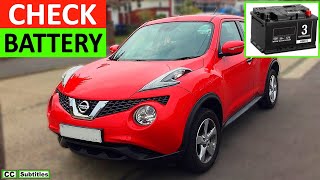
How to confirm: Use a multimeter to test the battery. 🎬 Watch: How to find and test your Juke's battery A healthy battery should read above 12.4 volts with the engine off. With the engine running, the voltage should be between 13.2 and 14.8 volts. Many auto parts stores offer free battery load testing, which is a more definitive test.
Typical fix: Replace the vehicle's 12V battery.
Est. part cost: $150-$300 - Loose or Corroded Battery Terminals/Grounds 🟡 Medium Probability → Shop Vehicle Battery Corrosion or looseness at the battery terminals or a main chassis ground can interrupt the constant power supply to the ECM, triggering the code. This is a common issue on all vehicles as they age and a specific check mentioned in Nissan's TSB.
How to confirm: Visually inspect the battery terminals for white or blue-green powder (corrosion). Physically attempt to twist the terminals; they should not move. Check that the main ground straps from the battery to the chassis and engine are clean and tight.
Typical fix: Disconnect the battery (negative terminal first), clean the posts and terminals with a wire brush, and reconnect securely (positive terminal first). Replace terminals if they are damaged or cannot be tightened.
Est. part cost: $5-$25 - Recent Battery Disconnection or Jump Start 🟡 Medium Probability → Shop Vehicle Battery The code is designed to set any time the ECM loses its backup power, which is stored in volatile memory. Disconnecting the battery for service, having a completely dead battery that requires a jump start, or even using a battery disconnect switch will cause this code to appear by design.
How to confirm: If the battery was recently disconnected or the vehicle was jump-started, this is the almost certain cause.
Typical fix: Clear the code with an OBD-II scanner. 🎬 Watch: How to reset the ECM memory backup The code should not return if the power supply is now stable. Nissan also provides a specific 10-cycle ignition procedure in its TSB to confirm the fix without further repairs being necessary.
Est. part cost: $0 - Failing Alternator ⚪ Low Probability → Shop Alternator A failing alternator can't properly charge the battery, leading to low system voltage that can trigger P0603.
How to confirm: With the engine running, test the voltage at the battery terminals. It should be consistently around 13.8-14.5 volts. If the voltage is below 13.2V, above 15V, or fluctuating wildly, the alternator is likely faulty.
Typical fix: Replace the alternator.
Est. part cost: $250-$500
Rare But Worth Checking
- Faulty Engine Control Module (ECM): → Shop Engine Control Module (ECM) This is the least likely cause. All other power supply-related issues (battery, terminals, alternator, fuses, wiring) must be ruled out completely before considering ECM replacement.
- Blown Fuse or Wiring Issue: The ECM backup power circuit is protected by a fuse. A short in the wiring or a random fuse failure could cause the code, though this is uncommon. In some related Nissan models, a blown fuse for the audio system has been found to cause P0603, as they can share a power source.
Diagnosis Steps
- Check for other stored trouble codes. Address those first if they are present.
- Ask the driver if the battery was recently replaced, disconnected, or if the vehicle was jump-started. If so, this is the likely cause.
- Visually inspect the battery terminals for corrosion and ensure they are tight. Clean and tighten as necessary.
- Check the main engine and chassis ground connections for tightness and corrosion.
- With the engine off, use a multimeter to check the battery's static voltage. It should be at least 12.4V. If it's below 12V, the battery is discharged and needs charging or replacement.
- Start the engine and measure the charging voltage at the battery terminals. It should be approximately 13.8V to 14.5V, indicating a healthy alternator.
- If the battery is old or fails voltage tests, have it professionally load-tested. Replace if necessary.
- If the battery and alternator test good, clear the DTC. Then, follow the procedure in Nissan TSB NTB16-018d: Turn ignition ON for 1+ second, then OFF for 10+ seconds. Repeat this cycle 10 times.
- After the 10 cycles, turn the ignition ON and check for a '1st trip' P0603 code using a capable scanner like Nissan CONSULT. If it is NOT present, the issue is resolved. If it IS present, further diagnosis of the ECM wiring, fuses, or the ECM itself is required.
- If all else fails, the issue may be with the ECM wiring or the ECM itself, which may require professional diagnosis.
Parts You'll Likely Need
- 12V Battery
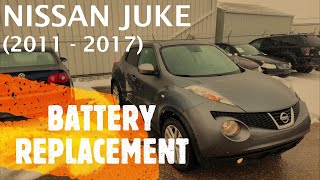
(OEM #B8599-C1620)— A weak or failing battery is the most frequent cause of the voltage drop that triggers the P0603 code on a Nissan JUKE.
Trusted brands: Nissan OEM, Bosch, Deka, DieHard
OEM price range: $200-$350
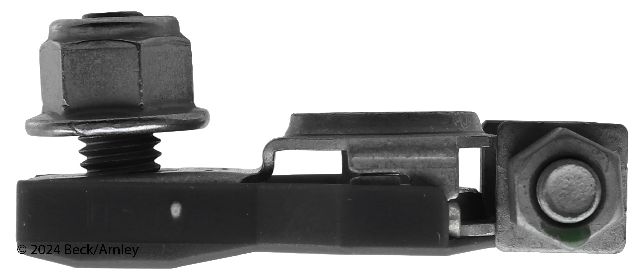
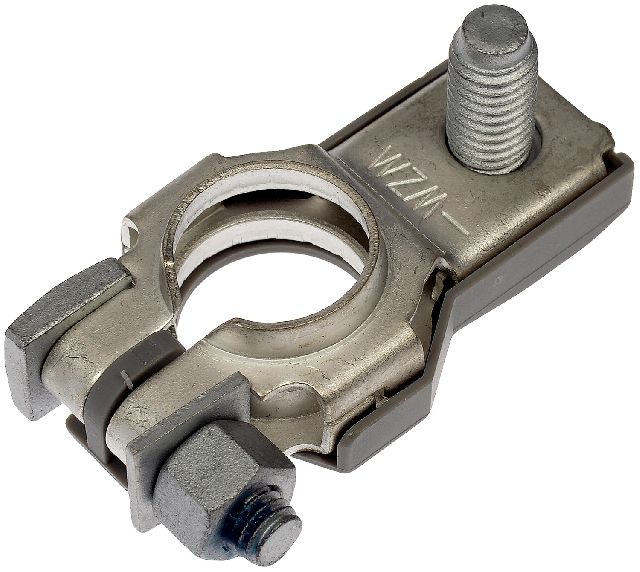
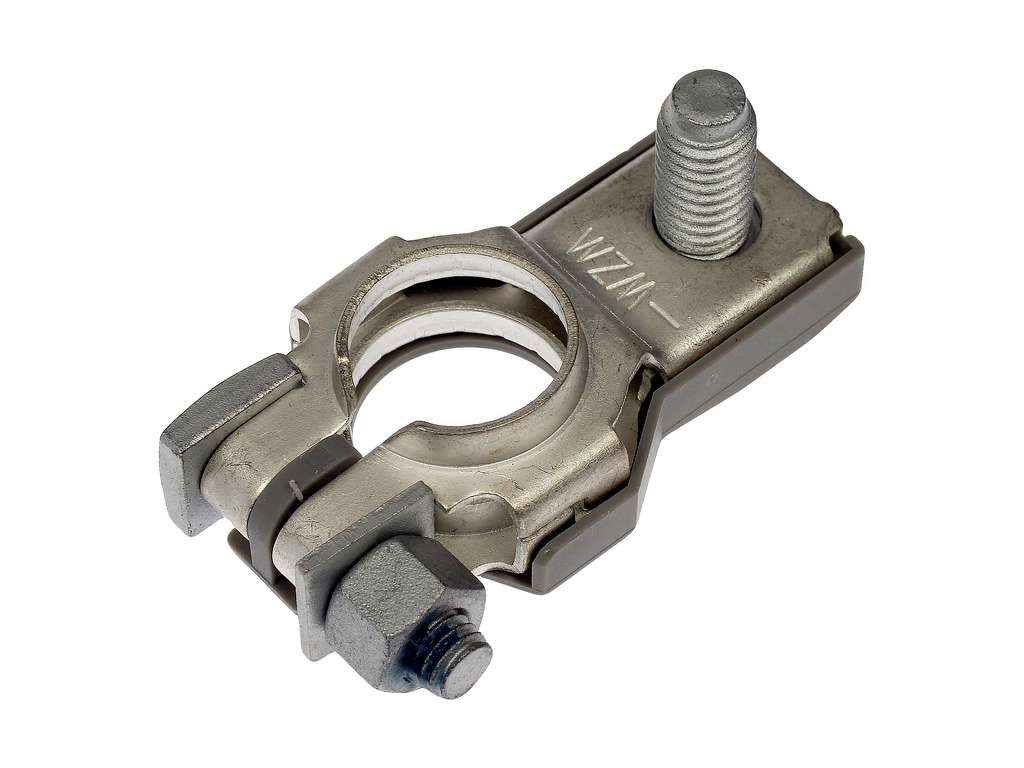
Aftermarket price range: $150-$250 - Battery Terminals — Corroded or damaged terminals that can't be properly cleaned or tightened will cause a persistent power interruption.
Trusted brands: Dorman, Standard Motor Products
OEM price range: $15-$40
Aftermarket price range: $5-$25
Technical Service Bulletins (TSBs) & Recalls
- NTB16-018d: 'MIL ON WITH P0603 STORED FOR ECM BACK UP CIRCUIT' - The most current version, which confirms the code's meaning, points to low battery voltage as a common cause, and provides a specific 10-ignition-cycle diagnostic procedure. It applies to a wide range of Nissan vehicles.
- NTB16-018c: An earlier version of the same bulletin with the same core information.
Platform-Specific Known Issues
- Nissan has issued Technical Service Bulletin NTB16-018d (and previous revisions) which applies to 2015 and later Nissan vehicles, including the Juke. It explicitly states that P0603 is often the result of low battery voltage, a discharged battery, or battery terminal disconnections. It provides a specific procedure to verify the fix before attempting further repairs: after ensuring the battery is healthy and clearing the code, cycle the ignition ON (1 sec) and OFF (10 sec) ten times. If the code does not return as a '1st trip DTC', the repair is considered complete.
Mechanic-Grade Diagnostic Values
- ECM Power Supply (Keep Alive Memory) — expected: At least 11 volts with the ignition ON (engine off).. Failure: Voltage below 11V indicates a battery or charging system issue that must be resolved before further P0603 diagnosis.
- ECM Backup Power Supply Fuse — expected: Continuity (near 0 ohms).. Failure: No continuity (Open Line/OL) indicates a blown fuse.
- ECM Backup Power Wire Voltage at ECM Connector — expected: Constant battery voltage (12V+).. Failure: 0V or fluctuating voltage indicates an open or short in the wiring harness between the fuse box and the ECM.
Hidden / Shadow Codes Worth Checking
- 1st trip DTC: This is not a separate code but a status shown on a Nissan CONSULT scanner. After clearing codes and performing the 10-cycle test, if P0603 reappears as a '1st trip DTC', it signifies the fault is still actively detected and further diagnosis is needed. If it does not reappear, the initial power interruption was transient and the fix is considered complete. (see via Nissan CONSULT-III plus diagnostic tool.)
Scan Tool Commands That Help
- Nissan CONSULT-III plus (or equivalent): Erase DTCs — This is the first step before performing the confirmation procedure to ensure you are starting from a clean slate.
- Manual Procedure (used with scanner): DTC Confirmation Procedure (10-Cycle Test) — After ensuring the battery is healthy and clearing the code, this procedure is used to verify the repair is complete. It involves cycling the ignition ON (for 1+ sec) and OFF (for 10+ sec) ten consecutive times.
Wiring & Ground Locations
- ECM Power Supply Fuse — In a Nissan 350Z with a similar issue, the fuse was a 15A fuse in the interior fuse block that also powered the radio. For the Juke, check the fuse box diagrams for fuses labeled 'ECM' or related to audio/BCM, as circuits can be shared.. This fuse provides the constant power to the ECM's Keep Alive Memory. If it blows, the ECM loses memory every time the car is turned off, triggering P0603.
- ECM (Engine Control Module) — On the F15 Juke, the ECM is typically located in the engine bay, near the battery and firewall, often requiring removal of plastic covers or the battery itself for access.. This is the component logging the code. Its ground connections and the integrity of its connector pins are critical. Physical inspection for corrosion or damage is necessary if power and ground tests fail elsewhere.
- Main Chassis/Engine Ground — Key grounds are located on the negative battery cable to the chassis, from the chassis to the engine block, and from the chassis to the transmission.. A corroded or loose main ground can cause intermittent voltage drops to all vehicle electronics, including the ECM's backup power, directly causing a P0603 code.
Real Owner Repair Stories
- my350z.com forum user '07_350Z' (2007 Nissan 350Z (similar Nissan electrical architecture)) — Check Engine Light on with a pending P0603 code after every ignition cycle. ECU would reset, and emissions readiness monitors would not complete.
❌ Tried (didn't work) The battery was presumably checked and okay. The user was considering an ECU reflash or replacement.
✅ What actually fixed it The user traced the problem back to a blown 15A fuse for the radio, which was located in the fuse box by the battery. After replacing the fuse, the head unit worked again and the P0603 code stopped appearing, allowing the ECU to retain its memory.
When the Usual Fixes Don't Work
- While the vast majority of P0603 codes on a 2015-2017 Nissan Juke are caused by a weak battery or poor connections, there are documented cases where the issue is more complex. In one instance on a similar Nissan platform, after all standard checks on the battery and charging system passed, the root cause was found to be a blown 15A fuse for the audio system. This highlights that if the primary causes are ruled out, the fault may lie in the shared power supply wiring or a fuse that is not obviously labeled for the ECM.
Helpful Videos

We Have This Part in Stock



The information in this article is provided for general reference and educational purposes only. Vehicle specifications, procedures, and part compatibility can vary by production date, trim level, and region. Always consult your vehicle's factory service manual and verify part numbers before purchasing or performing repairs. Safety-critical components such as airbags, seat belts, and braking systems should be installed by a qualified professional.
- Nissan JUKE:
- 🧭 Diagnostic Flowchart
- 🎬 Helpful Videos
- 🛍️ Shop This Part
- What's Unique About the 2015-2017 Nissan JUKE
- Symptoms You May Notice
- Most Likely Causes
- Rare But Worth Checking
- Diagnosis Steps
- Parts You'll Likely Need
- Technical Service Bulletins (TSBs) & Recalls
- Platform-Specific Known Issues
- Mechanic-Grade Diagnostic Values
- Hidden / Shadow Codes Worth Checking
- Scan Tool Commands That Help
- Wiring & Ground Locations
- Real Owner Repair Stories
- When the Usual Fixes Don't Work
- 🎟️ Get 5% Off