

P0603 on 2007-2010 Saturn OUTLOOK: Keep Alive Memory (KAM) Error Causes and Fixes
P0603 on a Saturn Outlook almost always points to a weak battery or bad battery connections. Before suspecting the computer, test the battery and charging system. The battery is located inside the cabin, making its condition easy to overlook. A new battery is the most common fix.
- P0603 is a memory error code, most often caused by a power supply problem like a weak battery.
- Always test the battery and charging system first. This is the most likely and cheapest fix.
- Check battery terminals and ground connections for corrosion and tightness.
- The battery on the Outlook is inside the vehicle behind the passenger seat, so it's often overlooked. The correct size is Group H6/48.
- Do not replace the PCM or TCM unless all power supply issues, including parasitic drains, have been ruled out.
What's Unique About the 2007-2010 Saturn OUTLOOK
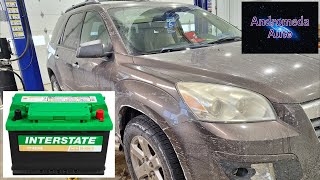
For the Saturn Outlook and its GM Lambda siblings (Acadia, Enclave, Traverse), this code is frequently a simple electrical issue rather than a module failure. The battery is located inside the cabin, under the floor behind the passenger seat, which 🎬 Watch: How to find and replace the hidden cabin battery. can lead to overlooked connection issues or a failure to check the battery's health during routine inspections. Furthermore, GM issued informational bulletins (TSB #05-06-04-060A, #PIP4653E) acknowledging that P0603 can appear in various modules, including the TCM, and may not always indicate a component failure, but rather an event like a battery disconnect or low voltage.
Diagnostic Flowchart
Tap your situation to follow the diagnostic path that matches what you're seeing on this vehicle.
Symptoms You May Notice
- Check Engine Light is on
- Rough or unstable idle
- Hesitation during acceleration
- Harsh or delayed transmission shifting
- Difficulty starting the engine or engine stalling
- Reduced fuel economy
- ABS/Traction Control Light may illuminate
- Replacing the PCM or TCM without first testing the battery and charging system. This is an expensive mistake, as the root cause is almost always related to the power supply.
Most Likely Causes
- Weak or Failing Battery 🔴 High Probability → Shop Vehicle Battery The Outlook is prone to battery drain issues, and a weak battery is the most common trigger for a KAM memory loss code. If battery voltage drops too low while the vehicle is off, the module's memory is lost. The battery's location inside the passenger compartment means it is often forgotten during routine checks.
How to confirm: Use a multimeter to test the battery. A healthy battery should read about 12.6 volts with the engine off and 13.5-14.5 volts while running. A load test at an auto parts store is more definitive, as a battery can show good voltage but fail under load.
Typical fix: Replace the vehicle's battery. The correct size is typically a Group H6 (also called Group 48).
Est. part cost: $150-$250 - Loose or Corroded Battery Terminals/Cables 🟡 Medium Probability → Shop Vehicle Battery Corrosion or loose connections can interrupt the constant power supply required for the Keep Alive Memory. This is a common issue on all vehicles and a primary check for any electrical code.
How to confirm: Visually inspect the battery terminals and main ground connections for corrosion (white or greenish powder) and ensure they are tight. Pay attention to the main ground strap from the engine to the chassis.
Typical fix: Clean the terminals with a wire brush and baking soda solution. Tighten any loose connections.
Est. part cost: $1-$10 - Recent Battery Disconnection 🟡 Medium Probability → Shop Vehicle Battery If the battery was recently replaced or disconnected for service, a P0603 code will often set as a normal consequence of power loss.
How to confirm: Ask if the battery has been disconnected recently. If so, this is the likely cause.
Typical fix: Clear the code with an OBD-II scanner. If it does not return after a few drive cycles, no further action is needed.
Est. part cost: $0 - Faulty Alternator/Charging System ⚪ Low Probability → Shop Alternator A failing alternator can cause inconsistent voltage, either undercharging or overcharging the battery, which can disrupt module memory.
How to confirm: With the engine running, check the battery voltage. If it's outside the normal 13.5-14.5 volt range, the alternator is likely faulty.
Typical fix: Replace the alternator.
Est. part cost: $200-$400 - Parasitic Battery Drain ⚪ Low Probability → Shop Vehicle Battery Some Outlooks and their platform mates have been known to develop parasitic draws, where a component stays on after the vehicle is shut off, draining the battery overnight. This slow drain can cause the voltage to drop enough to trigger a P0603.
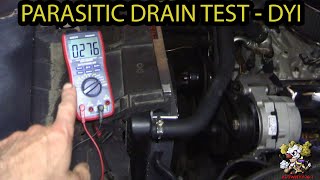
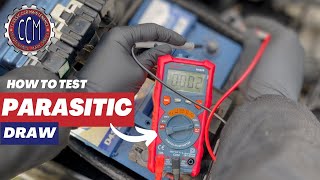
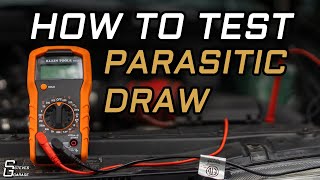
How to confirm: Perform a parasitic draw test using a multimeter set to measure 🎬 See this easy walkthrough on performing a parasitic draw test. amps. With the vehicle off and all modules go to sleep (can take up to 30 minutes), a normal draw should be under 50mA (0.05A). A higher reading indicates a parasitic draw.
Typical fix: Isolate the circuit causing the draw by pulling fuses one by one until the amperage drops. Diagnose and replace the faulty component on that circuit.
Est. part cost: $0-$200
Rare But Worth Checking
- Faulty Powertrain or Transmission Control Module (PCM/TCM): → Shop Transmission Assembly While this is the component the code points to, it is rarely the actual cause. The provided TSBs (#05-06-04-060A, #PIP4653E) indicate this code can be set without a true module fault. TSB PIP4653E even suggests that if the code is ONLY in the TCM, a reprogram should be performed before replacement. Only consider this after exhausting all power supply and connection checks.
- Aftermarket Performance Tuner: If the vehicle has an aftermarket engine tune, the device or software can sometimes interfere with the PCM's self-check routines and trigger this code.
- High Resistance in Wiring: Corrosion in wiring harnesses, particularly under the driver's or passenger's sill plates, can cause voltage drops to various modules and trigger communication or memory codes.
Diagnosis Steps
- Scan for any other trouble codes. Address other codes first, as they may be the root cause.
- Check if the battery was recently disconnected. If so, clear the code and test drive to see if it returns.
- Using a multimeter, check the battery voltage with the engine off (should be ~12.6V).
- Start the engine and check the battery voltage again (should be 13.5V-14.5V). This tests the alternator output.
- Thoroughly inspect the battery terminals, main power cables, and ground straps for any signs of corrosion, damage, or looseness. Clean and tighten as needed.
- If the battery is more than 4 years old, have it professionally load tested, even if voltage appears normal.
- If the battery is good but drains overnight, perform a parasitic draw test to check for components that are not shutting off correctly. A draw over 50mA is a problem.
- If all power and ground connections are good and the battery/alternator test fine, clear the code. If it returns persistently, the issue may be a wiring fault to the module or, in rare cases, the module itself.
Parts You'll Likely Need
- Car Battery
(OEM #ACDelco Gold 48AGM (88864541))— A weak or failing battery is the number one cause of a P0603 code on the Saturn Outlook.
Trusted brands: ACDelco, Interstate, DieHard, Optima
OEM price range: $200-$300
Aftermarket price range: $150-$250 - Transmission Control Module (TCM/TEHCM) — In the rare event the module has failed, it will need replacement. On this platform, it is integrated into the valve body and called a TEHCM (Transmission Electro-Hydraulic Control Module). TSB #PIP4653E specifically mentions this code can be stored in the TCM. This part requires programming by a dealer or qualified shop.
Trusted brands: ACDelco (OEM), Street Smart Transmission, Dorman
OEM price range: $300-$500
Aftermarket price range: $200-$400
Related Codes That Often Appear With This One
- P0601, P0602, P0604, P0606 — These are all internal control module error codes. TSB #05-06-04-060A specifically groups P0603 with these codes, indicating they can be set together for similar reasons (like power interruptions) across different modules.
Technical Service Bulletins (TSBs) & Recalls
- 05-06-04-060A: Information on control module Diagnostic Trouble Code(s) (DTC)(s) P0601, P0602, P0603, P0604, P0606, P062F, P06F3, P1621 which can be shared in multiple modules.
- PIP4653E: Provides information about Malfunction Indicator Lamp on with Diagnostic Trouble Codes P0601, P0603, P0604, P062F or P1621 stored in the Transmission Control Module. Recommends reprogramming the TCM if codes are isolated there.
Platform-Specific Known Issues
- TSB #05-06-04-060A is an informational bulletin for technicians regarding various internal control module codes, including P0603, noting they can be shared across multiple modules and are not necessarily indicative of module failure.
- TSB #PIP4653E provides information for technicians when P0603 (and other codes) are found in the Transmission Control Module (TCM), suggesting a reprogram of the TCM if the DTC is isolated there.
- Parasitic battery drains are a known complaint on this platform, which can lead to a P0603 code appearing due to low battery voltage. A 6-amp draw was noted by one owner, traced back to the main fuse panel.
Mechanic-Grade Diagnostic Values
- Normal Parasitic Draw — expected: < 50 mA (0.05 A). Failure: A reading consistently above 50-100 mA after all modules have entered sleep mode (approx. 30-45 minutes) indicates a parasitic drain.
- Abnormal Parasitic Draw Example — expected: A 6 Amp (6000 mA) draw was reported on a 2007 Outlook, traced to the 'BATT 1' 50A fuse in the underhood fuse block.. Failure: This level of draw is extremely high and can drain a healthy battery in minutes. It points to a significant short or a major component failing to shut down.
Scan Tool Commands That Help
- GM GDS2/Tech2: Service Programming System (SPS) — This function is used to flash the latest software to the ECM or TCM. TSB #PIP4653E recommends attempting a reprogram on the TCM if P0603 is stored there. It is also mandatory when installing a new TEHCM.
- GM GDS2/Tech2: Transmission Service Fast Learn — After a new TEHCM (TCM) is installed and programmed, this procedure must be run. It allows the new module to learn the specific hydraulic characteristics of the clutches to ensure proper shift quality.
- Professional Scan Tool: Setup SDM Primary Key in BCM — This procedure may be required after replacing the Body Control Module (BCM) to sync it with the airbag system (Sensing and Diagnostic Module - SDM) and extinguish the airbag warning light.
Wiring & Ground Locations
- G113 — Located on the left side of the engine, at an engine-to-transmission stud.. This is a primary ground point for components on the transmission, including the Transmission Electro-Hydraulic Control Module (TEHCM/TCM). A poor connection here can cause various transmission codes, including memory errors.
- G103 — Located on the left side of the engine compartment, on the left inner fender panel, sometimes described as above the brake booster.. This ground serves the Engine Control Module (ECM) and Body Control Module (BCM). A fault at this location can interrupt power stability for the main computers, leading to a P0603 code.
- G110 — Located on the right front of the engine, mounted to the cylinder head.. This is another critical engine ground. Ensuring all engine-to-chassis grounds are clean and tight is fundamental before suspecting module failure.
- Underhood Fuse Block — Located above the right front wheelwell.. This fuse block contains the main power distribution fuses, including 'BATT 1' (50A) and 'BATT 2' (50A), which supply power to the BCM and other modules that rely on keep-alive memory. A massive 6A parasitic draw has been traced to the 'BATT 1' fuse circuit on an Outlook.
- Body Control Module (BCM) — Generally located under the dashboard, often near the center console or integrated with the interior fuse panel.. The BCM manages many vehicle electronics and has its own grounds. Per TSB #07-08-47-004C, the BCM can be internally damaged if its ground path is removed while battery power is still supplied. Always disconnect the negative battery terminal before servicing BCM grounds.
Real Owner Repair Stories
- Car Talk Community user 'WilliamRay' (2007 Saturn Outlook) — Parasitic battery drain, initially mild, progressed to the point where the car would not start even with a jump. Battery voltage would drop to 10-11 volts within minutes of being connected.
❌ Tried (didn't work) Disconnecting the alternator did not stop the drain.
✅ What actually fixed it The user identified a massive 6-amp parasitic draw on the 'BATT 1' 50A fuse circuit in the underhood fuse block. While the final component fix was not posted, the isolation of the draw to this specific, high-amperage circuit is a critical diagnostic step for anyone with a severe battery drain causing a P0603. The battery itself had also likely failed due to the repeated deep discharges.
OEM Part Supersession History
24237552, 24248192, 24251029, and others→24256124, 24258304, 24264346, 24275870, 24041871— These are part numbers for the 6T70/6T75 TEHCM (TCM). Part numbers frequently supersede due to hardware revisions and software updates to improve reliability.
Heads up: When replacing the TEHCM, it is critical to use a part number compatible with the vehicle's year and calibration. The new module must be programmed to the vehicle's VIN using the Service Programming System (SPS). Some aftermarket suppliers offer pre-programmed modules.
Model Year Variations Within This Range
- 2007-2009: GM issued a special coverage program (#10287B) for certain 2007 and 2009 Outlooks (and other Lambda platform vehicles) to reprogram the Engine Control Module (ECM) to address premature timing chain wear. This involved updating the Engine Oil Life Monitor software. While not directly for P0603, it shows that GM provided significant software updates via TIS2WEB that could affect overall module performance and diagnostics. Ensuring the latest software is installed is a valid diagnostic step.
Helpful Videos


We Have This Part in Stock




The information in this article is provided for general reference and educational purposes only. Vehicle specifications, procedures, and part compatibility can vary by production date, trim level, and region. Always consult your vehicle's factory service manual and verify part numbers before purchasing or performing repairs. Safety-critical components such as airbags, seat belts, and braking systems should be installed by a qualified professional.
- Saturn OUTLOOK:
- 🧭 Diagnostic Flowchart
- 🎬 Helpful Videos
- 🛍️ Shop This Part
- What's Unique About the 2007-2010 Saturn OUTLOOK
- Symptoms You May Notice
- Most Likely Causes
- Rare But Worth Checking
- Diagnosis Steps
- Parts You'll Likely Need
- Related Codes That Often Appear With This One
- Technical Service Bulletins (TSBs) & Recalls
- Platform-Specific Known Issues
- Mechanic-Grade Diagnostic Values
- Scan Tool Commands That Help
- Wiring & Ground Locations
- Real Owner Repair Stories
- OEM Part Supersession History
- Model Year Variations Within This Range
- 🎟️ Get 5% Off