

P0603 on 2015-2019 Subaru Outback: KAM Error, Battery Drain, and DCM Fixes
On a 2015-2019 Outback, P0603 usually means the battery has been disconnected or is failing. The most common root cause is a parasitic battery drain from the Data Communications Module (DCM) related to the 3G network shutdown. The DCM gets stuck searching for the defunct network, creating a draw of 150-400mA that kills the battery. The fix is often a new battery and addressing the DCM drain via a dealer TSB (like 15-317-24) or a DIY fuse modification.
- P0603 on a 2015-2019 Outback is almost always related to a battery power issue, not a bad computer.
- Before replacing any parts, check if the battery was recently disconnected. If not, test the battery and perform a parasitic draw test.
- The most likely cause of a recurring P0603 and dead battery is the Data Communications Module (DCM).
- Confirm the DCM is the culprit by pulling its fuse and watching for a drop in the parasitic draw.
- The issue can be fixed by a dealer (via TSB) or with a simple DIY fuse tap modification to cut power to the DCM when the car is off.
What's Unique About the 2015-2019 Subaru Outback
For the 2015-2019 Subaru Outback, P0603 is rarely about a primary ECM failure. It's most often a direct result of a dead or disconnected battery. This generation is widely known for a parasitic battery drain caused by the Data Communications Module (DCM) for the Starlink system. After the 3G cellular network shutdown, the DCM gets stuck in an infinite loop searching for a signal, draining the battery even when the car is off. This constant drain is often over 150mA, far exceeding Subaru's tolerance of 70mA. Therefore, P0603 on this Outback is a strong indicator that you should investigate for a parasitic draw before suspecting the ECM itself.
Symptoms You May Notice
- Check Engine Light is on
- Recurring dead battery, especially after the car sits for a day or two
- Engine is slow to crank or won't start
- No noticeable symptoms (if caused by a simple battery disconnect)
- Rough idle or hesitation on acceleration
- Reduced fuel economy
- Solid red SOS light on the overhead console may stay on
- Loss of front speaker audio and Bluetooth microphone if DCM fuse is pulled to stop the drain
- Replacing the ECM when the actual problem is a weak battery or a parasitic draw from the DCM.
- Repeatedly replacing the battery without diagnosing the underlying DCM parasitic draw, leading to multiple failed batteries.
Most Likely Causes
- Weak or Failing Battery (Often due to Parasitic Draw) 🔴 High Probability → Shop Vehicle Battery These models are notorious for a parasitic draw from the Data Communications Module (DCM) which constantly searches for a defunct 3G network, draining the battery and causing premature failure. This issue was so widespread it led to a class-action lawsuit and a battery warranty extension from Subaru (TSB 07-207-22R).
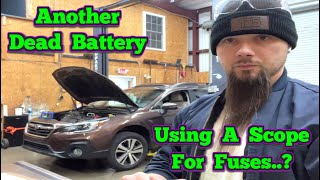
How to confirm: Test the battery voltage. A reading below 12.4V with the engine off is a sign of a weak battery. Perform a parasitic draw test with a multimeter; a draw over 70mA after the car has gone to sleep (approx. 20-30 mins) indicates a problem. 🎬 Watch: How to find the DCM and tailgate parasitic draw. Pulling the 'DCM' fuse (often fuse #9 in the under-hood fuse box) and seeing the draw drop to a normal level (typically under 50mA) confirms the module is the culprit.
Typical fix: Replace the battery (many owners upgrade to a higher-capacity AGM battery) and address the underlying parasitic draw via a dealer TSB or DIY fuse modification.
Est. part cost: $150-$350 - Recent Battery Disconnection or Jump-Start 🔴 High Probability → Shop Vehicle Battery
How to confirm: If the battery was recently replaced, disconnected for service, or the vehicle was jump-started, this code is expected. The code will likely not return after being cleared.
Typical fix: Clear the code with a scanner. If no other symptoms are present, the code may clear on its own after several drive cycles.
Est. part cost: $0 - Loose or Corroded Battery Terminals 🟡 Medium Probability → Shop Vehicle Battery
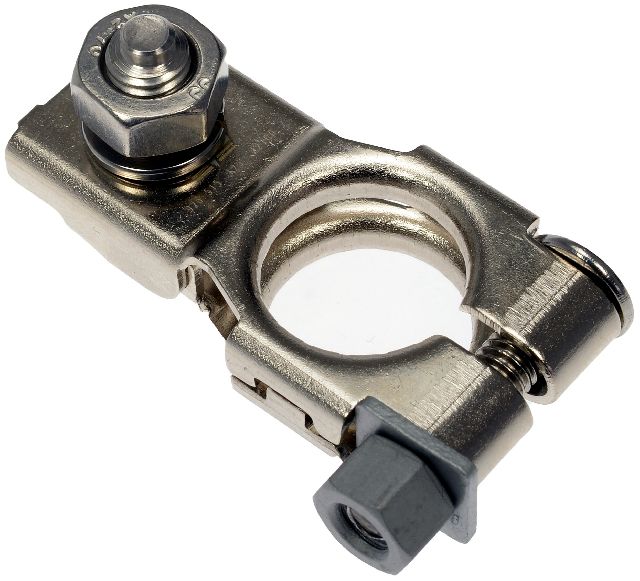
How to confirm: Visually inspect the battery terminals for white or blue-green corrosion. Ensure the terminal clamps are tight and cannot be moved by hand.
Typical fix: Disconnect, clean the terminals and clamps with a wire brush and baking soda solution, and reconnect securely.
Est. part cost: $1-$10 - Failing Alternator ⚪ Low Probability → Shop Alternator
How to confirm: With the engine running, use a multimeter to check the voltage at the battery terminals. A healthy alternator should produce between 13.8 and 14.5 volts. A reading outside this range suggests a charging system problem.
Typical fix: Replace the alternator.
Est. part cost: $300-$700
Rare But Worth Checking
- Faulty Engine Control Module (ECM): → Shop Engine Control Module (ECM) This is extremely rare. Before condemning the ECM, all other possibilities, especially the battery, charging system, and parasitic draws, must be exhaustively ruled out.
Diagnosis Steps
- Check if the battery was recently disconnected or jump-started. If so, clear the code and see if it returns.
- Inspect battery terminals for corrosion and tightness. Clean and tighten as needed.
- Test the battery's health. Check voltage with the engine off (should be >12.4V) and while cranking (should not drop below ~10V). Many auto parts stores offer free battery testing.
- Test the charging system. With the engine running, check for ~13.8-14.5V at the battery.
- If the battery and charging system are good, perform a parasitic draw test. Connect a multimeter in series with the negative battery cable. Trick the hood latch into the closed position and lock the car, waiting 20-30 minutes for all modules to go to sleep.
- If the draw is high (over ~70mA, with problem vehicles often showing >150mA), begin pulling fuses. Start with fuse #9 for the DCM in the under-hood fuse box. If pulling this fuse causes the draw to drop to a normal level (under 50mA), the DCM is the confirmed cause.
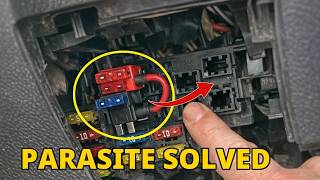
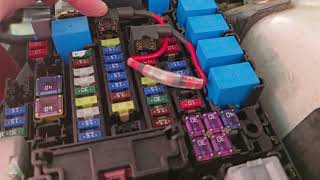
- If the DCM is the cause, contact a Subaru dealer about TSB 15-317-24 or 15-318-24. Alternatively, perform a DIY bypass by using 'add-a-circuit' fuse taps to move the DCM's power from a constant-hot fuse to an ignition-switched fuse. 🎬 See this DIY fuse tap modification to stop battery drain.
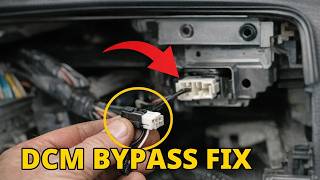
- Note: On many vehicles, simply pulling the DCM fuse will disable the front speakers and Bluetooth microphone, as the audio is routed through the module. A more involved DIY fix is to install a dedicated Starlink bypass harness behind the radio head unit to restore audio functionality.
- Only if all other steps fail to identify a cause should a faulty ECM be considered.
Parts You'll Likely Need
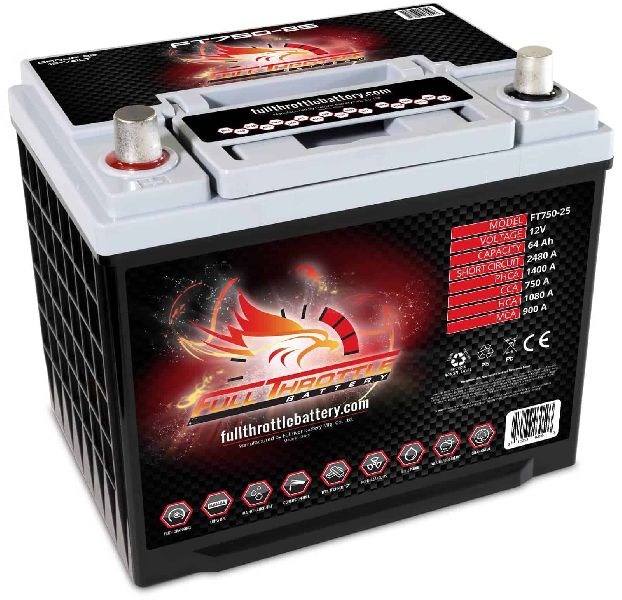
- 12V Battery
(OEM #82110AL10A (or similar, Group 25/26))— This is the most common failure point, either from age or from being repeatedly drained by the DCM parasitic draw. Many owners upgrade to a higher-capacity AGM battery.
Trusted brands: Subaru (OEM), Interstate, DieHard, Duralast, Optima
OEM price range: $200-$300
Aftermarket price range: $150-$350 - Add-A-Circuit Fuse Tap — Used for the common DIY fix to move the DCM to an ignition-switched power source, preventing it from draining the battery when the car is off.
Trusted brands: Bussmann, Littelfuse, JABINCO
OEM price range: N/A
Aftermarket price range: $5-$15 - DCM Bypass Box
(OEM #86229AL400)— This is an official Subaru part offered as an alternative to replacing the DCM on vehicles without an active Starlink subscription. It removes the DCM entirely while retaining audio functions.
Trusted brands: Subaru (OEM)
OEM price range: $50-$100
Aftermarket price range: N/A
Technical Service Bulletins (TSBs) & Recalls
- 07-207-22R: Battery Warranty Extension. Extends the warranty for the 12V battery as a result of the battery drain class action settlement.
- 15-317-24 / 15-317-24R: Warranty Extension for the Telematics Data Communications Module (DCM). Extends the DCM warranty to 8 years or 100,000 miles for 2016-18 models due to the 3G network issue causing battery drain.
- 15-318-24 / 15-318-24R: TSB for DCM bypass procedure. Announces the availability of a 'DCM Bypass Box' (P/N 86229AL400) as an official repair for unsubscribed vehicles, which restores audio functions while removing the faulty module.
Platform-Specific Known Issues
- A class-action lawsuit was filed against Subaru for battery drain issues on these models. This led to warranty extensions for the battery (TSB 07-207-22R) and the Data Communications Module (DCM).
- The DCM, which controls Starlink telematics, fails to enter sleep mode due to the 3G cellular network shutdown, causing a constant power draw of 150-400mA that kills the battery.
- Subaru has issued multiple Technical Service Bulletins (TSBs) to address this. TSB 15-317-24 extends the DCM warranty to 8 years/100k miles, and TSB 15-318-24 introduces a 'DCM Bypass Box' (P/N 86229AL400) for cars without a Starlink subscription.
Mechanic-Grade Diagnostic Values
- Normal Parasitic Draw (Sleep Mode) — expected: < 70 mA. Failure: A sustained reading above 70 mA after the vehicle has been off and locked for over 20 minutes indicates a parasitic draw.
- Parasitic Draw with Faulty DCM — expected: 150 mA to 400 mA. Failure: A steady draw in this range that drops significantly when the DCM fuse is pulled is a definitive sign of the common DCM failure.
- Parasitic Draw after DCM Fuse Pull / Bypass — expected: ~25-30 mA. Failure: If the draw does not drop to this level after disabling the DCM, there is another source of parasitic draw on a different circuit.
- Alternator Output Voltage (Engine Running) — expected: 13.8 V to 14.5 V. Failure: A voltage reading below or above this range indicates a fault in the charging system (alternator or voltage regulator) which can lead to an undercharged battery and trigger a P0603.
- Battery Voltage (Engine Off) — expected: > 12.4 V. Failure: A reading below 12.4V indicates a discharged or failing battery, which is the direct cause for the P0603 code being stored.
Scan Tool Commands That Help
- Subaru Select Monitor (SSM) or S-NET: Vehicle Inquiry > Connected Vehicle Subscriptions — This is a critical first step for a professional diagnosis. It is used to determine if the vehicle has an 'Active' or 'Inactive' Starlink subscription. An active subscription requires a full DCM replacement, while an inactive one can use the less expensive DCM Bypass Box (P/N 86229AL400).
Wiring & Ground Locations
- DCM Fuse — Typically fuse #9 (7.5A) in the under-hood/engine compartment fuse box.. This fuse provides constant power to the Data Communications Module. Pulling it is the primary diagnostic step to confirm the DCM is the source of a parasitic draw.
- Accessory Power Fuse (for DIY fix) — Fuse #43 (Cigar Lighter/Accessory Outlet) or Fuse #17 (Power Mirrors) in the passenger compartment fuse box, located to the left of the steering wheel.. These are ignition-switched power sources. In the common DIY fix, an 'add-a-circuit' tap is used on one of these fuses to provide power to the DCM only when the car is on, preventing battery drain when parked.
- DCM Connector i87 — Behind the main infotainment head unit in the dashboard.. When installing the official DCM Bypass Box (86229AL400), a new wire must be inserted into pin #4 of this connector to restore power to the Bluetooth microphone.
- Main Engine/Chassis Grounds — Multiple points on the engine block and chassis, with key grounds often located on the intake manifold and near the battery tray.. A poor or corroded main ground connection for the ECM or battery can cause intermittent power loss to control modules, triggering a P0603 code. While less common than the DCM issue, checking these grounds is a fundamental step in diagnosing any electrical fault.
Real Owner Repair Stories
- Reddit user on r/subaru (2019 Subaru Outback) — Unspecified issue requiring DCM replacement, car was at the dealership for a month waiting for the part.
❌ Tried (didn't work) Waiting for a backordered DCM replacement part.
✅ What actually fixed it The owner learned about TSB 15-318-24 and informed the dealership. The dealer then installed the newly available DCM Bypass Box (P/N 86229AL400) instead of the full DCM, resolving the issue much faster. The repair cost was approximately $600 plus a diagnostic fee. - YouTube video by 'Fix It Angel' (2015 Subaru Outback) — Parasitic battery drain caused by the DCM constantly searching for a signal after the 3G network shutdown.
❌ Tried (didn't work) Pulling the DCM fuse stopped the drain but also disabled the front speakers and microphone, which was an unacceptable trade-off.
✅ What actually fixed it The owner installed a dedicated Starlink bypass harness (a loopback plug) behind the head unit. This physically isolated the faulty DCM while reconnecting the audio and microphone circuits, providing a complete fix that restored all functionality without the battery drain.
OEM Part Supersession History
e.g., 86229AL20A, 86229AL21A→86229AL400 (DCM Bypass Box)— This is not a direct supersession but an official, lower-cost alternative repair part offered by Subaru for vehicles without an active Starlink subscription.
Heads up: The DCM Bypass Box (86229AL400) MUST NOT be used if the vehicle has an active STARLINK subscription, as it permanently disables all telematics services. A full DCM replacement is required in that case.
Model Year Variations Within This Range
- 2015: The 2015 model year was the first to introduce the Starlink system, and it may have different fuse box labeling. Some owners report the DCM fuse is not explicitly labeled, and may be combined with the 'AUDIO NAVI' fuse (#4 in the passenger compartment).
- 2018-2019: The 2018 model year received a facelift which included an updated Starlink Multimedia Plus system with a larger 8.0-inch screen standard on most trims, featuring NFC technology. While the underlying DCM 3G issue is the same, the head unit and some wiring connectors may differ from 2015-2017 models.
Diagnostic Flowchart
Other Known Issues on This Vehicle
Issues unrelated to this code that are worth knowing about as an owner of this generation:
- Spontaneously Cracking Windshields 🟠 Medium — Widespread enough to trigger multiple class-action lawsuits, which resulted in settlements and extended warranties. (Ref: Settlement extended warranty to 8 years/100,000 miles for certain types of cracks.)
- Lineartronic CVT Issues / Failure 🔴 High — Common enough that Subaru extended the powertrain warranty on the CVT to 10 years or 100,000 miles for many models in this generation. (Ref: Subaru TSB 16-115-18 (and others) detail the CVT warranty extension.)
- Starlink Infotainment System Glitches 🟡 Low — Very common reports of freezing, 'ghost touch', random reboots, and unresponsiveness. Led to class-action lawsuits for both earlier and later head units. (Ref: Class-action lawsuit settlements (e.g., Udeen v. Subaru) provided some relief for 2017-2018 models.)
- Excessive Oil Consumption (FB25 Engine) 🟠 Medium — A known issue on some FB25 2.5L engines, though less prevalent than in the previous generation. Can start at higher mileage.
- Wheel Bearing Failure 🟠 Medium — A fairly common issue, presenting as a loud humming or roaring noise that increases with vehicle speed.
Used vs. New Parts: Buying Guide for This Vehicle
When a used part is the smart pick: For this specific repair, sourcing a used DCM Bypass Box (P/N 86229AL400) from a reputable salvage yard is a viable option. It is a simple electronic module with a low failure rate. A used battery is never recommended.
Donor-vehicle mileage cap: roughly under 150000 miles for the part to have meaningful remaining life.
What to inspect on the donor part:
- Ensure the part number is exactly 86229AL400.
- Inspect the connector pins for any signs of corrosion or damage.
- If possible, get the part from a vehicle with a known history and no signs of flood or fire damage.
OEM-only on this vehicle (don't cheap out):
- DCM Bypass Box (86229AL400) - This is a Subaru-specific part with no aftermarket equivalent.
Aftermarket brands forum-validated for this vehicle:
- For the battery replacement, upgrading to a higher-capacity Absorbent Glass Mat (AGM) battery from brands like Optima, Odyssey, or NorthStar is a common and highly recommended practice by owners to better withstand the potential for deep cycling.
Brands owners have reported issues with on this vehicle:
- Avoid generic, unbranded 'add-a-circuit' fuse taps with thin wires or poor crimps, as they can create a fire hazard. Stick to reputable brands like Bussmann or Littelfuse.
Real Owner Stories
Aggregated from forums and TSBs cited above. Mileages and costs reflect what owners reported in those sources.
2015-2019 Subaru Outback
Symptoms: Recurring dead battery, especially after the car sits for a day or two; rough idle or hesitation on acceleration.
What fixed it: Pulling the 'DCM' fuse (fuse #9 in the under-hood fuse box) to stop the parasitic draw.
Source hint: subaruoutback.org: 'Dark current drain.'
5th Gen Subaru Outback
Symptoms: Parasitic drain causing the battery to die; confirmed high draw from the DCM module.
What fixed it: A ~$10 DIY fix using 'add-a-circuit' fuse taps to move the DCM's power from a constant-hot fuse to an ignition-switched fuse.
Source hint: Reddit (r/Subaru_Outback): '5th Gen Parasitic Drain. Diagnosis and ~$10 fix.'
2016-2018 Subaru Outback
Symptoms: Battery drain caused by the DCM failing to enter sleep mode due to the 3G network shutdown.
What fixed it: Installation of a 'DCM Bypass Box' (P/N 86229AL400) to restore audio functions while removing the faulty module.
Source hint: TSB 15-318-24 / 15-318-24R
Related OBD-II Codes
Frequently Asked Questions
Is there a warranty extension for the battery drain issue on my 2015-2019 Outback?
Why does my Starlink SOS light stay red and drain my battery?
Can I just pull the DCM fuse (Fuse #9) to stop the P0603 and battery drain?
What is the 'DCM Bypass Box' mentioned in Subaru service bulletins?
How much parasitic draw is considered normal for this vehicle?
Will a P0603 code appear if I just replaced my battery?
Helpful Videos
Used OEM Parts in Stock
New Aftermarket Parts Available



The information in this article is provided for general reference and educational purposes only. Vehicle specifications, procedures, and part compatibility can vary by production date, trim level, and region. Always consult your vehicle's factory service manual and verify part numbers before purchasing or performing repairs. Safety-critical components such as airbags, seat belts, and braking systems should be installed by a qualified professional.
- Subaru Outback:
- 🧭 Diagnostic Flowchart
- 🎬 Helpful Videos
- 🛍️ Shop This Part
- What's Unique About the 2015-2019 Subaru Outback
- Symptoms You May Notice
- Most Likely Causes
- Rare But Worth Checking
- Diagnosis Steps
- Parts You'll Likely Need
- Technical Service Bulletins (TSBs) & Recalls
- Platform-Specific Known Issues
- Mechanic-Grade Diagnostic Values
- Scan Tool Commands That Help
- Wiring & Ground Locations
- Real Owner Repair Stories
- OEM Part Supersession History
- Model Year Variations Within This Range
- Other Known Issues on This Vehicle
- Used vs. New Parts: Buying Guide for This Vehicle
- Real Owner Stories
- 2015-2019 Subaru Outback
- 5th Gen Subaru Outback
- 2016-2018 Subaru Outback
- Related OBD-II Codes
- Frequently Asked Questions
- 🎟️ Get 5% Off