

P0604 on 2013-2015 Buick Encore: Internal RAM Error Causes and Fixes
P0604 on a 2013-2015 Buick Encore signifies an internal memory (RAM) error in a control module. Based on GM Technical Service Bulletins, this most often points to a problem with the Transmission Control Module (TCM). Before suspecting the module, always test the battery, as low voltage is a very common trigger for this code. If the battery is healthy, the fix usually requires professional diagnostics, a software reflash, or complete TCM replacement and programming. This issue is also common in t
- P0604 is a serious code indicating an internal memory error, most often in the Transmission Control Module (TCM) for the 2013-2015 Buick Encore.
- Before suspecting an expensive module failure, always test the battery and check major power and ground connections, as voltage issues are a common trigger.
- This is not a DIY-friendly repair. The fix requires professional diagnostic tools for accurate diagnosis and for programming a new module to the vehicle.
- Ask your mechanic to check for any available software updates for the TCM or ECM before replacing any parts, as a reflash can sometimes solve the problem.
What's Unique About the 2013-2015 Buick ENCORE
For this generation of GM vehicles, including the Buick Encore and its platform-mates the Chevrolet Trax and Sonic, the P0604 code is specifically called out in Technical Service Bulletins (TSBs) as being frequently associated with the Transmission Control Module (TCM). While it can technically apply to any module, TSB #PIP4653E directly links P0604 to the TCM, making it the primary suspect if you experience any shifting-related symptoms. This suggests a known pattern of TCM-related issues in these vehicles that use the 6-speed automatic transmission.
Diagnostic Flowchart
Tap your situation to follow the diagnostic path that matches what you're seeing on this vehicle.
Symptoms You May Notice
- Check Engine Light is on.
- Erratic or harsh transmission shifting.
- Transmission getting stuck in one gear (limp mode).
- Vehicle may stall intermittently or not start at all.
- Activation of the Traction Control/StabiliTrak light.
- Decreased fuel efficiency.
- Engine seems to misfire or run rough.
- Replacing the TCM or ECM immediately without first thoroughly testing the battery and charging system. A weak battery is a frequent and much cheaper root cause.
- Replacing the ECM when the TCM is the actual cause. Given the specific TSB for the Encore, the TCM should be the primary suspect, especially if transmission symptoms are present.
Most Likely Causes
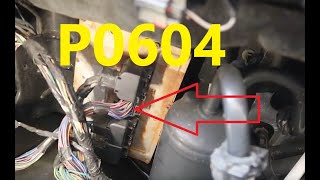
- Weak or Failing Battery 🔴 High Probability → Shop Vehicle Battery Control modules require stable voltage. The electrical demands of modern vehicles can shorten battery life, and low voltage during startup is a very common cause for corrupting a module's memory self-test, triggering a P0604. 🎬 Watch: A breakdown of P0604 causes and common fixes. Many owners have fixed this code simply by replacing an aging battery.
How to confirm: Test the battery with a digital multimeter or a carbon pile load tester. A healthy, resting battery should be at ~12.6V. The charging system should provide 13.5V-14.5V when the engine is running. A battery may start the car but still be too weak to maintain stable voltage for all modules, and voltage should not drop below 9.5V during cranking.
Typical fix: Replace the vehicle's battery.
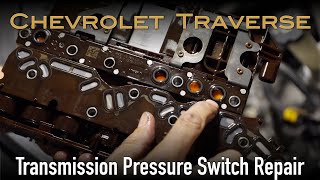
Est. part cost: $150-$300 - Faulty Transmission Control Module (TCM) 🔴 High Probability → Shop Transmission Assembly TSB #PIP4653E specifically points to the TCM as a common source for this code on this platform, indicating a known issue. The TCM is integrated into the control solenoid valve body (TEHCM) inside the transmission, where it's exposed to heat and vibration.
How to confirm: A professional scan tool can confirm if the code originated in the TCM. Diagnosis is a process of elimination after confirming the battery, grounds, and software are all good.
Typical fix: Replacement of the TCM (often as a complete control solenoid valve assembly), followed by programming it to the vehicle.
Est. part cost: $250-$700 - Control Module Software Corruption 🟡 Medium Probability TSB #05-06-04-060A discusses how these codes can be set across multiple modules, sometimes due to software glitches that can be resolved with an update. Voltage fluctuations can also corrupt the software.
How to confirm: A GM dealer or qualified shop can check for available software updates for the TCM using a Techline Connect (formerly TIS2WEB/SPS) subscription and a J2534 passthrough device.
Typical fix: Reprogramming (reflashing) the affected module with the latest GM software calibration. This is often the first recommended step before replacement.
Est. part cost: $100 - $250 (as a standalone service) - Poor Ground or Power Connections ⚪ Low Probability Vibrations and exposure to the elements can cause main ground straps and power connections to the ECM/TCM to become loose or corroded over time, causing intermittent voltage drops. TSBs for related platforms point to checking grounds like G106 and G107.
How to confirm: Visually inspect and physically check the main battery terminals, engine block ground straps, and chassis grounds for tightness and corrosion. Perform a voltage drop test on the power and ground circuits to the TCM.
Typical fix: Clean the connection points with a wire brush and re-secure the fasteners.
Est. part cost: $0-$20
Rare But Worth Checking
- Faulty Engine Control Module (ECM/PCM): → Shop Engine Control Module (ECM) While the TCM is more common for this vehicle, TSB #05-06-04-060A notes that the ECM can also be a source of this code. It should be considered if no transmission issues are present and the code is confirmed to be set in the ECM.
- Faulty Alternator: → Shop Alternator An alternator producing unstable voltage (spikes or drops) can corrupt module memory, triggering a P0604 code. This is less common than a simple weak battery but should be checked during a charging system test.
Diagnosis Steps
- Check the battery FIRST. Ensure it has a full charge (~12.6V engine off) and passes a load test. A weak battery is the most common simple fix.
- With the engine running, check that the alternator is charging correctly (13.5-14.5V).
- Inspect all power and ground connections. Check the battery terminals, main engine ground strap, and chassis grounds for corrosion and tightness. Clean as necessary.
- Check and record any other stored DTCs. Address them first if they are not other module memory codes. A P0700 code is expected to accompany a P0604 from the TCM.
- Clear the code and test drive the vehicle, including several key cycles. A random glitch or a temporary low voltage event can set this code. If it doesn't return, it may not be a hard fault.
- If the code returns, use a professional scan tool to confirm which module set the code (TCM or ECM). For this vehicle, it is most likely the TCM.
- Check for available software updates for the identified module. A software reflash is GM's recommended first step before condemning the module.
- If software updates don't resolve the issue, inspect the wiring harness and connectors to the affected module for any signs of damage, moisture, or corrosion.
- If all previous steps fail, the control module (most likely the TCM) is faulty and requires replacement and programming.
Parts You'll Likely Need
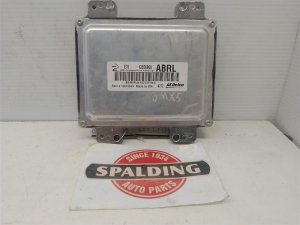
- Transmission Control Module (TCM)
(OEM #24268164)— This is the most probable cause of a P0604 code on a 2013-2015 Encore, as identified in GM TSB #PIP4653E. It is typically sold as part of the complete Control Solenoid Valve Body assembly (TEHCM) and requires programming.
Trusted brands: ACDelco (OEM)
OEM price range: $400-$800
Aftermarket price range: $250-$500 - Engine Control Module (ECM) — A possible, but less likely, cause. It should be considered if there are no transmission symptoms and the TCM has been ruled out.
Trusted brands: ACDelco
OEM price range: $400-$700
Aftermarket price range: $250-$550
Related Codes That Often Appear With This One
- P0700 — This is a generic code meaning the TCM has requested the Check Engine Light. It is almost always present when the TCM has an internal fault like P0604.
- P0601 — This is an 'Internal Control Module Memory Check Sum Error'. Both codes point to an internal module failure and are often grouped in TSBs.
- P0603 — This is an 'Internal Control Module Keep Alive Memory (KAM) Error'. It's often triggered by the same underlying causes, like power supply issues or module failure.
- P1621 — A GM-specific code for 'Control Module Long Term Memory Performance'. TSB #PIP4653E groups this with P0604, indicating a related module memory problem.
- U0101 — This code means 'Lost Communication with TCM'. If the TCM sets P0604 due to an internal failure, it may stop communicating altogether, causing other modules to log U0101.
Technical Service Bulletins (TSBs) & Recalls
- PIP4653E: Notes that P0604 may be stored in the Transmission Control Module and provides diagnostic information.
- 05-06-04-060A: An informational bulletin about a group of related internal control module error codes, including P0604.
Platform-Specific Known Issues
- TSB #PIP4653E: Indicates that DTCs P0601, P0603, P0604, P062F or P1621 may be found stored in the Transmission Control Module (TCM), pointing to a known issue with the TCM on this platform and its relatives (Chevy Trax/Sonic).
- TSB #05-06-04-060A: An informational bulletin that groups P0604 with several other internal module diagnostic codes, suggesting they share common causes and diagnostic paths across multiple GM control modules.
- Real-World Repair Story: The Weak Battery Trigger: → Shop Vehicle Battery A very common story shared by owners on forums involves the P0604 code appearing along with erratic shifting. Before taking it to a shop, the owner tests the battery and finds it is several years old and has low resting voltage. After replacing the battery and clearing the codes, the P0604 code does not return and transmission behavior returns to normal.
Mechanic-Grade Diagnostic Values
- TCM Power Supply Voltage (Ignition ON) — expected: 12.0 - 14.8 Volts. Failure: Voltage below 12.0V or significant drops when wiggling the harness suggest a power supply or wiring problem.
- TCM Ground Circuit Resistance — expected: Less than 0.5 Ohms. Failure: Resistance higher than 0.5 Ohms between the TCM connector ground pin and a clean chassis ground indicates a bad ground connection.
- Battery Voltage During Cranking — expected: Should stay above 9.5 Volts. Failure: A drop below 9.5V indicates a weak battery that may not be able to support the modules during startup.
- CAN Bus Signal Voltage (at DLC or backprobed at module) — expected: A square wave DC signal of approximately 2.5 volts. Failure: An absent or incorrect voltage pattern indicates a communication network problem.
Scan Tool Commands That Help
- GDS2 (GM Techline Connect): Service Programming System (SPS) — This is required to flash software updates to an existing TCM or to program a brand new replacement TCM to the vehicle's VIN. Failure to program a new module will result in a no-start or immediate limp mode.
- GDS2 (GM Techline Connect): Service Fast Learn (SFL) — After reprogramming or replacing the TCM, the Service Fast Learn procedure must be performed to allow the TCM to learn transmission clutch characteristics.
- GDS2 (GM Techline Connect): Clear All DTCs — Used after a programming event to clear all fault codes that were set across various modules during the reflash process.
- GDS2 (GM Techline Connect): Solenoid Cleaning Procedure — For the 6T40 transmission, a scan tool can command the TCM to cycle the solenoids while the system is pressurized to clean out debris. This should be performed to rule out a mechanical solenoid issue before diagnosing an electrical fault like P0604.
Wiring & Ground Locations
- G106 / G107 — Often located on the frame rail, sometimes behind the air cleaner assembly. The main ground from the battery negative terminal is typically bolted to the transmission or engine block.. These are primary ground points for the powertrain and transmission modules on many GM vehicles. A loose or corroded connection at these points can cause unstable voltage to the TCM, triggering memory faults like P0604. TSBs for related platforms specifically advise checking these grounds.
- Underhood Fuse Block — Located in the engine compartment, next to the battery on the driver's side.. This fuse block contains the primary fuses that supply power to the Transmission Control Module. A loose fuse or corroded terminal in the block can interrupt power and cause a P0604 code.
- Interior Fuse Block — Located behind the change drawer to the left of the steering wheel.. This fuse block may contain secondary fuses related to the powertrain control circuits. It's important to check all related fuses when diagnosing an electrical fault.
Real Owner Repair Stories
- Reddit user on r/MechanicAdvice (2009 Chevrolet Suburban (similar GM electrical architecture)) — Persistent P0604 code that would not clear.
❌ Tried (didn't work) Replaced ECM with a dealer remanufactured unit and flashed it., Removed an aftermarket CANBUS-connected radio., Tested every fuse and relay., Checked all grounds and added a missing hood ground strap., Removed park assist module to clear other codes.
✅ What actually fixed it The user did not post a final resolution, but the extensive list of failed attempts highlights the difficulty of diagnosing a persistent P0604, even after replacing the primary control module. The community suggested a thorough wiring harness inspection and checking pin fitment in connectors. - Chevy HHR Network forum user (Chevrolet HHR (platform with similar 6T40 transmission and TCM)) — Intermittent security light, no-start, gauges not working, engine misfire, and a 'no communication' code.
❌ Tried (didn't work) Adding an extra ground wire to the TCM (provided a temporary fix)., Checking some grounds., Disconnecting and reconnecting the battery.
✅ What actually fixed it The problem was ultimately resolved by replacing the ECM/PCM with a reflashed unit. After replacement and a key relearn procedure, all symptoms disappeared.
OEM Part Supersession History
24268164→24287425, 24297602 (among others)— Standard part evolution for reliability improvements or manufacturing changes.
Heads up: When ordering a replacement TCM, providing the vehicle's VIN is mandatory. The correct part number and, more importantly, the correct software calibration must be programmed to the module for it to function. Simply matching the part number is not sufficient.
Helpful Videos

Used OEM Parts in Stock
New Aftermarket Parts Available




The information in this article is provided for general reference and educational purposes only. Vehicle specifications, procedures, and part compatibility can vary by production date, trim level, and region. Always consult your vehicle's factory service manual and verify part numbers before purchasing or performing repairs. Safety-critical components such as airbags, seat belts, and braking systems should be installed by a qualified professional.
- Buick ENCORE:
- 🧭 Diagnostic Flowchart
- 🎬 Helpful Videos
- 🛍️ Shop This Part
- What's Unique About the 2013-2015 Buick ENCORE
- Symptoms You May Notice
- Most Likely Causes
- Rare But Worth Checking
- Diagnosis Steps
- Parts You'll Likely Need
- Related Codes That Often Appear With This One
- Technical Service Bulletins (TSBs) & Recalls
- Platform-Specific Known Issues
- Mechanic-Grade Diagnostic Values
- Scan Tool Commands That Help
- Wiring & Ground Locations
- Real Owner Repair Stories
- OEM Part Supersession History
- 🎟️ Get 5% Off