

P0604 on 2011-2015 Buick Regal: Internal Memory Error Causes and Fixes
P0604 on a 2011-2015 Buick Regal indicates a RAM error in a control module, often the TCM or PCM. Before replacing any expensive modules, first test the battery, clean all electrical grounds (especially G103 and the main transmission ground), and check for available software updates, as these are the most common and inexpensive fixes. Also, inspect the underhood fuse block for internal faults, which can cause intermittent power loss to the TCM.
- P0604 signifies an internal RAM memory error in a control module, most often the PCM or TCM.
- Always start diagnosis by testing the battery and checking all power and ground connections before suspecting a bad module.
- On the 2011-2015 Regal, this code is specifically called out in a TSB as potentially being set in the Transmission Control Module (TCM). [Bulletin #PIP4653E]
- A software update (reprogramming) is a very common fix and should be investigated before replacing any hardware.
- This is not a DIY-friendly repair beyond checking the battery and connections; final diagnosis and repair require professional tools.
What's Unique About the 2011-2015 Buick REGAL
For this generation of Buick Regal, the code P0604 is not exclusively a PCM (engine computer) issue. Manufacturer Technical Service Bulletins (TSBs) specifically highlight that this code can appear in the Transmission Control Module (TCM). [Bulletin #PIP4653E] This is critical because the TCM (part numbers like ACDelco 24256960) is a known failure point. Symptoms like harsh shifting are a key indicator, and the solution may involve reprogramming the TCM with updated software. In some cases, the problem is not the module itself but an intermittent power supply from an internally faulty fuse block, which can mimic a bad TCM.
Diagnostic Flowchart
Tap your situation to follow the diagnostic path that matches what you're seeing on this vehicle.
Symptoms You May Notice
- Check Engine Light is on
- Transmission shifts harshly or erratically
- Vehicle may stall unexpectedly
- Engine is hard to start or will not start
- Loss of power or poor acceleration
- Activation of the Traction Control/StabiliTrak light
- Vehicle gets stuck in a single gear (limp mode)
- Unresponsive dashboard electronics or gauges
- Replacing the PCM when the actual fault is in the TCM.
- Replacing a control module when the root cause was a weak battery or a bad ground connection.
- Replacing the TCM when the root cause was a faulty underhood fuse block causing intermittent power.
Most Likely Causes
- Low Battery Voltage or Weak Battery 🔴 High Probability → Shop Vehicle Battery Control modules require a stable voltage to maintain their Keep Alive Memory (KAM). Voltage drops during startup from a weak battery can corrupt the RAM and trigger this code. This is a common first step in diagnosis for any module-related error code.
How to confirm: Test the battery with a multimeter or electronic battery tester. Voltage should be above 12.4V with the engine off and between 13.5V and 14.5V with the engine running. Check terminals for corrosion.
Typical fix: Recharge or replace the battery. Clean the battery terminals and cable ends.
Est. part cost: $150-$300 - Corroded or Loose Electrical Connections 🟡 Medium Probability Poor ground connections are a common issue on many vehicles, leading to floating voltages and electrical anomalies that can upset sensitive control modules. Key locations on the Regal include the ground strap from the firewall to the transmission bell housing and grounds G103/G105 in the engine bay.
How to confirm: Visually inspect the main engine and body ground straps. Specifically check the ground on the transmission and the main ground points on the cowl (G103) and near the cooling fans (G105). 🎬 See this guide for locating and cleaning engine ground points. Check the power and ground connections at the PCM and TCM for tightness and any signs of corrosion. A voltage drop test across the ground circuit should show less than 0.1V.
Typical fix: Disassemble, clean all contact surfaces of ground connections with a wire brush, apply dielectric grease, and ensure they are tight. Repair any corroded connectors.
Est. part cost: $5-$20 - Faulty Underhood Fuse Block 🟡 Medium Probability → Shop Fuse Box There are documented cases where an internal failure in the fuse block causes intermittent power loss to the TCM. Wiggling the harness or pressing on the fuse block can cause the TCM to lose and regain power, triggering communication codes and P0604.
How to confirm: With the engine running, monitor TCM power with a test light or multimeter at the TCM connector. Wiggle the fuse block and its wiring harnesses. If the power flickers or cuts out, the fuse block is suspect.
Typical fix: Replacement of the underhood fuse block assembly.
Est. part cost: $200-$400 - Control Module Software Glitch 🟡 Medium Probability
How to confirm: A professional technician using a GM-compatible scan tool (like a Tech 2 or MDI2) can check the current software calibration ID against the latest version available from GM's Techline Connect (formerly TIS2Web) service.
Typical fix: Reprogramming ('flashing') the affected module (PCM or TCM) with the latest software, as recommended by TSB #PIP4653E.
Est. part cost: $0 (labor only) - Failing Transmission or Powertrain Control Module (TCM/PCM) ⚪ Low Probability → Shop Engine Control Module (ECM)
How to confirm: This is a diagnosis of exclusion. If the battery, grounds, fuse block, and software are all confirmed to be good, the module itself is likely faulty. A professional scan tool may have a specific RAM integrity test that can confirm the failure. Advanced diagnostics with an oscilloscope may show the module corrupting CAN bus signals.
Typical fix: Replace the faulty control module and program the new unit to the vehicle's VIN.
Est. part cost: $400-$1000
Diagnosis Steps
- Scan for all DTCs. Note if P0604 is accompanied by other codes, especially communication codes like U0101, 🎬 Watch: A technician diagnoses a Regal TCM communication failure. which strongly points towards the TCM.
- Perform a complete battery and charging system test. Ensure battery voltage is stable and within specification (12.4V+ off, 13.5-14.5V running).
- Inspect all battery terminals, main power cables, and chassis/engine ground straps for corrosion and tightness. Pay special attention to the main engine-to-chassis ground and the ground strap on the transmission housing (G103, G106, G107).
- Clear all DTCs, start the vehicle, and see if the P0604 code returns immediately. If it does, the fault is likely persistent.
- With the vehicle running, carefully wiggle the wiring harness connected to the underhood fuse block. Monitor for any engine stumbling or the Check Engine Light flickering. Check for power stability at the TCM connector.
- Inspect the wiring harnesses and connectors going to the PCM and TCM for any visible damage, moisture, or loose pins. Check for harness rub-through on top of the transmission.
- Consult a professional shop or dealer to check for Technical Service Bulletins (TSBs) and determine if a software update is available for the PCM or TCM, per TSB #PIP4653E.
- If a software update is applicable, have the module reprogrammed using the GM SPS.
- If all previous steps fail to resolve the issue, the affected control module (most likely the TCM) is the probable cause and requires replacement and programming.
Parts You'll Likely Need
- Transmission Control Module (TCM)
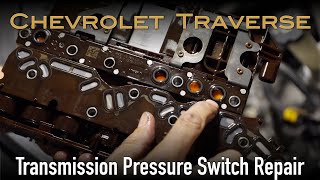
(OEM #ACDelco 24256960, 24256525, 24275860)— As per TSB #PIP4653E, the TCM is a known module to set this code on this platform. The fix may be reprogramming, but if the hardware has failed, it will need replacement. 🎬 Watch: How to repair and replace a GM transmission control module.
Trusted brands: ACDelco (OEM)
OEM price range: $400-$700
Aftermarket price range: $250-$500 - Powertrain Control Module (PCM) — If the fault is not in the TCM, the PCM is the next most likely module to have an internal RAM failure, though it is less common for this specific code on this vehicle.
Trusted brands: ACDelco
OEM price range: $500-$800
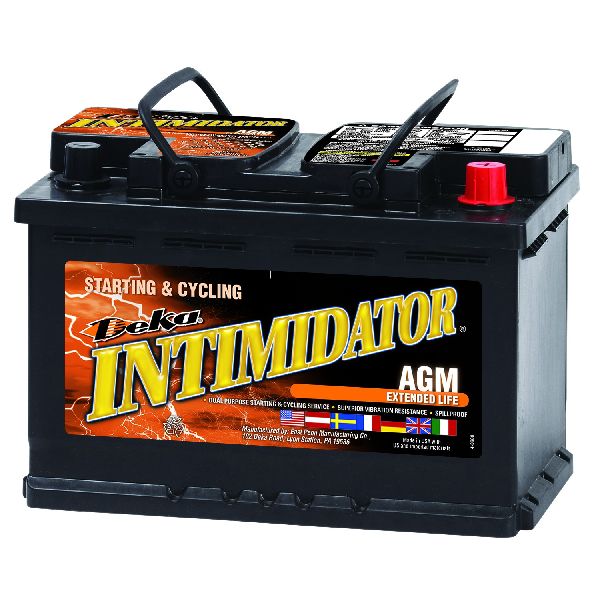
Aftermarket price range: $300-$600 - Battery — A weak or failing battery is a primary cause of voltage fluctuations that lead to this memory code. It should always be tested first.
Trusted brands: ACDelco, DieHard, Interstate
OEM price range: $200-$300
Aftermarket price range: $150-$250
Related Codes That Often Appear With This One
- P0601 — This code indicates a 'Control Module Read Only Memory (ROM) Error', another type of internal memory fault. They often appear together when a module is failing.
- P0606 — This code indicates a 'PCM/ECM Processor Fault', which is a more general internal processor error. It can be triggered by the same voltage issues or internal failures as P0604.
- U0100 — This code means 'Lost Communication With ECM/PCM'. If the PCM is malfunctioning due to an internal RAM error, it may stop communicating with other modules on the CAN bus.
- U0101 — This code means 'Lost Communication with TCM'. If the P0604 code is set in the TCM, it may cause the TCM to stop communicating with other modules. This is a very common companion code for this issue on the Regal.
Technical Service Bulletins (TSBs) & Recalls
- PIP4653E: Addresses DTCs P0601, P0603, P0604, P062F or P1621 stored in the Transmission Control Module.
- 05-06-04-060A: An informational bulletin regarding control module DTCs (including P0604) that can be shared in multiple modules.
Platform-Specific Known Issues
- Per TSB #PIP4653E, a Malfunction Indicator Lamp with DTC P0604 may be stored in the Transmission Control Module (TCM), potentially causing shifting issues. The recommended action involves verifying the code is set in the TCM and checking for software updates. [Bulletin #PIP4653E]
- TSB #05-06-04-060A is a general bulletin noting that P0604 is one of several codes that can be shared across multiple control modules, advising technicians that the fault may not be in the first module they check. [Bulletin #05-06-04-060A]
- Owners and technicians have reported that a faulty underhood fuse block can cause intermittent power loss to the TCM, leading to U0101 and P0604 codes. Wiggling the fuse block may replicate the issue.
Mechanic-Grade Diagnostic Values
- TCM/Module Ground Circuit Resistance — expected: Less than 0.1 Volts (measured as voltage drop) or near 0 Ohms to chassis ground.. Failure: A reading higher than 0.1V on a voltage drop test indicates excessive resistance in the ground circuit.
- CAN Bus High Voltage (Key On) — expected: Fluctuating between 2.5V and 3.5V. Failure: A static voltage, or one that is pulled high (e.g., to 4.2V or battery voltage) or low, indicates a module or wiring fault.
- CAN Bus Low Voltage (Key On) — expected: Fluctuating between 1.5V and 2.5V. Failure: A static voltage, or one that is pulled high or low, indicates a module or wiring fault.
- Charging System Voltage (Engine Running) — expected: 13.5V to 14.5V. Failure: Voltage below 13.5V or above 14.5V can indicate a failing alternator, which can cause electrical issues for control modules.
Scan Tool Commands That Help
- GDS2 / Techline Connect: Service Programming System (SPS) — Required after replacing the TCM or PCM to load the correct vehicle-specific software and VIN.
- GDS2 / Techline Connect: Transmission Control Module - Programming — This specific SPS function flashes the main operating software to the TCM.
- GDS2 / Techline Connect: Transmission Control Module - Configuration & Setup — This SPS function is performed after programming to configure the TCM to the specific vehicle options and perform setups.
- GDS2 / Techline Connect: Transmission Adaptive Functions (Reset) — After TCM replacement or reprogramming, the learned shift adaptives must be reset to ensure smooth shifting.
Wiring & Ground Locations
- G103 — Located at the left rear of the engine compartment on the cowl, above the brake booster.. This is a major body and control module ground. A poor connection here can cause a wide range of electrical issues, including module communication errors.
- G105 — Located at the left front of the engine compartment, behind the cooling fan relays.. While primarily for lighting and fans, ensuring all major engine bay grounds are clean is a critical step in diagnosing elusive electrical faults.
- G106 / G107 — Located on the transmission itself or on the frame rail near the transmission.. These are the primary grounds for the Transmission Control Module (TCM). A GM document for the related U0101 code specifically calls out checking these grounds as a likely cause of communication loss.
- TCM Harness Routing — On top of the transmission housing.. A GM Preliminary Information bulletin notes that the wiring harness can rub through on sharp edges of the engine block or transmission, causing shorts that lead to communication codes like U0101 and memory codes like P0604.
- X50A — Main connector at the underhood fuse block.. Power to the TCM runs through the underhood fuse block. An internal fault in the fuse block can cause an intermittent connection, and wiggling this connector or the block itself can help diagnose the issue.
Real Owner Repair Stories
- YouTube video by a professional technician (2014 Buick Regal 2.0L Turbo) — Transmission 'snaps into gear', multiple communication codes set, specifically U0101 (Lost Communication with TCM).
❌ Tried (didn't work) Initial scan showed many modules not communicating with the TCM., Checked communication wires to the TCM and found them to be good., Checked pin tension in the TCM connector and found it to be good.
✅ What actually fixed it The technician diagnosed an internally faulty underhood fuse block. While monitoring power at the TCM connector with a test light, he demonstrated that pushing and wiggling the fuse block caused the power to flicker on and off. The fuse block itself was the point of failure, not the fuses within it or the wiring to it.
"I Checked Everything" — The Actual Cause
- A common misdiagnosis pattern for this code is replacing the TCM when the actual cause is an intermittent power supply from a faulty underhood fuse block. A technician may test the TCM fuse and find it good, and test for power at the TCM connector and find it present at that moment. The failure is often intermittent and only revealed by wiggling the fuse block while monitoring TCM power, which mimics road vibrations.
Model Year Variations Within This Range
- 2011-2012 vs 2013-2017: The layout and some fuse assignments in both the passenger compartment and engine compartment fuse boxes differ between the 2011-2012 models and the facelifted 2013-2017 models. While the TCM power source is functionally similar, a technician must use the correct diagram for the specific model year to accurately locate fuses and relays.
Helpful Videos

Used OEM Parts in Stock
New Aftermarket Parts Available


The information in this article is provided for general reference and educational purposes only. Vehicle specifications, procedures, and part compatibility can vary by production date, trim level, and region. Always consult your vehicle's factory service manual and verify part numbers before purchasing or performing repairs. Safety-critical components such as airbags, seat belts, and braking systems should be installed by a qualified professional.
- Buick REGAL:
- 🧭 Diagnostic Flowchart
- 🎬 Helpful Videos
- 🛍️ Shop This Part
- What's Unique About the 2011-2015 Buick REGAL
- Symptoms You May Notice
- Most Likely Causes
- Diagnosis Steps
- Parts You'll Likely Need
- Related Codes That Often Appear With This One
- Technical Service Bulletins (TSBs) & Recalls
- Platform-Specific Known Issues
- Mechanic-Grade Diagnostic Values
- Scan Tool Commands That Help
- Wiring & Ground Locations
- Real Owner Repair Stories
- "I Checked Everything" — The Actual Cause
- Model Year Variations Within This Range
- 🎟️ Get 5% Off