

P0604 on 2013-2015 Cadillac ATS: Internal Memory Error Causes and Fixes
P0604 on a 2013-2015 Cadillac ATS indicates an internal RAM error, most often in the Transmission Control Module (TCM), which is integrated into the valve body inside the transmission pan (known as a TEHCM). Before suspecting a costly module failure, first test the battery and clean all power and ground connections, as unstable voltage is the most common trigger. If the power supply is good, the TEHCM likely needs replacement and programming, a job for a professional.
- P0604 on your ATS is a serious code that requires prompt attention.
- Always check the battery, alternator, and ground connections first. This is the most common and cheapest fix.
- Due to manufacturer TSBs, the Transmission Control Module (TCM) is the most likely faulty component if the power supply is good.
- Do not attempt to replace the TCM or PCM yourself unless you have access to professional programming tools.
- Driving with this code is a safety risk due to the possibility of stalling or unpredictable transmission behavior.
What's Unique About the 2013-2015 Cadillac ATS
While P0604 is a generic code, on many GM vehicles of this era, including the Cadillac ATS, it has a strong correlation with the Transmission Control Module (TCM). Technical Service Bulletin #PIP4653E specifically directs technicians to check for P0604 in the TCM. The key difference is that the TCM is part of the TEHCM, located inside the transmission, where it is subjected to constant heat and vibration, making it a known failure point. This means that unlike in other cars where the main engine computer might be the first suspect, on the ATS, transmission-related symptoms and the TEHCM itself should be the primary focus after ruling out basic electrical issues.
Diagnostic Flowchart
Tap your situation to follow the diagnostic path that matches what you're seeing on this vehicle.
Symptoms You May Notice
- Check Engine Light is on
- Harsh, erratic, or delayed transmission shifting
- Transmission may be stuck in one gear (limp mode)
- Vehicle may stall intermittently or fail to start
- ABS or Traction Control warning lights may illuminate
- Vehicle may not crank
- Door locks may cycle while driving
- Inability to communicate with the TCM using a scan tool
- Replacing the PCM when the code is actually set by the TCM.
- Replacing a control module before thoroughly testing the battery and charging system.
- Replacing the TEHCM without checking for loose pins at the main transmission connector as per TSB #PIC4740E.
Most Likely Causes
- Low Battery Voltage or Poor Connections 🔴 High Probability → Shop Vehicle Battery Modern vehicle electronics, especially on platforms like the ATS, are highly sensitive to voltage fluctuations. A weak battery, corroded terminals, or a bad ground can cause temporary memory corruption during startup, triggering a false P0604.
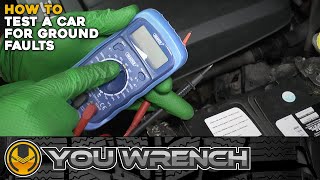
How to confirm: Test the battery with a multimeter. It should read above 12.4V with the engine off. A load test at an auto parts store is the definitive way to confirm battery health. Inspect battery terminals and main engine/chassis grounds for corrosion 🎬 See how to quickly test your car for ground faults. or looseness. Voltage should remain above 9.6V during cranking.
Typical fix: Recharge or replace the battery. Clean or tighten battery terminals and ground connections thoroughly.
Est. part cost: $5-$300 - Faulty Transmission Control Module (TCM/TEHCM) 🟡 Medium Probability → Shop Transmission Assembly Manufacturer TSBs (#PIP4653E) specifically point to the TCM as a common source for this code. The TCM is integrated into the TEHCM inside the transmission, where it is exposed to heat and vibration, leading to a higher failure rate.
How to confirm: After confirming the battery and charging system are healthy, a professional scan tool is needed to confirm the P0604 code is stored specifically in the TCM. If so, and power/grounds to the module are good, the TCM has an internal fault. An attempt to reflash the software may be made, but if it fails or the code returns, the module is condemned.
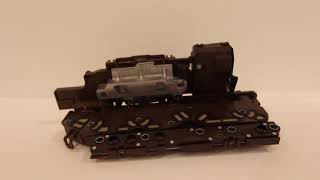
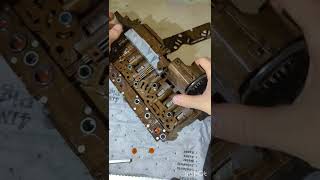
Typical fix: Replace the Transmission Electro-Hydraulic Control Module (TEHCM) and have it professionally programmed to the vehicle. This requires dropping the transmission pan. 🎬 Watch this guide on replacing GM 6-speed TEHCM and TCM units.
Est. part cost: $220-$850 - Failing Alternator ⚪ Low Probability → Shop Alternator An alternator producing unstable voltage (too high or too low) can corrupt the memory of any control module. GM's Regulated Voltage Control (RVC) system can sometimes mask a failing alternator until it's too late.
How to confirm: With the engine running, test the voltage at the battery terminals. It should be stable, typically between 13.5 and 14.7 volts, though it can vary on GM vehicles with RVC. Readings that are erratic or consistently outside this range suggest a faulty alternator.
Typical fix: Replace the alternator.
Est. part cost: $200-$500 - Faulty Powertrain Control Module (PCM) ⚪ Low Probability → Shop Engine Control Module (ECM)
How to confirm: This is a last resort after ruling out all other possibilities. If a professional scan tool confirms the code is stored in the PCM (not the TCM) and all power and ground inputs to the PCM are verified as good, the PCM itself has likely failed.
Typical fix: Replace the Powertrain Control Module and have it professionally programmed.
Est. part cost: $600-$900
Rare But Worth Checking
- Corrupted Software/Aftermarket Tune: If the vehicle has an aftermarket performance tune, it can sometimes cause memory conflicts. Reverting to the stock factory program can be a diagnostic step.
- Wiring Issue at Transmission Connector: → Shop Transmission Assembly TSB #PIC4740E notes that for the 2013-2014 ATS, unseated pins in the main transmission harness connector (X1) can cause a loss of communication, hard shifting, and set various codes. A careful 'tug test' on each wire in the connector is recommended.
- Blown Fuse or Wiring Issue: A blown fuse for the ECM/TCM or a damaged wire in the harness can cut power and trigger this code, though it's less common than a weak battery.
Diagnosis Steps
- Read all stored trouble codes with an OBD-II scanner that can access transmission codes to see which module (PCM or TCM) has set the P0604.
- Inspect the battery terminals for corrosion and tightness. Clean them thoroughly.
- Test the battery voltage with the engine off (should be >12.4V). Perform a load test to confirm its health.
- Start the engine and test the alternator output at the battery terminals (should be stable, ~13.5V-14.7V).
- Inspect the main engine and chassis ground straps for corrosion and ensure they are tight.
- Per TSB #PIC4740E, inspect the main transmission harness connector (X1). Disconnect it and gently tug each wire to ensure the pins are fully seated.
- If all power, ground, and connector checks are good, the problem is likely the control module that stored the code.
- Using a wiring diagram, verify that the suspect module (TEHCM) is receiving proper power and ground at its connector.
- If an updated software calibration is available, a reflash may be attempted. If this fails or the code returns, the module has an internal fault and must be replaced.
Parts You'll Likely Need
- Battery — A weak or failing battery is the most common cause of voltage instability that triggers a false P0604 code.
Trusted brands: ACDelco, Interstate, DieHard
OEM price range: $200-$300
Aftermarket price range: $150-$250 - Transmission Control Module (TCM/TEHCM)
(OEM #24279191)— If the battery and charging system are good, a faulty TCM (as part of the TEHCM assembly) is the next most likely cause, as indicated by GM service bulletins. It is located inside the transmission.
Trusted brands: ACDelco, GM Genuine Parts
OEM price range: $400-$850
Aftermarket price range: $220-$500 - Powertrain Control Module (PCM/ECM) — A less common but possible cause if the code is confirmed to originate in the PCM and not the TCM. Average replacement cost is estimated between $794 and $874 including labor.
Trusted brands: ACDelco, GM Genuine Parts
OEM price range: $600-$900
Aftermarket price range: $400-$700
Related Codes That Often Appear With This One
- P0700 — This is a generic 'Transmission Control System Malfunction' code. The TCM sends this code to the PCM to request the Check Engine Light be turned on when it has stored a fault like P0604.
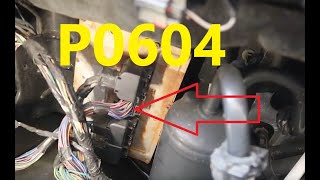
- P0601, P0603, P062F, P1621 — These are all related internal control module errors. 🎬 Watch: Understanding P0604 internal memory errors and common fixes. TSB #05-06-04-060A and #PIP4653E group them as related faults that can be set in the TCM.
- U-series codes (e.g., U0100, U0101) — If the failing TEHCM is also responsible for network communication, you may see communication loss codes with other modules on the vehicle. TSB #PIC4740E lists many U-codes that can result from a bad connection at the transmission.
Technical Service Bulletins (TSBs) & Recalls
- Bulletin #05-06-04-060A: An informational bulletin explaining that P0604 is one of several internal control module codes (P0601, P0602, etc.) that can be set in various modules. It advises technicians to be careful to diagnose the correct module before replacement.
- Bulletin #PIP4653E: Specifically directs technicians to investigate the Transmission Control Module (TCM) when P0604 is found, especially on 2013 models and other GM platforms. It groups P0604 with P0601, P0603, P062F, or P1621 as codes that may be stored in the TCM.
- Bulletin #PIC4740E: Details a potential cause for no-crank, hard shifting, and communication loss on 2013-2014 ATS models due to unseated pins in the transmission harness connector. This can cause symptoms similar to a failed TCM.
Platform-Specific Known Issues
- TEHCM Location and Failure: On the Cadillac ATS with the 6L45 automatic transmission, the TCM is not a standalone module. It is integrated into the Transmission Electro-Hydraulic Control Module (TEHCM) located inside the transmission oil pan. This location subjects the electronics to significant heat and vibration, which is a primary contributor to its failure over time, leading to codes like P0604.
- Transmission Harness Connector Pins: → Shop Transmission Assembly GM TSB #PIC4740E specifically addresses issues on the 2013-2014 ATS where pins in the main transmission harness connector can become unseated. This can cause a wide range of communication and shifting problems, including codes like P0604, and should be checked before condemning the TEHCM.
Mechanic-Grade Diagnostic Values
- CAN Bus High Voltage (Key On) — expected: 2.5V to 3.5V. Failure: A nominal voltage pulled significantly higher, for example to 4.2V, indicates a module is dragging the network down.
- CAN Bus Low Voltage (Key On) — expected: 1.5V to 2.5V. Failure: A nominal voltage pulled significantly away from the expected 2.5V midpoint.
- TCM/TEHCM Power/Ground Voltage Drop — expected: Less than 0.2V. Failure: A voltage drop greater than 0.2V can cause communication errors and false codes.
Scan Tool Commands That Help
- GM GDS2 (Global Diagnostic System 2): Service Programming System (SPS2) — This function, accessed via Techline Connect, is required to either update existing module software (Reprogram) or to configure a new TEHCM to the vehicle after replacement (Replace and Program).
- GM GDS2 (Global Diagnostic System 2): Clear All DTCs — This should be performed after a successful programming event to clear any lingering fault codes set during the process.
Wiring & Ground Locations
- G110 — On the left rear of the engine's cylinder head (for 3.6L V6). It is a common source of poor ground connections, sometimes due to aftermarket components being improperly mounted to it.. A poor engine or module ground is a primary cause of intermittent electronic faults and memory codes like P0604.
- G107 — On the front of the right cylinder head (for 3.6L V6).. This is another critical engine ground point that provides a return path for various control modules and sensors.
- G104 — An engine ground point specifically called out for inspection on 2013 models.. A TSB highlights this ground for potential issues like contamination under the eyelet, which can cause intermittent power steering and other electronic faults.
- X1 (Transmission Connector) — The main 16-pin electrical connector on the outside of the transmission case.. TSB #PIC4740E specifically warns that unseated pins in this connector are a known cause of communication loss with the TCM (U0101), hard shifting, and numerous other codes.
"I Checked Everything" — The Actual Cause
- In an advanced diagnostic scenario on a GM vehicle, the main power and ground pins to the TCM tested good, yet the module would not communicate reliably. The actual cause was an internal failure of the TCM's sensor ground circuit. This fault caused the CAN bus voltage to be pulled high, disrupting the entire network. The problem was identified by observing the abnormal CAN bus voltage on an oscilloscope and temporarily fixed by providing an external ground to a sensor's low-reference wire, which stabilized the network and proved the TCM was internally faulted.
OEM Part Supersession History
24279191→Varies— N/A
Heads up: When replacing the TEHCM, parts catalogs may list multiple part numbers for the same transmission. While they may physically fit, the internal circuitry and programming structure can differ. Installing the wrong part number will result in communication failures. Always verify the correct replacement by matching the OE part number off the original unit or by using the vehicle's VIN.
Model Year Variations Within This Range
- 2013: For 2013 models with 4-cylinder engines (LCV, LTG) and automatic transmissions, the location of a key engine ground was changed mid-year. Early production (through mid-Dec 2012) has the ground at the front of the engine; later production has it at the rear.
Helpful Videos
Used OEM Parts in Stock
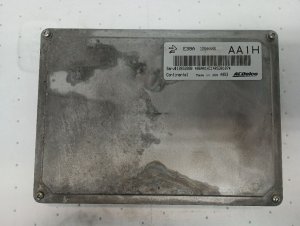
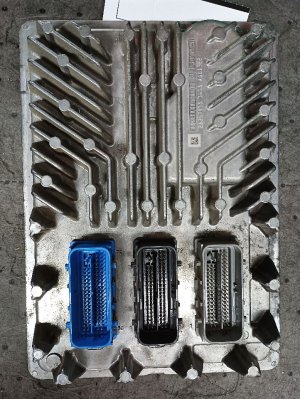
New Aftermarket Parts Available
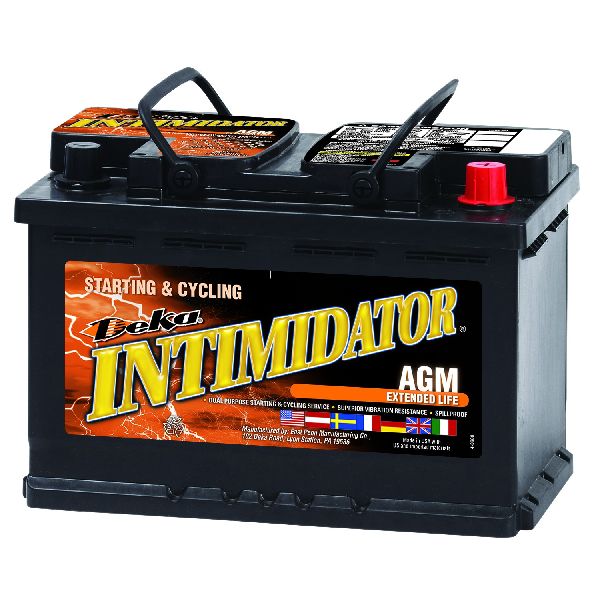
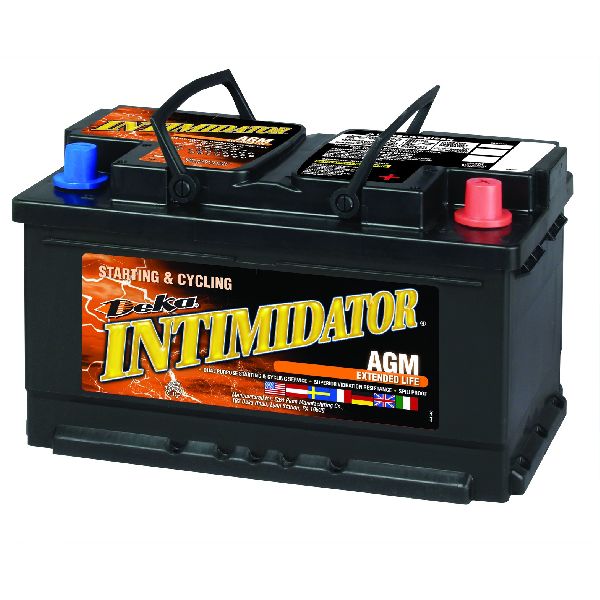



The information in this article is provided for general reference and educational purposes only. Vehicle specifications, procedures, and part compatibility can vary by production date, trim level, and region. Always consult your vehicle's factory service manual and verify part numbers before purchasing or performing repairs. Safety-critical components such as airbags, seat belts, and braking systems should be installed by a qualified professional.
- Cadillac ATS:
- 🧭 Diagnostic Flowchart
- 🎬 Helpful Videos
- 🛍️ Shop This Part
- What's Unique About the 2013-2015 Cadillac ATS
- Symptoms You May Notice
- Most Likely Causes
- Rare But Worth Checking
- Diagnosis Steps
- Parts You'll Likely Need
- Related Codes That Often Appear With This One
- Technical Service Bulletins (TSBs) & Recalls
- Platform-Specific Known Issues
- Mechanic-Grade Diagnostic Values
- Scan Tool Commands That Help
- Wiring & Ground Locations
- "I Checked Everything" — The Actual Cause
- OEM Part Supersession History
- Model Year Variations Within This Range
- 🎟️ Get 5% Off