

P0604 on 2013-2019 Cadillac ATS: Internal Memory Error Causes and Fixes
On a 2013-2019 Cadillac ATS, code P0604 indicates a RAM error in a control module, most often the Transmission Control Module (TCM/TEHCM). The most common cause is a weak battery or bad electrical connection, not a failed module. Always test the battery and clean connections before considering expensive repairs. If the power supply is good, the TEHCM inside the transmission is the next likely culprit.
- P0604 on a Cadillac ATS is a serious code, but do not assume the most expensive part has failed.
- Always start diagnosis by thoroughly testing the battery and inspecting all power and ground connections. This is the most common and cheapest fix.
- A professional scan tool is necessary to see which module (PCM or TCM) is at fault. On the ATS, it is most often the TCM.
- If a module must be replaced, it will require professional programming to function in the vehicle.
- Do not continue to drive the vehicle, as it may stall or shift unpredictably, creating a safety hazard.
What's Unique About the 2013-2019 Cadillac ATS
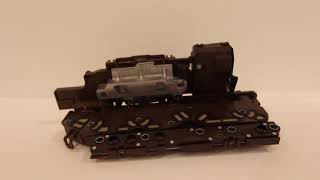
On the Cadillac ATS, the P0604 code has a strong tendency to point toward the transmission rather than the main engine computer. The Transmission Control Module (TCM) is not a separate external box but is integrated with the valve body inside the transmission oil pan. This complete assembly is known as the TEHCM (Transmission Electro-Hydraulic Control Module). Due to this design, the module is constantly subjected to heat cycles and vibration, making it a point of failure. Any issue with the TEHCM is more involved than swapping an external module, requiring removal of the transmission pan and fluid. A key difference exists between model years: 2013-2015 models use the 6L45 6-speed transmission, while 2016-2019 models use the 8L45 8-speed transmission, each with a unique TEHCM.
🎬 See this overview of 6-speed transmission TEHCM replacements.Symptoms You May Notice
- Check Engine Light is on
- Transmission shifts harshly or erratically
- Vehicle enters 'limp mode' and is stuck in one gear (often second gear)
- Engine stalls, misfires, or has intermittent starting issues
- No-start or hard-start condition
- ABS or Traction Control warning lights may illuminate
- Service Transmission message on the driver information center (DIC)
- Immediately replacing the PCM without checking if the code was set by the TCM.
- Replacing the TCM/TEHCM or PCM without first performing a thorough load test on the battery and inspecting all related power/ground connections for voltage drop.
Most Likely Causes
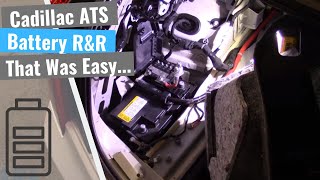
- Low Battery Voltage or Poor Electrical Connections 🔴 High Probability → Shop Vehicle Battery Modern GM control modules are highly sensitive to voltage. A weak battery, corroded terminals, or a bad ground strap can cause temporary memory corruption during startup, triggering a false P0604 code before the module itself has failed. This is the most common trigger and should always be the first check. 🎬 Watch: Step-by-step guide to Cadillac ATS battery replacement.
How to confirm: With the engine off, test the battery voltage with a multimeter; it should be above 12.4V. A professional load test is recommended. With the engine running, check alternator output; it should be stable between 13.5V and 14.5V. Inspect and clean all battery terminals, main power connections, and chassis ground straps, paying close attention to the main engine-to-frame ground. 🎬 Watch: How a loose ground cable causes no-start issues.
Typical fix: Charge or replace the battery. Clean or replace corroded terminals and ground straps.
Est. part cost: $20-$250 - Faulty Transmission Control Module (TCM/TEHCM) 🟡 Medium Probability → Shop Transmission Assembly GM service bulletins for similar platforms frequently point to the TCM as the source of P0604. On the ATS, this module is located inside the transmission, where it is exposed to significant heat and vibration, which can lead to internal solder joint failure or electronic component degradation over time. Early models (2013-2015) are noted to have more transmission-related issues. Manufacturer service bulletin #PIP4653E specifically notes that technicians may find P0604 stored in the Transmission Control Module and must verify the code is set in the transmission before proceeding.
How to confirm: If the battery and connections are good, a professional scan tool is needed to confirm the code is being set by the TCM. The technician may attempt a software reflash before condemning the hardware. If the reflash fails or the code returns immediately, the TEHCM has failed internally.
Typical fix: Replacement of the TEHCM assembly, which includes the TCM, valve body, and solenoids. This must be followed by a programming procedure (SPS - Service Programming System) to sync the new module with the vehicle's VIN and other modules.
Est. part cost: $400-$900
Rare But Worth Checking
- Faulty Powertrain Control Module (PCM): → Shop Engine Control Module (ECM) While less common for this code on this platform, the PCM can still be the source of a RAM error. Diagnosis should rule out the battery and TCM first, as they are far more likely culprits.
- Corrupted Software or Aftermarket Tune: A failed software update or a poorly written aftermarket engine/transmission tune can corrupt the module's memory and trigger this code. Reverting to the stock factory program can sometimes resolve the issue. Owners using tuning devices are advised to return to the stock tune before any dealer service.
- Wiring Harness Issues: Though rare, damage to the wiring harness leading to the transmission can cause communication errors or voltage drops that mimic a module failure. A related TSB for the Cadillac CTS (PIC4740F) points to unseated pins in the main transmission connector as a cause for similar codes and symptoms.
Diagnosis Steps
- Connect a professional OBD-II scanner capable of reading manufacturer-specific codes to determine which module (PCM or TCM) has stored the P0604 code. This is the most critical first step.
- Perform a complete battery and charging system test. Test the battery (must be >12.4V engine off) and alternator output (13.5V-14.5V engine on). A battery load test is essential.
- Inspect all battery terminals, cable ends, and primary chassis/engine ground straps for corrosion, security, and integrity. Perform a voltage drop test on the ground circuit to ensure it's under 0.2V.
- Check for relevant Technical Service Bulletins (TSBs) like 05-06-04-060A, which provides general guidance on internal module failure codes.
- If the power supply is confirmed good, check for any available software updates (re-flash) for the module that set the code. A GM dealer or specialist shop with an ACDelco TDS subscription can perform this.
- If the code persists after a re-flash, or if the re-flash fails, the module that stored the code (most likely the TCM/TEHCM) is faulty.
- If the TEHCM is suspected, the transmission pan must be removed for inspection and replacement.
- After replacement, the new module must be programmed to the vehicle's VIN using GM's Service Programming System (SPS). This must be followed by a 'Transmission Service Fast Learn' procedure using a scan tool.
Parts You'll Likely Need
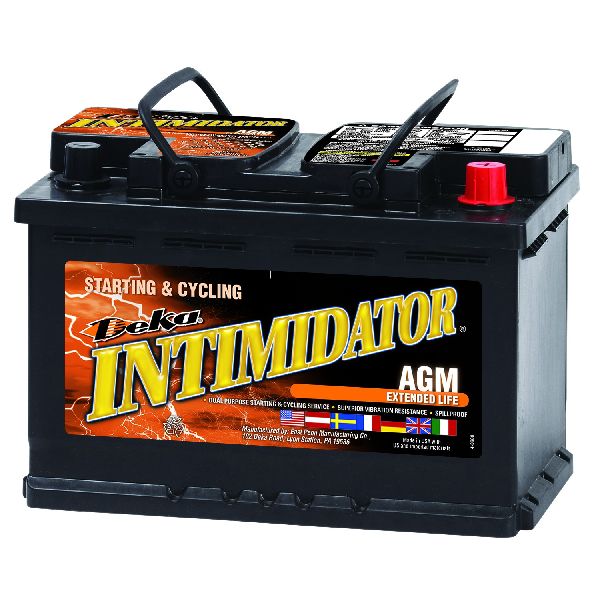
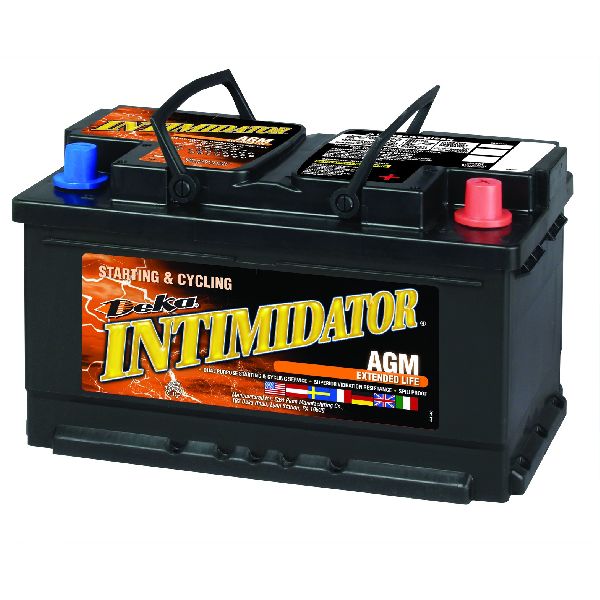
- Vehicle Battery — The most common cause of a P0604 code is unstable voltage from a weak or failing battery.
Trusted brands: ACDelco, Interstate, DieHard
OEM price range: $200-$300
Aftermarket price range: $150-$250 - Transmission Electro-Hydraulic Control Module (TEHCM)
(OEM #24291306 (supersedes 24287422, 24279191))— If the battery and connections are good, the internal TCM, which is part of the TEHCM, is the next most likely cause on this vehicle. Note: This part number is for the 6L45 transmission (2013-2015). The 8L45 (2016-2019) uses a different part.
Trusted brands: ACDelco (GM Original Equipment)
OEM price range: $500-$900
Aftermarket price range: $400-$700
Related Codes That Often Appear With This One
- U0100 — Lost Communication With ECM/PCM. If the module setting P0604 is failing, it may also stop communicating with other modules on the CAN bus, triggering a U-code.
- P0700 — Transmission Control System Malfunction. This is a general code indicating the TCM has detected a fault and has requested the Check Engine Light be turned on. It is almost always present when the TCM sets a specific code like P0604.
- P0602 — Control Module Programming Error. This can appear alongside P0604 if the issue is related to a software glitch or a failed reprogramming attempt.
Technical Service Bulletins (TSBs) & Recalls
- 05-06-04-060A: An informational bulletin for technicians explaining that internal failure DTCs (including P0604) can be set by multiple modules. It stresses the importance of using a scan tool to identify the specific module that set the code before starting diagnosis and advises checking for low voltage conditions first.
- Bulletin #PIP4653E: This manufacturer bulletin provides information to technicians regarding vehicles with the Malfunction Indicator Lamp on and DTC P0604 stored in the Transmission Control Module. It emphasizes the need to ensure the code is specifically set in the transmission.
- PIC4740F: While addressing communication codes, this TSB is highly relevant as it points to unseated pins in the main transmission connector (X1) as a cause for no-crank, hard shifting, and multiple warning lights on the 2013-2015 ATS. This should be checked before condemning a module.
Platform-Specific Known Issues
- Owner Experience with P0604: A user on CadillacForums with a 2013 ATS 2.0T reported a P0604 code accompanied by a no-start condition. After confirming the battery was healthy, the dealer diagnosed a failed Transmission Control Module. The repair involved replacing the entire valve body assembly (TEHCM) inside the transmission, which resolved the issue.
Mechanic-Grade Diagnostic Values
- Control Module Power/Ground Circuit Voltage Drop — expected: < 200mV (0.2V). Failure: A reading higher than 200mV indicates excessive resistance in the circuit, which can cause module malfunction.
- TEHCM Shift Solenoid (On/Off type) Resistance — expected: 20-40 Ω. Failure: A reading outside this range indicates a failed solenoid within the TEHCM, requiring module replacement.
- TEHCM Shift and Line Pressure Solenoid (PWM type) Resistance — expected: 3-8 Ω. Failure: A reading outside this range indicates a failed solenoid within the TEHCM, requiring module replacement.
Hidden / Shadow Codes Worth Checking
- Symptom Byte (e.g., 0x5A): A 2-digit hexadecimal code that provides more specific detail about the nature of the internal fault. For example, 0x5A can mean 'Internal Electronic Failure'. This helps differentiate between a software glitch and a hard hardware failure. (see via GM GDS2 or equivalent professional scan tool. It is displayed along with the primary DTC.)
Scan Tool Commands That Help
- GDS2 (GM Techline Connect): Service Programming System (SPS) — This is a mandatory procedure after replacing the TCM/TEHCM or PCM. It downloads the correct VIN-specific software and calibration files to the new module.
- GDS2 (GM Techline Connect): Transmission Service Fast Learn — This procedure must be performed after programming a new TEHCM. It allows the new module to learn the specific hydraulic and mechanical characteristics of the clutches, ensuring proper shift quality.
Wiring & Ground Locations
- X184 — The main 16-pin electrical connector located on the passenger side of the transmission case.. This is the primary interface for the TEHCM. TSB PIC4740F identifies unseated pins or corrosion in this connector as a cause for communication loss and erratic behavior, which can mimic a P0604 fault.
- G104 / G107 — Primary engine-to-chassis grounds. For the 2.0L LTG, a key ground is located on the engine block. For 2013 models, the location moved from the front to the rear of the engine mid-year. A poor connection here can cause voltage instability for all modules.. Unstable ground connections are a primary cause of transient voltage issues that can corrupt module memory and trigger a false P0604. TSB PI1097A highlights the importance of inspecting these grounds, noting they must be unbolted to check for hidden corrosion.
Real Owner Repair Stories
- CadillacForums user (2013 Cadillac ATS 2.0T) — No-start condition, P0604 code stored.
❌ Tried (didn't work) Initial diagnosis confirmed the battery was healthy.
✅ What actually fixed it The dealer diagnosed a failed Transmission Control Module (TCM). Replacing the entire TEHCM assembly inside the transmission resolved the no-start condition and cleared the code. - YouTube channel 'Final Stop Mobile Auto Tech LLC' (2016 Cadillac ATS (with a 2017 engine swapped in)) — Crank-no-start condition after an engine replacement. The vehicle had been at a dealer for 3 months, who could not figure it out.
❌ Tried (didn't work) Engine replacement., Dealer diagnosis for 3 months.
✅ What actually fixed it The actual root cause was a failed fuel rail pressure sensor that was reading a constant 3,800 PSI, preventing the engine from starting. While not a P0604 case, this story is a valuable example of a complex no-start issue on this platform being caused by a simple sensor, not a major module.
OEM Part Supersession History
24279191, 24287422→24291306— Internal revisions by GM/ACDelco to improve reliability and address common failure modes. These updates often involve improved internal components or logic.
Heads up: These part numbers are specific to the 6L45 transmission used in 2013-2015 models. They are not compatible with the 8L45 transmission in 2016-2019 models.
Model Year Variations Within This Range
- 2013-2015: These models use the GM 6L45 6-speed automatic transmission. The TEHCM is part number 24291306 or a predecessor. These early model years are reported to have more transmission and electrical issues.
- 2016-2019: These models use the GM 8L45 8-speed automatic transmission. This transmission uses a different TEHCM and has its own set of potential issues, including a class-action lawsuit related to harsh shifting and torque converter problems. While P0604 can still occur, the specific part and software are different from earlier models.
Diagnostic Flowchart
Other Known Issues on This Vehicle
Issues unrelated to this code that are worth knowing about as an owner of this generation:
- Cracked Pistons / Pre-Ignition 🔴 High — More common on early 2013-2014 models. Can occur at low mileage. Failure often presents as a misfire and can lead to complete engine replacement. (Ref: GM Program #14591 (NHTSA #10113571): Reprogram ECM and install colder spark plugs to prevent pre-ignition damage.)
- CUE Infotainment Screen Delamination/Cracking 🟠 Medium — Extremely common across 2013-2017 models. The screen develops 'spider web' cracks or becomes unresponsive to touch, often starting near the edges. (Ref: GM TSB #PI1120B: Acknowledges the condition of bubbling, cracking, or delamination and provides instructions for replacement. A class-action lawsuit was also filed regarding this issue.)
- Rear Differential Failure/Leak 🔴 High — Commonly reported issue involving whining/grinding noises or fluid leaks from axle seals or the differential cover. Can lead to complete failure requiring replacement.
- Timing Cover Oil Leak 🟡 Low — A frequent oil leak develops from the front timing cover gasket. It's often a slow seep rather than a major leak but is a common nuisance.
- Carbon Buildup on Intake Valves 🟠 Medium — As a direct-injection engine, the LTG is prone to carbon buildup over time (typically noticeable after 70,000 miles), which can cause rough idle, misfires, and a gradual loss of performance.
Used vs. New Parts: Buying Guide for This Vehicle
When a used part is the smart pick: For this specific repair, a used part is almost never a smart choice. The primary failure part, the TEHCM, is a high-failure item that is electronically programmed to the original vehicle's VIN.
Donor-vehicle mileage cap: roughly under 30000 miles for the part to have meaningful remaining life.
What to inspect on the donor part:
- If considering a used TEHCM against professional advice, it must come from a specialist who has 'virginized' (reset) it and offers a warranty.
- Never buy a used TEHCM from a junkyard vehicle without a plan for reprogramming, as it will not function in a different car without being unlocked and then programmed via SPS.
OEM-only on this vehicle (don't cheap out):
- Transmission Electro-Hydraulic Control Module (TEHCM): Due to VIN-locking, high failure rates of used units, and mandatory programming, only a new OEM ACDelco part should be used.
Aftermarket brands forum-validated for this vehicle:
- For the battery, brands like ACDelco (OEM), Interstate, and DieHard are consistently recommended.
Brands owners have reported issues with on this vehicle:
- Avoid no-name, unverified TEHCM 'rebuilders' from online marketplaces. The risk of receiving a unit that cannot be programmed or fails quickly is very high.
Real Owner Stories
Aggregated from forums and TSBs cited above. Mileages and costs reflect what owners reported in those sources.
2013 Cadillac ATS 2.0T
Symptoms: P0604 code accompanied by a no-start condition. The owner confirmed the battery was healthy before seeking further diagnosis.
What fixed it: The dealer diagnosed a failed Transmission Control Module and replaced the entire valve body assembly (TEHCM) inside the transmission.
Source hint: CadillacForums thread titled '2013-ats-2-0-turbo-no-start-p0604-code'
Related OBD-II Codes
Frequently Asked Questions
Does TSB 05-06-04-060A apply to my Cadillac ATS if I have a P0604 code?
Could the 'Service Transmission' message and P0604 on my 2014 ATS be caused by a simple wiring issue instead of a failed module?
Is there a software update to fix the P0604 code on the LTG 2.0L Turbo engine?
Why is my 2013 ATS stuck in second gear with a P0604 code?
Can a weak battery trigger a P0604 code on my Cadillac?
What is involved in replacing the module responsible for P0604 in the ATS transmission?
Helpful Videos
We Have This Part in Stock


The information in this article is provided for general reference and educational purposes only. Vehicle specifications, procedures, and part compatibility can vary by production date, trim level, and region. Always consult your vehicle's factory service manual and verify part numbers before purchasing or performing repairs. Safety-critical components such as airbags, seat belts, and braking systems should be installed by a qualified professional.
- Cadillac ATS:
- 🧭 Diagnostic Flowchart
- 🎬 Helpful Videos
- 🛍️ Shop This Part
- What's Unique About the 2013-2019 Cadillac ATS
- Symptoms You May Notice
- Most Likely Causes
- Rare But Worth Checking
- Diagnosis Steps
- Parts You'll Likely Need
- Related Codes That Often Appear With This One
- Technical Service Bulletins (TSBs) & Recalls
- Platform-Specific Known Issues
- Mechanic-Grade Diagnostic Values
- Hidden / Shadow Codes Worth Checking
- Scan Tool Commands That Help
- Wiring & Ground Locations
- Real Owner Repair Stories
- OEM Part Supersession History
- Model Year Variations Within This Range
- Other Known Issues on This Vehicle
- Used vs. New Parts: Buying Guide for This Vehicle
- Real Owner Stories
- 2013 Cadillac ATS 2.0T
- Related OBD-II Codes
- Frequently Asked Questions
- 🎟️ Get 5% Off