

P0604 on 2015-2018 Cadillac Escalade: Internal RAM Error Causes and Fixes
P0604 on a 2015-2018 Escalade indicates a memory error in a control module, often the ECM or TCM. Before replacing any expensive modules, check the battery, alternator, and all power/ground connections first, as unstable voltage is the most common and cheapest cause to fix. TSB PIP5609 directly advises checking these connections before condemning the ECM.
- P0604 indicates an internal memory error in a control module, but the module itself is not always the root cause.
- Always start your diagnosis by thoroughly checking the battery, alternator, and all power/ground connections to the ECM and TCM. This is the most common cause and the cheapest fix.
- This code is considered serious. The vehicle may stall or fail to start, so continued driving is not recommended.
- If a control module (ECM or TCM) needs to be replaced, it must be programmed to your Escalade's VIN by a professional.
- Consult the provided TSBs, as they give specific diagnostic direction from GM to check electrical connections before replacing parts.
What's Unique About the 2015-2018 Cadillac ESCALADE
On this K2XX platform generation of Cadillac Escalade, manufacturer technical service bulletins (TSBs) are explicit that P0604 can be set in either the Engine Control Module (ECM) or the Transmission Control Module (TCM). TSB #PIP5609 specifically instructs technicians that when diagnostics point toward ECM replacement for a P0604 code, they must first verify all power and ground circuits and check for connection issues before replacing the module. This indicates GM is aware that intermittent power/ground loss can mimic an internal module failure, aiming to prevent unnecessary expensive repairs. The 8L90 8-speed transmission uses a T87A TCM, which is a separate module, unlike the integrated TEHCM in previous generations.
Diagnostic Flowchart
Tap your situation to follow the diagnostic path that matches what you're seeing on this vehicle.
Symptoms You May Notice
- Check Engine Light is on
- Vehicle may not start or may be hard to start
- Engine may stall intermittently or die when stopped
- Harsh or erratic transmission shifting
- Transmission may enter 'limp mode' (stuck in one gear)
- ABS or Traction Control light may activate
- Stabilitrak service message may appear on the dash
- Radio clock may reset or other seemingly unrelated electrical issues may occur due to voltage fluctuations
- Replacing the ECM or TCM without first exhaustively testing the battery, alternator, and all related power and ground connections. Unstable voltage or a bad ground is a very common cause and is much cheaper to fix than a module replacement.
Most Likely Causes
- Low or Unstable Battery Voltage 🔴 High Probability → Shop Vehicle Battery Control modules in modern vehicles like the K2XX Escalade are highly sensitive to voltage fluctuations. A weak battery, failing alternator, or poor connections can corrupt the module's RAM during startup self-tests or operation. This is the most common and cheapest potential cause to fix.
How to confirm: Test the battery with a multimeter; it should read above 12.4 volts with the engine off. With the engine running, voltage should be stable between 13.5 and 14.5 volts, though GM's regulated voltage control can cause this to vary. A definitive load test at an auto parts store is recommended. Check battery terminals for corrosion and tightness.
Typical fix: Clean battery terminals and cable ends. Charge or replace the battery if it fails a load test.
Est. part cost: $150-$350 - Poor ECM/TCM Power or Ground Connections 🟡 Medium Probability GM Technical Service Bulletin #PIP5609 specifically advises technicians to inspect the engine control module's electrical connections and verify proper powers and grounds when this code appears. Forum discussions for platform-mates like the Tahoe/Yukon frequently cite corroded or loose ground straps on the frame as the source of various electrical issues that can trigger module faults.
How to confirm: Visually inspect the wiring harnesses and connectors at the ECM and TCM for any signs of corrosion, damage, or looseness. Use a multimeter to perform a voltage drop test on the main power and ground circuits for each module to ensure there is no excessive resistance (should be < 0.1 Ω). Key ground locations on these trucks include points on the frame under the driver's door and on the engine block.
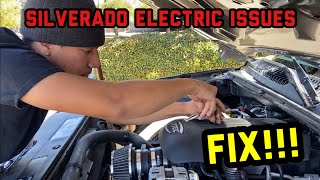
Typical fix: Clean the corroded connectors or ground points with a wire brush, re-secure them tightly, and apply a protective coating. Repair any damaged wires. A common failure point is the main negative battery cable which has multiple ground connections. 🎬 Watch: How to fix common GM truck electrical and ground issues.
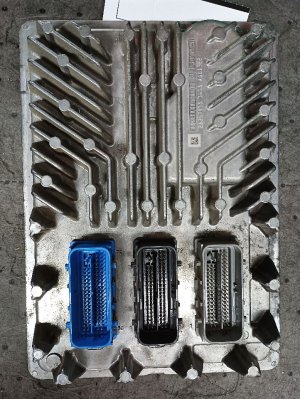
Est. part cost: $0-$100 - Faulty Engine Control Module (ECM) 🟡 Medium Probability → Shop Engine Control Module (ECM) Internal hardware failure of the E92-type ECM can occur over time due to heat cycles, vibration, or voltage spikes. TSB #PIP5609 confirms this is a potential outcome after all electrical checks have been exhausted.
How to confirm: This is the last diagnostic step after confirming the battery, charging system, and all related wiring are in perfect condition. Diagnosis requires an advanced scan tool to confirm the P0604 code is originating from the ECM and to run internal self-tests if available.
Typical fix: Replace the faulty ECM. The new module will require programming to the vehicle's VIN by a dealer or a qualified shop with the correct tools (e.g., GM MDI with a subscription to ACDelco TDS/Techline Connect). Several relearn procedures like crankshaft position variation learn are also required.
Est. part cost: $400-$1000 - Faulty Transmission Control Module (TCM) ⚪ Low Probability → Shop Transmission Assembly While less common than the ECM for this specific code, TSB #PIP4653E notes that P0604 can be stored in the T87A TCM used with the 8L90 transmission. If transmission-specific symptoms are dominant, the TCM is a stronger suspect.
How to confirm: Use a professional scan tool to isolate the P0604 code specifically to the TCM. Verify all power and ground connections to the TCM are solid before condemning the module.
Typical fix: Replace the faulty T87A TCM. Like the ECM, the new module must be programmed to the vehicle's VIN.
Est. part cost: $250-$600
Rare But Worth Checking
- Aftermarket Engine/Transmission Tune: → Shop Transmission Assembly If the vehicle has been modified with an aftermarket performance tune, the custom software can sometimes cause memory conflicts or corruption, triggering a P0604 code. Reverting to the stock factory program can be a valid diagnostic step to rule this out.
- Failing Alternator: → Shop Alternator An alternator that is failing can produce excessive AC ripple or unstable DC voltage, which can corrupt the memory in sensitive control modules. This should be tested if battery issues are suspected; output should be stable and generally between 13.5V and 14.5V.
Diagnosis Steps
- Check Battery Health: Fully charge and load test the battery. Ensure terminals are clean and tight. A weak battery is a primary cause of memory codes.
- Inspect Charging System: With the engine running, check the alternator output. It should be stable, typically between 13.5V and 14.5V.
- Scan for All Codes: Use a professional-grade OBD-II scanner to read codes from all modules (ECM, TCM, BCM, etc.). Note which module specifically stored the P0604 code. This is critical for diagnosis.
- Inspect Wiring and Grounds: Following TSB #PIP5609, carefully inspect the main connectors and wiring harnesses for the ECM and TCM. Locate and clean the main engine and chassis ground points. On K2XX trucks, key grounds are on the frame under the driver's door and on the engine block near the front.
- Perform Voltage Drop Tests: Check the power and ground circuits at the suspect module's connector to ensure it's receiving clean, stable voltage. Voltage should not drop below 9V during cranking, and ground resistance should be below 0.1 Ω.
- Check for Aftermarket Tunes: If the vehicle has an aftermarket programmer, flash it back to the stock tune to see if the code disappears.
- Condemn the Module: If all previous steps pass and the code consistently returns immediately after clearing, the control module itself is likely faulty. Replacement is the only solution.
- Program New Module: A new ECM or TCM must be professionally programmed to the vehicle's VIN to function correctly. This requires a GM MDI tool and a software subscription. After programming, procedures like crankshaft position variation learn and theft deterrent relearn must be performed. 🎬 Watch: Professional walkthrough of a GM ECM swap and programming.
Parts You'll Likely Need
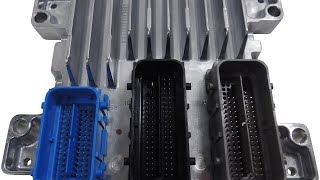
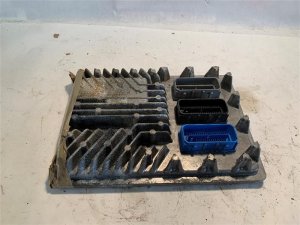
- Engine Control Module (ECM)
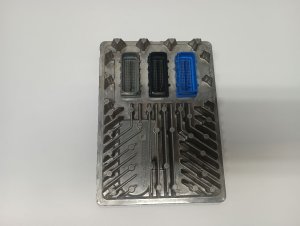
(OEM #12672733 (example, VIN-specific))— If all electrical checks pass, the ECM's internal RAM has likely failed, requiring module replacement. Part number is VIN-specific. The ECM for this platform is an ACDelco E92 type.
Trusted brands: ACDelco
OEM price range: $500-$800
Related Codes That Often Appear With This One
- P0601 — This code indicates an Internal Control Module Memory Check Sum Error. Both P0601 and P0604 point to internal module faults and are often listed together in TSBs.
- P0603 — This code indicates an Internal Control Module Keep Alive Memory (KAM) Error. It's another memory-related fault that can be caused by power supply interruptions.
- P0606 — This code indicates a general ECM/PCM Processor Fault. It's a more severe internal error, and TSB #PIP5609 groups it with P0604 as a potential module issue.
- P16F3 — This is a GM-specific code often related to control module redundancy checks. It can appear alongside internal processor codes like P0604 per TSB #PIP5609.
- P0700 — This is a generic code from the ECM indicating the Transmission Control Module (TCM) has stored a fault. It will be present if the P0604 code originated in the TCM.
Technical Service Bulletins (TSBs) & Recalls
- PIP5609: Advises that before replacing the ECM for P0604 (and other codes), technicians MUST verify all power and ground circuits and check for connection issues, as low voltage or momentary power loss can cause these DTCs.
- 05-06-04-060A: An informational bulletin noting that internal module DTCs like P0604 can be shared among multiple modules, which can complicate diagnosis.
- PIP4653E: Provides information that DTCs P0601, P0603, P0604, etc., can be stored in the Transmission Control Module (TCM) and may be resolved by reprogramming the TCM if the codes are isolated there.
Platform-Specific Known Issues
- Grounding Issues on K2XX Platform: Owners on forums for the Escalade and its platform-mates (Tahoe, Yukon, Silverado) report that various strange electrical problems, including module communication errors, can be traced back to poor ground connections. A common trouble spot is the ground strap on the frame rail under the driver-side door, which is exposed to the elements and can corrode. Cleaning this ground point has resolved issues for some owners.
- Negative Battery Cable Failure: → Shop Vehicle Battery A known issue on these GM trucks is internal corrosion or failure of the main negative battery cable assembly. This can cause intermittent no-start conditions, flickering lights, and various module error codes as the vehicle loses its primary ground connection. One owner on YouTube detailed how replacing this cable resolved multiple electrical gremlins.
Mechanic-Grade Diagnostic Values
- ECM/TCM Power Supply Voltage (engine off) — expected: >12.4 Volts. Failure: Voltage below 12.4V indicates a weak battery, a primary cause of memory codes.
- ECM/TCM Power Supply Voltage (engine running) — expected: 13.5V - 14.5V (stable). Failure: Voltage that is unstable, too low, or too high indicates a charging system problem that can corrupt module memory.
- ECM/TCM Power Supply Voltage (during cranking) — expected: > 9.0 Volts. Failure: Voltage dropping below 9.0V during cranking can cause modules to lose memory and set false codes.
- ECM/TCM Ground Circuit Resistance — expected: < 0.1 Ω. Failure: Resistance higher than 0.1 Ohms between the module's ground pin and a clean chassis point indicates a poor ground, a common cause for this code.
Scan Tool Commands That Help
- GDS2 (GM Global Diagnostic System 2): Vehicle DTC Information — To perform an initial scan of all modules on the vehicle to see which specific module(s) have stored the P0604 code.
- GDS2 (GM Global Diagnostic System 2): Clear All DTCs — Used after a repair (like cleaning a ground) to see if the code returns, or after module programming.
- GDS2 (GM Global Diagnostic System 2): Crankshaft Position Variation Learn — This is a mandatory procedure after replacing the ECM to prevent a P0315 code and ensure proper misfire detection.
- GDS2 (GM Global Diagnostic System 2): Theft Deterrent Relearn — Required after ECM replacement to allow the vehicle to start. This can sometimes be done via a 30-minute manual procedure if a scan tool is unavailable.
Wiring & Ground Locations
- G103 — On the cowl in the left rear of the engine compartment, above the brake booster.. This is a primary instrument panel and Body Control Module (BCM) ground. A poor connection here can cause a wide range of electrical issues that could lead to module communication errors or low voltage faults.
- G104 / G105 / G106 — These are primary engine and chassis grounds located in the engine compartment. G104 is often on the right side of the engine compartment, while G105/G106 are on the front frame cross rail or engine block.. These are the main ground points for the ECM and TCM. TSBs frequently reference ensuring these grounds are clean and tight as a primary diagnostic step for module-related DTCs.
- G218 — Under the driver's side dash, near the A-pillar, just above or behind the dash speaker.. This is another critical ground for the Body Control Module (BCM). A known issue on the K2XX platform involves sound-deadening material getting trapped under this ground, causing high resistance and bizarre electrical problems that can mimic a failed module.
- ECM Connector X1 — The E92 ECM is located in the front left of the engine compartment. X1 is one of the main electrical connectors to the module, often distinguished by a blue terminal position assurance lock.. This connector contains the primary power and ground pins for the ECM. Pin 20 (RD/WH wire) is a key Battery Positive Voltage input, and various other pins provide ground. Voltage drop tests are performed at these pins.
Real Owner Repair Stories
- Forum user reports on platform-mate GMT900/K2XX trucks (Various 2014+ GM Trucks (Silverado, Sierra)) — Intermittent no-start, stalling, multiple random electrical codes including P0604.
❌ Tried (didn't work) Replacing the battery, Replacing the alternator, Clearing codes, which would return intermittently
✅ What actually fixed it The issue was traced to a poor or corroded main ground connection. Specifically, the braided ground strap from the engine block to the firewall or the main negative battery cable connection to the frame were common culprits. Cleaning the contact points to bare metal and re-securing the connection resolved the voltage drop that was causing the module memory errors.
OEM Part Supersession History
12656993, 12662034, 12663183, 12663391→12672537, 12672963, 12673195, 12676230, 12686381, 12692067— Hardware and software revisions by the manufacturer to improve reliability or address known issues.
Heads up: When replacing the ECM, the service number must be compatible. A replacement module, even with a superseded part number, must be programmed with the vehicle's specific VIN and calibration files using GM's Service Programming System (SPS).
Helpful Videos

Used OEM Parts in Stock
New Aftermarket Parts Available



The information in this article is provided for general reference and educational purposes only. Vehicle specifications, procedures, and part compatibility can vary by production date, trim level, and region. Always consult your vehicle's factory service manual and verify part numbers before purchasing or performing repairs. Safety-critical components such as airbags, seat belts, and braking systems should be installed by a qualified professional.
- Cadillac ESCALADE:
- 🧭 Diagnostic Flowchart
- 🎬 Helpful Videos
- 🛍️ Shop This Part
- What's Unique About the 2015-2018 Cadillac ESCALADE
- Symptoms You May Notice
- Most Likely Causes
- Rare But Worth Checking
- Diagnosis Steps
- Parts You'll Likely Need
- Related Codes That Often Appear With This One
- Technical Service Bulletins (TSBs) & Recalls
- Platform-Specific Known Issues
- Mechanic-Grade Diagnostic Values
- Scan Tool Commands That Help
- Wiring & Ground Locations
- Real Owner Repair Stories
- OEM Part Supersession History
- 🎟️ Get 5% Off