

P0604 on 2007-2014 Cadillac Escalade ESV: RAM Error Causes and Fixes
P0604 on a 2007-2014 Escalade ESV indicates an internal memory error, most often within the Transmission Control Module (TCM), which is integrated into the valve body inside the transmission pan. This unit is called a TEHCM. The most common fix is replacing the faulty TEHCM, which requires dropping the transmission pan and professional programming.
- P0604 on a 2007-2014 Escalade ESV is a serious code indicating an internal memory failure, most often in the Transmission Electro-Hydraulic Control Module (TEHCM), which is located inside the transmission pan.
- Do not continue to drive the vehicle, as it can lead to unpredictable shifting, stalling, and is a safety hazard.
- While a weak battery can cause this code, the most probable cause is a failed TEHCM that will need to be replaced and programmed by a professional.
- Always check for the related TSBs (PIP4653E) which specifically guide technicians to inspect the TCM for this code.
- This is not a DIY-friendly repair; replacing and programming a TEHCM requires dropping the transmission pan and using specialized equipment.
What's Unique About the 2007-2014 Cadillac ESCALADE ESV
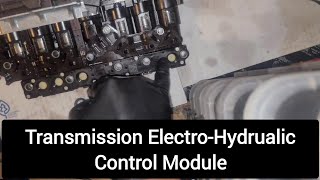
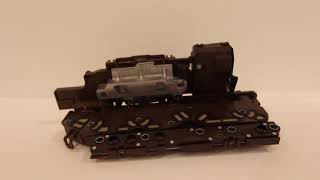
While P0604 is a generic code, its diagnosis on the GMT900 platform (which includes the Escalade) is highly specific. GM has issued Technical Service Bulletin PIP4653E that directly links P0604 to the Transmission Control Module (TCM) for these vehicles. For the 6L80 transmission used in this Escalade, the TCM is not a separate, externally-mounted box. It is integrated with the valve body and solenoids into a single assembly called the TEHCM (Transmission Electro-Hydraulic Control Module), which is located inside the transmission oil pan. 🎬 See how to rebuild and test the internal TEHCM circuits. This internal location subjects the electronics to constant heat cycles and potential fluid contamination, making it a known failure point and complicating its replacement compared to an external module.
Diagnostic Flowchart
Tap your situation to follow the diagnostic path that matches what you're seeing on this vehicle.
Symptoms You May Notice
- Check Engine Light is on
- Transmission may shift harshly, erratically, or not at all.
- Vehicle may enter 'limp mode' with reduced power, often stuck in 3rd or 5th gear.
- Engine may stall or have difficulty starting.
- ABS or Traction Control lights may illuminate.
- Gear position indicator on the dashboard may be blank or incorrect.
- Code returns immediately after being cleared, even without starting the engine, indicating a hard fault.
- Replacing the main Engine Control Module (ECM) when the fault is actually in the Transmission Control Module (TCM/TEHCM). The TSBs for this platform specifically point towards the TCM, making it the more likely culprit.
- Replacing individual solenoids when the P0604 code indicates a failure of the controller logic itself, not the mechanical parts it commands.
Most Likely Causes
- Faulty Transmission Electro-Hydraulic Control Module (TEHCM) 🔴 High Probability → Shop Transmission Assembly Manufacturer TSB PIP4653E specifically identifies the TCM (TEHCM) as the likely source for this code. Its location inside the hot transmission oil pan leads to electronic failure from heat, vibration, and fluid contamination over time.
How to confirm: After ruling out power/ground issues, a professional scan tool (like a GM Tech 2/GDS2) is used to confirm the P0604 code is set by the TCM. If the code returns immediately after being cleared, the TEHCM is condemned.
Typical fix: Drop the transmission oil pan, replace the entire TEHCM assembly (which includes the valve body), and program the new unit to the vehicle's VIN using GM's Service Programming System (SPS). This must be followed by a transmission service learn procedure.
Est. part cost: $300-$600 - Low Battery Voltage or Weak Charging System 🟡 Medium Probability → Shop Vehicle Battery All modern vehicles with multiple control modules are sensitive to low voltage. A weak battery or failing alternator can cause unpredictable behavior and spurious memory-related codes in the TEHCM or ECM.
How to confirm: Test the battery with a digital load tester; voltage should be above 12.4V at rest and not drop below 9.5V during cranking. With the engine running, check the alternator output at the battery terminals; it should be stable between 13.5 and 14.5 volts.
Typical fix: Replace the weak battery and/or failing alternator.
Est. part cost: $150-$400 - Wiring or Connector Issues ⚪ Low Probability
How to confirm: Visually inspect the main 16-pin transmission case connector for corrosion, moisture, or pushed-out pins. Check main engine and module ground points, such as G103 and G104 on the cylinder heads, for corrosion or looseness.
Typical fix: Repair the damaged section of the wiring harness or clean/replace the affected connector and ground points.
Est. part cost: $20-$150
Diagnosis Steps
- Scan for all stored trouble codes with a professional tool to see which module set the P0604 (ECM or TCM).
- Check the battery. Ensure it is fully charged and passes a load test. A weak battery is a common cause of module-related codes.
- Inspect the charging system. Verify the alternator is providing a stable voltage (typically 13.5V-14.5V) when the engine is running.
- Inspect main power and ground connections. On GMT900 trucks, pay special attention to grounds on the cylinder heads (G103, G104) and the main transmission case connector.
- Clear the codes. If P0604 returns immediately in the TCM, it strongly suggests a hard internal TEHCM fault.
- If the battery, charging system, and wiring are all confirmed to be good, the fault is highly likely to be the TEHCM itself.
- Confirm the diagnosis with a professional scan tool. Replacement of the TEHCM by a qualified technician, including programming and a service learn procedure, is the final step.
Parts You'll Likely Need
- Transmission Electro-Hydraulic Control Module (TEHCM)
(OEM #24252114)— This is the most common cause of a P0604 code on this specific vehicle, as identified by GM's own technical service bulletins. It contains the TCM, which fails internally.
Trusted brands: ACDelco, Sonnax (Remanufactured)
OEM price range: $400-$600
Aftermarket price range: $300-$500
Related Codes That Often Appear With This One
- P0601 — This code indicates an Internal Control Module Memory Check Sum Error. It is often seen with P0604 as both point to internal module failure. TSB PIP4653E and 05-06-04-060A both list these codes together.
- P1621 — This code relates to Control Module Long Term Memory Performance. It is also listed in TSB PIP4653E and 05-06-04-060A as a related code pointing to a module issue.
- U0101 — This code means 'Lost Communication with TCM'. If the TEHCM fails internally (triggering P0604), it will also stop communicating with other modules on the vehicle's network, causing this U-code to appear.
- P0700 — This is a general transmission fault code requested by the TCM. It tells the ECM to turn on the Check Engine Light. It will almost always be present when a specific transmission code like P0604 is stored in the TEHCM.
Technical Service Bulletins (TSBs) & Recalls
- PIP4653E: Directly links P0604 to the Transmission Control Module (TCM) and instructs technicians to check which module set the code.
- 05-06-04-060A: Informs technicians that P0604 is a generic control module DTC that can be found in multiple modules.
Platform-Specific Known Issues
- TSB #PIP4653E notes that DTCs P0601, P0603, P0604, P062F or P1621 stored in the Transmission Control Module indicate a likely TCM failure.
- TSB #05-06-04-060A communicates that P0604 is one of several codes that can be shared across multiple modules, but context from other TSBs points to the TCM as the primary location for this vehicle.
- The TEHCM (TCM) is located inside the 6L80 transmission's oil pan, bolted to the valve body. This requires pan removal for access and makes the unit prone to failure from heat and vibration.
Mechanic-Grade Diagnostic Values
- CAN Bus Resistance — expected: ~60 Ohms. Failure: A reading of 120 Ohms indicates an open circuit or a missing terminating resistor in the network. A reading near 0 Ohms indicates a short between the CAN High and CAN Low wires.
- 6L80 Transmission Line Pressure (at operating temp) — expected: Approximately 45-80 PSI at idle in gear.. Failure: Significantly lower or higher pressure can indicate a hydraulic or solenoid issue, though P0604 is an electronic fault.
- Run/Crank Power Voltage at TEHCM Connector — expected: Battery Voltage (12V+). Failure: No voltage or low voltage at Pin 12 of the 16-pin transmission connector indicates a wiring or fuse issue between the fuse box and the TEHCM.
Scan Tool Commands That Help
- GDS2 (Global Diagnostic System 2): Service Programming System (SPS) — This function is mandatory after installing a new TEHCM. It downloads the correct vehicle-specific calibration and software into the new module and programs it to the VIN.
- GDS2: Reset Transmission Adapts / Fast Learn — After programming a new TEHCM, this procedure must be run to quickly establish baseline shift parameters and clutch fill volumes for smooth shifting.
- GDS2 / Tech2Win: Crankshaft Position System Variation Learn — This procedure is often required after programming a new ECM or TCM to synchronize the modules with the engine's crankshaft position sensor, preventing misfire codes and ensuring proper engine operation.
- GDS2: Module Diagnostics > Output Controls — Allows a technician to command individual solenoids on and off to test their function, helping to rule out a mechanical solenoid failure before condemning the entire TEHCM for an electronic code like P0604.
Wiring & Ground Locations
- G103 — On the front of the passenger's side (right) cylinder head.. This is a primary ground point for the ECM and other critical engine sensors. A poor connection here can cause a variety of module communication and fault codes.
- G104 — On the rear of the driver's side (left) cylinder head.. This is another main engine ground. A service bulletin notes that improper grounding, especially if the battery has been relocated, can cause multiple transmission DTCs.
- Transmission Case Connector (16-pin) — The main electrical connector on the passenger side of the 6L80 transmission case.. This is the sole electrical interface for the TEHCM. Pin 12 (Run/Crank Power) and Pin 5 (Ground) are critical for TEHCM operation. Corrosion or a loose pin here can directly cause TEHCM power loss and trigger memory codes.
- G108 — A ground strap located on the driver's side, running from the firewall/hood area to the back of the left cylinder head, often near G104.. Provides a critical body-to-engine ground path. A broken or corroded strap can create floating grounds and unpredictable electrical issues for various modules.
Real Owner Repair Stories
- YouTube channel 'DanielJaegerFilms' (2010 Chevrolet Silverado (GMT900 platform mate)) — Check Engine Light with code P0604.
❌ Tried (didn't work) The video focuses on the successful repair, which was replacing the PCM.
✅ What actually fixed it The Powertrain Control Module (PCM/ECM) was faulty. A new PCM was installed and programmed using GM's Service Programming System (SPS), followed by an Idle Learn and Crankshaft Position Variation Learn procedure, which resolved the code. - YouTube channel 'Pine Hollow Auto Diagnostics' (Chevrolet Cavalier (different platform, but demonstrates GM P0604 logic)) — No crank, P0604, P0513 (Invalid Immobilizer Key), P1633 (Theft Deterrent Learn Mode Active).
❌ Tried (didn't work) Reflashing the original computer did not fix the P0604., Installing a used computer and programming it fixed the P0604, but introduced other persistent codes (P0513, P1633).
✅ What actually fixed it Replacing the original PCM with a new, remanufactured PCM and programming it successfully resolved all codes and the no-start condition. This highlights that even a used, programmable module may not be a viable fix.
When the Usual Fixes Don't Work
- While Technical Service Bulletins and common field experience strongly point to the TEHCM as the cause for P0604 on the GMT900 platform, it is not the only possibility. As documented in a repair on a 2010 Silverado, a faulty Engine Control Module (ECM) can also fail its internal RAM check and set a P0604 code. Therefore, if a scan tool shows the code originating from the ECM, or if a known-good TEHCM does not resolve the issue, the ECM becomes the primary suspect. This reinforces the first diagnostic step: confirming which module is setting the code.
OEM Part Supersession History
Varies (e.g., Gen 1 TEHCM)→Varies (e.g., Gen 2 TEHCM)— GM made internal changes to the TEHCM throughout the 6L80's production run, updating solenoids, pressure switches, and internal logic to improve durability and performance.
Heads up: TEHCMs from different generations are NOT interchangeable, even if they physically fit. The internal circuitry and programming structure differ. Using the wrong TEHCM will cause immediate communication errors or limp mode. Always verify the correct part number via VIN.24252363→24256861, 19435614— Standard part updates by the manufacturer.
Heads up: These part numbers are for Allison transmissions and are often confused with 6L80 parts. They will not work in a Cadillac Escalade with a 6L80.
Model Year Variations Within This Range
- 2007-2010 (approx.): These early 'Gen 1' 6L80 TEHCMs are known for different failure patterns, such as issues with the TCC apply solenoids sticking under heat. The internal pressure switches and logic are different from later models.
- 2011-2014 (approx.): Later 'Gen 2' TEHCMs feature improved solenoids, updated pressure manifold gaskets, and revised internal logic for better thermal tolerance and durability. These units are not backward-compatible with Gen 1 valve bodies or programming.
Helpful Videos

We Have This Part in Stock



The information in this article is provided for general reference and educational purposes only. Vehicle specifications, procedures, and part compatibility can vary by production date, trim level, and region. Always consult your vehicle's factory service manual and verify part numbers before purchasing or performing repairs. Safety-critical components such as airbags, seat belts, and braking systems should be installed by a qualified professional.
- Cadillac ESCALADE ESV:
- 🧭 Diagnostic Flowchart
- 🎬 Helpful Videos
- 🛍️ Shop This Part
- What's Unique About the 2007-2014 Cadillac ESCALADE ESV
- Symptoms You May Notice
- Most Likely Causes
- Diagnosis Steps
- Parts You'll Likely Need
- Related Codes That Often Appear With This One
- Technical Service Bulletins (TSBs) & Recalls
- Platform-Specific Known Issues
- Mechanic-Grade Diagnostic Values
- Scan Tool Commands That Help
- Wiring & Ground Locations
- Real Owner Repair Stories
- When the Usual Fixes Don't Work
- OEM Part Supersession History
- Model Year Variations Within This Range
- 🎟️ Get 5% Off