

P0604 on 2007-2013 Cadillac Escalade EXT: TCM RAM Error Causes and Fixes
On a 2007-2013 Cadillac Escalade EXT, code P0604 almost always points to an internal failure of the Transmission Control Module (TCM). The most reliable fix is replacing the TCM, which is located inside the transmission housing on this model. This repair can cost between $450 and $1,500 at a shop, including parts, labor, and mandatory programming.
- P0604 on a 2007-2013 Escalade EXT is a specific code indicating a RAM failure, most commonly within the Transmission Control Module (TCM).
- Symptoms are primarily transmission-related, such as harsh shifting, getting stuck in gear, or a lit Check Engine Light.
- While checking the battery and its connections is a wise first step, the ultimate fix is almost always replacing the TCM, which is located inside the transmission.
- This is not a DIY-friendly repair. The new TCM must be professionally programmed to the vehicle's VIN to function.
- Do not replace the entire transmission; the problem is electronic, not mechanical. A bad TCM is a common failure point on the 6L80 transmission.
What's Unique About the 2007-2013 Cadillac ESCALADE EXT
For this generation of Cadillac Escalade and its platform-mates (the GMT900 series), General Motors has issued specific Technical Service Bulletins (TSBs) that directly link the P0604 code to the Transmission Control Module (TCM). This provides a clearer diagnostic path compared to many other vehicles where P0604 can be a more generic Powertrain Control Module (PCM) error. The TCM in the 6L80 transmission is a known failure point, located internally on the valve body, making it susceptible to heat and vibration, and more labor-intensive to replace. The issue is often an internal hardware or software fault within the TCM itself, rather than an external wiring problem.
Diagnostic Flowchart
Tap your situation to follow the diagnostic path that matches what you're seeing on this vehicle.
Symptoms You May Notice
- Check Engine Light is on
- Transmission may shift harshly or erratically
- Vehicle may get stuck in one gear (limp mode)
- Delayed engagement when shifting into Drive or Reverse
- Engine may stall or hesitate
- Reduced fuel economy
- Vehicle may not start
- ABS or Traction Control lights may activate
- Replacing the entire transmission when only the TCM is faulty.
- Replacing the Engine Control Module (ECM) when the TSBs point specifically to the Transmission Control Module (TCM) for this code on this platform.
- Assuming a used TCM from a junkyard will work without programming. All TCMs, new or used, must be programmed to the specific vehicle's VIN.
Most Likely Causes
- Faulty Transmission Control Module (TCM) 🔴 High Probability → Shop Transmission Assembly As cited in manufacturer TSBs PIP4653E and 05-06-04-060A, the TCM is the primary location for this fault code on this platform. The TCM is located inside the transmission pan, where it is exposed to heat, which can lead to premature failure of its internal electronic components like RAM chips. This is a widely documented failure on the 6L80 transmission family.
How to confirm: After confirming stable battery voltage (12.6V engine off, 13.7-14.7V running) and clean connections, if the code returns immediately after being cleared, the TCM is almost certainly the cause. A professional scan tool may fail to communicate with the module or will show the persistent internal fault code, confirming a bad TCM.
Typical fix: Replace the Transmission Control Module (TCM) and the integrated valve body solenoids (often called a TEHCM). 🎬 Watch: How to repair the TEHCM pressure switch membrane The new unit must be programmed to the vehicle's VIN using GM's Service Programming System (SPS).
Est. part cost: $200-$800 - Corrupted TCM Software 🟡 Medium Probability Glitches during normal operation, voltage fluctuations from a weak battery, or failed programming attempts can corrupt the software or calibration files stored in the module.
How to confirm: A dealership or qualified shop can use a GM Tech 2 or similar J2534 pass-thru tool to check if a software update is available for the TCM. Attempting to re-flash the module is a key diagnostic step before condemning the hardware.
Typical fix: Reprogram (re-flash) the TCM with the latest software from the manufacturer. 🎬 See how to program the TCM using GM SPS2 software If the re-flash fails to complete or the code returns immediately, the module hardware is faulty and must be replaced.
Est. part cost: $0 (if part of another repair) - $200 (for programming labor) - Low Battery Voltage or Poor Electrical Connection ⚪ Low Probability → Shop Vehicle Battery All control modules are sensitive to voltage. A weak battery, failing alternator, or corroded grounds can cause modules to glitch and set memory-related codes during startup. While this can cause the code, it's less common than outright TCM failure on this platform.
How to confirm: Test the battery with a multimeter; it should read ~12.6V with the engine off and 13.7V-14.7V with the engine running. Inspect battery terminals and check the main power and ground connections to the ECM and chassis for tightness and integrity.
Typical fix: Clean battery terminals, tighten connections, or replace a weak battery or faulty alternator.
Est. part cost: $20-$300
Diagnosis Steps
- Scan for all diagnostic trouble codes. Note if P0604 is accompanied by other module communication or memory codes like P0601, P0603, etc.
- Check and verify battery voltage. Ensure the battery is fully charged (~12.6V) and the alternator is functioning correctly (13.7-14.7 volts when running).
- Inspect the battery terminals and main chassis grounds for corrosion or looseness. Clean and tighten as necessary. A poor ground can cause intermittent module resets.
- Visually inspect the wiring harness and connectors at the Transmission Control Module (TCM) for any signs of damage, corrosion, or moisture. Since the TCM is internal, this requires dropping the transmission pan.
- Clear the DTCs with a scan tool and test drive the vehicle. If the P0604 code returns immediately, it strongly suggests an internal hardware failure in the TCM.
- If a capable scan tool is available, attempt to re-flash the TCM with the latest GM calibration. If the process fails or the code returns, the module is confirmed bad.
- If all previous steps fail, the Transmission Control Module (TEHCM) is defective and must be replaced and programmed.
Parts You'll Likely Need
- Transmission Control Module (TCM)
(OEM #24256861, 24241350)— This is the component that fails internally, triggering the P0604 code. The provided TSBs specifically identify this module as the source of the problem on this platform. Part number 24256861 is the common replacement TEHCM (Transmission Electro-Hydraulic Control Module) for 2010-2013 models. Earlier 2007-2009 models may use a different part number like 24241350. Always confirm the correct part number with a dealer using your VIN.
Trusted brands: ACDelco (GM Genuine Parts)
OEM price range: $170-$900
Aftermarket price range: $220-$500
Related Codes That Often Appear With This One
- P0700 — This is a generic transmission fault code that requests the check engine light. It is almost always present when a specific transmission code like P0604 is stored in the TCM.
- P0601 — This is an Internal Control Module Memory Check Sum Error, another internal module fault often listed in the same TSBs.
- P0603 — This indicates an Internal Control Module Keep Alive Memory (KAM) Error, often related to power supply issues.
- P062F — This is an Internal Control Module EEPROM Error, pointing to a different type of memory failure within the same module.
- P1621 — This is a GM-specific code for Control Module Long Term Memory Performance, often stored in the TCM and mentioned in the same TSBs.
Technical Service Bulletins (TSBs) & Recalls
- PIP4653E: Notes that DTCs including P0604 may be stored in the Transmission Control Module (TCM).
- 05-06-04-060A: Informs technicians that P0604 is one of several DTCs that can be shared across multiple modules and to be careful to diagnose the correct one. It also warns that low voltage can set these codes.
Platform-Specific Known Issues
- GM Technical Service Bulletin #PIP4653E explicitly states that DTC P0604 may be found stored in the Transmission Control Module (TCM).
- GM Technical Service Bulletin #05-06-04-060A notes that P0604 is one of several internal module codes that can be set, reinforcing that this is a known issue across many GM vehicles, not just the Escalade.
- A real-world owner experience on a GM forum with a 2007 Escalade detailed a dealer diagnosing a bad TCM for shifting issues, quoting $1,800 for the repair, highlighting the high cost and confirmation that the TCM is the go-to diagnosis for these symptoms.
Mechanic-Grade Diagnostic Values
- PWM Solenoid Resistance (Line Pressure, TCC, Clutch Pressure Control) — expected: 3.0 - 8.0 Ohms. Failure: A reading outside this range indicates a failed solenoid within the TEHCM.
- Shift Solenoid Resistance (On/Off type) — expected: 20 - 40 Ohms. Failure: A reading outside this range indicates a failed shift solenoid within the TEHCM.
- Voltage at 16-pin TEHCM Connector (Pins 10, 11, 12) — expected: Battery Voltage (approx. 12.6V). Failure: Low or no voltage points to a wiring harness or fuse issue, not a bad TEHCM.
- Ground at 16-pin TEHCM Connector (Pin 16) — expected: Near 0 Ohms resistance to chassis ground. Failure: High resistance indicates a bad ground wire or connection at G103/G110.
- GMLAN Bus Resistance (at DLC pins 6 & 14) — expected: Approximately 60 Ohms. Failure: 120 Ohms indicates an open circuit or a module off the network; near 0 Ohms indicates a short.
Hidden / Shadow Codes Worth Checking
- P0604 with Symptom Byte (e.g., '71'): GM uses two-digit hex symptom bytes for added detail. For example, '71' indicates 'Invalid Serial Data Received,' suggesting a software or communication issue rather than a pure hardware failure. Other bytes can indicate voltage or temperature faults. (see via A dealer-level scan tool like a GM Tech 2 or GDS2 is required to view symptom bytes.)
Scan Tool Commands That Help
- GM GDS2 / Tech 2: Replace and Reprogram ECU — This function, used within the Service Programming System (SPS), is mandatory when installing a new or used TEHCM to load the correct VIN and vehicle calibration files.
- GM GDS2 / Tech 2: Transmission Service Fast Learn / Transmission Adaptive Pressure Reset — This is a required post-programming step after a new TEHCM is installed. It commands the transmission to cycle through clutches to quickly learn hydraulic parameters for smooth shifting.
- GM GDS2 / Tech 2: Solenoid Automated Cleaning Process — If a solenoid performance DTC is present with P0604, this function can be used to cycle the solenoids to flush out potential debris before condemning the entire TEHCM.
Wiring & Ground Locations
- X184 / X210 — The main 16-pin round electrical connector on the passenger side of the 6L80 transmission case.. This is the single point of connection for all power, ground, and communication signals to the internal TEHCM. Corrosion or backed-out pins here will cause communication and power loss, triggering codes like P0604.
- G110 — On the front driver's side of the engine block.. This is a primary ground point for both the Engine Control Module (ECM) and Transmission Control Module (TCM). A loose or corroded connection here is a known cause of intermittent module communication and memory faults.
- G103 — On the front of the right (passenger side) cylinder head.. This is another critical engine-to-chassis ground. A poor connection here can cause unstable voltage and electrical noise, which is a known cause for corrupting control module memory.
- Underhood Fuse Block — In the engine compartment on the driver's side.. Contains fuses that provide power to the TCM (often labeled F14 'TCM' and F19 'TRANS' on similar GM trucks). A blown or loose fuse will cut power and trigger memory-related codes.
Real Owner Repair Stories
- TahoeYukonForum.com user (2011 Chevrolet Tahoe (GMT900 Platform)) — Check engine light on, transmission stuck in 3rd gear (limp mode).
❌ Tried (didn't work) Clearing the code (it returned immediately).
✅ What actually fixed it A transmission shop diagnosed a failed Transmission Control Module (TCM). Replacing and programming the new TEHCM resolved all symptoms and cleared the P0604 code. - Go-Parts research on a similar platform (GMC Yukon XL (GMT900 Platform)) — Persistent P0604 code that returned immediately after clearing, even with the engine off.
❌ Tried (didn't work) Verifying good power and ground to the ECM., Testing battery and charging system., Disconnecting all aftermarket electronics., Replacing the ECM with a remanufactured unit and programming it.
✅ What actually fixed it The vehicle had an aftermarket engine tune. The persistent code was determined to be a non-recoverable software fault within the tuned module itself. The ultimate fix required addressing the aftermarket software tune.
OEM Part Supersession History
24241350 (example)→24256861— The 'Gen 1' TEHCM used in early models was updated with improved solenoids and a revised pressure manifold gasket for better durability against heat and vibration.
Heads up: While they may physically connect, Gen 1 and Gen 2 TEHCMs have different internal logic and components; they are not directly interchangeable without programming issues. Always use the correct part number for the specific model year.24256861→N/A (Still a valid number for its application period)— This part was placed on restriction by GM, requiring dealers to contact the Technical Assistance Center before ordering, indicating it was a high-failure part being monitored for quality issues.
Heads up: This part is correct for roughly 2010-2013 models but is not correct for 2017+ models, which use different TEHCMs like 24279973.
Model Year Variations Within This Range
- 2007-2009: These early models use the 'Gen 1' 6L80 TEHCM (e.g., part number 24241350). These units are known to be more susceptible to internal pressure switch failures and TCC (torque converter clutch) solenoid issues.
- 2010-2013: These later models use an updated 'Gen 2' TEHCM (e.g., part number 24256861). This version features improved solenoids and a revised pressure manifold gasket to increase durability and address some of the common failure points of the earlier generation.
Helpful Videos
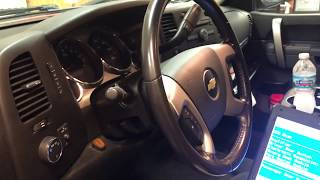



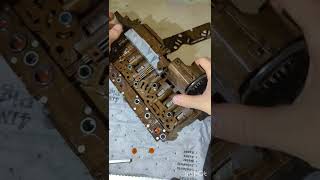
We Have This Part in Stock
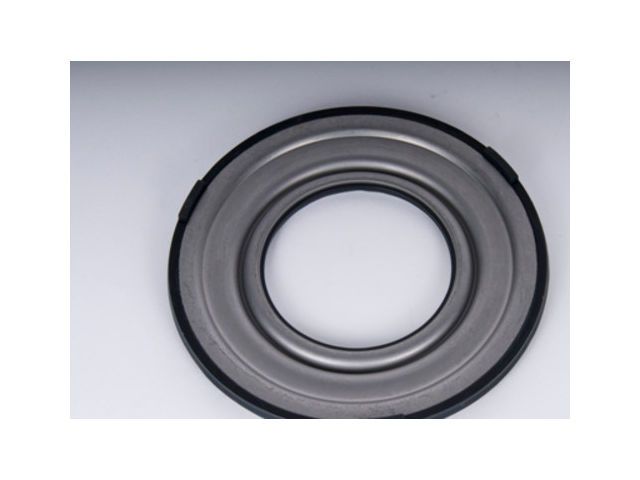
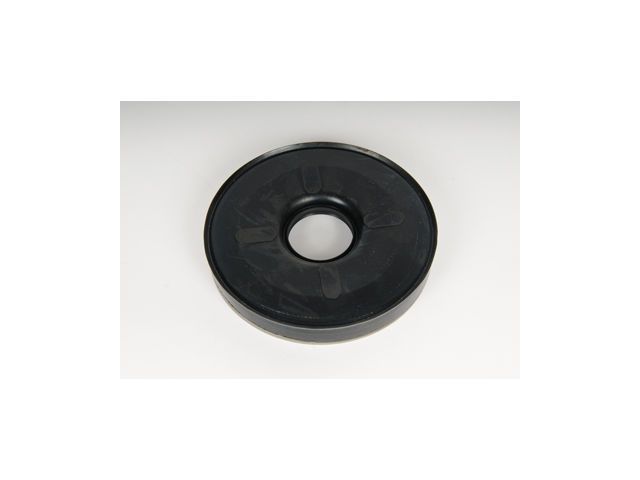



The information in this article is provided for general reference and educational purposes only. Vehicle specifications, procedures, and part compatibility can vary by production date, trim level, and region. Always consult your vehicle's factory service manual and verify part numbers before purchasing or performing repairs. Safety-critical components such as airbags, seat belts, and braking systems should be installed by a qualified professional.
- Cadillac ESCALADE EXT:
- 🧭 Diagnostic Flowchart
- 🎬 Helpful Videos
- 🛍️ Shop This Part
- What's Unique About the 2007-2013 Cadillac ESCALADE EXT
- Symptoms You May Notice
- Most Likely Causes
- Diagnosis Steps
- Parts You'll Likely Need
- Related Codes That Often Appear With This One
- Technical Service Bulletins (TSBs) & Recalls
- Platform-Specific Known Issues
- Mechanic-Grade Diagnostic Values
- Hidden / Shadow Codes Worth Checking
- Scan Tool Commands That Help
- Wiring & Ground Locations
- Real Owner Repair Stories
- OEM Part Supersession History
- Model Year Variations Within This Range
- 🎟️ Get 5% Off