

P0604 on 2010-2015 Cadillac SRX: Internal Memory Error Causes and Fixes
P0604 on a 2010-2015 Cadillac SRX indicates an internal RAM error in a control module. Due to manufacturer bulletins, this often points to a failing Transmission Control Module (TCM), causing shifting issues. Ruling out low battery voltage is the first step before module replacement, which requires programming.
- P0604 on a 2010-2015 SRX is a serious code indicating a control module memory failure.
- Due to GM TSBs, the Transmission Control Module (TCM) is a primary suspect, often causing shifting problems.
- Always check the battery and its connections first, as low voltage can trigger this code erroneously.
- Diagnosis and repair require a professional scan tool and module programming; this is not a simple DIY fix.
- Do not ignore this code, as it can lead to stalling or a no-start condition at any time.
What's Unique About the 2010-2015 Cadillac SRX
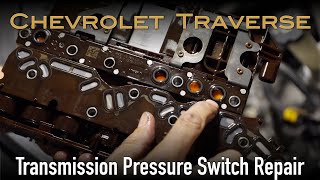
On the 2010-2015 Cadillac SRX, this generic code has a specific, well-documented history. General Motors has issued Technical Service Bulletin (TSB) #PIP4653E, which explicitly states that P0604 (and related codes) can be stored in the Transmission Control Module (TCM). This makes transmission-related symptoms and a potential TCM failure a much more likely cause on the SRX and its platform mates compared to other vehicles where the code might default to an ECM issue. The TSB applies to a wide range of GM vehicles using the 6T and 6L series transmissions, confirming this is a known powertrain component issue. The TCM, also known as a TEHCM (Transmission Electro-Hydraulic Control Module), is located inside the transmission and is known for failures of its pressure switch laminated disks 🎬 Watch: How to repair the internal pressure switch disks., which can cause shifting issues and trigger various codes, including P0604.
Diagnostic Flowchart
Tap your situation to follow the diagnostic path that matches what you're seeing on this vehicle.
Symptoms You May Notice
- Check Engine Light is on
- Harsh, erratic, or delayed automatic transmission shifting
- Transmission seems 'confused' or 'bangs' into lower gears when decelerating
- Vehicle may stall unexpectedly, especially at low speeds or when stopping
- Engine may be hard to start or not start at all
- Reduced engine power or 'limp mode'
- ABS or Traction Control lights may illuminate
- Replacing the ECM when the code is actually stored in the TCM. TSB PIP4653E specifically warns against this.
- Replacing a control module when the actual problem is a weak battery, a poor ground connection, or a faulty alternator.
- Immediately replacing the transmission when it's actually an electronic control issue with the TCM.
Most Likely Causes
- Failing Transmission Control Module (TCM) 🔴 High Probability → Shop Transmission Assembly A specific GM Technical Service Bulletin (PIP4653E) directly links P0604 to the TCM on this platform, indicating a known issue with the 6T70 transmission's control unit. The TEHCM (TCM) is located inside the transmission, and first-generation units are notorious for failures of the internal pressure switch laminated disks, leading to shifting problems and codes.
How to confirm: Use a professional scan tool capable of reading codes from all modules. If P0604 is stored in the TCM, and power/ground are verified, the module is the primary suspect. TSB PIP4653E specifically instructs technicians to verify the code is in the TCM before proceeding.
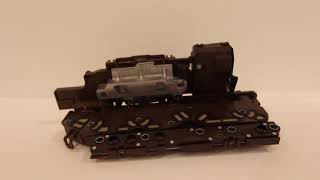
Typical fix: Replace the Transmission Control Module (TCM), also known as a TEHCM, and have it programmed to the vehicle's VIN. Some specialists offer repair services for the original module, which involves replacing internal components like the pressure switch disks.
Est. part cost: $165-$915 - Low Battery Voltage or Poor Connections 🟡 Medium Probability → Shop Vehicle Battery All modern vehicles with complex electronics are sensitive to low voltage. A weak battery or corroded terminals can cause temporary data corruption and trigger false codes in control modules during startup. Owners on forums often report that a P0604 code appeared after jump-starting the vehicle or replacing a dead battery.
How to confirm: Test the battery voltage with a multimeter. It should be above 12.4V with the engine off. Test the charging system; it should be 13.7V-14.7V with the engine running. Inspect all battery terminals and main ground connections for corrosion and tightness.
Typical fix: Charge or replace the battery. Clean or tighten battery terminals and ground straps. After fixing the power issue, clear the codes and see if P0604 returns.
Est. part cost: $150-$300 for a new battery - Failing Engine Control Module (ECM) ⚪ Low Probability → Shop Engine Control Module (ECM)
How to confirm: If a scan of all modules shows the P0604 code is stored *only* in the ECM and not the TCM, and all power/ground checks for the ECM are good, the ECM itself is the likely culprit.
Typical fix: Replace the Engine Control Module and have it programmed.
Est. part cost: $400-$1000+
Rare But Worth Checking
- Wiring Harness Damage: Damage to the wiring providing power or ground to the TCM/ECM can mimic an internal module failure. A visual inspection is always worthwhile before ordering an expensive module.
- Aftermarket Performance Tune: Improperly written aftermarket software can sometimes cause memory checksum errors, leading to codes like P0604. If the vehicle has been tuned, reverting to the stock program is a key diagnostic step.
Diagnosis Steps
- Check the battery voltage and charging system health. Ensure battery terminals and main grounds are clean and tight. A healthy battery should read over 12.4V engine off, and the alternator should supply 13.7-14.7V engine running.
- Use a professional-grade scan tool to perform a full vehicle scan, reading codes from ALL available modules (ECM, TCM, BCM, etc.).
- Critically, identify which specific module has stored the P0604 code. TSB PIP4653E emphasizes this, as the code can set in the ECM, FPCM, or TCM.
- If the code is in the TCM (as is common for this vehicle), inspect the TCM wiring and connectors for any visible damage, corrosion, or looseness.
- Using a wiring diagram, verify that the TCM has consistent power and a clean ground connection. Check for less than 0.5 Ohms of resistance on the ground circuit.
- If the battery, connections, and wiring are all confirmed to be good, the control module that stored the code is faulty and requires replacement.
- Replace the faulty control module (most likely the TCM).
- Program the new module to the vehicle using specialized equipment like a GM GDS2 or a J2534 pass-thru device. This step is mandatory for the vehicle to start and operate correctly.
Parts You'll Likely Need
- Transmission Control Module (TCM/TEHCM)
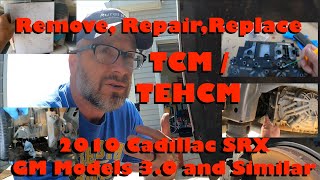
(OEM #24252114 (older), 24276411 (newer), and others)— This is the most likely failed component for a P0604 code on this specific vehicle, as identified in GM TSB #PIP4653E. It is often the root cause of the harsh shifting symptoms. 🎬 Watch: A mechanic explains common TEHCM replacement options.
Trusted brands: ACDelco (GM Genuine Parts), Dorman (Remanufactured)
OEM price range: $400-$915
Aftermarket price range: $165-$350 - Engine Control Module (ECM/PCM) — If the code is confirmed to be in the ECM and not the TCM, the ECM itself has likely failed.
Trusted brands: ACDelco (GM Genuine Parts)
OEM price range: $500-$1000+
Aftermarket price range: $300-$600
Related Codes That Often Appear With This One
- P0601 — This code indicates an Internal Control Module Memory Check Sum Error. It is another type of internal module fault and is listed alongside P0604 in TSB #PIP4653E as a code that points to a faulty TCM.
- P0603 — This code indicates an Internal Control Module Keep Alive Memory (KAM) Error. It is also part of the family of internal module fault codes mentioned in TSB #PIP4653E.
- P1621 — This is a GM-specific code for Control Module Long Term Memory Performance. TSB #PIP4E lists it alongside P0604 as a code that can be stored in the Transmission Control Module, further strengthening the diagnosis of a failed TCM.
Technical Service Bulletins (TSBs) & Recalls
- 05-06-04-060A: Information on Control Module Diagnostic Trouble Codes which can be shared in multiple modules.
- PIP4653E: Information for vehicles with Malfunction Indicator Lamp on and DTCs (including P0604) stored in the Transmission Control Module.
Platform-Specific Known Issues
- TSB #PIP4653E: This is the key bulletin for this issue. It confirms that DTCs P0601, P0603, P0604, P062F, or P1621 stored in the Transmission Control Module (TCM) are a known issue across a wide range of GM vehicles, including the 2008-2014 SRX. It advises technicians to confirm the code is in the TCM before replacing it.
- TSB #05-06-04-060A: An informational bulletin that groups P0604 with several other internal control module fault codes (P0601, P0602, etc.) that can be set in multiple different modules, explaining they indicate an internal self-test failure.
- Common Failure Point: Forum discussions and repair videos suggest the TCM (TEHCM) located inside the transmission is prone to failure of its internal pressure switches and circuit board, leading to both codes and physical shifting problems.
Mechanic-Grade Diagnostic Values
- TCM/TEHCM Ground Circuit Resistance — expected: Less than 0.5 Ohms. Failure: Resistance higher than 0.5 Ohms between the ground pin at the transmission connector and a known good chassis ground indicates a faulty ground connection or corroded ground point (like G103).
- TCM/TEHCM Power Supply Voltage — expected: 12.0 - 14.8 Volts. Failure: Voltage below 12.0V or a significant voltage drop when wiggling the harness indicates a power supply or wiring issue.
Hidden / Shadow Codes Worth Checking
- Symptom Bytes (e.g., P0604 71): GM uses two-digit hexadecimal symptom bytes to provide more specific information about a generic DTC. For example, a symptom byte of '71' often indicates 'Invalid Serial Data Received,' pointing to a communication or software issue rather than a pure hardware failure. (see via These are visible using dealer-level scan tools like the GM GDS2 (Global Diagnostic System 2) or a Tech 2. Basic OBD-II readers will not display them.)
Scan Tool Commands That Help
- GM GDS2 / Techline Connect: Service Programming System (SPS) - Replace and Reprogram ECU — This function is mandatory after installing a new or remanufactured TEHCM (TCM). It downloads the correct VIN-specific calibration file from GM's servers and flashes it to the new module. Failure to perform this step will result in a no-start or immediate limp mode.
Wiring & Ground Locations
- G103 — On the front of the passenger-side cylinder head. Two ground wires are attached to a stud.. This is a primary ground point for the Engine Control Module (ECM) and Transmission Control Module (TCM). A loose or corroded connection here can cause unstable voltage and trigger internal memory faults like P0604.
- TEHCM 16-pin Connector — On the side of the Transmission Control Module, which is located inside the transmission oil pan, mounted to the valve body.. This is the main data and power connector for the TCM. Pins for CAN bus, power (Pin 10), and ground (Pin 16) must be checked here for voltage, continuity, and resistance during advanced diagnosis.
- G303 / G304 — G303 is on the left side B-pillar behind the trim panel. G304 is on the right side B-pillar behind the trim panel.. These are major body ground points. While not directly tied to the TCM, poor body grounds can introduce electrical noise and intermittent issues throughout the vehicle's module network.
Real Owner Repair Stories
- TahoeYukonForum.com user (2011 Chevrolet Tahoe (GMT900 platform, similar electronics to SRX)) — Check engine light with code P0604, transmission stuck in what felt like 3rd gear (limp mode).
❌ Tried (didn't work) Clearing the code (it returned immediately)
✅ What actually fixed it The owner had the Transmission Control Module (TCM) replaced and programmed at a dealership, which resolved the code and the limp mode condition. - YouTube video by 'Fix and Maintain' (Chevrolet Traverse with 6T70 transmission (shared with SRX)) — Extended delay when shifting from Reverse to Drive, along with other potential shifting issues like slipping and bind-ups.
✅ What actually fixed it The problem was traced to failed pressure switch laminated disks inside the TEHCM (TCM). The video demonstrates a successful repair by removing the TEHCM, and replacing the four internal laminated disks and seals, which is a common failure point for these modules.
OEM Part Supersession History
24234503, 24239224→24252114— Standard part revision and consolidation by the manufacturer.
Heads up: The newer part number is a direct replacement for the older ones but requires programming upon installation.24272004→24276411— Updated replacement part for later model years or specific applications.
Heads up: Part 24276411 is listed as a compatible and updated replacement for 24272004, but programming is required.
Model Year Variations Within This Range
- 2010-2011: These earlier models were equipped with the 3.0L LF1 V6 engine. While they use the same 6T70 transmission, the specific software calibration for the TCM will be different from later models.
- 2012-2015: These later models feature the 3.6L LFX V6 engine. This change in powertrain requires different software and calibration files for the ECM and TCM, which is critical to know during any reprogramming procedure.
Helpful Videos


Used OEM Parts in Stock
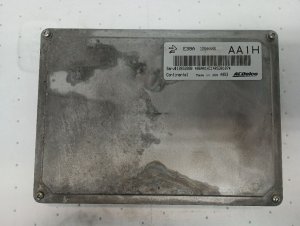
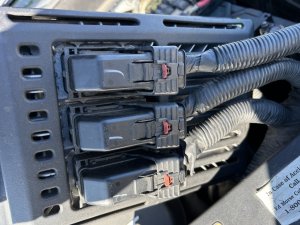
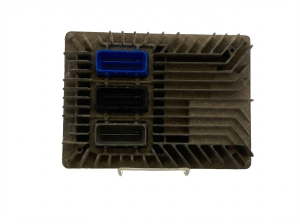
New Aftermarket Parts Available




The information in this article is provided for general reference and educational purposes only. Vehicle specifications, procedures, and part compatibility can vary by production date, trim level, and region. Always consult your vehicle's factory service manual and verify part numbers before purchasing or performing repairs. Safety-critical components such as airbags, seat belts, and braking systems should be installed by a qualified professional.
- Cadillac SRX:
- 🧭 Diagnostic Flowchart
- 🎬 Helpful Videos
- 🛍️ Shop This Part
- What's Unique About the 2010-2015 Cadillac SRX
- Symptoms You May Notice
- Most Likely Causes
- Rare But Worth Checking
- Diagnosis Steps
- Parts You'll Likely Need
- Related Codes That Often Appear With This One
- Technical Service Bulletins (TSBs) & Recalls
- Platform-Specific Known Issues
- Mechanic-Grade Diagnostic Values
- Hidden / Shadow Codes Worth Checking
- Scan Tool Commands That Help
- Wiring & Ground Locations
- Real Owner Repair Stories
- OEM Part Supersession History
- Model Year Variations Within This Range
- 🎟️ Get 5% Off