

P0604 on 2007-2011 Cadillac STS: Internal RAM Error Causes and Fixes
P0604 on a Cadillac STS indicates an internal RAM error, often within the Transmission Control Module (TCM). This is a serious issue that can cause shifting problems or a no-start condition. The fix usually involves diagnosing the module's power supply, potentially reprogramming it, or replacing the faulty module, which on these vehicles is an internal component of the transmission known as the TEHCM.
- P0604 on a 2007-2011 Cadillac STS is a serious code that often points to a problem with the Transmission Control Module (TCM).
- Do not drive the vehicle, as it can result in unpredictable transmission behavior and is a safety hazard.
- Diagnosis requires a professional scan tool to identify which module is storing the code.
- Before replacing any expensive modules, always verify the battery is healthy and all power and ground connections are clean and tight.
- The fix is not a DIY job; it will likely require module reprogramming or replacement by a qualified technician.
What's Unique About the 2007-2011 Cadillac STS
While P0604 is a generic code, its common location on the Cadillac STS platform is noteworthy. Manufacturer bulletins specifically guide technicians to check the Transmission Control Module (TCM) for this fault. [TSB #PIP4653E] This is a critical distinction, as on many other vehicles, P0604 points almost exclusively to the main engine computer (ECM/PCM). For the STS, the TCM is an internal transmission component (TEHCM), making diagnosis and replacement more involved than a simple bolt-on module swap. This GM-specific guidance can save significant diagnostic time by focusing on the TCM and its related circuits first.
Diagnostic Flowchart
Tap your situation to follow the diagnostic path that matches what you're seeing on this vehicle.
Symptoms You May Notice
- Check Engine Light is on
- Transmission may not shift correctly or may feel harsh
- Vehicle may not start or may stall intermittently
- Loss of power while driving
- ABS or Traction Control lights may illuminate
- Reduced fuel economy
- Vehicle enters 'limp mode'
- Replacing the Engine Control Module (ECM) when the fault is in the Transmission Control Module (TCM).
- Replacing the entire transmission when the issue is electronic (the internal TEHCM).
- Replacing internal transmission components like clutches or solenoids before verifying the health of the TEHCM.
- Overlooking a simple bad battery or poor ground connection as the root cause.
Most Likely Causes
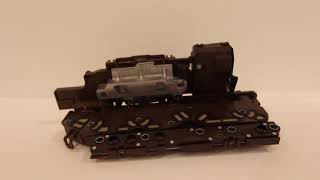
- Faulty Transmission Control Module (TCM/TEHCM) 🔴 High Probability → Shop Transmission Assembly A manufacturer TSB (PIP4653E) specifically points to the TCM as a location for this DTC, suggesting it's a known issue on this platform. The TCM is an internal component (TEHCM) located inside the transmission pan, bolted to the valve body, where it is subjected to heat and vibration.
How to confirm: Use a professional scan tool to confirm the P0604 code is stored in the TCM. Perform module-specific diagnostic tests, including checking for software updates. If power and grounds to the transmission are good, the internal TEHCM is the likely culprit.
Typical fix: First, attempt to reprogram the TCM with the latest software via a dealership or qualified shop. If the code returns, the TEHCM is faulty. Replacement requires removing the transmission pan and valve body to access the module. The new module must be programmed to the vehicle's VIN.
Est. part cost: $400-$1200 - Low Battery Voltage or Poor Connections 🟡 Medium Probability → Shop Vehicle Battery All modern vehicles with multiple control modules are sensitive to voltage fluctuations. A weak battery or bad ground can cause memory corruption during startup or shutdown. This is a common first check for any module-related DTC.
How to confirm: Test the battery voltage; it should be above 12.4V with the engine off. Check battery terminals for corrosion and tightness. Perform a voltage drop test on the main power and ground circuits for the TCM and ECM.
Typical fix: Clean battery terminals and cable ends. Tighten all connections. Replace a weak or failing battery.
Est. part cost: $150-$300 - Wiring or Connector Issues at the Transmission ⚪ Low Probability → Shop Transmission Assembly GM issued TSB PIC4740E for the STS and related platforms, which points to unseated pins in the main round, twist-lock transmission connector (X1) as a cause for a host of communication and performance issues, including hard shifting and no-start conditions. Vibration and heat can cause these pins to lose contact.
How to confirm: Visually inspect the main wiring harness connector on the driver's side of the transmission. Disconnect it and check for corrosion, damage, or backed-out pins. Gently tug on each wire to ensure it is fully seated in the connector.
Typical fix: Reseat any loose terminals. Clean the connector with electronic cleaner. If a terminal or wire is damaged, it will need to be repaired or replaced, which may require a specific terminal repair kit.
Est. part cost: $20-$200
Rare But Worth Checking
- Faulty Engine Control Module (ECM/PCM): → Shop Engine Control Module (ECM) While the TSBs point to the TCM, the ECM can also be the source of the problem. If the code is confirmed to be stored in the ECM and all power/ground checks are good, the ECM itself may have failed.
- Failing Alternator: → Shop Alternator An alternator producing unstable voltage (too high or too low) can corrupt control module memory. This should be checked if battery issues are also present. With the engine running, voltage at the battery should be stable, typically between 13.5 and 14.5 volts.
- Aftermarket Tuning: If the vehicle has an aftermarket engine or transmission tune, it can sometimes cause conflicts or corruption in the control module's memory. Reverting to the stock factory program can sometimes resolve the P0604 code.
Diagnosis Steps
- Verify Battery Health: Ensure the battery voltage is stable and above 12.4V with the engine off. Check that the running voltage is steady (13.5-14.5V), indicating a healthy alternator. Clean and tighten all battery terminals and chassis grounds.
- Scan for Codes: Use a professional scan tool to read the codes. Crucially, determine which module (ECM, TCM, etc.) has stored the P0604 code. This is the most important first step.
- Check for TSBs: Look for any relevant Technical Service Bulletins for your specific vehicle, such as PIP4653E, 05-06-04-060A, and PIC4740E. These bulletins directly point to the TCM and its connector as likely culprits.
- Inspect Transmission Connector (X1): Following TSB PIC4740E, disconnect the large, round, twist-lock connector on the driver's side of the transmission. Inspect for corrosion, moisture, or bent pins. Gently pull on each wire to ensure the terminals are fully seated.
- Check Power and Grounds to TCM: If the connector looks good, verify the module has a stable power supply and a clean ground connection at the harness. This requires a wiring diagram and multimeter to perform voltage drop tests.
- Attempt Reprogramming: Before replacement, check with a dealer or qualified shop if a software update is available for the TCM. Sometimes, re-flashing the existing software can resolve corruption issues.
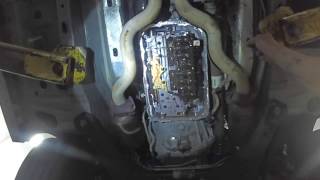
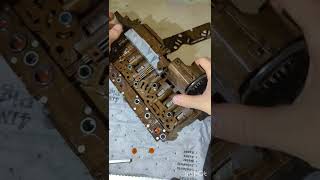
- Module Replacement: If all other steps fail and the code persists, the internal TEHCM is faulty. This requires draining the transmission, removing the pan and filter, and unbolting the TEHCM/valve body assembly. 🎬 Watch: Step-by-step walkthrough of replacing the STS transmission TEHCM The new module must be programmed to the vehicle.
Parts You'll Likely Need
- Transmission Control Module (TCM/TEHCM)
(OEM #24256960)— As cited in TSB PIP4653E, the TCM is a primary location for this fault code. This is an internal transmission component (TEHCM) that is serviced by being replaced. This part number is for the T42/T43 controller used in many 6-speed GM transmissions of the era, but always verify with VIN.
Trusted brands: ACDelco
OEM price range: $500-$1200
Aftermarket price range: $300-$800 - Battery — Low or unstable voltage is a common cause of memory-related fault codes in control modules. It is a critical first check before condemning an expensive module.
Trusted brands: ACDelco, Interstate, DieHard
OEM price range: $200-$300
Aftermarket price range: $150-$250
Related Codes That Often Appear With This One
- P0601 — This is an 'Internal Control Module Memory Check Sum Error', another type of internal module fault. TSB #PIP4653E and #05-06-04-060A list them together.
- P0603 — This is an 'Internal Control Module Keep Alive Memory (KAM) Error'. TSB #PIP4653E and #05-06-04-060A list them together.
- P062F — This is an 'Internal Control Module EEPROM Error'. TSB #PIP4653E and #05-06-04-060A list them together.
- P1621 — This is a GM-specific code for 'Control Module Long Term Memory Performance'. TSB #PIP4653E and #05-06-04-060A list them together.
- U0101 — This code means 'Lost Communication With TCM'. It often appears alongside P0604 if the TCM is failing or has a connection issue, as noted in TSB PIC4740E.
Technical Service Bulletins (TSBs) & Recalls
- PIP4653E: Information on vehicles with Malfunction Indicator Lamp on and various DTCs (including P0604) stored in the Transmission Control Module.
- 05-06-04-060A: Information on control module DTCs (including P0604) which can be shared in multiple modules.
- PIC4740E: Details symptoms like no-crank, hard shifts, and multiple warning lights caused by unseated pins in the main transmission connector, affecting 2006-2011 STS models.
Platform-Specific Known Issues
- TSB #PIP4653E notes that DTCs P0601, P0603, P0604, P062F, or P1621 may be found stored in the Transmission Control Module (TCM).
- TSB #05-06-04-060A provides information that DTCs like P0604 can be shared across multiple modules, reinforcing the need for advanced diagnostics to pinpoint the source.
- TSB #PIC4740E is highly relevant, linking a wide range of communication DTCs, no-start, and hard shifting to unseated pins in the main transmission harness connector on 2006-2011 STS models.
- The TCM in these vehicles is a TEHCM (Transmission Electro-Hydraulic Control Module), an integrated unit inside the transmission pan that combines the TCM, solenoids, and pressure switches.
Mechanic-Grade Diagnostic Values
- TEHCM Shift Solenoid (On/Off type) Resistance — expected: 20-40 Ohms. Failure: A reading outside this range indicates a failed solenoid within the TEHCM, requiring module replacement.
- TEHCM Pressure Control (PWM type) Solenoid Resistance — expected: 3-8 Ohms. Failure: A reading outside this range points to a faulty PWM solenoid, necessitating TEHCM replacement.
- TCM/TEHCM Power Supply Voltage — expected: 8.3 - 9.3 Volts (regulated from TCM to solenoids). Failure: Incorrect voltage from the TCM to the solenoids indicates an internal TCM fault.
- TCM Ground Circuit Voltage Drop — expected: < 0.1 Volts. Failure: Voltage higher than 0.1V indicates high resistance in the ground circuit, which can cause module communication and memory errors.
- GMLAN Bus Resistance (at DLC) — expected: Approximately 60 Ohms. Failure: A reading of ~120 Ohms indicates a break in the circuit or a missing terminating resistor/module. A reading below 55 Ohms can indicate a shorted module.
Scan Tool Commands That Help
- GDS2 / Tech2Win: SPS (Service Programming System) — This function is required after installing a new TEHCM to flash it with the correct software and VIN for the vehicle. Failure to program the new module will result in a no-start or no-communication condition.
- GDS2 / Tech2Win: Solenoid Automated Cleaning Process — If a solenoid performance DTC is present alongside P0604, a technician can use this function to cycle all solenoids to flush out potential debris before condemning the entire TEHCM.
- GDS2 / Tech2Win: Module ID / Part Number Information — Used to verify the hardware and software part numbers of the installed TEHCM to ensure it is the correct version for the vehicle, as multiple incompatible versions exist.
Wiring & Ground Locations
- X1 Connector — The main 16-pin, round, twist-lock electrical connector on the driver's side of the transmission housing.. TSB PIC4740E identifies this connector as a primary source of unseated pins, leading to communication loss with the TCM, hard shifting, and various DTCs, including those related to module failure.
- G101 — Near the left front strut tower, at the bottom of the inside fender well. On some diagrams, shown on the lower front of the engine block.. This is a primary ground point for both the Engine Control Module (ECM) and the Transmission Control Module (TCM). A poor connection here can cause voltage instability and memory corruption in either module.
- G110 — On the right front frame rail, near the right front strut tower.. This is another critical chassis ground that serves multiple engine compartment components. A bad ground here can create a floating voltage potential on the engine block, disrupting module operation.
- Battery Ground — The main negative battery cable connection to the chassis, located under the rear seat where the battery is housed.. Since the battery is in the rear, the integrity of both the rear chassis ground and the engine-to-chassis ground straps in the front is critical for a stable electrical system.
Real Owner Repair Stories
- YouTube user Alex Wittich (2008 Cadillac STS) — Not explicitly stated, but the repair involves replacing the TEHCM, which is the primary fix for P0604 and related shifting/communication issues.
❌ Tried (didn't work) Not mentioned; video goes directly to TEHCM replacement.
✅ What actually fixed it The TEHCM (internal transmission control module) was replaced. The video details the process of dropping the transmission pan, removing the valve body, separating the old TEHCM, installing the new one, and reassembling. It is noted that the new module requires programming by a mechanic with the proper software after installation.
OEM Part Supersession History
24239224→24252114, 24256960— Hardware and software updates to improve reliability and address common failure points like pressure switch degradation.
Heads up: TEHCMs for different years or applications (e.g., RWD vs. FWD) are often not interchangeable even if they physically fit. Installing the wrong hardware version can cause communication failures or a no-start condition. The new module must be programmed with vehicle-specific software using GM's SPS.
Model Year Variations Within This Range
- 2007-2011: The 2007 V6 models primarily used a 5-speed 5L40-E automatic transmission, while V8 models received the 6-speed 6L50. By 2008, the more powerful 302-hp V6 also used a 6-speed automatic. The P0604 code and its association with the internal TEHCM primarily apply to vehicles equipped with the 6-speed (6L45/6L50/6L80) transmissions, as the 5-speed has a different control architecture.
Helpful Videos
We Have This Part in Stock

The information in this article is provided for general reference and educational purposes only. Vehicle specifications, procedures, and part compatibility can vary by production date, trim level, and region. Always consult your vehicle's factory service manual and verify part numbers before purchasing or performing repairs. Safety-critical components such as airbags, seat belts, and braking systems should be installed by a qualified professional.
- Cadillac STS:
- 🧭 Diagnostic Flowchart
- 🎬 Helpful Videos
- 🛍️ Shop This Part
- What's Unique About the 2007-2011 Cadillac STS
- Symptoms You May Notice
- Most Likely Causes
- Rare But Worth Checking
- Diagnosis Steps
- Parts You'll Likely Need
- Related Codes That Often Appear With This One
- Technical Service Bulletins (TSBs) & Recalls
- Platform-Specific Known Issues
- Mechanic-Grade Diagnostic Values
- Scan Tool Commands That Help
- Wiring & Ground Locations
- Real Owner Repair Stories
- OEM Part Supersession History
- Model Year Variations Within This Range
- 🎟️ Get 5% Off