

P0604 on 2007-2009 Cadillac XLR: Internal Memory Error Causes and Fixes
On a 2007-2009 Cadillac XLR, P0604 almost always points to a faulty Transmission Control Module (TCM/TEHCM) located inside the transmission. Before replacing it, always verify the battery and electrical connections are perfect, as low voltage is a common trigger. This is not a DIY fix and requires professional programming.
- P0604 on a 2007-2009 XLR is a serious code that most often points to a fault within the Transmission Control Module (TCM/TEHCM).
- Before any expensive repairs, ALWAYS test the battery, charging system, and inspect all main power and ground connections. Unstable voltage is a very common cause.
- This is not a DIY repair. A professional scan tool is needed to confirm which module set the code, and replacement of either the TCM or ECM requires special programming.
- Do not drive the vehicle. The transmission's behavior can become unpredictable, creating a significant safety hazard.
What's Unique About the 2007-2009 Cadillac XLR
The 2007-2009 XLR uses the 6-speed 6L80 automatic transmission. For this specific platform, the Transmission Control Module (TCM) is not a separate external box. It's integrated with the valve body, solenoids, and pressure switches inside the transmission oil pan, in a single unit called a Transmission Electro-Hydraulic Control Module (TEHCM). This internal location subjects the module to significant heat, vibration, and potential contamination from transmission fluid, making it a known failure point and the most common cause for a P0604 code on this vehicle, as highlighted by TSB #PIP4653E.
Diagnostic Flowchart
Tap your situation to follow the diagnostic path that matches what you're seeing on this vehicle.
Symptoms You May Notice
- Check Engine Light is on
- Harsh, erratic, or delayed shifting
- Vehicle enters 'limp mode' (often stuck in one gear, like 3rd or 4th)
- Transmission may not shift at all
- Engine may stall or fail to start
- Illuminated anti-lock brake (ABS) or traction control light
- Sudden loss of forward or reverse gears
- Replacing the ECM when the fault is actually in the TCM. A professional scan tool is required to identify which module is storing the code.
- Replacing a control module when the actual problem is a weak battery, failing alternator, or a corroded ground wire.
- Assuming a new TEHCM is faulty (Dead on Arrival) when the actual issue is a failure to properly program it to the vehicle.
Most Likely Causes
- Faulty Transmission Control Module (TCM/TEHCM) 🔴 High Probability → Shop Transmission Assembly The TCM is an internal component (TEHCM) located inside the transmission pan, bolted to the valve body, where it is subjected to constant heat cycles and vibration. TSB #PIP4653E specifically identifies the TCM as a location for this code. Failures can stem from cracked solder joints on the internal circuit board or failure of the integrated pressure switches.
How to confirm: Use a professional scan tool to confirm the P0604 code is stored in the TCM. If the battery, charging system, and wiring are all confirmed to be good (voltage stable above 12.4V engine off, 13.5-14.5V running), the internal TEHCM is the likely culprit. If the code returns immediately after clearing, it indicates a hard internal fault.
Typical fix: Replace the TEHCM assembly inside the transmission and program the new module to the vehicle's VIN using a GM-specific tool. This involves dropping the transmission pan and draining the fluid.
Est. part cost: $250-$800 - Low Battery Voltage or Poor Electrical Connections 🟡 Medium Probability → Shop Vehicle Battery Control modules are extremely sensitive to voltage. A weak battery, failing alternator, or corroded ground wires can cause voltage drops during startup, which corrupts the module's RAM and triggers a false P0604 code. GMT900-platform vehicles, which share the XLR's electrical architecture, are known for having ground points that corrode over time.
How to confirm: Test the battery with a multimeter; it should be above 12.4V with the engine off and pass a load test. With the engine running, check that the charging system voltage is stable, typically between 13.5 and 14.5 volts. Inspect all battery terminals and main chassis grounds (e.g., G103 on the passenger-side cylinder head, G104 on the driver-side) for corrosion and tightness.
Typical fix: Clean battery terminals and cable ends with a wire brush. Clean all ground contact points to bare metal and tighten. Replace a weak or failing battery.
Est. part cost: $150-$300 - Faulty Engine Control Module (ECM/PCM) ⚪ Low Probability → Shop Engine Control Module (ECM)
How to confirm: If diagnostic scanning shows the P0604 code is stored in the ECM (not the TCM) and all power/ground checks are good, the ECM itself may have failed. This is less common than a TCM failure for this code but does happen, as documented in some owner repair stories.
Typical fix: Replace the ECM and program it to the vehicle. This often requires additional relearn procedures for the crankshaft position sensor and theft deterrent system.
Est. part cost: $800-$1100
Rare But Worth Checking
- Corrupted Software or Aftermarket Tune: If the vehicle has an aftermarket engine or transmission tune, or if a recent software update failed, it can corrupt the module's memory. Reverting to the stock factory program can sometimes resolve the code. One Corvette owner reported a P0604 immediately after an email tune was flashed, which was resolved with a corrected file.
- Wiring or Connector Issues: A damaged wire or a loose/corroded pin in the main round, twist-lock transmission connector (X184) can interrupt power or data, causing the module to log a fault. This should be checked before condemning the module itself.
Diagnosis Steps
- Verify Battery Health: Ensure the battery voltage is stable and above 12.4V with the engine off. Perform a load test to confirm its health. Clean and tighten all battery terminals.
- Check Charging System: Start the engine and confirm the alternator is producing a steady voltage, typically between 13.5-14.5V (note: GM's Regulated Voltage Control can vary this).
- Scan for Codes: Use a professional-grade scan tool to read the codes. Crucially, determine WHICH module (ECM or TCM) has stored the P0604 code. This step dictates the entire diagnostic path.
- Inspect Grounds and Fuses: Check all fuses related to the ECM and TCM. Thoroughly inspect and clean the main engine-to-chassis ground straps, especially G103 and G104 on the cylinder heads.
- Inspect Connectors: If the code is in the TCM, inspect the main round, twist-lock transmission connector for corrosion, moisture, or unseated pins.
- Check for Software Updates: Before replacing a module, check with a dealer or qualified shop if there are any available software updates (reflashes) for the module in question. TSB #PIP4653E suggests this as a valid diagnostic step.
- Module Replacement: If all external factors (power, grounds, wiring, software) are confirmed to be good, the module that stored the code is faulty and needs to be replaced and programmed.
Parts You'll Likely Need
- Transmission Electro-Hydraulic Control Module (TEHCM)
(OEM #24256960 (This is a common number for the era, but part numbers like 24252114, 24276411, and 24254908 have also been used. Numbers are frequently superseded; always verify with VIN.))— This is the most common point of failure for a P0604 code on this vehicle, as confirmed by TSBs and extensive repair data for the 6L80 transmission.
Trusted brands: ACDelco (OEM), Dorman, Sonnax (Remanufactured)
OEM price range: $400-$800
Aftermarket price range: $250-$600 - Battery — A weak or failing battery is a frequent cause of a false P0604 code due to unstable voltage supplied to the control modules. It should always be the first part tested.
Trusted brands: ACDelco, Interstate
OEM price range: $200-$300
Aftermarket price range: $150-$250
Related Codes That Often Appear With This One
- P0700 — This is a generic 'Transmission Control System Malfunction' code. It acts as a master light, telling the ECM that the TCM has stored a fault. It will almost always be present when the TCM sets a code like P0604.
- P0601 — This is an 'Internal Control Module Memory Check Sum Error', another internal module fault code. TSBs #PIP4653E and #05-06-04-060A list it as a related code.
- P0603 — This is an 'Internal Control Module Keep Alive Memory (KAM) Error', related to the module's ability to retain memory when the vehicle is off. It often points to power supply issues.
- P1621 — This is a GM-specific code for 'Control Module Long Term Memory Performance'. TSB #PIP4653E mentions it appearing with P0604.
- U0101 — This code indicates 'Lost Communication With TCM'. A severe internal fault that sets P0604 can cause the TCM to stop communicating on the vehicle's network entirely.
Technical Service Bulletins (TSBs) & Recalls
- PIP4653E: Notes that P0604 can be stored in the Transmission Control Module (TCM), advising reprogramming or replacement.
- 05-06-04-060A: Confirms P0604 can be shared across multiple modules and advises thorough diagnosis before replacement.
Platform-Specific Known Issues
- TSB #PIP4653E specifically notes that DTC P0604 may be found stored in the Transmission Control Module (TCM), advising technicians to investigate the transmission system and consider reprogramming as a step before replacement.
- TSB #05-06-04-060A is an informational bulletin confirming that P0604 is a known DTC that can be shared across multiple control modules, advising against immediate module replacement without thorough diagnosis of power and grounds.
- The TEHCM unit in the 6L80 transmission contains not only the computer but also the solenoids and pressure switches. Failure of the internal plastic pressure switch diaphragms is a known issue that can cause various shifting problems and may contribute to setting a P0604 code.
Mechanic-Grade Diagnostic Values
- 6L80 TEHCM Shift Solenoid (On/Off type) Resistance — expected: 20 - 40 Ω. Failure: A resistance reading outside this range indicates a failed solenoid within the TEHCM.
- 6L80 TEHCM Shift and Line Pressure Solenoid (PWM type) Resistance — expected: 3 - 8 Ω. Failure: A reading outside this range points to an internal TEHCM solenoid fault.
- 6L80 TEHCM Internal Pressure Switch Resistance (Switch Depressed) — expected: Approx. 10 Ω. Failure: An incorrect or nonexistent reading when pressing the switch (e.g., with a pencil eraser) indicates a faulty pressure switch laminate, requiring TEHCM replacement.
- 6L80 TEHCM Internal Pressure Switch Resistance (Switch Not Depressed) — expected: OL (Open Line / Infinite Resistance). Failure: Continuity (low resistance) when the switch is not pressed indicates it is stuck closed.
- Control Module Voltage Supply (During Cranking) — expected: Should stay above 9.0V. Failure: Voltage dropping below 9.0V during engine crank can corrupt module memory and trigger a false P0604.
- Control Module Ground Circuit Resistance — expected: Below 0.1 Ω to a clean chassis point.. Failure: Higher resistance indicates a poor ground connection, which can cause module malfunctions.
Hidden / Shadow Codes Worth Checking
- Symptom Byte (e.g., 71): GM uses two-digit hexadecimal symptom bytes to add context to a DTC. For example, a symptom byte of '71' can indicate 'Invalid Serial Data Received,' pointing towards a software or communication issue rather than a pure hardware failure. Other bytes can specify over-temperature, voltage, or other specific internal faults. (see via A dealer-level scan tool like the GM GDS2 (Global Diagnostic System 2) or a Tech 2 is required to view these symptom bytes.)
Scan Tool Commands That Help
- GM GDS2 / Tech 2: Service Programming System (SPS) — This function is mandatory after replacing the TEHCM or ECM. It downloads the correct VIN-specific software and calibration files to the new module. The vehicle will not operate correctly without this step.
- GM GDS2 / Tech 2: Transmission Service Fast Learn — After a new TEHCM has been installed and programmed with SPS, the 'Fast Learn' procedure must be run. It allows the new module to learn the hydraulic and mechanical characteristics of the specific transmission it's installed in, ensuring smooth shifts. Failure to perform this can result in harsh shifting even with a new part.
- GM GDS2 / Tech 2: Solenoid Cleaning Procedure — If a solenoid performance DTC is present, some scan tools offer an automated function that cycles all solenoids to flush out potential debris. This can be attempted before removing the TEHCM from the transmission.
Wiring & Ground Locations
- G103 — On the front of the passenger-side (right side) cylinder head.. This is a primary engine ground point. Pass 2 noted its importance; this provides the specific location. A poor connection here can cause unstable voltage to multiple engine and transmission sensors and modules.
- G104 — On the rear of the driver-side (left side) cylinder head. A ground strap often runs from here to the firewall.. This is another critical engine-to-chassis ground. Corrosion or looseness here can directly impact module stability and communication, potentially triggering a P0604.
- X184 (Transmission Connector) — The main 16-pin round, twist-lock electrical connector on the side of the 6L80 transmission case.. This is the sole data and power link to the internal TEHCM. Technicians report that the female barrel pins within the connector can lose tension over time, causing intermittent power loss to the TEHCM, which can set a P0604 code. A 'pin drag test' or back-probing for voltage stability is a key diagnostic step here.
- G101 / G102 — Located on the frame rails in the front of the vehicle, often near the radiator support.. These are primary chassis grounds for the front of the vehicle. While less direct than engine grounds, corrosion here can contribute to overall electrical system instability that affects sensitive modules.
Real Owner Repair Stories
- TahoeYukonForum.com user (2011 Chevrolet Tahoe (Same GMT900 platform and 6L80 transmission)) — Check engine light on, transmission stuck in 3rd gear (limp mode).
❌ Tried (didn't work) Not specified, but the owner took it to a transmission shop for diagnosis.
✅ What actually fixed it A transmission shop diagnosed a failed Transmission Control Module (TCM). Replacing and programming the new TEHCM resolved all symptoms and cleared the P0604 code.
OEM Part Supersession History
Various early PNs (e.g., 24254908)→24256960, 24252114 (Hardware Code)— GM made several hardware and software revisions to the 6L80 TEHCM to improve reliability, particularly concerning the internal pressure switch membranes and solenoid performance under heat.
Heads up: TEHCM units are not backward or forward compatible. The hardware and internal software must match the vehicle's model year and calibration. Installing the wrong year or part number will result in a no-start condition, immediate limp mode, or communication failure. Always verify the correct part number by VIN.
Model Year Variations Within This Range
- 2007-2009: While all use the 6L80, there were running changes to the TEHCM hardware and software. Early 2007 models are more prone to the initial pressure switch and solenoid failures. Later TEHCMs have improved thermal tolerance and revised logic. The main connector style (black vs. grey 20-pin) can also vary, though most in this range use the same style. It is critical to match the TEHCM part number (or Tag ID) to the vehicle.
Helpful Videos

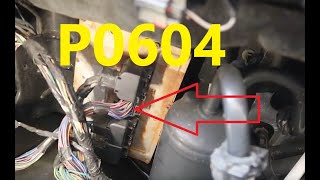
We Have This Part in Stock
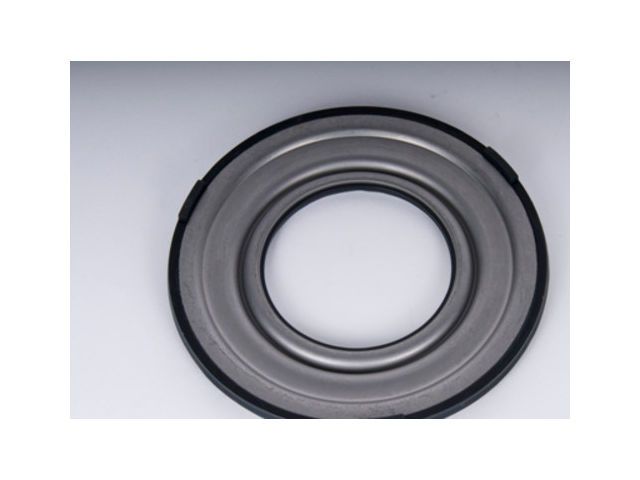
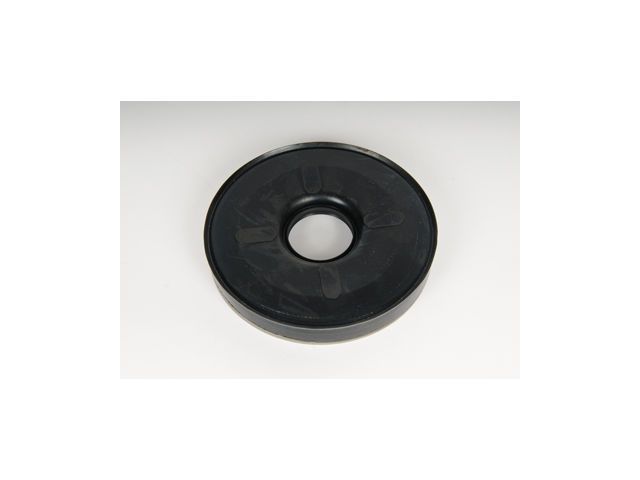



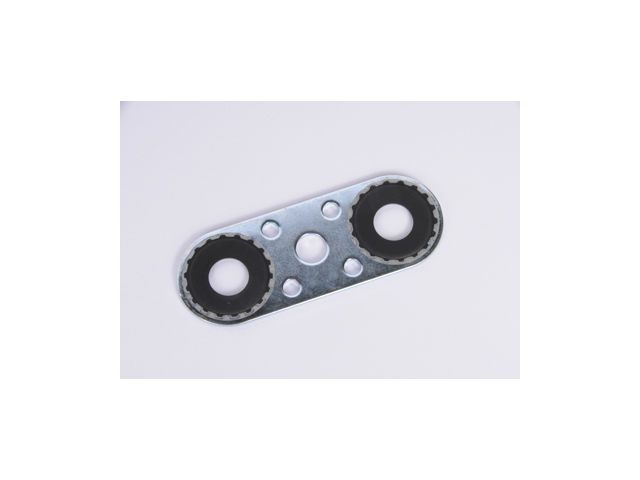

The information in this article is provided for general reference and educational purposes only. Vehicle specifications, procedures, and part compatibility can vary by production date, trim level, and region. Always consult your vehicle's factory service manual and verify part numbers before purchasing or performing repairs. Safety-critical components such as airbags, seat belts, and braking systems should be installed by a qualified professional.
- Cadillac XLR:
- 🧭 Diagnostic Flowchart
- 🎬 Helpful Videos
- 🛍️ Shop This Part
- What's Unique About the 2007-2009 Cadillac XLR
- Symptoms You May Notice
- Most Likely Causes
- Rare But Worth Checking
- Diagnosis Steps
- Parts You'll Likely Need
- Related Codes That Often Appear With This One
- Technical Service Bulletins (TSBs) & Recalls
- Platform-Specific Known Issues
- Mechanic-Grade Diagnostic Values
- Hidden / Shadow Codes Worth Checking
- Scan Tool Commands That Help
- Wiring & Ground Locations
- Real Owner Repair Stories
- OEM Part Supersession History
- Model Year Variations Within This Range
- 🎟️ Get 5% Off