

P0604 on 2011-2015 Chevrolet Camaro: Internal Memory Error Causes and Fixes
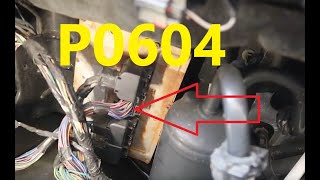
P0604 on a 2011-2015 Camaro indicates an internal RAM error in a control module, most commonly the Transmission Control Module (TCM) or Powertrain Control Module (PCM). The fix is often replacing the faulty module, which requires professional programming. Before replacement, always check the battery and electrical connections, as low voltage is a common trigger.
- P0604 is a serious internal memory error in a control module, most often the TCM or PCM.
- On the 2011-2015 Camaro, GM has specifically identified the Transmission Control Module (TCM) as a likely culprit for this code.
- Before condemning an expensive control module, always perform a thorough test of the battery, alternator, and all related power/ground connections, as electrical issues are a common trigger.
- This is not a DIY-friendly repair. A replacement module must be professionally programmed to the car's VIN.
- If you experience shifting problems along with the check engine light, focus your diagnosis on the TCM.
What's Unique About the 2011-2015 Chevrolet CAMARO
On the 5th generation Camaro, a P0604 code has a notable and well-documented association with the Transmission Control Module (TCM), not just the main engine computer. GM issued a Technical Service Bulletin (PIP4653E) specifically mentioning that P0604 could be stored in the TCM, leading to transmission-related symptoms like harsh shifting or getting stuck in gear. This is a critical distinction, as DIY mechanics might otherwise focus solely on the Engine Control Module (ECM). Forum discussions on Camaro5.com confirm that owners frequently resolve this code by replacing the TCM after experiencing transmission limp mode.
Diagnostic Flowchart
Tap your situation to follow the diagnostic path that matches what you're seeing on this vehicle.
Symptoms You May Notice
- Check Engine Light is on
- Transmission may shift harshly or erratically
- Transmission may get stuck in 2nd or 3rd gear ('limp mode')
- Vehicle may enter 'limp mode' with reduced power
- Engine may stall intermittently or fail to start
- ABS or Traction Control lights may illuminate
- Inability to communicate with the TCM using a scan tool
- Replacing the ECM when the TCM is the actual cause. The presence of transmission-related symptoms like harsh shifting or being stuck in gear is a key indicator to check the TCM first, as per TSB #PIP4653E.
- Condemning a control module before thoroughly testing the battery and charging system. Unstable voltage is a very common trigger for this code.
Most Likely Causes
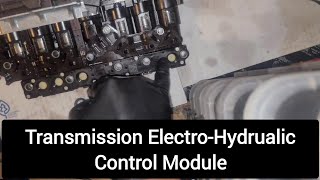
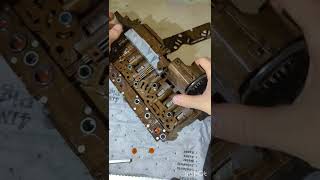
- Failing Transmission Control Module (TCM) 🔴 High Probability → Shop Transmission Assembly GM TSB #PIP4653E specifically points to the TCM as a potential source for this code on the 2011 Camaro and related platforms. The TCM (as part of the TEHCM) is located inside the transmission, subject to heat and vibration, leading to internal hardware failure over time. Owner experiences on forums confirm this is the most common fix.
How to confirm: After ruling out all electrical issues (battery, grounds, wiring), use a professional scan tool to see if the code is isolated to the TCM. Attempting a reflash with official GM software is a key step; if the module cannot be communicated with or the reflash fails, the module is condemned.
Typical fix: Replace the faulty Transmission Control Module (TEHCM assembly) and have it programmed to the vehicle by a dealer or qualified shop with access to GM's programming service.
Est. part cost: $300-$800 - Low or Unstable Battery Voltage 🟡 Medium Probability → Shop Vehicle Battery All modern control modules are sensitive to voltage. A weak battery, failing alternator, or poor connections can cause momentary voltage drops during startup, which can corrupt the module's RAM self-check and trigger a P0604 code. A Camaro5 forum member noted their P0604 appeared after starting the car in extreme cold, a condition that stresses the battery.
How to confirm: Perform a full battery and charging system test. The battery should have over 12.4 volts with the engine off and the alternator should produce 13.5-14.5 volts when running. A load test on the battery is the most definitive test. 🎬 Watch: Understanding P0604 causes and common fixes
Typical fix: Replace the vehicle's battery and clean all battery terminals and main ground connections.
Est. part cost: $150-$250 - Poor Electrical Connections or Grounds ⚪ Low Probability Corrosion on the main power or ground connections to the ECM/TCM can create high resistance, mimicking low voltage and causing memory errors. A Reddit user chasing a persistent P0604 was advised to perform a thorough visual inspection of the wiring harness and check for pin fitment in all related connectors.
How to confirm: Visually inspect the connectors at the ECM and TCM for corrosion or backed-out pins. Check the main engine and chassis ground straps to ensure they are clean and tight. Perform a voltage drop test on the power and ground circuits to the suspect module under load.
Typical fix: Clean corroded connectors and ground points with a wire brush. Apply dielectric grease to protect the connection. Repair any damaged wiring.
Est. part cost: $5-$20
Rare But Worth Checking
- Aftermarket Engine/Transmission Tuning: → Shop Transmission Assembly A poorly written or improperly flashed aftermarket tune can corrupt the module's software or RAM, leading to this code. A Camaro5 forum member experienced a total loss of communication with the TCU after a failed flash attempt with an aftermarket tool, forcing a replacement. Reverting to the stock factory tune using official GM software should be attempted before replacing hardware.
- Unseated Pins in Transmission Connector: → Shop Transmission Assembly While not directly for the Camaro, GM TSB PIC4740E for the related Cadillac STS (which shares the transmission and TCM) points to unseated pins in the main round, twist-lock transmission connector as a cause for communication and performance issues. This is worth inspecting given the shared components.
Diagnosis Steps
- Scan for all DTCs. If P0700 or U0101 is present with P0604, the problem is almost certainly in the transmission control system.
- Perform a complete battery and charging system test. Ensure voltage is stable and within specification (12.4V+ engine off, 13.5-14.5V engine on).
- Inspect all power and ground connections to the battery, engine block, and chassis. A loose or corroded ground is a known cause.
- Visually inspect the wiring harnesses and connectors for the ECM and the main transmission connector. Look for any signs of damage, moisture, or corrosion.
- Clear all DTCs and perform a test drive. If the code returns immediately, it points towards a hard internal fault in the module.
- If possible, attempt to reflash the suspect module (TCM or ECM) with the latest factory software using official GM tools (e.g., Tech 2, GDS2). A failed reflash is a strong indicator of module failure.
- If the code persists after verifying all electrical connections and attempting a reflash, the control module is faulty and must be replaced.
Parts You'll Likely Need
- Transmission Control Module (TCM/TEHCM)
(OEM #24256960, 24296206, 24279973 (Verify by VIN))— As identified in GM TSB #PIP4653E and confirmed by numerous owner accounts, the TCM is the most common point of failure for this code on this platform, especially if transmission symptoms are present. Part numbers are often interchangeable service numbers.
Trusted brands: ACDelco, Dorman
OEM price range: $400-$800
Aftermarket price range: $250-$500 - Powertrain Control Module (PCM/ECM)
(OEM #19300015 (Example for 2011 3.6L V6))— If there are no transmission symptoms and the TCM checks out, the main engine computer is the next most likely cause. Part number is an example for a 2011 3.6L model and must be verified by VIN.
Trusted brands: ACDelco, Cardone
OEM price range: $400-$600
Aftermarket price range: $250-$450
Related Codes That Often Appear With This One
- P0700 — This code means 'Transmission Control System Malfunction'. The TCM will request the ECM to turn on the check engine light by sending a P0700, indicating a transmission-specific fault (like P0604) is stored in the TCM.
- U0101 — This code means 'Lost Communication With TCM'. It often appears alongside or as a result of a P0604 in the TCM, as the internal failure can cause the module to stop communicating on the CAN bus entirely. A forum user reported this exact combination.
- P0601 — This code is for an 'Internal Control Module Memory Check Sum Error'. It's another type of internal module failure. GM TSB #05-06-04-060A groups P0601 and P0604 together as having a similar diagnostic path.
- P1621 — This is a GM-specific code for 'Control Module Long Term Memory Performance'. It is also mentioned in TSB #PIP4653E as a code that can set in the TCM along with P0604.
Technical Service Bulletins (TSBs) & Recalls
- PIP4653E: Information on Malfunction Indicator Lamp with DTCs P0601, P0603, P0604, P062F or P1621 stored in the Transmission Control Module.
- 05-06-04-060A: Information on Control Module Diagnostic Trouble Codes (DTCs) P0601, P0602, P0603, P0604, P0606, P062F, P06F3, P1621.
Platform-Specific Known Issues
- TSB #PIP4653E: Notes that DTCs P0601, P0603, P0604, P062F or P1621 may be found stored in the Transmission Control Module (TCM). The bulletin advises that if the codes are *only* in the TCM, a reprogram should be attempted before replacement.
- TSB #05-06-04-060A: A general bulletin that communicates that P0604 is one of several internal module diagnostic codes that can be shared across multiple different control modules on the vehicle, advising against immediate replacement without full diagnosis.
Mechanic-Grade Diagnostic Values
- TEHCM/TCM Solenoid Resistance (On/Off Shift Solenoids) — expected: 20-40 ohms. Failure: A reading outside this range indicates a failed solenoid, requiring TEHCM replacement.
- TEHCM/TCM Solenoid Resistance (PWM Pressure Control Solenoids) — expected: 3-8 ohms. Failure: A reading outside this range points to an internal solenoid fault within the TEHCM.
- TEHCM/TCM Solenoid Resistance (Alternate Source) — expected: Shift Solenoids: 20-24 ohms; All other solenoids: 5-6 ohms. Failure: Values outside these specific ranges suggest an internal TEHCM solenoid issue.
- Module Voltage During Cranking — expected: Should stay above 9.0 Volts. Failure: Voltage dropping below 9V during startup can corrupt module memory and trigger a false P0604.
- Module Ground Circuit Resistance — expected: Below 0.1 Ω. Failure: Higher resistance indicates a poor ground connection, which can cause various module errors.
- TEHCM Power and Ground at 16-pin Connector — expected: Battery Voltage at Pin 10, Run/Crank Voltage at Pin 12, and continuity to ground at Pin 16.. Failure: Absence of correct voltage or ground at these pins points to a wiring or power supply issue, not necessarily a bad TCM.
Scan Tool Commands That Help
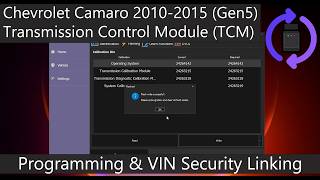
- GDS2 / Techline Connect: SPS (Service Programming System) - Replace and Reprogram — This function is required after installing a new TCM or ECM. It downloads the correct software and calibration from GM's servers and writes the vehicle's VIN into the new module. A failure during this process can indicate a faulty new module or a problem with the programming setup.
- GDS2 / Tech 2: Solenoid Automated Cleaning Process — If a solenoid performance DTC is present alongside P0604, this function can be attempted before replacing the TEHCM. It cycles the solenoids to flush out potential debris that might be causing an electrical or hydraulic fault.
Wiring & Ground Locations
- ECM/TCM Harness Grounds — On the rear of the cylinder heads, near the firewall. A main grounding point is on the passenger side head, which can be difficult to access.. The ECM and TCM rely on these grounds for stable operation. A corroded or loose ground at the back of the head is a known cause of intermittent electrical issues and module faults.
- G105 — Located at the left front of the engine compartment, behind the cooling fan relays.. This ground point serves the Engine Control Module and Transmission Control Module, making its integrity critical for preventing codes like P0604.
- X115 Connector — A large inline harness connector that connects the body wiring harness to the engine wiring harness.. This is a major pass-through for power, ground, and data signals going to the engine and transmission controllers. Corrosion or unseated pins in this connector can interrupt communication and power, leading to module errors.
Real Owner Repair Stories
- gmtruckclub.com forum user (2009 Chevrolet Silverado (Same GMT900 platform and 6L80 transmission)) — Check engine light on, transmission stuck in limp mode.
❌ Tried (didn't work) Initial diagnosis revealed codes P0604 and U0100 (Lost Communication with TCM).
✅ What actually fixed it The final repair was replacing the Transmission Electro-Hydraulic Control Module (TEHCM) located inside the transmission pan. After the new module was installed and programmed, the codes were cleared and did not return. - chevyhhr.net forum user (Chevrolet HHR (different vehicle, but same GM module behavior)) — Code P0604 and a no-crank condition.
❌ Tried (didn't work) Attempting to start the vehicle., Using a slow, low-amperage float charger to recharge a dead battery.
✅ What actually fixed it The owner determined the battery voltage was too low (12.0V). Disconnecting the battery completely from the vehicle, charging it fully with a proper charger to 12.5V+, and then reconnecting it resolved the issue. The slow charge/discharge cycle had likely scrambled the controller's RAM, and a full power reset with a healthy battery cleared the fault.
OEM Part Supersession History
24252114→24256960— Hardware and software updates for improved reliability and performance.
Heads up: Part number 24256960 is a common service replacement for many earlier TEHCMs used in 6L80 transmissions. However, it is critical to verify the correct part number by VIN, as there are multiple hardware versions. Installing the wrong hardware generation, even if it physically fits, can result in a no-start or immediate limp mode.24256960→24296206, 24289415, and others— Continued revisions and consolidation of part numbers for service.
Heads up: The part number 24296206 is listed as a cross-reference for 24256960 but is primarily associated with newer applications (e.g., 2019+ Silverado). Always use the vehicle's VIN to get the exact required part number from a GM catalog before ordering.
Model Year Variations Within This Range
- 2011-2013 vs 2014-2015: While the 6L80 transmission was used throughout the 5th generation, GM made internal revisions to the TEHCM hardware and software over the years. Early modules (closer to 2011) are known to be more prone to pressure switch and solenoid failures. Later modules have improved thermal tolerance and updated logic. While parts may be physically interchangeable, they are not always electronically compatible, making VIN-specific part selection and programming essential.
Helpful Videos

Used OEM Parts in Stock
New Aftermarket Parts Available



The information in this article is provided for general reference and educational purposes only. Vehicle specifications, procedures, and part compatibility can vary by production date, trim level, and region. Always consult your vehicle's factory service manual and verify part numbers before purchasing or performing repairs. Safety-critical components such as airbags, seat belts, and braking systems should be installed by a qualified professional.
- Chevrolet CAMARO:
- 🧭 Diagnostic Flowchart
- 🎬 Helpful Videos
- 🛍️ Shop This Part
- What's Unique About the 2011-2015 Chevrolet CAMARO
- Symptoms You May Notice
- Most Likely Causes
- Rare But Worth Checking
- Diagnosis Steps
- Parts You'll Likely Need
- Related Codes That Often Appear With This One
- Technical Service Bulletins (TSBs) & Recalls
- Platform-Specific Known Issues
- Mechanic-Grade Diagnostic Values
- Scan Tool Commands That Help
- Wiring & Ground Locations
- Real Owner Repair Stories
- OEM Part Supersession History
- Model Year Variations Within This Range
- 🎟️ Get 5% Off