

P0604 on 2011-2015 Chevrolet Caprice: Internal RAM Error Causes and Fixes
P0604 on a 2011-2015 Chevrolet Caprice indicates an internal Random Access Memory (RAM) error in the Powertrain Control Module (PCM). The most common fix is replacing the PCM, which requires professional programming. Before replacement, always check the battery, charging system, and all PCM power and ground connections, as electrical issues are a frequent cause and can trigger this code falsely.
- P0604 is a critical code indicating an internal memory failure in your Caprice's main computer (PCM).
- Do not drive the vehicle, as it can stall or fail to start without warning.
- Before condemning the expensive PCM, thoroughly test the battery, alternator, and all related power and ground connections, as unstable voltage is a primary trigger.
- A software update (reflash) is a possible but less common fix.
- PCM replacement is the most likely repair for a persistent code and requires professional programming to your vehicle's VIN. This is not a DIY job.
What's Unique About the 2011-2015 Chevrolet CAPRICE
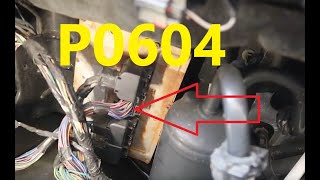
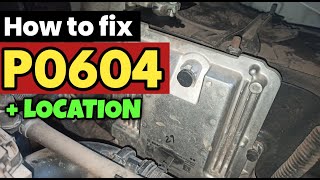
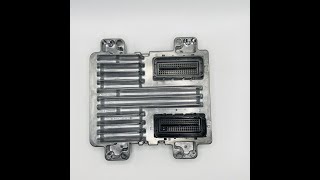
The 2011-2015 Chevrolet Caprice is a unique platform in the US, based on the Australian Holden Caprice (WM/WN series). While the P0604 code is a standard GM fault, its appearance on this vehicle points toward issues common in this era of GM control modules, specifically the ACDelco E38 ECM. The provided NHTSA Technical Service Bulletin (TSB) #05-06-04-060A groups P0604 with a family of internal module diagnostic codes, indicating that GM recognized this as a potential issue across multiple vehicle lines, not just the Caprice. The core problem is almost always related to the module's integrity or its electrical environment, a vulnerability shared with its Zeta platform mates like the Pontiac G8 🎬 See this video to locate the ECU on this platform. and Chevrolet SS. Many of these ex-police vehicles have had their auxiliary battery and police wiring removed, which if not done properly, can create grounding or power supply issues that trigger module errors.
Diagnostic Flowchart
Tap your situation to follow the diagnostic path that matches what you're seeing on this vehicle.
Symptoms You May Notice
- Check Engine Light is on
- Vehicle will not start or is hard to start (may crank but not fire).
- Intermittent stalling, sometimes after running for a few seconds or when coming to a stop.
- Erratic engine performance or sudden loss of power
- Transmission shifting problems, such as harsh shifts or entering 'limp mode'.
- Other warning lights, such as the Anti-lock Brake System (ABS) or Traction Control light, may activate.
- Complete loss of throttle response, with the engine stuck at idle.
- Replacing sensors (e.g., oxygen sensors, MAF sensor) when other codes appear alongside P0604. The P0604 indicates the PCM itself is unreliable, which can cause it to falsely report sensor failures.
Most Likely Causes
- Faulty Powertrain Control Module (PCM) 🔴 High Probability → Shop Engine Control Module (ECM) The ACDelco E38 ECM used in these vehicles can fail internally over time due to heat, vibration, and age, leading to memory corruption. This is often the final diagnosis after all external factors are eliminated.
How to confirm: After ruling out all external factors (power, ground, software), if the code persists, the PCM is condemned. A professional may use a bench tester or attempt a factory reprogram; if the code returns immediately, the module is bad. A forum user with a similar P0603 code on a Caprice confirmed a new ECU was the ultimate fix.
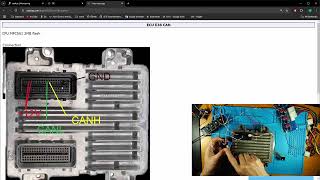
Typical fix: Replace the PCM. The new unit must be programmed with 🎬 Watch: How to clone an E38 ECM via CAN BUS. the vehicle's VIN and specific software, followed by a security relearn procedure.
Est. part cost: $288-$314 - Low Battery Voltage or Charging System Fault 🟡 Medium Probability → Shop Vehicle Battery Control modules require a stable voltage to operate. Low voltage during cranking or voltage spikes from a faulty alternator can corrupt the RAM data, sometimes referred to as a 'brown-out' event. This is a very common trigger for false P0604 codes.
How to confirm: Test the battery voltage at rest (should be >12.4V), during cranking (should stay >9.5V at the module), and with the engine running (13.5V-14.5V). Check for a weak battery or a failing alternator.
Typical fix: Replace the weak battery, faulty alternator, or repair charging system wiring.
Est. part cost: $150-$400 - Poor Electrical Connections 🟡 Medium Probability Corroded or loose battery terminals, main engine/body grounds, or PCM connectors can interrupt power and cause memory errors. On these former police vehicles, leftover or improperly removed police wiring can be a source of bad grounds or intermittent shorts.
How to confirm: Visually inspect and physically check all power and ground connections to the PCM and the battery. Perform a voltage drop test on the power and ground circuits; ground resistance should be below 0.1 Ω.
Typical fix: Clean and tighten all ground connections and PCM harness connectors. Repair any corroded or damaged wiring. Ensure any aftermarket wiring is removed or properly integrated.
Est. part cost: $5-$50 - PCM Software Corruption ⚪ Low Probability Software glitches can sometimes cause the module to write invalid data to RAM, triggering a P0604 code. This can also happen after an improper flash or use of an aftermarket tuner.
How to confirm: Use a GM-compatible scan tool to check if a software update (reflash) is available for the PCM. If the code appeared after a tune, reverting to the stock file can help diagnose.
Typical fix: Update the PCM with the latest software calibration from the manufacturer. This must be done by a dealer or a qualified shop with a J2534 pass-thru device and a subscription to GM's service.
Est. part cost: $100-$200
Rare But Worth Checking
- Aftermarket Tuner or Programmer:
Diagnosis Steps
- Check for other DTCs. If other codes are present, address them first, unless they are also internal module codes (P06xx).
- Verify battery and charging system health. Ensure voltage is stable and within the correct range (12.4V+ at rest, >9.5V during crank, 13.5-14.5V running).
- Inspect all battery terminals, main power cables, and engine/body ground straps for corrosion and tightness. A ground resistance check should show less than 0.1 Ω.
- Check PCM-related fuses. A forum member on a Caprice forum with a similar P0603 code found a blown 'ECM BATT' fuse in the trunk fuse box (#F134).
- Disconnect and inspect the PCM connectors for any signs of corrosion, moisture, or bent/damaged pins.
- Clear the DTCs with a scan tool and perform a test drive. If the code returns immediately, the fault is likely hard-wired (PCM or connections).
- Check for available PCM software updates (reflash) using a professional scan tool and a stable power supply.
- If all external wiring, grounds, and power supplies are confirmed good and the code persists after a reflash attempt, the PCM is faulty and requires replacement.
Parts You'll Likely Need
- Powertrain Control Module (PCM)
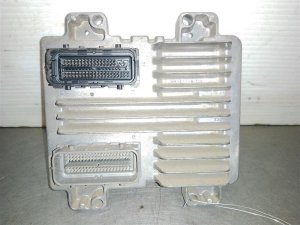
(OEM #12633238, 12653852)— This is the most common cause of a persistent P0604 code after external electrical issues have been ruled out. Part number 12633238 is a common service number for the E38 ECM used in the Caprice and many other GM V8 vehicles of the era.
Trusted brands: ACDelco (Remanufactured)
OEM price range: $288-$314
Aftermarket price range: $200-$400 (Remanufactured)
Related Codes That Often Appear With This One
- P0601 — This code indicates an Internal Control Module Memory Check Sum Error. Like P0604, it points to a critical internal failure of the PCM.
- P0606 — This code indicates an ECM/PCM Processor Fault. It often appears with other P06xx codes and reinforces the diagnosis of a failed control module.
- U-codes (e.g., U0100) — U-codes indicate a loss of communication with a specific module. If the PCM is failing internally, it may stop communicating with other modules on the vehicle's network, such as the TCM or BCM.
Technical Service Bulletins (TSBs) & Recalls
- 05-06-04-060A: This informational bulletin from GM lists P0604 as part of a group of internal control module DTCs (P0601, P0602, P0603, P0604, P0606, etc.) that can be set in multiple modules. It advises technicians that these codes often instruct to replace the module after diagnosis and that the issue is not specific to any single model but can occur on any 2005 and newer GM vehicle.
Platform-Specific Known Issues
- Improper Removal of Police Equipment: Many Caprice PPVs have had their police-specific wiring and auxiliary battery systems removed. If this is done incorrectly, it can leave behind unterminated wires, create poor grounds, or cause voltage supply issues to the main electrical system, which can trigger module faults like P0604. A thorough inspection of the trunk and passenger footwell areas for leftover wiring is recommended.
Mechanic-Grade Diagnostic Values
- PCM Ground Circuit Resistance — expected: Less than 0.1 Ω. Failure: A reading higher than 0.1 Ω indicates excessive resistance in the ground circuit, which can cause intermittent module resets and memory errors.
- Battery Voltage During Cranking (at PCM) — expected: Should remain above 9.6 Volts. Failure: A drop below 9.6V indicates a weak battery or excessive voltage drop in the starting circuit, which can corrupt the PCM's RAM during startup.
- Charging System Voltage (Engine Running) — expected: 13.5V - 14.5V. Failure: Voltage below 13.5V or above 14.5V indicates a faulty alternator or voltage regulator, which can lead to an unstable power supply for the PCM.
- PCM Ignition 1 Voltage (Pin 19 on X1 Connector) — expected: Battery voltage with key in ON or RUN position. Failure: Low or no voltage indicates a problem in the ignition switch circuit supplying power to the PCM.
- PCM Battery Positive Voltage (Pin 20 on X1 Connector) — expected: Constant battery voltage (Hot at all times). Failure: Low or no voltage points to a blown fuse or a break in the main power feed to the PCM, affecting Keep Alive Memory (KAM).
Scan Tool Commands That Help
- GM GDS2 / Tech2: Service Programming System (SPS) — This is required after installing a new PCM to flash the correct, VIN-specific software and calibrations to the module. Without this step, the vehicle will not start.
- GM GDS2 / Tech2: Crankshaft Position Variation Learn — This procedure must be performed after PCM replacement to synchronize the new module with the crankshaft position sensor's signal, preventing a P0315 code and ensuring accurate misfire detection.
- GM GDS2 / Tech2: Theft Deterrent Relearn — Required after PCM replacement to match the new module to the vehicle's immobilizer system. If skipped, the engine will be disabled by the anti-theft system.
- GM GDS2 / Tech2: Idle Learn Reset — Used after PCM replacement or reprogramming to clear old idle data and force the module to relearn the throttle body's idle position for a stable idle.
Wiring & Ground Locations
- G101 — On the left side (driver's side) of the engine block.. This is a primary ground point for the Engine Control Module (ECM). A poor connection here can directly cause unstable ECM operation and trigger internal memory faults like P0604.
- G103 — On the cowl in the left rear of the engine compartment, often near the brake booster.. This ground serves multiple modules, including the Body Control Module (BCM) and the Data Link Connector (DLC). A fault here can cause communication issues and widespread electrical problems that may indirectly trigger a PCM fault code.
- G304 — In the trunk, related to the rear auxiliary battery power junction block.. This is a ground distribution point for the police-specific equipment. If police wiring was improperly removed, this ground point could be loose or damaged, affecting the vehicle's overall electrical stability.
- ECM Connector X1, Pin 19 (Ignition 1 Voltage) — The main (black) connector on the E38 ECM.. This pin supplies key-on power to the ECM. A voltage drop or intermittent connection here will cause the ECM to shut down and restart, potentially corrupting RAM.
- ECM Connector X1, Pin 20 (Battery Positive Voltage) — The main (black) connector on the E38 ECM.. This pin provides constant power to maintain the Keep Alive Memory (KAM) in the RAM. A poor connection here is a direct cause of memory-related fault codes.
Real Owner Repair Stories
- YouTube channel 'DanielJaegerFilms' (2010 Chevrolet Silverado (similar GMT900 platform and E38 ECM)) — Check Engine Light was on with only code P0604 present. The truck ran fine otherwise.
❌ Tried (didn't work) Removing all aftermarket wiring., Reprogramming (reflashing) the original ECM with the latest software update via GM's SPS. The P0604 code returned immediately after the reflash.
✅ What actually fixed it The Engine Control Module (ECM) was replaced with a new unit. The new ECM was then programmed using GM's Service Programming System (SPS), followed by an Idle Learn Reset, a Theft Deterrent Relearn, and a Crankshaft Position Variation Learn procedure. This permanently cleared the P0604 code.
OEM Part Supersession History
12597121, 12612384, 12625455→12633238— Standard component revisions and updates by the manufacturer.12633238→12653852— Later service replacement part number for the same E38 ECM hardware family.
Heads up: While physically interchangeable, the correct software and calibration must be flashed for the specific vehicle VIN and model year. Using a module from a different vehicle without proper programming will not work.
Model Year Variations Within This Range
- 2014-2015 (WN Series): The 2014 model year marked the switch from the WM to the WN platform. WN models feature a completely redesigned interior, dashboard, and center console with the GM MyLink infotainment system. This introduced a different electrical architecture for the cabin and could present different diagnostic paths for issues related to the BCM or data communication networks.
- 2014-2015 (WN Series): The front suspension knuckle was changed from cast iron on the WM to aluminum on the WN. This changes the design of the strut-to-knuckle mounting point, making front struts and coilovers non-interchangeable between WM and WN models.
Helpful Videos
Used OEM Parts in Stock
New Aftermarket Parts Available

The information in this article is provided for general reference and educational purposes only. Vehicle specifications, procedures, and part compatibility can vary by production date, trim level, and region. Always consult your vehicle's factory service manual and verify part numbers before purchasing or performing repairs. Safety-critical components such as airbags, seat belts, and braking systems should be installed by a qualified professional.
- Chevrolet CAPRICE:
- 🧭 Diagnostic Flowchart
- 🎬 Helpful Videos
- 🛍️ Shop This Part
- What's Unique About the 2011-2015 Chevrolet CAPRICE
- Symptoms You May Notice
- Most Likely Causes
- Rare But Worth Checking
- Diagnosis Steps
- Parts You'll Likely Need
- Related Codes That Often Appear With This One
- Technical Service Bulletins (TSBs) & Recalls
- Platform-Specific Known Issues
- Mechanic-Grade Diagnostic Values
- Scan Tool Commands That Help
- Wiring & Ground Locations
- Real Owner Repair Stories
- OEM Part Supersession History
- Model Year Variations Within This Range
- 🎟️ Get 5% Off