

P0604 on 2007-2014 Chevrolet Corvette: Internal RAM Error Causes and Fixes
P0604 on a C6 or early C7 Corvette indicates an internal Random Access Memory (RAM) error in a control module, most commonly the Transmission Control Module (TCM) or Engine Control Module (ECM). The most frequent causes are low battery voltage or a software issue requiring a reflash, though module failure is also possible. For 2006+ models with the A6 automatic, the fault is almost always traced to the internal TCM, also known as the TEHCM.
- P0604 indicates a RAM (short-term memory) error in a control module, usually the ECM or TCM.
- Before suspecting an expensive module failure, thoroughly check the battery, alternator, and all ground connections. Low voltage is a very common cause.
- This code is specifically mentioned in GM TSBs for the Corvette, particularly in relation to the Transmission Control Module (TCM).
- A software reflash by a dealer or qualified shop can often fix this code if it's caused by a glitch.
- If the module must be replaced, it will require programming to your vehicle's VIN.
What's Unique About the 2007-2014 Chevrolet CORVETTE
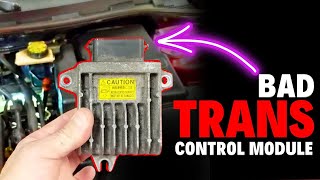
On the 2007-2014 Corvette with the 6-speed (6L80) automatic transmission, this code is very specifically linked to the Transmission Control Module (TCM). Unlike the 2005 model's external TCM, the 2006+ models feature a TCM that is integrated with the valve body and solenoids inside the transmission oil pan. This integrated unit is called a Transmission Electro-Hydraulic Control Module (TEHCM). Its location subjects it to constant heat and vibration, leading to a higher failure rate. TSB #PIP4653E directly points technicians to investigate the TCM for this code, confirming it's a known issue. TSB #05-06-04-060A further notes that such internal module codes can be set across various modules, but on this platform, the TEHCM is the primary suspect.
Diagnostic Flowchart
Tap your situation to follow the diagnostic path that matches what you're seeing on this vehicle.
Generation note: The 2007-2013 models belong to the C6 generation. The 2014 model is the first year of the C7 generation. TSB #PIP4653E was issued in June 2014, indicating it may apply to both late C6 and early C7 models with the 6L80 automatic transmission. A key difference is the TCM location: on 2005 C6 models with the A4 automatic, the TCM is external and located behind the ECM. On 2006+ C6 and C7 models with the A6 (6L80) automatic, the TCM is the TEHCM, located inside the transmission itself, making replacement more labor-intensive.
Symptoms You May Notice
- Check Engine Light is on.
- Transmission may shift harshly, erratically, or enter a "limp mode" (often stuck in one gear).
- "Service Traction Control" or "Service Active Handling" messages on the Driver Information Center (DIC).
- Engine may stall intermittently, hesitate, or have a rough idle.
- Hard starting or no-start conditions.
- ABS or Traction Control lights may illuminate.
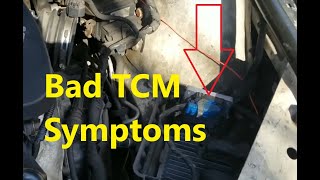
- Speedometer may not work if communication with the TCM is lost. 🎬 See more common symptoms of a failing transmission control module.
- Replacing the TCM/TEHCM immediately without first thoroughly testing the battery, alternator, and all main power/ground connections. A weak power supply is a very common and much cheaper fix to rule out first.
Most Likely Causes
- Low Battery Voltage or Poor Connections 🔴 High Probability → Shop Vehicle Battery Corvettes are known to be highly sensitive to battery voltage. A weak battery, failing alternator, or corroded/loose ground connections can cause momentary voltage drops ('brown-outs') during cranking that corrupt the module's RAM and trigger a P0604 code.
How to confirm: Test the battery voltage with a multimeter; it should be above 12.4V (ideally 12.6V+) with the engine off. During cranking, voltage should not drop below 9.6V. With the engine running, alternator output should be between 13.5V and 14.5V. Inspect all battery terminals and main chassis/engine ground straps (e.g., G103 on the passenger-side cylinder head) for corrosion and tightness. 🎬 Watch: How to find and clean your Corvette ground wires.
Typical fix: Charge or replace the battery. Clean or tighten battery terminals and ground connections. Many owners on forums report that a new battery or cleaning ground points resolves mysterious electrical issues.
Est. part cost: $0-$250 - Faulty Transmission Control Module (TEHCM) 🔴 High Probability → Shop Transmission Assembly The internal TEHCM in the 6L80 transmission is a known failure point across many GM vehicles. Subjected to constant thermal cycles and vibration inside the transmission, the module's internal electronics, including the RAM, can fail. TSB #PIP4653E specifically points to the TCM as the likely source of the code.
How to confirm: This is typically confirmed after ruling out all other possibilities. If the battery, grounds, and wiring are good, and a software reflash doesn't work (or isn't available), the TEHCM itself is the culprit. A professional scan tool can confirm the code is originating from the TCM.
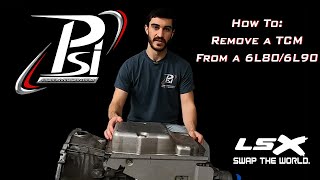
Typical fix: Replace the faulty TEHCM. This involves dropping the transmission pan and valve body. 🎬 Watch: Step-by-step guide to removing the internal TCM. The new module must be programmed to the vehicle's VIN using a GM-specific tool like a Tech 2 or a J2534 pass-thru device.
Est. part cost: $300-$1200 - Control Module Software Corruption 🟡 Medium Probability TSBs for this platform suggest software issues are a known problem. An incomplete update, a glitch, or an issue with an aftermarket tune can trigger a RAM error.
How to confirm: This requires a professional scan tool (like a Tech 2 for GM) to check the current software calibration ID and see if an update is available from the manufacturer via TIS2WEB or similar service.
Typical fix: Reflash the affected module (TCM or ECM) with the latest factory software. If an aftermarket tune is present, flashing back to the stock tune can resolve the issue, as confirmed by users on CorvetteForum.
Est. part cost: $0
Rare But Worth Checking
- Aftermarket Tuning Device: A CorvetteForum user with a 2010 C6 reported that code P0604 appeared immediately after loading an email tune. The issue was resolved by the tuner after the owner first flashed back to the stock file, confirming the tune file itself was the cause. A bad tune can cause memory or checksum errors.
- Wiring Harness Issue: While less common than module or power issues, a damaged wire or loose connector pin at the ECM or the main transmission case connector can interrupt power, ground, or data signals, leading to memory faults. A deformed seal on the X184 transmission-to-engine harness connector has been noted by owners to cause issues after car washes.
- Faulty Engine Control Module (ECM): → Shop Engine Control Module (ECM) While the TCM is the more common culprit on this platform, the P0604 code can also originate in the ECM. Diagnostic procedures sometimes state that if other specific transmission codes are *not* present alongside P0604, the ECM should be replaced. This is less likely but still possible.
Diagnosis Steps
- Check Battery Health & Charging System: Ensure the battery is fully charged (12.6V+ engine off) and holds a load. Verify the alternator is charging correctly (13.5-14.5V engine on). A weak battery is a top cause of this code on Corvettes.
- Inspect Power and Ground Connections: Clean and tighten battery terminals. Inspect the main engine ground strap and the primary module grounds (like G103 on the passenger cylinder head and the grounds under the battery tray) for tightness and absence of corrosion.
- Scan All Modules: Use a professional scan tool (GM Tech 2 / GDS2) to read codes from ALL modules (ECM, TCM, BCM, EBCM). Confirm that the P0604 code is being set by the Transmission Control Module (TCM), as is common. Check for any symptom bytes associated with the code.
- Clear Codes and Test Drive: Clear the DTCs, disconnect any aftermarket OBD-II devices, and drive the vehicle to see if the code returns. If it doesn't, the issue may have been a temporary voltage drop or interference.
- Check for Software Updates (Reflash): If the code returns, use a scan tool with access to GM's TIS (Technical Information System) to check if a software update is available for the TCM. Reflashing the module is a common fix.
- Inspect Module Wiring: Visually inspect the main wiring harness connector at the transmission case (X184) for any signs of damage, corrosion, or loose pins. Check for chafed wiring under the vehicle.
- Module Replacement: If all previous steps fail, the TEHCM (internal TCM) has likely failed. Replacement requires dropping the transmission pan and valve body, followed by programming the new module to the vehicle's VIN.
Parts You'll Likely Need
- Transmission Control Module (TCM/TEHCM)
(OEM #24256861)
Related Codes That Often Appear With This One
- P0700 — This is a generic code indicating the Transmission Control Module has requested the MIL (Check Engine Light) to be turned on. It's a gateway code that tells you to look for more specific codes within the TCM, such as P0604.
- P0601 — This indicates an Internal Control Module Memory Check Sum Error. Both P0601 and P0604 point to internal module faults and are listed together in TSB #PIP4653E and #05-06-04-060A.
- P0603 — This indicates an Internal Control Module Keep Alive Memory (KAM) Error. It's another memory-related fault often seen with P0604, as mentioned in the same TSBs.
- P062F — This indicates an Internal Control Module EEPROM Error. It is also cited alongside P0604 in TSBs #PIP4653E and #05-06-04-060A, pointing to a family of related module integrity codes.
- P1621 — This GM-specific code relates to Control Module Long Term Memory Performance. It is also listed in TSBs #PIP4653E and #05-06-04-060A as a related code.
Technical Service Bulletins (TSBs) & Recalls
- PIP4653E: Addresses P0604 and other codes being stored in the Transmission Control Module, guiding technicians to suspect the TCM first.
- 05-06-04-060A: Informs technicians that internal module fault codes like P0604 can be set by various modules and to identify the source module before replacement.
Platform-Specific Known Issues
- TSB #PIP4653E: This bulletin directly addresses DTCs P0601, P0603, P0604, P062F, or P1621 being stored in the Transmission Control Module (TCM). It instructs technicians to confirm the code is set in the TCM, strongly indicating the internal TEHCM is the known point of failure for this code on this platform.
- TSB #05-06-04-060A: This is a broader informational bulletin informing technicians that P0604 and similar internal module codes can be shared among different control modules. It advises technicians to use a scan tool to identify exactly which module has set the DTC before proceeding with diagnosis.
- TEHCM Failure: The Transmission Electro-Hydraulic Control Module (TEHCM) used in the 6L80 transmission is a well-documented failure point. It combines the TCM, solenoids, and pressure switches into one unit inside the transmission, where it is exposed to heat and vibration that can lead to electronic failure.
Mechanic-Grade Diagnostic Values
- Module Ground Circuit Resistance — expected: < 0.1 Ω. Failure: A reading higher than 0.1 Ohms indicates excessive resistance in the ground circuit, which can cause voltage drops and module malfunction.
- Battery Voltage (cranking) — expected: > 9.6V. Failure: Voltage dropping below 9.6V during engine crank can cause control modules to reset or store false memory error codes like P0604.
- Alternator Output Voltage (engine running) — expected: 13.5 - 14.5 Volts. Failure: Voltage below 13.5V may indicate a failing alternator, while voltage above 14.8V can damage electronic modules.
- 6L80 TEHCM Shift Solenoid Resistance (On/Off type) — expected: 20 - 40 Ω. Failure: A resistance reading outside this range indicates a failed solenoid, which is internal to the TEHCM and requires module replacement.
Hidden / Shadow Codes Worth Checking
- Symptom Byte (e.g., '71'): GM uses two-digit hexadecimal symptom bytes to add context to a DTC. For example, a symptom byte of '71' can indicate 'Invalid Serial Data Received,' pointing toward a communication or software issue rather than a pure hardware failure. (see via Visible using dealer-level scan tools like the GM GDS2 (Global Diagnostic System 2) or a Tech 2. Basic OBD-II readers will not display them.)
Scan Tool Commands That Help
- GM GDS2/Tech2: Service Programming System (SPS) — This function is required after replacing the TCM/TEHCM or ECM to download the correct VIN-specific software and calibration files to the new module. The vehicle will not operate correctly without this step.
- GM GDS2/Tech2: Fast Learn / Reset Adapts — After a new TEHCM is programmed, this function must be performed to allow the module to learn the specific hydraulic characteristics of the transmission and ensure proper shift quality.
Wiring & Ground Locations
- G103, G105, G106 — These are primary engine and chassis grounds located on the passenger side of the engine bay, near the cylinder head and frame rail. G106 is often found under the battery tray.. Corrosion or looseness at these points can cause intermittent voltage drops to the ECM and TCM, triggering memory-related codes like P0604. They are a critical first check.
- X184 — This is the main inline harness connector that joins the engine harness to the transmission harness. On a C6 Corvette, it is located in the engine compartment on the passenger side, near the firewall.. This connector carries all power, ground, and data signals to the TCM/TEHCM. A poor connection, corrosion, or a deformed seal (which can let water in) can directly cause communication loss and trigger P0604.
Real Owner Repair Stories
- CorvetteForum user (2010 Corvette C6 A6) — Check engine light with code P0604 appeared immediately after loading an e-mail tune file with an AutoCal device.
❌ Tried (didn't work) Doing a full re-flash of both the ECM and TCM with the tuner's file., Attempting to clear the code with the AutoCal device.
✅ What actually fixed it The owner flashed the vehicle back to the stock tune files, which resolved the issue. The tuner then corrected the tune file, confirming the aftermarket calibration was the direct cause of the P0604 code. - CorvetteForum user 'drjorde' (C6 Corvette (year not specified)) — A series of erroneous, random trouble codes were being set.
❌ Tried (didn't work) Initial diagnostics pointed to various sensor issues.
✅ What actually fixed it The owner suspected a grounding issue and took the car to a dealer with instructions to clean every ground on the car. The dealer cleaned the main ground points, and this action completely fixed the problem of random codes appearing.
OEM Part Supersession History
24241350 / 24252114→24256861 / 24256863— Used in early Gen 1 6L80s (2006-2009), these TEHCMs were prone to pressure switch failures. The subsequent part numbers featured improved solenoids and an updated pressure manifold gasket.
Heads up: TEHCMs from 2006-2009 are generally interchangeable. However, TEHCMs from 2010, 2011, and 2012 are often specific to their model year and not interchangeable with other years due to software and communication differences.24256861→Multiple numbers including 24275873, 24261870, and ultimately service part number 19435614.— Continuous improvements to address internal component failures, improve thermal tolerance, and update logic.
Heads up: A 2014 TEHCM (e.g., 24274046) is not interchangeable with earlier units due to integrated calibration changes. Always verify the correct part number for the specific vehicle year and VIN before ordering.
Model Year Variations Within This Range
- 2007-2009 vs 2010-2013: The TEHCMs used in 2007-2009 Corvettes are generally interchangeable with each other. However, starting in 2010, the TEHCMs became year-specific and are not backward or forward compatible. For example, a 2011 TEHCM will not work in a 2008 model, and vice-versa, due to differences in the internal software and communication protocols expected by the ECM.
- 2014: The 2014 Corvette, as the first year of the C7 generation, uses a different TEHCM (e.g., part number family starting with 2427xxxx) with integrated calibration changes that make it non-interchangeable with any C6 TEHCMs.
Helpful Videos

We Have This Part in Stock



The information in this article is provided for general reference and educational purposes only. Vehicle specifications, procedures, and part compatibility can vary by production date, trim level, and region. Always consult your vehicle's factory service manual and verify part numbers before purchasing or performing repairs. Safety-critical components such as airbags, seat belts, and braking systems should be installed by a qualified professional.
- Chevrolet CORVETTE:
- 🧭 Diagnostic Flowchart
- 🎬 Helpful Videos
- 🛍️ Shop This Part
- What's Unique About the 2007-2014 Chevrolet CORVETTE
- Symptoms You May Notice
- Most Likely Causes
- Rare But Worth Checking
- Diagnosis Steps
- Parts You'll Likely Need
- Related Codes That Often Appear With This One
- Technical Service Bulletins (TSBs) & Recalls
- Platform-Specific Known Issues
- Mechanic-Grade Diagnostic Values
- Hidden / Shadow Codes Worth Checking
- Scan Tool Commands That Help
- Wiring & Ground Locations
- Real Owner Repair Stories
- OEM Part Supersession History
- Model Year Variations Within This Range
- 🎟️ Get 5% Off