

P0604 on 2007-2014 Chevrolet Equinox: Internal RAM Error Causes and Fixes
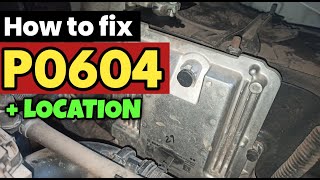
On a 2007-2014 Equinox, P0604 indicates a RAM error, often in the Transmission Control Module (TCM). Before replacing the module, check for low battery voltage and ensure all power and ground connections are clean and tight, as this is a common and inexpensive root cause. For 2010-2014 models, the TCM is located inside the transmission, making replacement a more complex and costly repair.
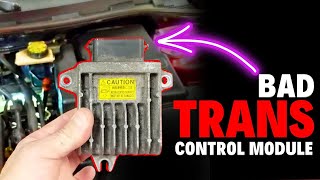
- P0604 on a Chevy Equinox is a serious code indicating a memory failure, often within the Transmission Control Module (TCM).
- Always check the battery and electrical connections first. A simple fix like cleaning terminals or replacing an old battery can often resolve this code.
- Do not immediately assume the main engine computer (ECM) is bad; a GM TSB specifically points to the TCM as a likely culprit. [Bulletin #PIP4653E]
- Replacement of a TCM or ECM is not a simple DIY task as it requires professional programming to match the vehicle's VIN.
What's Unique About the 2007-2014 Chevrolet EQUINOX
While P0604 is a generic code for a RAM error, its specific context on the 2007-2014 Equinox is noteworthy. Chevrolet issued Technical Service Bulletins (TSBs) clarifying that this DTC, along with others like P0601 and P1621, may be found specifically in the Transmission Control Module (TCM). [Bulletin #PIP4653E] This is a crucial distinction, as mechanics might otherwise focus solely on the main Engine Control Module (ECM), potentially misdiagnosing the problem. The location of the TCM inside the transmission on second-generation models (2010+) also makes this repair more involved than on many other vehicles.
Diagnostic Flowchart
Tap your situation to follow the diagnostic path that matches what you're seeing on this vehicle.
Generation note: This range covers the end of the first generation (2007-2009) and the beginning of the second generation (2010-2014). The relevant TSBs apply to vehicles in both generations. However, the repair complexity is significantly higher for the second generation due to the TCM being located inside the 6T40/6T45 transmission.
Symptoms You May Notice
- Check Engine Light (Malfunction Indicator Lamp) is on
- Transmission may exhibit harsh or erratic shifting, or get stuck in one gear
- Vehicle may stall intermittently or fail to start
- ABS or Traction Control lights may illuminate
- Engine RPMs climb without acceleration, indicating transmission slippage or incorrect gear command
- Failure to pass emissions testing due to the OBD-II monitor fault
- Replacing the ECM when the fault is in the TCM. The TSBs are key to avoiding this by specifically checking the transmission module for codes.
- Replacing a control module when the actual cause is a weak battery or a poor ground connection.
- Condemning the transmission for harsh shifting when the root cause is a faulty TCM.
Most Likely Causes
- Low Battery Voltage or Poor Connection 🔴 High Probability → Shop Vehicle Battery Control modules are sensitive to voltage fluctuations. An aging battery, corroded terminals, or a weak charging system can cause temporary memory faults during startup, falsely triggering a P0604 code.
How to confirm: Test the battery with a multimeter; it should read ~12.6V with the engine off and 13.7V-14.7V while running. Check battery terminals and main ground connections for corrosion or looseness. A voltage drop during cranking below 9.5V is a strong indicator of a weak battery.
Typical fix: Clean battery terminals and cable ends. If the battery is old or fails a load test, replace it. This is the most common and cheapest fix and should always be the first step.
Est. part cost: $150-$300 - Faulty Transmission Control Module (TCM) 🟡 Medium Probability → Shop Transmission Assembly A GM Technical Service Bulletin specifically points to the TCM as a location where this code may be stored, indicating a known issue with the module itself. [Bulletin #PIP4653E] On 2010-2014 models, the TCM is internal to the transmission, where it is subjected to heat and vibration, contributing to failure.
How to confirm: After ruling out power/ground issues, use a professional scan tool to confirm the code is stored in the TCM. If the code cannot be cleared or returns immediately after a battery reset, the module is likely faulty.
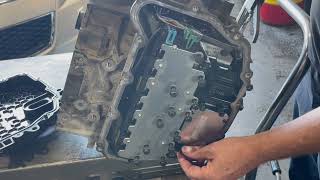
Typical fix: Replace the Transmission Control Module. For 2010-2014 models, this requires draining the transmission fluid, removing the side cover, and replacing the module/valve body assembly. The new module will require programming to the vehicle's VIN.
Est. part cost: $300-$700 - Faulty Engine Control Module (ECM/PCM) ⚪ Low Probability → Shop Engine Control Module (ECM) While the TCM is a more specific point of failure on this platform, the ECM can also set this code for the same internal RAM fault reason.
How to confirm: A professional scan tool is used to confirm the code is originating from the ECM and not another module. All power and ground circuits to the ECM must be verified before condemning the unit.
Typical fix: Replace the Engine Control Module and program it to the vehicle.
Est. part cost: $400-$800
Rare But Worth Checking
- Software Glitch: Sometimes the code can be set due to a temporary software issue. A module reflash with the latest calibration from the manufacturer can sometimes resolve the problem without replacing hardware.
- Wiring Harness Issues: Damaged wiring or corroded connector pins for the TCM or ECM can cause intermittent power loss or data corruption, leading to a RAM error code. This can be common after major engine or transmission work if a connector is not fully seated.
- Blown TCM Fuse: The TCM is protected by one or more fuses. A blown fuse will cut power and can cause communication errors or a P0604 code. For 2010-2017 models, a key 15A TCM fuse is in position 44 of the under-hood fuse box.
Diagnosis Steps
- Scan for all DTCs in all modules. Note if P0604 is present in the ECM, TCM, or both. This is the most critical first step.
- Check for the presence of other codes listed in TSBs, such as P0601, P0603, or P1621.
- Perform a complete battery and charging system test. Ensure battery voltage is stable at ~12.6V engine-off and 13.7V-14.7V while running. A weak battery is a very common cause.
- Inspect all battery terminals, main power feeds, and ground straps for the engine and transmission. Clean and tighten as necessary.
- Check the TCM-specific fuse(s). For 2010-2017 models, inspect the 15A fuse in slot 44 of the under-hood fuse box.
- Clear all DTCs, disconnect the battery for 30 minutes to reset all modules, reconnect, and perform a drive cycle. See if the P0604 code returns.
- If the code returns, use an advanced scan tool to check the software calibration of the affected module (TCM or ECM). Check for available updates from GM.
- If no updates are available and power/grounds/fuses are good, the affected control module is the most likely cause of the failure and requires replacement.
Parts You'll Likely Need
- Transmission Control Module (TCM)
(OEM #24256524 (For 2nd Gen 6T40/6T45, verify with VIN))— A known issue on this platform, as documented by GM TSBs, points to the TCM as a common source for this code. [Bulletin #PIP4653E] Part number 24256524 is a common replacement for the 6-speed automatic TCM.
Trusted brands: ACDelco, Dorman (Remanufactured)
OEM price range: $400-$700
Aftermarket price range: $250-$500 - Automotive Battery — Low voltage is a primary trigger for spurious control module memory codes.
Trusted brands: ACDelco, DieHard, Interstate
OEM price range: $200-$300
Aftermarket price range: $150-$250 - Transmission Fluid & Gasket — Required when replacing the internal TCM on 2010-2014 models. The transmission side cover must be removed.
Trusted brands: ACDelco DEXRON-VI
OEM price range: $80-$150
Aftermarket price range: $50-$100
Related Codes That Often Appear With This One
- P0601 — This code indicates an Internal Control Module Memory Check Sum Error, another type of internal module fault. TSBs #PIP4653E and #05-06-04-060A list it alongside P0604.
- P0603 — This code relates to a Keep Alive Memory (KAM) error, which is closely related to a RAM error. TSBs #PIP4653E and #05-06-04-060A also list this code.
- P1621 — This is a GM-specific code for Control Module Long Term Memory Performance. It often appears with other module integrity codes as noted in TSBs #PIP4653E and #05-06-04-060A.
Technical Service Bulletins (TSBs) & Recalls
- PIP4653E: Notes that DTCs P0601, P0603, P0604, P062F or P1621 may be stored in the Transmission Control Module. Instructs technicians to verify which module contains the code before replacing parts.
- 05-06-04-060A: An informational bulletin that mentions DTC P0604 can be shared across multiple modules, reinforcing the need for careful diagnosis.
Platform-Specific Known Issues
- Internal TCM on 2nd Gen Models: For the 2010-2014 Equinox with the 6T40 or 6T45 6-speed automatic transmission, the TCM is not an easily accessible external part. It is located inside the transmission, bolted to the valve body. Replacement requires draining the fluid, removing the driver's side wheel and wheel well liner, and then removing the transmission side cover. This increases labor time from ~1 hour to 3-5 hours compared to an external module, significantly raising the total repair cost.
Mechanic-Grade Diagnostic Values
- 6T40/6T45 Pressure Control Solenoid (PCS) Resistance — expected: 3-5 Ohms. Failure: A reading outside this range (e.g., open circuit or short) indicates a faulty solenoid which can damage the TCM.
- 6T40/6T45 Shift Solenoid Resistance — expected: 16-20 Ohms. Failure: A reading outside this range indicates a faulty shift solenoid.
- CAN Bus Resistance at DLC — expected: ~60 Ohms between Pin 6 (CAN High) and Pin 14 (CAN Low) with battery disconnected.. Failure: A reading of 120 Ohms suggests a break in the CAN circuit or a module offline. A reading near 0 Ohms indicates a short between the CAN wires.
- CAN Bus Voltage at DLC — expected: Key On, Engine Off: CAN High (Pin 6) to Ground should be ~2.6V. CAN Low (Pin 14) to Ground should be ~2.1V.. Failure: Voltages that are stuck high, low, or are equal to each other indicate a circuit fault.
- PCM Ground Circuit Resistance (2.4L Engine) — expected: ~0.9 Ohms from the PCM ground pins to the battery negative terminal.. Failure: High resistance indicates a poor ground connection at G112 or elsewhere in the circuit.
Scan Tool Commands That Help
- GDS2 (Global Diagnostic System 2): Module Replacement & Reprogramming (within Techline Connect/SPS) — This function is required after replacing the TCM or ECM. It downloads the correct software and VIN to the new module.
- GDS2 (Global Diagnostic System 2): Transmission Adaptive Learn Procedure — Must be performed after TCM programming or replacement to reset and relearn transmission shift points and clutch pressures for smooth operation.
- GDS2 with DT 48616 Test Plate: Solenoid Valve Test — Used to individually command each transmission solenoid on and off while applying shop air, allowing a technician to verify the mechanical function of each solenoid and valve by observing pressure changes on a gauge.
Wiring & Ground Locations
- G112 — On the engine block, serves as a primary ground point for the PCM on the 2.4L engine.. A poor connection at this ground can cause various PCM communication and internal errors, including P0604.
- G104 / G106 / G107 — Main engine/transmission ground straps, typically located on the engine block near the starter or on the transmission case itself.. These are the main return paths for the ECM and TCM. Corrosion or looseness here can cause unstable voltage and trigger memory fault codes.
- Fuse F44 (Underhood) — In the underhood fuse block, position 44.. This is a primary 15A fuse for the Transmission Control Module on 2010-2017 models. A blown fuse will cause a loss of power to the TCM, leading to codes like P0604.
- Other TCM Fuses (2010-2017) — Fuse F25 (Interior), Fuses F17 and F52 (Underhood).. These are additional fuses that supply power to the TCM circuits. They should be checked along with the main F44 fuse.
Real Owner Repair Stories
- Diag.net forum user (2011 Chevrolet Equinox LT/LS 2.4L FWD) — No crank, no start, no communication with PCM, TCM, and Power Steering Module. Vehicle was in limp mode (4th and reverse only) before failing completely.
❌ Tried (didn't work) Replacing the transmission., Swapping the original TCM into the replacement transmission., Verifying all powers and grounds at the PCM connector were good.
✅ What actually fixed it The technician found the CAN bus resistance was 120 Ohms instead of the correct 60 Ohms, indicating a break in the circuit. The fault was traced to an open in the CAN wiring. Manually joining the two brown wires and two brown/black wires of the CAN bus restored the 60 Ohm reading and re-established communication with all modules.
OEM Part Supersession History
24256524→24041956— Standard part revision and replacement by the manufacturer.
Heads up: Part 24256524 is part of a large family of compatible Gen 1 (post-2010) TCMs. Other compatible numbers include 24258573, 24260028, 24264420, and 24287420. Always verify with VIN, as programming is required.
Model Year Variations Within This Range
- 2010-2014: The 6T40/6T45 transmission had two generations of internal TEHCMs (TCM). 'Generation 1' TEHCMs use pressure switches, while 'Generation 2' TEHCMs do not. The solenoids are not interchangeable between generations. The generation can be identified by the 8th digit of the TEHCM part number (a number for Gen 1, a letter for Gen 2).
Helpful Videos


We Have This Part in Stock

The information in this article is provided for general reference and educational purposes only. Vehicle specifications, procedures, and part compatibility can vary by production date, trim level, and region. Always consult your vehicle's factory service manual and verify part numbers before purchasing or performing repairs. Safety-critical components such as airbags, seat belts, and braking systems should be installed by a qualified professional.
- Chevrolet EQUINOX:
- 🧭 Diagnostic Flowchart
- 🎬 Helpful Videos
- 🛍️ Shop This Part
- What's Unique About the 2007-2014 Chevrolet EQUINOX
- Symptoms You May Notice
- Most Likely Causes
- Rare But Worth Checking
- Diagnosis Steps
- Parts You'll Likely Need
- Related Codes That Often Appear With This One
- Technical Service Bulletins (TSBs) & Recalls
- Platform-Specific Known Issues
- Mechanic-Grade Diagnostic Values
- Scan Tool Commands That Help
- Wiring & Ground Locations
- Real Owner Repair Stories
- OEM Part Supersession History
- Model Year Variations Within This Range
- 🎟️ Get 5% Off