

P0604 on 2007-2014 Chevrolet Impala: Internal RAM Error Causes and Fixes
P0604 indicates a Random Access Memory (RAM) error in a control module. On this Impala, it often points to the Transmission Control Module (TCM). Before replacing any modules, fully test the battery and check all power and ground connections, as low voltage is a very common cause. If the TCM is faulty, it is located inside the transmission and requires programming upon replacement.
- P0604 on a 2007-2014 Impala is a serious code indicating a RAM error, often in the Transmission Control Module (TCM).
- DO NOT immediately replace the TCM or PCM. The most common cause is a weak battery or poor electrical connections. Always perform a full battery and charging system test first.
- Symptoms are frequently transmission-related, such as harsh shifting or getting stuck in gear.
- If a module must be replaced, it is not a plug-and-play part. It requires professional programming with GM-specific tools to match your car's VIN.
What's Unique About the 2007-2014 Chevrolet IMPALA
While P0604 is a generic code, its context on the 2007-2014 Impala is heavily influenced by GM's own technical service bulletins. TSB #PIP4653E directly links P0604 to the Transmission Control Module (TCM), meaning symptoms are often transmission-related, like harsh shifting or getting stuck in gear. Another bulletin, #05-06-04-060A, confirms the code can be shared among multiple modules, often due to a systemic electrical issue like low voltage, which should be ruled out before condemning an expensive module. A key issue for this platform is that the TCM is often a TEHCM, located inside the transmission pan, bathed in hot fluid. This environment makes it prone to heat-related failure and complicates replacement, as the transmission side cover must be removed.
Diagnostic Flowchart
Tap your situation to follow the diagnostic path that matches what you're seeing on this vehicle.
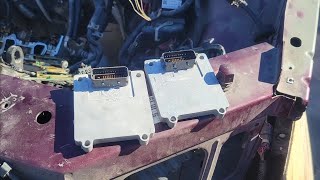
Generation note: This range covers the end of the 9th generation (2007-2013) and the start of the 10th generation (2014). The 2014 model year could be either a 9th gen 'Impala Limited' (often for fleets) or the redesigned 10th gen. Diagnostics are similar, but part numbers for control modules (TCM/TEHCM) will differ. The 9th gen commonly used the 4-speed 4T65E (with an external TCM) 🎬 Watch: Step-by-step guide to replacing the external TCM or the 6-speed 6T70 (with an internal TEHCM), making it critical to identify the transmission type.
Symptoms You May Notice
- Check Engine Light is on
- Harsh or erratic transmission shifting, especially a hard 1-2 shift.
- Vehicle may get stuck in one gear (limp mode), often 3rd gear.
- Engine may stall or refuse to start.
- ABS or Traction Control / Stabilitrak lights may illuminate.
- Loss of communication with the TCM (may be accompanied by code U0101).
- Delayed gear engagement when shifting from Park to Drive or Reverse.
- Replacing internal transmission components (like solenoids or clutches) when the issue is electronic (the TCM/TEHCM).
- Replacing the PCM when the fault lies within the TCM, which is more common for this code on this platform according to TSBs.
- Condemning a module before performing a thorough battery and charging system load test.
Most Likely Causes
- Low or Unstable Battery Voltage 🔴 High Probability → Shop Vehicle Battery Control modules are extremely sensitive to voltage. An aging battery, failing alternator, or corroded terminals can cause voltage drops during startup, corrupting the module's RAM self-test and triggering a false P0604. This is the most common and easiest issue to check first.
How to confirm: Perform a full battery and charging system test. The battery should have over 12.4 volts with the engine off and the alternator should produce 13.5-14.5 volts when running. A simple voltage check is not enough; a load test is required as a weak battery can fail under the load of engine cranking.
Typical fix: Replace the weak battery, clean or replace corroded battery terminals and ground connections, or replace the failing alternator.
Est. part cost: $150-$400 - Faulty Transmission Control Module (TCM/TEHCM) 🟡 Medium Probability → Shop Transmission Assembly GM TSB #PIP4653E specifically identifies the TCM as a potential source for this code. On models with the 6-speed transmission, the TCM is integrated into the TEHCM inside the transmission, where constant heat exposure can lead to solder joint failure and electronic degradation over time.
How to confirm: After ruling out all power/ground issues and checking for software updates, the TCM becomes the primary suspect, especially if transmission-related symptoms are present and code P0700 (Transmission Control System Malfunction) is also stored. Diagnosis requires a professional scan tool to confirm the code is set in the TCM.
Typical fix: Replace the Transmission Control Module (or the entire TEHCM assembly) and program it to the vehicle's VIN.
Est. part cost: $170-$650 - Corrupted Software ⚪ Low Probability Software glitches can cause the module to fail its internal memory checks. Manufacturers release updates to fix such bugs, and TSBs for P0604 often recommend checking for a reflash as a first step before replacement.
How to confirm: A dealer or qualified shop with a GM-compatible scan tool (like a Tech 2 or MDI) can check the current software calibration against the latest available version in the GM TIS2Web service.
Typical fix: Reflash (reprogram) the affected module (TCM or PCM) with the latest manufacturer software.
Est. part cost: $100-$250 - Faulty Powertrain Control Module (PCM) ⚪ Low Probability → Shop Engine Control Module (ECM) While the TCM is more commonly cited in TSBs for this platform, the PCM can also set this code due to an internal RAM failure. This is more likely if engine-related symptoms are present without any transmission issues.
How to confirm: This is typically a process of elimination. If there are no transmission symptoms, no P0700 code, and all other causes (battery, grounds, TCM) are ruled out, the PCM is the likely culprit.
Typical fix: Replace the PCM and program it to the vehicle's VIN.
Est. part cost: $250-$700
Rare But Worth Checking
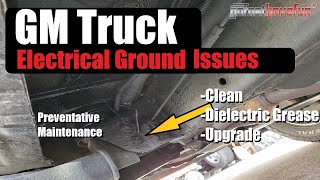
- Poor Ground Connections: A loose or corroded ground strap for the engine, transmission, or body can create electrical noise and voltage irregularities that mimic a failing module. Always check major ground points (e.g., on the engine block near the transmission and from the battery to the chassis) before replacing expensive parts. 🎬 See how to test for bad engine ground straps
- Damaged Wiring or Connectors: The main harness connector to the transmission (on TEHCM models) can get corroded or have pushed-out pins, interrupting communication and power, which can trigger a P0604. Visually inspecting this connector is a key diagnostic step.
Diagnosis Steps
- Scan for all stored DTCs. Note if P0700 is present, as this points directly to the TCM.
- Perform a complete battery and charging system test, including a load test. Ensure voltage is stable and within specifications (12.4V+ engine off, 13.5-14.5V running).
- Inspect the battery terminals and main power/ground cables for corrosion or looseness. Clean and tighten as necessary. Pay special attention to the main engine and transmission ground straps.
- Visually inspect the wiring harnesses and the main electrical connector at the transmission for any signs of damage, corrosion, or pushed-out pins.
- Clear the codes. If P0604 returns immediately (key-on, engine-off), it suggests a hard internal fault in a module. If it returns intermittently while driving, it's more likely related to connections or voltage drops.
- Using a professional scan tool, check for available software updates for the TCM and PCM. If an update is available, perform the reflash as this is a required step before module replacement.
- If all previous steps fail to resolve the issue, the module itself (most likely the TCM/TEHCM, given the TSBs) is the probable cause and requires replacement and programming.
Parts You'll Likely Need
- Transmission Control Module (TCM/TEHCM)
(OEM #24256524, 24252114, 24234503 (Examples, must verify by VIN))— This is the most likely component to have failed according to GM TSBs and owner reports, especially on models with the 6-speed automatic where it's an internal TEHCM.
Trusted brands: ACDelco (GM Genuine), Dorman OE Solutions
OEM price range: $300-$650
Aftermarket price range: $170-$450 - Automotive Battery — A weak or failing battery is a primary cause of module memory code
Related Codes That Often Appear With This One
- P0700 — This is a generic code indicating the TCM has requested the MIL to be turned on. Its presence strongly suggests the P0604 fault originates in the transmission control system.
- P0601 — Indicates an Internal Control Module Memory Check Sum Error. Both P0601 and P0604 point to internal module faults and are listed together in GM TSBs. [2, 3, Bulletin #PIP4653E, #05-06-04-060A]
- P0603 — Indicates an Internal Control Module Keep Alive Memory (KAM) Error. This is another related module memory fault code. [2, 3, Bulletin #PIP4653E]
- P062F — Indicates an Internal Control Module EEPROM Error. This is another related module memory fault code mentioned in GM TSBs. [2, 3, Bulletin #PIP4653E, #05-06-04-060A]
- P1621 — Indicates Control Module Long Term Memory Performance. This is a GM-specific code also pointing to a module memory issue. [2, 3, Bulletin #PIP4653E, #05-06-04-060A]
Technical Service Bulletins (TSBs) & Recalls
- PIP4653E: Notes that DTCs P0601, P0603, P0604, P062F or P1621 may be stored in the Transmission Control Module (TCM). Advises checking for software updates and confirming the code is set in the TCM before replacement.
- 05-06-04-060A: Informs technicians that control module DTCs including P0604 can be shared in multiple modules, suggesting a systemic cause like low voltage and the need for careful diagnosis to identify the correct faulty module.
Platform-Specific Known Issues
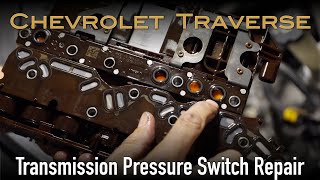
- Internal TEHCM Failure in 6-Speed Transmissions: → Shop Transmission Assembly For Impalas equipped with the 6-speed automatic (6T70/6T75), the TCM is not a separate, easily accessible box. It is integrated into the valve body inside the transmission pan, forming a single unit called the TEHCM. This location subjects it to constant high temperatures, which is a leading cause of electronic failure. Replacement requires draining the fluid and removing the transmission's side cover, making it a more labor-intensive job than an external module.
Mechanic-Grade Diagnostic Values
- Module Power Supply Voltage (while cranking) — expected: Should stay above 9.0 Volts. Failure: A drop below 9.0V during cranking can corrupt the module's self-test and trigger a false P0604.
- Module Ground Circuit Resistance — expected: Below 0.1 Ω. Failure: Resistance higher than 0.1 Ω indicates a poor ground connection, which can cause floating voltage and module errors.
- Alternator Output Voltage (engine running) — expected: 13.5V - 14.5V. Failure: Voltage outside this range indicates a charging system problem that can lead to module instability.
Scan Tool Commands That Help
- GM Tech 2 / GDS2: Service Programming System (SPS) — This function is required after replacing the TCM or PCM. It downloads the correct software and calibration from GM's servers and flashes it to the new module, programming it to the vehicle's VIN.
- GM Tech 2 / GDS2: Crankshaft Position Variation Learn — This procedure is mandatory after replacing the PCM to synchronize the new module with the crankshaft position sensor, preventing misfire detection codes.
- GM Tech 2 / GDS2: Idle Learn Reset — Used after replacing the PCM to force the module to relearn the engine's idle characteristics.
- GM Tech 2 / GDS2: Theft Deterrent Relearn — Required after replacing the PCM or BCM to synchronize the security information between modules, allowing the vehicle to start.
Wiring & Ground Locations
- G101 — Located at the front, lower part of the engine block.. This is a primary ground point for the Engine Control Module (ECM) and Transmission Control Module (TCM). A poor connection here can directly cause power instability for both modules, leading to P0604.
- G111 — Located on a transmission-to-engine bolt, above the starter.. This is a specific ground for the automatic transaxle. Corrosion or looseness at this point can cause erratic behavior and codes originating from the TCM/TEHCM.
- G113 — Located on the front of the automatic transaxle, to the left of G111.. Another critical ground for the automatic transaxle. Both G111 and G113 should be inspected and cleaned when diagnosing transmission-related codes like P0604.
- Engine Block to Firewall Strap — A braided strap connecting the rear of the engine/cylinder head to the vehicle's firewall.. Ensures the engine and body have a common ground potential. A broken or corroded strap can cause electrical noise and intermittent module issues.
Real Owner Repair Stories
- Chevy HHR Forum User (Chevrolet HHR (similar GM platform)) — No-crank, no-start condition with code P0604 present.
❌ Tried (didn't work) Initial code scan pointed to a RAM error.
✅ What actually fixed it The user had used a low-amperage float charger on a discharged battery. Disconnecting the battery, fully charging it with a proper charger, and then reconnecting it cleared the P0604 code and resolved the no-start issue. The low/slow charge likely scrambled the module's memory.
OEM Part Supersession History
24256524→24041956— This is a common TEHCM (Valve Body with TCM) for 6T40/6T45/6T50 transmissions used in this era. Part numbers are frequently updated by GM.
Heads up: Part number 24256524 is a widely cited TEHCM for Gen 1 6-speed transmissions. It has been superseded by multiple numbers over time. Always verify the correct part number by VIN before ordering, as there are many variations.
Model Year Variations Within This Range
- 2007-2011: These years primarily used the 4-speed 4T65-E automatic transmission, which has an external TCM, or the early 6-speed 6T70 with an internal TEHCM. The engine options were typically the 3.5L or 3.9L V6.
- 2012-2013: These years transitioned to using the 3.6L LFX V6 engine paired with the 6-speed 6T70 automatic transmission, which contains the internal TEHCM. This combination became standard.
- 2014-2016: For the 2014 model year, Chevrolet sold two different Impalas. The all-new 10th generation Impala was sold to the public, while the previous 9th generation body style was continued as the 'Impala Limited' primarily for fleet sales. When ordering parts for a 2014 Impala, it is critical to specify if it is a 'Limited' model to get the correct 9th generation components.
Helpful Videos




We Have This Part in Stock

The information in this article is provided for general reference and educational purposes only. Vehicle specifications, procedures, and part compatibility can vary by production date, trim level, and region. Always consult your vehicle's factory service manual and verify part numbers before purchasing or performing repairs. Safety-critical components such as airbags, seat belts, and braking systems should be installed by a qualified professional.
- Chevrolet IMPALA:
- 🧭 Diagnostic Flowchart
- 🎬 Helpful Videos
- 🛍️ Shop This Part
- What's Unique About the 2007-2014 Chevrolet IMPALA
- Symptoms You May Notice
- Most Likely Causes
- Rare But Worth Checking
- Diagnosis Steps
- Parts You'll Likely Need
- Related Codes That Often Appear With This One
- Technical Service Bulletins (TSBs) & Recalls
- Platform-Specific Known Issues
- Mechanic-Grade Diagnostic Values
- Scan Tool Commands That Help
- Wiring & Ground Locations
- Real Owner Repair Stories
- OEM Part Supersession History
- Model Year Variations Within This Range
- 🎟️ Get 5% Off