

P0604 on 2007-2014 Chevrolet Silverado 1500: RAM Error Causes and Fixes
P0604 on a 2007-2014 Silverado indicates an internal memory error in a control module, most often the Powertrain Control Module (PCM) or Transmission Control Module (TCM). The most common fix is replacing the faulty module, which requires professional programming and costs between $500 and $1,500. Before condemning a module, always verify the battery, charging system, and critical ground connections are solid.
- P0604 is a serious internal memory error in either the engine (PCM) or transmission (TCM) control module.
- Before condemning the expensive module, thoroughly test the battery and charging system, and inspect all related power and ground connections for corrosion.
- This is not a DIY-friendly repair. Replacement of a PCM or TCM requires professional-level tools for programming it to your truck's VIN and security system.
- Check for available software updates, as a reflash can sometimes resolve the issue without replacing hardware.
- Do not continue to drive with this code, as it can lead to stalling, no-start conditions, and unpredictable vehicle behavior.
What's Unique About the 2007-2014 Chevrolet SILVERADO 1500
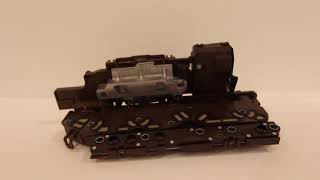
On this generation of Silverado (GMT900/K2XX), the P0604 code is explicitly mentioned in Technical Service Bulletin #PIP4653E as a known issue that can be set in the Transmission Control Module (TCM), not just the main engine computer. This is a key distinction, as generic definitions often point only to the PCM. For trucks with the 6-speed 6L80 automatic transmission, the TCM is an integrated unit called a TEHCM (Transmission Electro-Hydraulic Control Module) located inside the transmission oil pan, making it highly susceptible to heat and vibration-related failures. TSB #05-06-04-060A also highlights that this code can be shared across multiple modules, suggesting a network communication or software issue rather than just a single failed component.
Diagnostic Flowchart
Tap your situation to follow the diagnostic path that matches what you're seeing on this vehicle.
Generation note: This range covers the GMT900 (2007-2013) and the first year of the K2XX (2014) generation. While the underlying cause is similar, part numbers for control modules will differ between these two generations. The 6-speed 6L80 transmission with its internal TEHCM is a frequent failure point on GMT900 models. The K2XX generation (starting in 2014) uses different PCM part numbers, such as 12656993.
Symptoms You May Notice
- Check Engine Light is on
- Transmission shifts harshly, erratically, or goes into "limp mode" (often stuck in 3rd gear).
- Engine stalls intermittently or dies when coming to a stop.
- Vehicle has a hard start or no-start condition.
- ABS or Traction Control lights may illuminate.
- Loss of communication with the TCM (may be accompanied by code U0100).
- Replacing individual sensors (e.g., crank sensor, throttle body) when P0604 is the primary code. Other codes may appear as a result of the module's confusion, but the root cause is the module itself.
- Immediately replacing the PCM/ECM without first using a scan tool to verify which module (PCM or TCM) actually stored the code, as TSB PIP4653E points to the TCM being a common culprit.
Most Likely Causes
- Faulty Transmission Control Module (TCM/TEHCM) 🔴 High Probability → Shop Transmission Assembly As noted in TSB #PIP4653E, the TCM is a common source of P0604. On models with the 6L80 transmission, the TCM is part of the TEHCM located inside the transmission pan, where it is exposed to significant heat and vibration, leading to internal hardware failure.
How to confirm: Use a professional scan tool to confirm the code is stored in the TCM. After ruling out power/ground issues, attempt a software reflash. If the code returns immediately, the module hardware is condemned.
Typical fix: Replace the Transmission Electro-Hydraulic Control Module (TEHCM) and program the new unit to the vehicle's VIN using GM's Service Programming System (SPS).
Est. part cost: $350-$700 - Faulty Powertrain Control Module (PCM/ECM) 🟡 Medium Probability → Shop Engine Control Module (ECM) Internal hardware failure (like a RAM chip) can occur over time due to heat cycles and vibration. This is a common failure point for all modern vehicles.
How to confirm: After ruling out all other causes, a professional uses a specialized scan tool to attempt a reflash. If the code returns immediately after the reflash, the module hardware is faulty.
Typical fix: Replace the faulty control module and program the new unit to the vehicle's VIN. This often requires additional relearn procedures for the crankshaft position sensor and theft deterrent system.
Est. part cost: $300-$900 - Low Battery Voltage or Unstable Charging System 🟡 Medium Probability → Shop Vehicle Battery Weak batteries or failing alternators can cause voltage drops (below 9.5V) during startup, which can corrupt a module's temporary memory and trigger a P0604 code as a glitch.
How to confirm: Test the battery with a load tester to ensure it's healthy (should be above 12.4V at rest). Check the alternator output while the engine is running (should be stable, between 13.5V and 14.8V). Check for the code returning immediately after clearing; if it only returns after a start-up, low voltage is a likely cause.
Typical fix: Replace the weak battery and/or faulty alternator.
Est. part cost: $150-$500 - Poor Electrical Connections or Grounds ⚪ Low Probability GMT900 trucks are known for having issues with main ground straps corroding or breaking. Key locations include the main engine-to-frame ground, grounds on the cylinder heads (G103/G104), and the firewall. Poor grounding can cause unstable voltage to the modules.
How to confirm: Visually inspect and clean all battery terminals and primary ground straps. Check ground resistance; it should be below 0.1 Ω. Specifically check the ground strap from the engine block to the firewall on the driver's side rear. Inspect the PCM/TCM connectors for corrosion, moisture, or bent pins.
Typical fix: Clean or repair corroded terminals and ground points. Replace damaged connectors or broken ground straps.
Est. part cost: $5-$50 - Corrupted Software or Programming Error ⚪ Low Probability As noted in TSBs, GM has issued software updates to address control module issues. An aftermarket tune can also cause memory checksum errors if not written correctly, sometimes triggering P0604.
How to confirm: A dealership or qualified shop can check the current software calibration against the latest version available from GM. If an aftermarket tuner was used, restoring the stock tune may resolve the issue.
Typical fix: Reflash the control module with the latest OEM software. If tuned, contact the tuner for a revised file.
Est. part cost: $0 (if under warranty) - $200
Diagnosis Steps
- Check and record any other stored trouble codes. Use a professional scan tool to identify which module set the P0604 code (ECM or TCM).
- Perform a complete battery and charging system test. Ensure voltage is stable and within the 13.5V-14.8V range when running and does not drop below 9.5V during cranking.
- Inspect all battery cables, terminals, and main engine/body ground straps for tightness and corrosion. Pay special attention to the main grounds on the cylinder heads (G103/G104) and the strap from the block to the firewall. Clean and tighten as necessary.
- Carefully inspect the electrical connectors at the PCM and the main 16-pin transmission connector (X184/X214) for any signs of water intrusion, corrosion, or damaged pins.
- Clear all diagnostic trouble codes. If the code returns immediately without starting the engine, it indicates a hard internal module fault. If it only returns after a start-up attempt, it may have been a temporary glitch caused by low voltage.
- If the code returns, the next step is to attempt a software reflash with the latest calibration from the manufacturer. This requires a professional scan tool with a subscription (e.g., GM SPS/TIS2Web).
- If reflashing fails or the code returns immediately, the control module is faulty and must be replaced. The new module will require programming to the vehicle's VIN and may require subsequent relearn procedures (crankshaft variation, idle, theft deterrent).
Parts You'll Likely Need
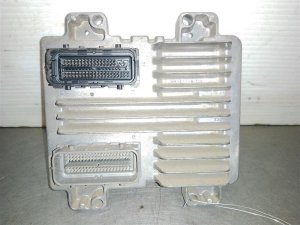
- Powertrain Control Module (PCM/ECM)
(OEM #12656993, 12692865 (Part numbers vary significantly by year and engine. Always verify with VIN))— This is a common cause of a persistent P0604 code when the code is confirmed to be in the ECM and power/grounds are good. The internal RAM hardware fails.
Trusted brands: ACDelco
OEM price range: $400-$900
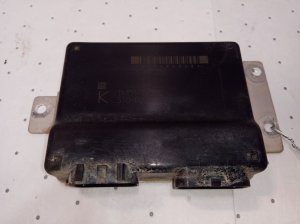
Aftermarket price range: $300-$600 - Transmission Control Module (TCM/TEHCM)
(OEM #24256861, 24238856, 24238659 (Part numbers vary by year and transmission. Always verify with VIN))— The most common point of failure for a P0604 on this platform, especially when accompanied by transmission symptoms or U-codes. The TEHCM is located inside the transmission pan and is susceptible to heat-related failure.
Trusted brands: ACDelco
OEM price range: $350-$700
Aftermarket price range: $250-$500
Related Codes That Often Appear With This One
- P0601 — This code indicates a Read Only Memory (ROM) checksum error, another type of internal module failure. Both are mentioned together in TSB #PIP4653E and #05-06-04-060A.
- P0606 — This code indicates a general PCM/ECM processor fault and often appears with other internal module error codes.
- U-codes (e.g., U0100) — U-codes indicate a loss of communication. If the PCM or TCM is failing, it may stop communicating with other modules on the vehicle's network, triggering these codes. A U0100 (Lost Communication with TCM) alongside a P0604 strongly points to a failed TCM.
- P0700 — This is a generic transmission fault code requested by the PCM. When the TCM detects a serious internal fault like P0604, it will ask the PCM to turn on the Check Engine Light by sending a P0700 request.
Technical Service Bulletins (TSBs) & Recalls
- PIP4653E: Mentions P0604 can be stored in the Transmission Control Module. Instructs technicians to verify which module set the code before proceeding.
- 05-06-04-060A: Notes that P0604 can be a shared code across multiple vehicle modules and can be triggered by low voltage conditions.
Platform-Specific Known Issues
- TSB #PIP4653E notes that codes P0601, P0603, P0604, P062F, or P1621 may be stored in the Transmission Control Module (TCM), requiring technicians to verify the location of the code before starting diagnosis.
- TSB #05-06-04-060A informs technicians that P0604 is one of several codes that can be shared among multiple control modules, indicating a potential software or communication issue, and specifically warns that low voltage can be a cause.
- The TCM for the 6L80 transmission is a TEHCM (Transmission Electro-Hydraulic Control Module) located inside the transmission pan, making it prone to failure from heat and vibration. This is a very common failure point for P0604 on this platform.
Mechanic-Grade Diagnostic Values
- Module Ground Circuit Resistance — expected: < 0.1 Ω. Failure: A reading higher than 0.1 Ohms indicates excessive resistance that can cause voltage drops and module malfunction.
- Alternator Output Voltage (Engine Running) — expected: 13.5 - 14.8 Volts. Failure: Voltage below 13.5V or above 14.8V can cause module memory errors.
- Battery Voltage During Cranking — expected: > 9.5 Volts. Failure: Voltage dropping below 9.5V during startup can corrupt module RAM and trigger a false P0604.
- 6L80 TEHCM On/Off Shift Solenoid Resistance — expected: 20 - 40 Ω. Failure: A resistance reading outside this range indicates a failed solenoid, requiring TEHCM replacement.
- 6L80 TEHCM PWM Pressure Control Solenoid Resistance — expected: 3 - 8 Ω. Failure: A resistance reading outside this range indicates a failed solenoid, requiring TEHCM replacement.
Scan Tool Commands That Help
- GM GDS2 / Tech 2: Service Programming System (SPS) — This is required after replacing the PCM or TCM/TEHCM to download the correct VIN-specific software and calibration files to the new module. Failure to program will result in a no-start or immediate limp mode.
- GM GDS2 / Tech 2: Module Setup / Relearn Procedures — After programming a new PCM, functions like 'Crank Position Relearn', 'Idle Learn Reset', and 'Theft Deterrent Relearn' must be performed to synchronize the new module with the engine's sensors and security system.
- GM GDS2 / Tech 2: Transmission Service Fast Learn — This is a mandatory procedure after TEHCM replacement and programming. It commands the transmission to cycle through its clutches to quickly learn adaptive values for smooth shifting.
- GM GDS2 / Tech 2: Solenoid Cleaning Procedure — If a solenoid performance code is present with P0604, this automated routine cycles all solenoids to try and flush out debris. It can be attempted before condemning the entire TEHCM.
Wiring & Ground Locations
- G103 — On the front of the passenger-side cylinder head.. This is a primary engine and module ground point on the GMT900 platform. Corrosion or looseness here can cause intermittent low-voltage conditions for both the ECM and TCM, triggering a P0604.
- G104 — On the front of the driver-side cylinder head.. Another critical engine ground point that must be clean and tight to ensure stable voltage for all powertrain control modules.
- G101 — At the lower front of the engine block.. Service information lists this as a ground point for the Engine Control Module and Transmission Control Module, making it a key inspection point.
- X184 / X214 — The main 16-pin round electrical connector on the outside of the transmission case, typically on the passenger side.. This is the sole connection point for the internal TEHCM. All power, ground, and communication signals pass through it. TSB #08-07-30-021H notes this connector is a common site for corrosion and backed-out pins, which can cause communication loss and module fault codes like P0604.
Real Owner Repair Stories
- gmtruckclub.com forum user (2009 Chevrolet Silverado (GMT900 platform with 6L80 transmission)) — Check engine light with codes P0604 and U0100 (Lost Communication with TCM). Transmission was stuck in limp mode.
❌ Tried (didn't work) Replacing the battery, Clearing codes (they returned immediately), Checking wiring harness for visible damage
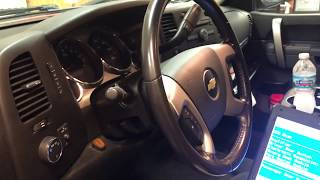
✅ What actually fixed it The final repair was replacing the Transmission Electro-Hydraulic Control Module (TEHCM) located inside the transmission pan. After replacement and programming, the codes were cleared and did not return. - DanielJaegerFilms on YouTube (2010 Chevrolet Silverado) — Check Engine Light with code P0604. The code returned immediately after clearing.
❌ Tried (didn't work) Checked charging system (was stable at 14.9V), Removed aftermarket wiring, Reprogrammed/updated the original PCM software
✅ What actually fixed it Replacing the Powertrain Control Module (PCM/ECM) and performing the necessary relearn procedures (idle learn, crank position learn, theft deterrent) resolved the issue.
OEM Part Supersession History
24256861 (TCM/TEHCM)→19435614— Manufacturer update for improved reliability or component changes.
Heads up: New modules must be programmed to the vehicle's VIN after installation; they are not plug-and-play.12656993 (PCM/ECM for 2014+ K2XX)→12686381, among others.— This part number is part of a large interchange list with multiple updates and compatible numbers including 12672537, 12663391, and 12692067.
Heads up: A replacement PCM requires programming to the VIN and may trigger a P0633 (Theft Deterrent Key Not Programmed) code until a security relearn procedure is completed with a scan tool.
Model Year Variations Within This Range
- 2007-2013 (GMT900): These models predominantly feature the 6L80 transmission with an internal TEHCM that is a very common failure point for P0604. Grounding issues (G103, G104) are well-documented on this platform.
- 2014 (K2XX): The 2014 model year marked the beginning of the K2XX platform. While it still used the 6L80, the PCM/ECM is a different part (e.g., 12656993) than the one used in most GMT900 trucks. The electrical architecture and ground locations may also differ from the earlier generation.
- 2006-2010 (Early 6L80 TEHCMs): Early versions of the TEHCM were more prone to failures related to pressure switches and torque converter clutch (TCC) apply solenoids sticking under heat. Later versions featured improved solenoids and logic.
Helpful Videos
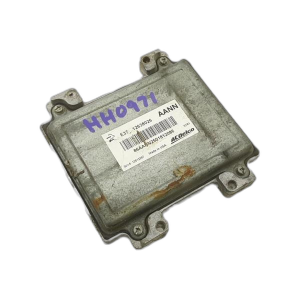
Used OEM Parts in Stock
New Aftermarket Parts Available

The information in this article is provided for general reference and educational purposes only. Vehicle specifications, procedures, and part compatibility can vary by production date, trim level, and region. Always consult your vehicle's factory service manual and verify part numbers before purchasing or performing repairs. Safety-critical components such as airbags, seat belts, and braking systems should be installed by a qualified professional.
- Chevrolet SILVERADO 1500:
- 🧭 Diagnostic Flowchart
- 🎬 Helpful Videos
- 🛍️ Shop This Part
- What's Unique About the 2007-2014 Chevrolet SILVERADO 1500
- Symptoms You May Notice
- Most Likely Causes
- Diagnosis Steps
- Parts You'll Likely Need
- Related Codes That Often Appear With This One
- Technical Service Bulletins (TSBs) & Recalls
- Platform-Specific Known Issues
- Mechanic-Grade Diagnostic Values
- Scan Tool Commands That Help
- Wiring & Ground Locations
- Real Owner Repair Stories
- OEM Part Supersession History
- Model Year Variations Within This Range
- 🎟️ Get 5% Off