

P0604 on 2015-2018 Chevrolet Suburban: Internal RAM Error Causes & Fixes
P0604 on a 2015-2018 Suburban indicates an internal memory error in a control module, like the ECM or TCM. Before replacing any expensive modules, thoroughly check the battery, its connections, and all power/ground circuits as per GM Technical Service Bulletin #PIP5609, as low voltage or poor connections are very common triggers. A voltage drop below 9.6V during cranking is a known cause.
- P0604 is a serious code indicating an internal memory error in a key vehicle computer like the ECM or TCM.
- Do NOT immediately replace the control module. Per GM's own service bulletins, the most common causes are a weak battery or poor electrical connections.
- A professional battery load test is the essential first diagnostic step.
- If a module must be replaced, it is not a DIY job. It requires expensive programming that is specific to your Suburban's VIN.
- Driving with this code is a safety risk, as it can lead to sudden stalling or unpredictable transmission behavior.
What's Unique About the 2015-2018 Chevrolet SUBURBAN
On this generation of Chevrolet Suburban (part of the K2XX platform), GM has issued specific service bulletins acknowledging that P0604 and related internal memory codes are often caused by electrical issues rather than an outright module failure. TSB #PIP5609 explicitly directs technicians to investigate low voltage, poor connections, and faulty grounds at the ECM before considering replacement. The code can also be set specifically in the Transmission Control Module (TCM), leading to shifting problems, a scenario also covered by GM bulletins for this platform. Another related TSB for the platform, PIT5405C, points to a poor ground at location G218 (under the driver's side instrument panel) as a cause for numerous electrical issues and communication DTCs.
Diagnostic Flowchart
Tap your situation to follow the diagnostic path that matches what you're seeing on this vehicle.
Symptoms You May Notice
- Check Engine Light is on
- Service StabiliTrak warning message
- Harsh or erratic transmission shifting
- Transmission may get stuck in one gear (limp mode)
- Engine may stall, run rough, or hesitate
- Vehicle may not start or may be hard to start
- Reduced fuel economy
- ABS or Traction Control lights may illuminate
- Replacing the ECM or TCM without first performing a battery load test and thoroughly inspecting all power and ground connections. The TSBs strongly advise checking these simpler, less expensive items first.
Most Likely Causes
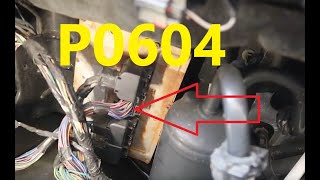
- Low Battery Voltage or Weak/Failing Battery 🔴 High Probability → Shop Vehicle Battery Control modules on the K2XX platform are highly sensitive to voltage drops. A weak battery can cause voltage to fall below the required threshold (e.g., under 9.6V) during engine cranking, causing temporary memory corruption and triggering a P0604 code. 🎬 Watch: A breakdown of P0604 causes and common fixes GM bulletins specifically mention low voltage as a primary potential cause to investigate first.
How to confirm: Perform a battery load test, not just a simple voltage check. Voltage should be above 12.4V with the engine off and 13.5V-14.5V when running. Check the cranking voltage; if it drops below 9.6V, the battery is suspect.
Typical fix: Replace the vehicle's battery if it fails a load test. Ensure the new battery meets or exceeds OEM specifications for Cold Cranking Amps (CCA).
Est. part cost: $150-$350 - Poor Electrical Connections or Grounds 🔴 High Probability TSB #PIP5609 specifically calls out checking for connection/terminal tension issues for the ECM's power and ground circuits as a primary diagnostic step before module replacement. TSB PIT5405C for this platform also identifies a poor ground at G218 (under the driver's side dash) as a source of widespread electrical issues. Corrosion on battery terminals or main chassis grounds can also create voltage instability.
How to confirm: Visually inspect and physically check the battery terminals, main engine/chassis grounds, and the electrical connectors at the ECM and TCM for any signs of corrosion, looseness, or backed-out pins. Perform a voltage drop test on the ground circuits; resistance should be less than 0.1 ohms.
Typical fix: Clean corroded terminals with a wire brush, tighten all loose connections, and repair any damaged wiring or pins in the module connectors. Specifically check and clean the G218 ground location if multiple electrical issues are present.
Est. part cost: $5-$50 - Faulty Engine Control Module (ECM) or Transmission Control Module (TCM) 🟡 Medium Probability → Shop Engine Control Module (ECM) While this is the direct meaning of the code, it's often triggered by external factors. However, internal hardware failure of the module itself (often the GM E92 ECM) is still a significant possibility after all other causes are ruled out.
How to confirm: This is a process of elimination. If the battery, charging system, and all related power, ground, and data wiring to the module are confirmed to be in perfect condition per TSB #PIP5609, the module itself is the likely culprit.
Typical fix: Replace the faulty control module (ECM or TCM). The new module must be programmed by a dealer or a qualified shop with access to GM's Service Programming System (SPS).
Est. part cost: $400-$1200
Rare But Worth Checking
- Aftermarket Engine/Transmission Tuning: → Shop Transmission Assembly Loading a custom software tune via a handheld device can sometimes corrupt the module's memory or cause it to fail its internal self-check, triggering a P0604 code. A Reddit user with a similar GM truck noted the code appeared on a tuned vehicle.
- Software Glitch: In some instances, the module's hardware is fine, but the operating software has become corrupted. A dealer or qualified technician can attempt to re-flash the module with the latest factory software, which can sometimes resolve the issue without replacing the part.
Diagnosis Steps
- Scan the vehicle for all DTCs and document them. Use a scan tool capable of reading from all modules to determine exactly which module set the P0604 code (ECM, TCM, etc.).
- Perform a thorough visual inspection of the battery, battery terminals, and main engine/chassis ground straps. Clean and tighten as necessary.
- Test the battery using a professional load tester. Check that cranking voltage does not drop below 9.6V. Ensure the charging system is operating correctly (13.5V-14.5V when running).
- Clear all DTCs. Disconnect the negative battery terminal for 30 minutes to reset all modules. Drive the vehicle to see if the code returns. If it returns immediately, it suggests a hard fault.
- Following the guidance of TSB #PIP5609, carefully inspect the electrical connectors at the suspect control module (ECM or TCM). Check for corrosion, moisture, or loose/damaged pins.
- Using a digital multimeter and the vehicle's wiring diagram, verify that the module is receiving proper voltage and has a solid ground connection on all specified pins. Ground resistance should be under 0.1 Ω.
- Specifically inspect ground G218 under the driver's side of the instrument panel for looseness or corrosion, as this is a known issue on the K2XX platform.
- If a software update is available for the module, consider having a dealer perform a re-flash as this can sometimes resolve software corruption.
- If all wiring, connections, power, and grounds are verified to be good and the code persists, the control module is defective and requires replacement and programming.
Parts You'll Likely Need
- Engine Control Module (ECM)
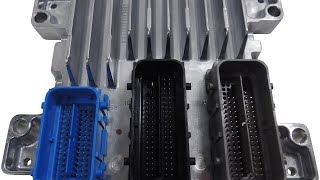
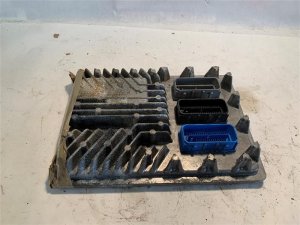
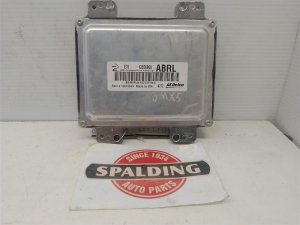
(OEM #12669318 (2015-16), 12674472 (2017), 12692068 (2017). Part number is VIN-specific, always verify.)— If all electrical checks pass, the ECM's internal RAM has likely failed, requiring replacement. This is the final step after ruling out power/ground issues.
Trusted brands: ACDelco (GM Genuine)
OEM price range: $500-$900
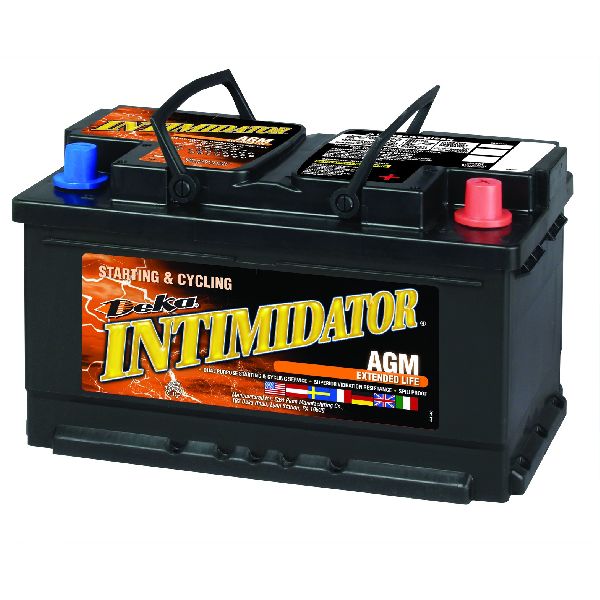
Aftermarket price range: $300-$600 - Battery — A weak battery that fails a load test is a very common cause of module memory codes due to low voltage during startup.
Trusted brands: ACDelco, DieHard, Interstate
OEM price range: $200-$350
Aftermarket price range: $150-$250
Related Codes That Often Appear With This One
- P0601, P0603, P0606 — These are all internal control module memory or processor fault codes. Seeing them together strongly points to a problem with the module itself or its power/ground supply, as noted in TSB #05-06-04-060A and PIP5609.
- P0700 — This code means the Transmission Control Module (TCM) has requested the Check Engine Light to be turned on. If you see P0700 with P0604, it's a very strong indicator that the P0604 fault is located within the TCM.
- U0100, U0101, U0121 — These are communication loss codes. A poor ground or failing module can disrupt the vehicle's data network, causing other modules to report a loss of communication with the ECM (U0100) or TCM (U0101). TSB PIT5405C links these codes to ground issue G218.
Technical Service Bulletins (TSBs) & Recalls
- PIP5609: Diagnostic tips for a family of internal module DTCs, including P0604, emphasizing checking power/ground connections before ECM replacement.
- 05-06-04-060A: Informational bulletin about shared internal module DTCs, warning that low voltage can be a root cause.
- PIP4653E: Information on P0604 and related codes being stored in the Transmission Control Module (TCM).
- PIT5405C: Details widespread electrical issues caused by a poor BCM ground at G218 on K2XX platform vehicles.
Platform-Specific Known Issues
- TSB #PIP5609 (dated 2018-11-02) specifically addresses P0604 on 2016-2018 Suburbans. It states that low voltage or a momentary loss of power/ground to the ECM can cause this code and instructs technicians to "Verify ALL controller power and ground supply circuits are correct" and check for terminal tension issues before replacing the ECM.
- TSB #05-06-04-060A (dated 2015-02-24) is an informational bulletin noting that P0604 is part of a family of codes that can be set in multiple different control modules, and warns that a low voltage condition can be the cause.
- TSB #PIP4653E (dated 2014-06-03) notes that P0604 can be stored specifically in the Transmission Control Module (TCM), which would require diagnosis to focus on the TCM and its related circuits. The bulletin suggests a reprogram should be attempted before replacement.
Mechanic-Grade Diagnostic Values
- ECM/TCM Ground Circuit Resistance — expected: Less than 0.1 Ohms. Failure: A reading higher than 0.1 Ohms indicates excessive resistance in the ground path, which can cause module instability.
- Battery Voltage at ECM/TCM Connector (Key ON, Engine OFF) — expected: Should be equal to battery voltage (approx. 12.4-12.6V). Failure: A significant voltage drop indicates a problem in the power supply wiring or fuse block.
- Battery Voltage at ECM/TCM Connector (During Cranking) — expected: Should remain above 9.6 Volts. Failure: Voltage dropping below 9.6V can corrupt module memory and trigger a P0604. This points to a weak battery or high resistance in the power/ground circuit.
- Charging System Voltage (Engine Running) — expected: 13.5V - 14.7V. Failure: Voltage outside this range indicates a faulty alternator or voltage regulator, which can lead to module errors.
Hidden / Shadow Codes Worth Checking
- Symptom Bytes (e.g., '71'): GM uses additional 2-digit hexadecimal codes, called symptom bytes, that are not visible on standard OBD-II scanners. For example, a symptom byte of '71' can indicate 'Invalid Serial Data Received,' pointing to a software or communication issue rather than a hardware failure. Other bytes can specify faults related to voltage, temperature, or internal processing. (see via A dealer-level scan tool like the GM GDS2 (Global Diagnostic System 2) or a high-end professional scanner with GM-specific software is required to view these codes.)
Scan Tool Commands That Help
- GM GDS2 / Tech2: Service Programming System (SPS) — This function is mandatory after replacing an ECM or TCM. It downloads the correct VIN-specific software and calibration files to the new module. Without this step, the vehicle will not start or will enter limp mode.
- GM GDS2 / Tech2: Module Setup / Relearn Procedures — After programming a new ECM, several relearn procedures must be executed. These include 'Crankshaft Position Variation Learn,' 'Idle Learn Reset,' and 'Theft Deterrent Relearn' to synchronize the new module with the vehicle's sensors and security system.
- GM GDS2 / Tech2: Clear All DTCs — After reprogramming a module via SPS, this command is used to clear out all temporary codes set during the flashing process.
Wiring & Ground Locations
- ECM X1 Connector — On the Engine Control Module (ECM), located on the driver's side front of the engine bay, under the upper radiator hose. For the K2XX platform, the X1 connector is often identified by a Blue terminal position assurance tab.. This is the primary connector for the ECM. Key pins to test for P0604 are Pin 19 (Ignition 1 Voltage), Pin 20 (Battery Positive Voltage), and multiple ground pins. A poor connection or voltage drop at these pins is a direct cause of module memory errors.
- G101 / G106 — Located on the lower front of the engine block, sometimes jumpered to a location on the front center of the frame cross rail under the crank pulley.. This is a primary ground point for the Engine Control Module and Transmission Control Module. Corrosion or looseness here can directly cause unstable module operation and trigger P0604.
- G103 — Located on the passenger side front of the cylinder head. (Note: Some GM diagrams show it on the cowl above the brake booster, location can vary slightly by year/model).. This ground serves multiple components, including the Body Control Module (BCM) and Data Link Connector (DLC). A fault here can cause widespread communication issues that may be misinterpreted as a single module failure.
- Frame Grounds Behind Front Wheels — On the frame rail, located just behind both the driver and passenger side front wheels.. These grounds are in a terrible location prone to corrosion from tire splash. A bad ground here can cause a host of strange electrical issues, including module communication problems that could lead to a P0604 code.
Real Owner Repair Stories
- Reddit user on r/MechanicAdvice (2009 Chevrolet Suburban (similar GM platform and electronics)) — Persistent P0604 code that would not clear.
❌ Tried (didn't work) Replaced ECM with a dealer remanufactured unit and had it flashed., Tested all fuses and relays., Checked and cleaned ground connections.
✅ What actually fixed it The user discovered an aftermarket CAN bus device (related to insurance tracking) was still installed. Removing this device completely resolved the P0604 code. - gmtruckclub.com forum user (2009 Chevrolet Silverado (Same GMT900 platform and 6L80 transmission)) — Check engine light with codes P0604 and U0100 (Lost Communication with TCM). Transmission was stuck in limp mode.
❌ Tried (didn't work) Replacing the battery., Clearing codes (they returned immediately)., Checking wiring harness for visible damage.
✅ What actually fixed it The final repair was replacing the Transmission Electro-Hydraulic Control Module (TEHCM) located inside the transmission pan. After replacement and programming, the codes were cleared and did not return.
OEM Part Supersession History
12669318, 12672963, 12676230→12704475 (and others, VIN-specific)— Hardware and software updates to improve reliability and address potential faults.
Heads up: GM's Global A electrical architecture prevents swapping used ECMs between vehicles, even with identical part numbers. A new or remanufactured ECM must be programmed online via GM's SPS with the correct VIN and calibration files. Cloning data from the old ECM to a used replacement is possible with specialized tools but not supported by dealers.
Model Year Variations Within This Range
- 2014-2018: The E92 ECM is the primary controller for the Direct Injection engines (EcoTec3) introduced in 2014. While the P0604 code's meaning is consistent, the specific ECM part numbers and software calibrations changed almost yearly. For example, a 2015 Suburban uses different part numbers than a 2017. Always verify the correct part number by VIN.
- 2015-2018: The ECM may have two or three main connectors (X1, X2, X3) depending on the specific engine (e.g., LFX vs LFR). The color of the connector and its terminal position assurance (TPA) lock helps identify which is which (e.g., X1 is often Black with a Blue TPA). This is critical for ensuring tests are performed on the correct pins.
Helpful Videos
Used OEM Parts in Stock
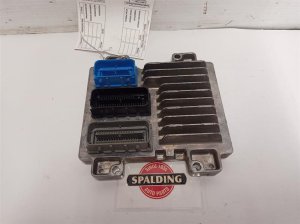
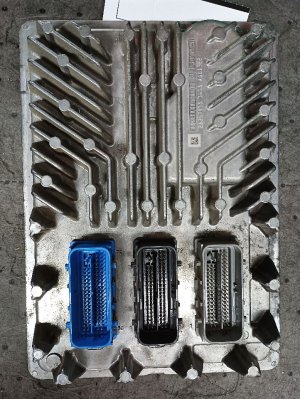
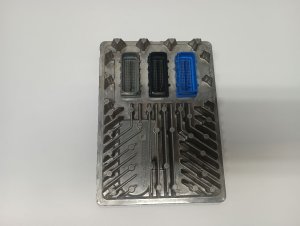
New Aftermarket Parts Available



The information in this article is provided for general reference and educational purposes only. Vehicle specifications, procedures, and part compatibility can vary by production date, trim level, and region. Always consult your vehicle's factory service manual and verify part numbers before purchasing or performing repairs. Safety-critical components such as airbags, seat belts, and braking systems should be installed by a qualified professional.
- Chevrolet SUBURBAN:
- 🧭 Diagnostic Flowchart
- 🎬 Helpful Videos
- 🛍️ Shop This Part
- What's Unique About the 2015-2018 Chevrolet SUBURBAN
- Symptoms You May Notice
- Most Likely Causes
- Rare But Worth Checking
- Diagnosis Steps
- Parts You'll Likely Need
- Related Codes That Often Appear With This One
- Technical Service Bulletins (TSBs) & Recalls
- Platform-Specific Known Issues
- Mechanic-Grade Diagnostic Values
- Hidden / Shadow Codes Worth Checking
- Scan Tool Commands That Help
- Wiring & Ground Locations
- Real Owner Repair Stories
- OEM Part Supersession History
- Model Year Variations Within This Range
- 🎟️ Get 5% Off