

P0604 on 2015-2018 Chevrolet Tahoe: Internal RAM Error Causes and Fixes
This code indicates an Internal Control Module Random Access Memory (RAM) Error. Before condemning the expensive Engine (ECM) or Transmission (TCM) Control Module, check the battery, charging system, and all module connections, as poor voltage or bad grounds are the most common culprits on this vehicle.
- P0604 is a serious code indicating a memory error in a vital control module, but do not immediately assume the module is bad.
- For the 2015-2018 Tahoe, the most likely causes are external: a weak battery, failing alternator, or poor wiring/connections to the ECM or TCM.
- Always start diagnosis by testing the battery and charging system, then inspecting all related connectors and grounds before considering module replacement.
- If a module must be replaced, it is not a plug-and-play part. The new module must be programmed to your vehicle's VIN.
- Check for any available software updates with a dealer or qualified shop, as this can sometimes resolve the issue without replacing hardware.
What's Unique About the 2015-2018 Chevrolet TAHOE
For the 2015-2018 Chevrolet Tahoe and its platform mates, manufacturer technical service bulletins (TSBs) strongly suggest that external factors are a primary cause for this internal memory code. Specifically, TSB #PIP5609 directs technicians to inspect the Engine Control Module's electrical connections and power supply first. This indicates that on this platform, a P0604 code is frequently a symptom of a wiring, ground, or power issue, not an immediate failure of the control module itself.
Diagnostic Flowchart
Tap your situation to follow the diagnostic path that matches what you're seeing on this vehicle.
Symptoms You May Notice
- Check Engine Light is on
- Vehicle may not start or may be hard to start
- Intermittent stalling while driving
- Erratic or harsh automatic transmission shifting
- Activation of the anti-lock brake or traction control lights
- "Service Stabilitrak" message on the driver information center 🎬 See this quick fix for common Stabilitrak warning messages
- Replacing the Engine Control Module (ECM) or Transmission Control Module (TCM) without first verifying stable battery voltage, clean grounds, and solid connector integrity. The TSBs for this vehicle strongly suggest these external factors should be checked first.
Most Likely Causes
- Poor Electrical Connections or Wiring Issues 🔴 High Probability Manufacturer TSB #PIP5609 specifically directs technicians to check the ECM's electrical connections and power supply when this code appears, indicating it's a known issue. Grounding points on GM trucks can corrode over time, leading to unstable voltage. TSB PIT5405C identifies the Body Control Module (BCM) ground G218 as a frequent source of various electrical problems.
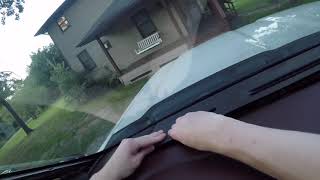
How to confirm: Visually inspect the connectors (X1 and X2) at the ECM for any signs of corrosion, moisture, or backed-out pins. Check for damaged wiring. Using a multimeter, perform a voltage drop test on the ground circuits at the ECM; a reading greater than 0.1-0.3 volts indicates a problem. Pay special attention to ground G103 on the passenger-side cylinder head and ground G218 under the driver's side dash, ensuring the dash insulator mat is not trapped underneath it. 🎬 Watch: How to locate and fix the G218 ground issue
Typical fix: Clean and secure the module connectors with dielectric grease. Repair any damaged wires or faulty ground connections by cleaning them to bare metal and ensuring they are tight. Torque the G218 ground nut to 15 Nm (11 ft lb).
Est. part cost: $0-$50 - Low Battery Voltage or Failing Charging System 🟡 Medium Probability → Shop Vehicle Battery The complex electronics on the Tahoe are sensitive to voltage. A weak battery or failing alternator can cause voltage drops ('brown-outs') that corrupt the module's RAM during operation or startup.
How to confirm: Test the battery voltage with the engine off (should be >12.4V). Start the engine and test the alternator output (should be roughly 13.5V-14.5V). Many auto parts stores offer free battery and alternator testing. A weak battery may fail a load test even if voltage seems okay.
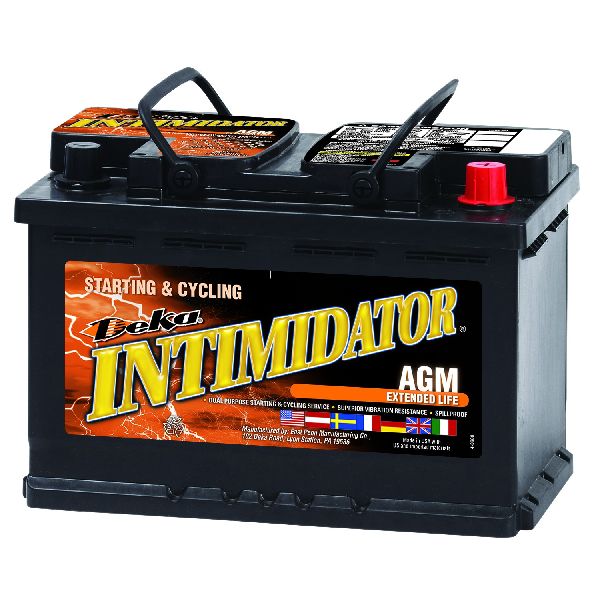
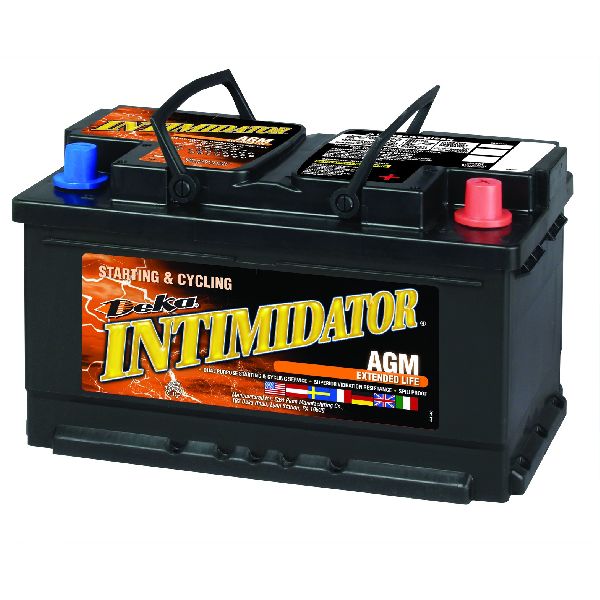
Typical fix: Replace the vehicle's battery (common size is an H7/Group 94R AGM) or alternator.
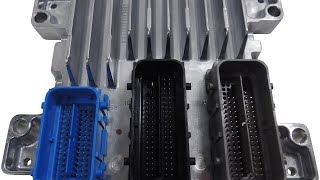
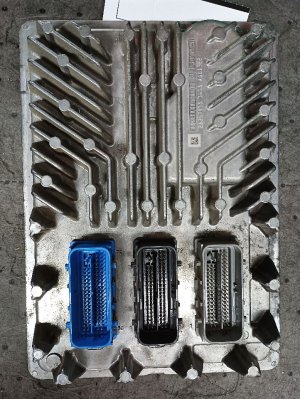
Est. part cost: $150-$450 - Faulty Control Module (ECM or TCM) ⚪ Low Probability While less common than external issues, the control modules can fail internally. The 2015+ Tahoe's ECM (an ACDelco E92) is located in a high-heat area under the hood, which can contribute to eventual failure. Internal failure of the 5V reference circuit is a known, though uncommon, failure mode.
How to confirm: This is a diagnosis of exclusion. If the battery, charging system, all power/ground circuits, and all connections to the module are confirmed to be perfect per TSB #PIP5609, the module itself is the likely culprit. A professional scan tool may have a module self-test function. Advanced diagnosis may involve checking reference voltage outputs directly at the ECM pins; for example, seeing 7-9V on a 5V reference circuit points to internal ECM failure.
Typical fix: Replace the faulty control module. This requires programming the new module to the vehicle's VIN and may require additional procedures like a crankshaft position variation relearn. 🎬 Watch: Professional walkthrough of a GM ECM swap and programming
Est. part cost: $413-$800
Rare But Worth Checking
- Corrupted Software: Sometimes, the module's software can become corrupted. A dealer or specialized shop can check for and apply any available software or firmware updates before replacing the entire unit.
- Blown Fuse: A blown fuse for the ECM or TCM can cause this code by interrupting power. Check the underhood fuse box for any fuses labeled ECM, PCM, or TRANS and ensure they are intact.
Diagnosis Steps
- Check for other Diagnostic Trouble Codes (DTCs) to see if other systems are reporting faults. Use a dealer-level scan tool (like GM GDS2) to check for hidden 'symptom bytes' that provide more detail on the fault.
- Perform a complete battery and charging system test. Ensure battery voltage is above 12.4V with the engine off and that the alternator is charging correctly (13.5V-14.5V) when running.
- Inspect the battery terminals and main body/engine ground straps for cleanliness and tightness.
- Locate, inspect, and clean the primary BCM ground G218, located under the driver's side dash behind the kick panel. Ensure the dash insulator mat is not trapped under the ground terminal and torque the nut to 15 Nm (11 ft lb).
- Following the guidance of TSB #PIP5609, carefully disconnect the battery, then unplug and inspect the X1 and X2 electrical connectors at the Engine Control Module. Look for any signs of corrosion, moisture, or loose/bent pins.
- Perform a voltage drop test on the main power and ground circuits at the ECM connector. Voltage drop should not exceed 0.1-0.3V.
- Check all fuses related to the ECM/PCM/TCM in the underhood fuse block.
- If all wiring, connections, and power sources are good, check for any available software updates for the affected module. This must be done by a dealer or a qualified shop with a subscription to GM's Service Programming System (SPS).
- If the code still returns after all previous steps have been exhausted, the control module is likely faulty and requires replacement and programming.
Parts You'll Likely Need
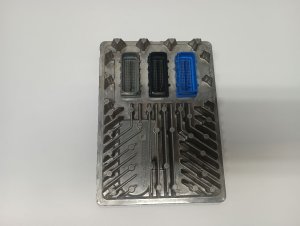
- Engine Control Module (ECM/PCM)
(OEM #12692070)— This is the part to replace if all external electrical issues have been ruled out and the module has been diagnosed as faulty. It is the 'brain' of the engine.
Trusted brands: ACDelco (Genuine GM)
OEM price range: $400-$800
Aftermarket price range: $250-$500 - Vehicle Battery — A weak or failing battery is a common cause of voltage-related module codes like P0604. It's a critical first check.
Trusted brands: ACDelco, DieHard, Interstate
OEM price range: $200-$300
Aftermarket price range: $150-$250
Related Codes That Often Appear With This One
- P0601 — This indicates an Internal Control Module Memory Check Sum Error. It is part of the same family of internal module fault codes as P0604 and is mentioned in the same TSBs (#PIP5609, #05-06-04-060A, #PIP4653E).
- P0606 — This code means ECM/PCM Processor Fault. It's another internal self-test failure code that can appear with P0604, as noted in TSBs #PIP5609 and #05-06-04-060A.
- U0100 — This code means Lost Communication With ECM/PCM. If the ECM is failing due to heat or internal faults, it may stop communicating on the vehicle's network, triggering this code alongside P0604.
Technical Service Bulletins (TSBs) & Recalls
- PIP5609: Preliminary information on Service Engine Soon light due to various codes including P0604, advising inspection of ECM electrical connections and power.
- 05-06-04-060A: Informational bulletin about control module DTCs (including P0604) being shared in multiple modules.
- PIP4653E: Information regarding P0604 and other codes being stored in the Transmission Control Module.
Platform-Specific Known Issues
- TSB #PIP5609: Informs dealers that codes P0601-P0604 may be caused by low voltage or a momentary loss of power or ground to the ECM. It explicitly instructs technicians to verify all power/ground circuits and connections before replacing the ECM. [⭐ MANUFACTURER TSB — highest authority]
- TSB #PIP4653E: Notes that P0604 can be stored specifically in the Transmission Control Module (TCM), which may be relevant if shifting problems are present. [⭐ MANUFACTURER TSB — highest authority]
- TSB #05-06-04-060A: An informational bulletin confirming that P0604 and related codes can be set in multiple different control modules, reinforcing the idea that a systemic issue like low voltage could be the root cause. [⭐ MANUFACTURER TSB — highest authority]
- TSB #PIT5405C: While not directly for P0604, this bulletin addresses various electrical issues caused by a poor BCM ground at G218, a known problem on this platform that can lead to module communication and data errors.
Mechanic-Grade Diagnostic Values
- ECM Ground Circuit Voltage Drop — expected: Less than 0.1 Volts. Failure: A reading greater than 0.3 Volts indicates high resistance from corrosion or a faulty wire.
- BCM Ground (G218) Nut Torque — expected: 15 Nm (11 ft lb). Failure: A loose nut can cause intermittent connection and widespread electrical faults.
- Negative Battery Cable to Engine Block Nut Torque — expected: 45 Nm (33 ft lb). Failure: A loose connection at this primary ground point can cause numerous issues.
Hidden / Shadow Codes Worth Checking
- P0604 with Symptom Byte (e.g., P0604 71): GM uses two-digit hexadecimal symptom bytes to add detail to a DTC. For example, a symptom byte of '71' can indicate 'Invalid Serial Data Received,' pointing toward a software or communication network issue rather than a hardware memory failure. (see via A dealer-level scan tool like the GM GDS2 (Global Diagnostic System 2) is required. Basic OBD-II readers will not display these bytes.)
Scan Tool Commands That Help
- GDS2 / Tech2: Crankshaft Position System Variation Learn — This procedure is mandatory after replacing the ECM to calibrate the new module to the specific engine's crankshaft reluctor wheel, preventing misfire codes.
- GDS2 / Tech2: Theft Deterrent Relearn — Required after replacing the ECM to synchronize the new module with the vehicle's immobilizer system, allowing the engine to start.
- GM Service Programming System (SPS): Replace and Reprogram ECU — This is the main function used to flash a new or used control module with the correct VIN-specific software and calibrations for the vehicle.
- GDS2 / Tech2: Idle Learn Reset — Used after ECM replacement or throttle body service to reset learned idle values and allow the module to relearn the correct idle speed.
Wiring & Ground Locations
- G218 — Under the driver's side dash, behind the A-pillar kick panel, attached to a stud.. This is the primary ground for the Body Control Module (BCM). A poor connection here is a well-documented cause (TSB PIT5405C) of widespread communication and data errors between modules, which can mimic an ECM failure.
- ECM Connector X1, Pin 19 — On the first of the two main connectors for the Engine Control Module.. This pin, with a Pink (PK) wire, supplies ignition voltage to the ECM. Verifying stable power here is a critical step in ruling out power supply issues before condemning the module.
- Frame Grounds (behind front wheels) — On the vehicle frame, located just behind both front wheels.. These grounds are in a location highly susceptible to road spray, salt, and corrosion, which can lead to high resistance and unstable voltage for various vehicle systems.
- G103 — On the front of the passenger-side cylinder head.. This is a primary engine ground point. Pass 2 correctly identified it, and its integrity is crucial for stable ECM operation.
Real Owner Repair Stories
- LS1TECH forum user (2015 Silverado 5.3L L83 (same K2XX platform and Gen V engine/ECM as Tahoe)) — Reduced Engine Power mode with multiple codes related to the fuel rail pressure sensor (P018D, P0191, P0641).
❌ Tried (didn't work) Inspecting the wiring harness for a short to voltage., Unwrapping and separating wires at the ECM connector to check for shorts.
✅ What actually fixed it The owner diagnosed an internal ECM failure. Using a voltmeter, he found the 5-volt reference signal pin for the sensor was outputting 7-9 volts directly from the ECM itself. Replacing the ECM resolved the issue.
OEM Part Supersession History
12692070→12703872— Standard part revision and update by manufacturer.
Heads up: The E92 ECM platform used in these vehicles emulates its EEPROM within the main flash memory. This means when programming a used module, tools that only write to the EEPROM may not work; a full reflash of the module with GM's SPS software is often required to correctly configure it.
Model Year Variations Within This Range
- 2017-2018: Models equipped with the IO5/IO6 infotainment systems may include a Serial Data Gateway Module (SDGM). This module acts as a firewall for the vehicle's diagnostic networks and can sometimes complicate diagnostics or require special bypass harnesses for certain aftermarket tools.
Helpful Videos


Used OEM Parts in Stock
New Aftermarket Parts Available


The information in this article is provided for general reference and educational purposes only. Vehicle specifications, procedures, and part compatibility can vary by production date, trim level, and region. Always consult your vehicle's factory service manual and verify part numbers before purchasing or performing repairs. Safety-critical components such as airbags, seat belts, and braking systems should be installed by a qualified professional.
- Chevrolet TAHOE:
- 🧭 Diagnostic Flowchart
- 🎬 Helpful Videos
- 🛍️ Shop This Part
- What's Unique About the 2015-2018 Chevrolet TAHOE
- Symptoms You May Notice
- Most Likely Causes
- Rare But Worth Checking
- Diagnosis Steps
- Parts You'll Likely Need
- Related Codes That Often Appear With This One
- Technical Service Bulletins (TSBs) & Recalls
- Platform-Specific Known Issues
- Mechanic-Grade Diagnostic Values
- Hidden / Shadow Codes Worth Checking
- Scan Tool Commands That Help
- Wiring & Ground Locations
- Real Owner Repair Stories
- OEM Part Supersession History
- Model Year Variations Within This Range
- 🎟️ Get 5% Off