

P0604 on 2009-2015 Chevrolet Traverse: Internal RAM Error Causes and Fixes
On a 2009-2015 Traverse, P0604 usually points to an internal failure in the Transmission Control Module (TCM), which is integrated into the valve body inside the transmission. The most common fix is replacing this entire assembly (known as the TEHCM) and reprogramming it, though checking for low battery voltage and bad grounds first is critical.
- P0604 on a 2009-2015 Traverse is a serious code that almost always points to a problem with the Transmission Control Module (TCM), which is located inside the transmission.
- Do not continue to drive the vehicle, as the transmission could behave erratically, posing a safety risk.
- Before condemning the expensive TCM/TEHCM assembly, always verify the battery is healthy and all power/ground connections are clean, tight, and corrosion-free.
- Replacing the TCM is not a simple swap; it is part of the valve body (TEHCM) and requires removal of the transmission pan and professional programming to the vehicle's VIN.
What's Unique About the 2009-2015 Chevrolet TRAVERSE
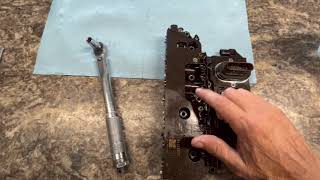
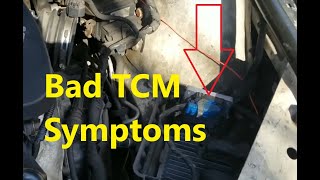
While P0604 is a generic code, on the GM Lambda platform (which includes the Traverse), it has a specific and well-documented history. General Motors issued Technical Service Bulletins (TSBs) acknowledging that this code, along with others, frequently appears and is stored in the Transmission Control Module (TCM). On these vehicles, the TCM is not a separate, externally-mounted box. It is integrated with the transmission valve body and solenoids into a single unit called the Transmission Electro-Hydraulic Control Module (TEHCM), located inside the transmission oil pan. This location subjects it to significant heat and vibration, contributing to its higher failure rate and making 🎬 Watch: Common symptoms of a failing transmission control module. replacement more labor-intensive.
Diagnostic Flowchart
Tap your situation to follow the diagnostic path that matches what you're seeing on this vehicle.
Symptoms You May Notice
- Check Engine Light (Malfunction Indicator Lamp) is on
- Harsh or erratic shifting
- Transmission may get stuck in one gear (limp mode)
- Vehicle may not start or may stall intermittently
- ABS or Traction Control lights may also illuminate
- Driver Information Center (DIC) may display a "Service Stabilitrak" or "Traction Control Off" message
- Erratic door lock cycling when hitting bumps, indicating a network communication issue stemming from the TCM fault.
- Replacing the Engine Control Module (ECM) first, when the TSBs for this vehicle point specifically to the Transmission Control Module (TCM).
- Replacing the TCM/TEHCM without first thoroughly checking and confirming the battery's state of health and the integrity of all power and ground connections. A weak battery can easily mimic module failure.
Most Likely Causes
- Transmission Control Module (TCM/TEHCM) Internal Failure 🔴 High Probability → Shop Transmission Assembly As identified in GM Technical Service Bulletin #PIP4653E, the TCM is a known point of failure. The TEHCM unit is located inside the transmission, where constant exposure to heat and vibration can lead to the degradation of internal electronic components and solder joints over time.
How to confirm: After ruling out power/ground issues, a professional scan tool is needed to confirm the P0604 code is stored specifically in the TCM. If communication is intermittent or internal memory tests fail, the module is bad.
Typical fix: Replace the entire Control Solenoid Valve Assembly (which includes the TCM, valve body, and solenoids). The new module must be programmed to the vehicle's VIN using GM-specific software (SPS/TIS2Web).
Est. part cost: $300-$600 - Low Battery Voltage or Poor Grounds 🟡 Medium Probability → Shop Vehicle Battery Control modules require a stable voltage to operate correctly. Low voltage during startup or due to a failing alternator can corrupt the temporary data in RAM, triggering a false P0604 code. These large vehicles have significant electrical demands, making them sensitive to battery health.
How to confirm: Test the battery with a digital multimeter and a load tester. It should read ~12.6V with the engine off and 13.7V-14.7V with the engine running. Inspect the main battery terminals, chassis ground straps, and the engine-to-chassis ground for tightness and corrosion.
Typical fix: Fully charge the battery after disconnecting it from the vehicle, or replace it if it fails a load test. Clean or tighten all ground connections.
Est. part cost: $150-$300 for a new battery - Wiring or Connector Issues at the TCM ⚪ Low Probability The main wiring harness connector for the transmission passes through the engine bay where it is exposed to heat and vibration. The harness can rub against the transmission case or other components, causing wires to chafe and short out, leading to communication loss and various codes, including P0604.
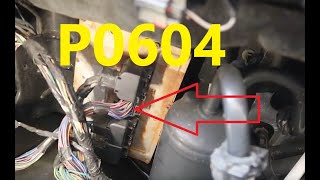
How to confirm: Visually inspect the wiring harness and the main 20-way connector going to the transmission case for any signs of damage, corrosion, or loose pins. A YouTube video by 'Codeman's Auto' shows this exact failure mode on a platform-mate GMC Acadia.
Typical fix: Repair the damaged section of the harness or clean/replace the connector. This can involve soldering and heat-shrinking individual wires.
Est. part cost: $20-$150 for wiring repair supplies or a connector pigtail
Rare But Worth Checking
- Engine Control Module (ECM) Fault: → Shop Engine Control Module (ECM) While TSBs point to the TCM, it is possible for the main ECM to be the source of the P0604 code. This is less likely on this specific vehicle but should be considered if a new TCM does not resolve the issue. Diagnosis requires a scan tool to confirm which module is logging the fault.
- Aftermarket Tuning/Programmers: Improperly installed or low-quality aftermarket engine or transmission tunes can corrupt the memory in the control modules, leading to a P0604 code. If the vehicle has a tuner, returning the vehicle to the stock calibration is a necessary diagnostic step.
Diagnosis Steps
- Perform a full vehicle scan to check for all stored DTCs. Confirm if P0604 is stored in the TCM, ECM, or both. Note any accompanying codes like P0700 or U0101.
- Thoroughly test the battery. Check the static voltage (should be ~12.6V) and perform a load test. A weak battery is a common cause of spurious module codes.
- With the engine running, check the alternator output voltage. It should be stable and within the 13.7-14.7V range.
- Inspect all primary ground connections: the negative battery cable to the chassis, the chassis-to-engine block ground strap, and any grounds near the TCM/ECM. Ensure they are clean, tight, and free of corrosion. Resistance should be below 0.1 Ω.
- If power and grounds are good, clear the codes and test drive. If the code returns immediately, it points more strongly to a hardware fault.
- Locate the main transmission wiring harness connector. Inspect it for corrosion, moisture, or pushed-out pins. Inspect the harness for any signs of chafing or rubbing against the transmission case or engine components.
- If all external factors are ruled out, the issue is most likely an internal failure of the TCM/TEHCM.
- Using a professional scan tool (like a GM MDI), attempt to re-flash or update the TCM software. If this fails or the code returns immediately, the TEHCM requires replacement.
Parts You'll Likely Need
- Transmission Control Module (TCM/TEHCM)
(OEM #24256524 (Superseded by other numbers, always verify by VIN))— As per GM TSBs and overwhelming field reports, the integrated TCM/valve body assembly is the most frequent cause of a P0604 code on this vehicle.
Trusted brands: ACDelco (OEM), Dorman
OEM price range: $400-$600
Aftermarket price range: $300-$500
Related Codes That Often Appear With This One
- P0700 — This is a generic transmission fault code that simply means the TCM has requested the check engine light to be turned on. It almost always accompanies specific transmission codes like P0604 when the fault is in the TCM.
- P0601 — This code indicates an Internal Control Module Memory Check Sum Error. Both P0601 and P0604 are internal module faults and are often cited together in GM bulletins, pointing to a failing module.
- P1621 — This is a GM-specific code for Control Module Long Term Memory Performance. It often appears with other module memory codes like P0604, as noted in TSB #PIP4653E.
- U0101 — This code means Lost Communication with TCM. If the TCM is failing internally, it can stop communicating on the vehicle's network, triggering this code in other modules like the ECM.
Technical Service Bulletins (TSBs) & Recalls
- PIP4653E: Addresses DTCs including P0604 stored in the Transmission Control Module, directing technicians to suspect the TCM itself.
- 05-06-04-060A: An informational bulletin about various control module DTCs, including P0604, which advises checking for electrical issues like low voltage first.
Platform-Specific Known Issues
- GM issued Technical Service Bulletin #PIP4653E specifically for technicians to address DTCs P0601, P0603, P0604, P062F or P1621 being stored in the Transmission Control Module. The fix is typically module replacement.
- Informational Bulletin #05-06-04-060A also groups P0604 with other control module DTCs, indicating a known pattern and advising to check for low voltage conditions before module replacement.
- The TCM is integrated into the valve body inside the transmission (as a TEHCM), making it more susceptible to heat-related failure and more labor-intensive to replace than an external module.
Mechanic-Grade Diagnostic Values
- Alternator Output Voltage — expected: 13.5V - 14.8V with engine running. Failure: Voltage below 13.5V or above 14.8V indicates a charging system issue that can trigger false module codes.
- Voltage Drop on Ground Circuit — expected: Less than 100 millivolts (0.1V). Failure: A reading higher than 100mV between the ground point (e.g., G110) and the negative battery terminal under load indicates excessive resistance in the ground path.
Scan Tool Commands That Help
- GM SPS (Service Programming System) with a J2534 device: Replace and Reprogram ECU — This function is mandatory when replacing the TEHCM. It downloads the correct VIN-specific software and calibration files from GM's servers to the new module.
- GM GDS2/Tech2 or equivalent professional scan tool: Transmission Adaptive Pressure Reset — After replacing and programming the TEHCM, this function must be performed to clear the old learned shift pressure values and allow the new module to learn correctly.
- GM GDS2/Tech2 or equivalent professional scan tool: Idle Learn / Crankshaft Position Variation Learn — Often required after a module replacement or any procedure that involves disconnecting power for an extended period. It allows the ECM to relearn engine idle characteristics.
Wiring & Ground Locations
- G110 — Located on the right rear of the engine, mounted to the back of the cylinder head.. This is a critical shared ground point for both the Engine Control Module (ECM) and the Transmission Control Module (TCM). A loose or corroded connection here can cause P0604 and a host of communication codes (U-codes).
- TCM Ground Wires — Pins 1 and 18 (Black/White wires) in the main automatic transmission connector (X1). These wires lead to ground G110.. These are the specific ground supply pins for the TEHCM. Performing a voltage drop test on these pins can confirm if the module itself is receiving a proper ground from G110.
- G302 — At the base of the right-hand (passenger side) B-pillar, often under carpet and trim.. This is a body ground point that services multiple interior modules. While less likely to be the primary cause for P0604, a fault here can cause bizarre network-wide electrical issues that could potentially confuse diagnosis.
Real Owner Repair Stories
- Reddit user comment in r/Chevy (2011 Chevrolet Traverse) — Intermittent no-crank, no-start, and multiple communication loss DTCs between modules.
❌ Tried (didn't work) Initial diagnosis was confusing due to the number of communication codes across different modules.
✅ What actually fixed it The root cause was a loose G110 ground bolt. A previous transmission replacement had resulted in the bolt being cross-threaded; it felt tight but was not making a solid electrical connection, causing an intermittent ground for the TCM and ECM.
OEM Part Supersession History
24256524→24041956, 24287420, and others. A full list of superseded numbers includes 24258573, 24260028, 24264420, and 24275860.— Revisions often include software updates, improved internal components, or changes to the pressure switch design to enhance durability.
Heads up: TEHCMs for GM 6-speed transmissions are often grouped by model years (e.g., 2009-2012 may be one group, 2013-2015 another). Using a TEHCM from the wrong year group, even if it physically fits, can result in a no-start or immediate limp mode. Programming with the correct VIN-specific calibration via GM SPS is mandatory.ACDelco OEM→Dorman 609-008 (Remanufactured)— Aftermarket alternative. Dorman claims their remanufactured unit uses upgraded PEEK plastic for gaskets to better resist heat and prevent contamination, addressing a common failure point of the original design.
Heads up: Like the OEM part, this aftermarket module must be programmed to the vehicle after installation.
Model Year Variations Within This Range
- 2009-2015: While the fundamental TEHCM design is similar across this range, internal software calibrations and potentially minor hardware components were updated year-to-year. There is no universal TEHCM for all years; the correct part must be selected and then programmed with VIN-specific software from GM to ensure compatibility with the vehicle's other modules and operating systems.
Helpful Videos
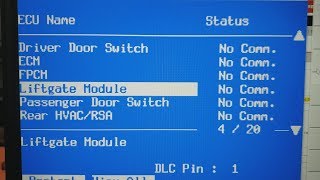
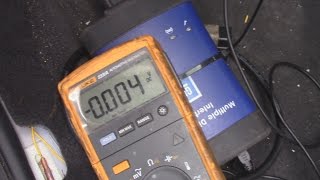
We Have This Part in Stock


The information in this article is provided for general reference and educational purposes only. Vehicle specifications, procedures, and part compatibility can vary by production date, trim level, and region. Always consult your vehicle's factory service manual and verify part numbers before purchasing or performing repairs. Safety-critical components such as airbags, seat belts, and braking systems should be installed by a qualified professional.
- Chevrolet TRAVERSE:
- 🧭 Diagnostic Flowchart
- 🎬 Helpful Videos
- 🛍️ Shop This Part
- What's Unique About the 2009-2015 Chevrolet TRAVERSE
- Symptoms You May Notice
- Most Likely Causes
- Rare But Worth Checking
- Diagnosis Steps
- Parts You'll Likely Need
- Related Codes That Often Appear With This One
- Technical Service Bulletins (TSBs) & Recalls
- Platform-Specific Known Issues
- Mechanic-Grade Diagnostic Values
- Scan Tool Commands That Help
- Wiring & Ground Locations
- Real Owner Repair Stories
- OEM Part Supersession History
- Model Year Variations Within This Range
- 🎟️ Get 5% Off