

P0604 on 2020-2025 Chrysler Voyager: Internal RAM Error Causes & Fixes
This code indicates an internal memory error in your Voyager's main engine computer (PCM). The most common causes are a weak battery, failing auxiliary battery (if equipped), or poor electrical connections. Before replacing the expensive PCM, fully test the entire charging system and check for available software updates from a dealer, as a reflash is a common fix.
- P0604 is a serious internal error in the Powertrain Control Module (PCM).
- Do not drive the vehicle, as it may stall without warning.
- The most common and cheapest-to-fix causes are a weak battery or bad electrical connections. Always check these first.
- A software update from a Chrysler dealer may fix the problem without replacing any parts, as indicated by TSB #18-044-26.
- If the battery, connections, and software are good, the PCM itself has likely failed and will need to be replaced and programmed, which is a costly repair.
What's Unique About the 2020-2025 Chrysler VOYAGER
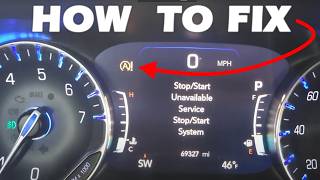
The Chrysler Voyager in this year range is mechanically identical to the Chrysler Pacifica, sharing the 3.6L Pentastar V6 and associated electronics. For these vehicles, which often feature an Engine Stop/Start (ESS) system, there are two batteries: a main AGM battery and a smaller auxiliary battery. A failing auxiliary battery is a very common culprit for causing a variety of electrical issues and codes, including processor faults like P0604, 🎬 Watch: Understanding the causes and fixes for the P0604 code. as it can strain the entire electrical system. Furthermore, Chrysler has issued software updates like TSB #18-044-26 that address a cluster of internal module faults, suggesting that some instances of this code are resolvable with a software reflash rather than immediate hardware replacement.
Diagnostic Flowchart
Tap your situation to follow the diagnostic path that matches what you're seeing on this vehicle.
Symptoms You May Notice
- Check Engine Light is on
- Engine may crank but not start
- Intermittent stalling, sometimes shortly after starting or while driving
- Rough or unstable idle
- Harsh or erratic transmission shifting
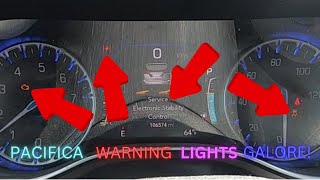
- Activation of the Anti-lock Brake System (ABS) or Traction Control light
- Vehicle may fail an emissions test
- Message on dash regarding the Engine Stop/Start (ESS) system needing service
- Replacing sensors like the crankshaft or camshaft position sensor. While these can cause similar symptoms like no-start or stalling, they will set their own specific codes. P0604 is explicitly an internal module fault.
- Replacing only the main battery without testing the auxiliary battery. On vehicles with the ESS system, the auxiliary battery is a frequent point of failure and can cause this code.
Most Likely Causes
- Low Battery Voltage or Poor Connections (Main or Auxiliary) 🔴 High Probability → Shop Vehicle Battery Modern vehicles with complex electronics, especially those with Engine Stop/Start (ESS), are highly sensitive to voltage fluctuations. The Voyager/Pacifica platform uses a main battery and a smaller auxiliary battery for the ESS system. A failure in either battery, loose terminals, or corroded grounds can interrupt power to the PCM, corrupting its memory. Forum discussions frequently point to a failing auxiliary battery as the root cause for various electronic gremlins.
How to confirm: Use a multimeter to test the main battery voltage with the engine off (~12.4V or higher). Test the charging voltage with the engine running (stable, between 13.5-14.8V). Both batteries should be load-tested, as a simple voltage check may not reveal a weak battery. Inspect all battery terminals and main engine/chassis grounds for tightness and corrosion.
Typical fix: Charge or replace the faulty battery (often the auxiliary one). Clean or tighten all battery terminals and ground connections. After replacement, the code may clear on its own after a few drive cycles.
Est. part cost: $100-$250 for an auxiliary battery, $150-$300 for a main AGM battery - PCM Software Glitch 🟡 Medium Probability Manufacturers often release software updates to fix bugs discovered after a vehicle is sold. TSB #18-044-26 specifically lists P0604 as a code addressed by a performance update, indicating this is a known issue for Chrysler that can be fixed with a reflash.
How to confirm: A Chrysler dealership or a well-equipped independent shop with a subscription to Mopar's Tech Authority or a tool like wiTECH can check your vehicle's VIN for any available PCM software updates.
Typical fix: The PCM is reprogrammed (or "reflashed") with the latest software version. This procedure requires a stable power supply to the vehicle to prevent interruption.
Est. part cost: $0-$250, depending on dealer labor rates and warranty status - Failing Powertrain Control Module (PCM) ⚪ Low Probability → Shop Engine Control Module (ECM) While not exceptionally common, internal hardware failure of the PCM can occur. Voltage spikes from a faulty alternator or jump-starting incorrectly can damage the sensitive internal components, including the RAM chip.
How to confirm: This is a diagnosis of exclusion. If both batteries, the charging system, all power/ground connections, and software are confirmed to be good, the PCM itself is the likely culprit.
Typical fix: The PCM must be replaced and programmed to the vehicle's specific VIN and options. This is not a plug-and-play part.
Est. part cost: $800-$2000 for a new OEM unit, remanufactured units are available for less
Rare But Worth Checking
- Failing Alternator: → Shop Alternator An alternator producing unstable voltage or excessive AC ripple can disrupt the PCM's sensitive electronics, causing memory errors. This should be checked during the charging system test.
- Aftermarket Engine Tuner/Programmer: If the vehicle has an aftermarket performance tune, it can sometimes corrupt the PCM's software and trigger internal memory faults. Removing the tune and returning to the stock program is a critical diagnostic step before condemning the factory hardware.
- Blown PCM Fuse or Faulty Power Supply Circuit: A blown fuse dedicated to the PCM or a fault in the power supply wiring can cause this code. A visual inspection of the fuse box and wiring harness to the PCM is a necessary step.
Diagnosis Steps
- Scan for All Codes: Use an OBD-II scanner to confirm P0604 and check for any other codes that may provide more context.
- Inspect and Load Test Both Batteries: If equipped with an Engine Stop/Start system, both the main and auxiliary batteries must be fully charged and load-tested. A simple voltage check is not enough. Ensure all battery terminals are clean and tight.
- Test Charging System Voltage: With the engine running, use a multimeter to verify the alternator is producing a stable voltage, typically between 13.5V and 14.8V.
- Inspect Power and Ground Connections: Visually inspect and verify the main ground straps from the battery to the chassis and from the chassis to the engine block are clean and secure. Check the wiring harness and connectors at the PCM for any signs of corrosion or damage.
- Check for Technical Service Bulletins (TSBs): Have a dealer or qualified shop check your VIN for any software updates related to the PCM, specifically referencing TSB #18-044-26. This is a very common solution.
- Remove Aftermarket Tuners: If any aftermarket performance programmers are installed, return the PCM to the stock factory tune and clear the codes to see if the issue persists.
- PCM Replacement: If all previous steps check out, the PCM is likely faulty and requires replacement. The new module must be programmed by a dealer or a specialist with the correct equipment.
Parts You'll Likely Need
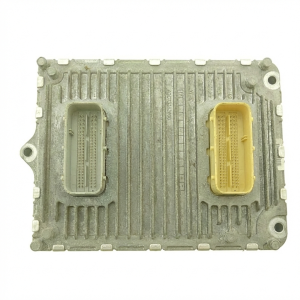
- Powertrain Control Module (PCM)
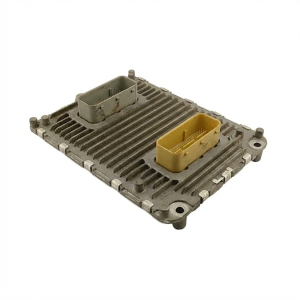
(OEM #68330910AA (example base number, always verify with VIN))— If basic electrical issues and software are ruled out, the internal RAM failure requires the replacement of the entire module.
Trusted brands: Mopar (OEM)
OEM price range: $800-$2000
Aftermarket price range: $500-$1200 (Remanufactured) - AGM Auxiliary Battery — A weak or failing auxiliary battery is a primary cause of voltage-related module errors like P0604 on models with Engine Stop/Start.
Trusted brands: Mopar (OEM), Duralast, DieHard
OEM price range: $150-$300
Aftermarket price range: $100-$250 - AGM Main Battery — A weak or failing main battery can also cause voltage-related module errors like P0604.
Trusted brands: Mopar (OEM), Interstate, DieHard
OEM price range: $250-$400
Aftermarket price range: $150-$300
Related Codes That Often Appear With This One
- P062B — Internal Control Module Fuel Injector Control Performance. This code is listed in the same TSB (#18-044-26) as P0604, suggesting a related software issue that can be fixed with a reflash.
- P060C — Internal Control Module Main Processor Performance. Also listed in TSB #18-044-26, this points to a general internal processing error within the PCM, often caused by the same software or voltage issues as P0604.
- P0606 — PCM Processor Fault. This is a more general processor fault code that can appear alongside P0604, indicating a significant internal error within the control module.
Technical Service Bulletins (TSBs) & Recalls
- 18-044-26: Addresses P0604-00 along with P062B-00 and P060C-00, indicating a known software-related issue for certain 2020 models that can be resolved with a PCM reflash.
Platform-Specific Known Issues
- TSB #18-044-26: Chrysler issued this bulletin for 2020 models which includes a software update to address P0604-00 - Internal Control Module Random Access Memory Ram Error, among other codes. This is a strong indicator that a dealer reflash may be the intended fix in some cases.
- Dual Battery System Weakness: On Pacifica/Voyager models with the Engine Stop/Start (ESS) feature, the auxiliary battery is a known weak point. Owners on forums like r/ChryslerPacifica report that a failing auxiliary battery is a very common cause of seemingly unrelated electrical problems and fault codes.
Mechanic-Grade Diagnostic Values
- Battery Voltage (engine off) — expected: 12.4V or higher (12.6V+ for a fully charged AGM battery). Failure: Voltage below 12.4V indicates a discharged or failing battery that can cause memory faults.
- Alternator Charging Voltage (engine running at idle) — expected: 13.5V - 14.8V, stable. Failure: Voltage that is unstable, too low (below 13.2V), or too high (above 15.0V) can corrupt PCM memory.
- PCM Ground Circuit Resistance — expected: Below 0.1 Ohms. Failure: Resistance higher than 0.1 Ohms indicates a poor ground connection, which can cause intermittent PCM resets and memory errors.
- 3.6L Camshaft Position Sensor Supply Voltage — expected: 5.0V reference from PCM. Failure: No voltage or incorrect voltage on a sensor's supply line can indicate a broader PCM power supply issue.
Hidden / Shadow Codes Worth Checking
- P0604-00: The '-00' suffix is a Chrysler-specific extension that defines the fault type. While a public definition is not available, its inclusion in TSB #18-044-26 confirms it is the specific variant addressed by the software update. The TSB also notes the code can be in 'Active or Stored status,' which is critical for diagnosis. (see via A professional scan tool like Mopar's wiTECH or an advanced aftermarket scanner capable of reading manufacturer-specific codes.)
Scan Tool Commands That Help
- wiTECH (Mopar OEM Tool): Reprogram ECU / Flash PCM — Used to apply software updates, such as the one specified in TSB #18-044-26, which is a common fix for a software-induced P0604 code.
- wiTECH (Mopar OEM Tool): PCM Configuration — This routine must be performed after flashing or replacing the PCM to ensure all vehicle options and security information are correctly programmed into the new module.
- OEM-level Scan Tool: Memory Test / RAM Integrity Test — This is a specific self-test routine that can be initiated to command the PCM to check its own RAM. A 'fail' result from this test definitively confirms an internal hardware fault, condemning the PCM.
Wiring & Ground Locations
- Main Engine/Transmission Ground Strap (similar to G101) — Typically a braided strap running from a stud on the transmission case to the engine block or chassis frame rail. On Pacifica/Voyager platforms, this is a known point of fraying or corrosion due to engine movement.. This is a primary ground path for the powertrain. A poor connection here can cause significant voltage drops and electrical noise, leading to PCM malfunction and memory errors.
- Chassis Grounds near Fuse Box — In the engine bay, look for several wires bolted directly to the chassis/shock tower area, often near the main fuse box or battery. A video for the related Pacifica shows three ground screws in this area.. These grounds are essential for the PCM and other modules. They must be clean, tight, and free of corrosion to ensure a stable voltage supply.
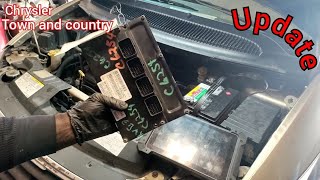
- PCM Connector — The PCM is typically located in the engine bay, often against the firewall or on a fender well. Its connectors are large and have dozens of pins.. Technicians should avoid probing the connector terminals directly to prevent damage. A poor pin fit or corrosion within the connector itself can cause P0604. A special tool (Miller #8815) is recommended for safe diagnosis.
Real Owner Repair Stories
- Multiple owners on r/ChryslerPacifica Reddit forum (2018-2021 Chrysler Pacifica (mechanically identical to Voyager) with Engine Stop/Start (ESS)) — Vehicle won't start, multiple warning lights on the dash, 'Service ESS System' message, and various seemingly unrelated fault codes, including processor codes.
❌ Tried (didn't work) Jump-starting the vehicle (sometimes works temporarily)., Replacing only the main battery., Clearing codes, only for them to return immediately.
✅ What actually fixed it Replacing the small AGM auxiliary battery. Once the failing auxiliary battery was replaced, the electrical system stabilized, and the fault codes, including processor errors, were resolved. - r/MechanicAdvice user (Truck with similar CANBUS architecture and P0604 code) — Persistent P0604 code that would not clear.
❌ Tried (didn't work) Replacing the ECM with a dealer-remanufactured and flashed unit., Removing an aftermarket CANBUS-connected radio., Testing all fuses and relays., Checking and adding a missing ground strap.
✅ What actually fixed it The final fix was not posted by the original author, but the diagnostic path demonstrates a critical point: even after replacing the PCM, the code can persist if the root cause is in the vehicle's wiring harness or power supply. This story serves as a caution against assuming the PCM is the final answer.
When the Usual Fixes Don't Work
- In some documented cases, replacing the Powertrain Control Module (PCM) does not resolve the P0604 code. This happens when the root cause is not a hardware failure within the PCM itself, but rather an issue external to it that corrupts its operation. Examples include a faulty wiring harness with an intermittent short, poor pin tension at the PCM connector, or unstable voltage from a failing alternator or auxiliary battery. This underscores the importance of exhaustively testing all power and ground circuits *before* condemning and replacing the expensive PCM.
OEM Part Supersession History
68330910AA→Unknown— Part numbers for PCMs are frequently updated or superseded due to hardware revisions or software updates. Multiple part numbers may be compatible with a given vehicle.
Heads up: Always verify the correct part number with the vehicle's VIN through a dealer parts department. A used module will require professional programming to match the vehicle's VIN, options, and security key information.
Model Year Variations Within This Range
- 2020-2025: While there are trim and cosmetic updates, the core powertrain (3.6L Pentastar V6) and electrical architecture (including the dual-battery ESS system) relevant to diagnosing P0604 remain consistent across this year range for the Voyager. Diagnosis does not significantly change from year to year.
Helpful Videos

We Have This Part in Stock

The information in this article is provided for general reference and educational purposes only. Vehicle specifications, procedures, and part compatibility can vary by production date, trim level, and region. Always consult your vehicle's factory service manual and verify part numbers before purchasing or performing repairs. Safety-critical components such as airbags, seat belts, and braking systems should be installed by a qualified professional.
- Chrysler VOYAGER:
- 🧭 Diagnostic Flowchart
- 🎬 Helpful Videos
- 🛍️ Shop This Part
- What's Unique About the 2020-2025 Chrysler VOYAGER
- Symptoms You May Notice
- Most Likely Causes
- Rare But Worth Checking
- Diagnosis Steps
- Parts You'll Likely Need
- Related Codes That Often Appear With This One
- Technical Service Bulletins (TSBs) & Recalls
- Platform-Specific Known Issues
- Mechanic-Grade Diagnostic Values
- Hidden / Shadow Codes Worth Checking
- Scan Tool Commands That Help
- Wiring & Ground Locations
- Real Owner Repair Stories
- When the Usual Fixes Don't Work
- OEM Part Supersession History
- Model Year Variations Within This Range
- 🎟️ Get 5% Off