

P0604 on 2019-2023 Dodge Challenger: Internal RAM Error Causes and Fixes
Code P0604 on a 2019-2023 Dodge Challenger indicates an internal memory (RAM) error in the engine's main computer (PCM). The most common fix is a PCM software update performed by a dealer, as noted in TSB 18-044-26. This reflash typically costs between $100-$250. If a software update doesn't work and the battery/charging system is healthy, the PCM itself likely needs replacement.
- P0604 on a 2019-2023 Challenger is an internal memory error within the PCM, but the most likely cause is a software glitch, not hardware failure.
- The first and most important diagnostic step is to check for a PCM software update with a dealer, as specified in TSB 18-044-26.
- A PCM reflash is a relatively inexpensive procedure (around $150) that often resolves the code permanently.
- Before condemning the PCM, always ensure the battery and charging system are in perfect health, as voltage instability is a known trigger for this code.
- PCM replacement is the last resort and requires a new module programmed to the vehicle's VIN.
What's Unique About the 2019-2023 Dodge CHALLENGER
For this generation of Dodge Challenger and its platform-mates (Dodge Charger, Chrysler 300), code P0604 is specifically mentioned in Technical Service Bulletin (TSB) 18-044-26, which points to a software issue. This suggests that in many cases, the code can be resolved with a PCM software update (a 'reflash') from a dealership, rather than an immediate and expensive hardware failure. This is a common pattern on many modern Dodge/Ram vehicles where software logic is updated to prevent false triggers of internal module faults. The dealer-level scan tool, wiTECH, is required to perform this update.
Diagnostic Flowchart
Tap your situation to follow the diagnostic path that matches what you're seeing on this vehicle.
Symptoms You May Notice
- Check Engine Light is on
- Vehicle may not start or has a hard time starting
- Engine may stall intermittently, sometimes after running for a short period
- Erratic or harsh transmission shifting, or entering limp mode
- Reduced engine power or poor acceleration
- Activation of the anti-lock brake system (ABS) or traction control light
- Vehicle may fail an emissions test due to OBD-II monitor system issues
- Replacing the PCM without first checking for software updates. Given the TSB, a reflash should always be the first step.
- Replacing other engine sensors. P0604 is an internal module fault; it is not caused 🎬 Watch: A breakdown of P0604 causes and common fixes. by a bad oxygen sensor or MAF sensor, though a failing PCM can sometimes cause other false codes to appear.
- Ignoring a weak battery. Many modern vehicles are extremely sensitive to battery voltage, and a battery that can still start the car may not be stable enough for the PCM, triggering this code.
Most Likely Causes
- Outdated or Corrupted PCM Software 🔴 High Probability As cited in manufacturer TSB #18-044-26, a software update is available to correct this specific fault, indicating it's a known issue that can be resolved without hardware replacement. This is the most common fix reported for this platform.
How to confirm: A technician with a dealer-level scan tool (like wiTECH) can check the current software calibration ID of the PCM and see if an update is available. This is the first step a dealer will take.
Typical fix: Perform a PCM software update (reflash) to the latest version. This service typically costs between $100 and $250 at a dealership.
Est. part cost: $0 - Failing Powertrain Control Module (PCM) 🟡 Medium Probability → Shop Engine Control Module (ECM) While software is the primary suspect, internal hardware failure of the RAM chip can occur due to heat cycles, vibration, or age.
How to confirm: If the code returns immediately after a successful software update and all power/ground circuits are verified to be good, the PCM's internal hardware is condemned. This is a process of elimination.
Typical fix: Replace the PCM. The new module must be programmed 🎬 See this walkthrough on how to remove the Challenger PCM. to the vehicle's VIN and configuration. This can be done by the dealer or by specialized third-party services.
Est. part cost: $800-$1100 - Low Battery Voltage or Charging System Issue ⚪ Low Probability → Shop Vehicle Battery Control modules are sensitive to voltage. A weak battery, poor connections, or a failing alternator can cause voltage drops ('brown-outs') that corrupt the PCM's memory during startup and trigger a P0604 code. Many owners report this code appearing after a battery replacement or jump start.
How to confirm: Test the battery's state of charge and health. With the engine running, check the alternator output voltage at the battery terminals; it should be stable, typically between 13.5 and 14.8 volts. Inspect all battery terminals and main ground connections for corrosion and tightness. A voltage drop test on the power and ground circuits to the PCM is the definitive test.
Typical fix: Charge or replace the battery, clean terminal connections, or replace the failing alternator.
Est. part cost: $150-$600
Rare But Worth Checking
- Aftermarket Engine Tuner/Programmer: If an aftermarket performance tune (e.g., from DiabloSport) has been loaded onto the PCM, it can sometimes cause instability or corrupt the memory. Returning the PCM to the stock factory tune is a critical diagnostic step if a tuner is present. Some tuners for 2015+ models require a modified or unlocked PCM, which adds complexity.
- Wiring or Connector Issue at the PCM: While uncommon, corrosion, moisture, or a loose pin in the main PCM connectors can cause intermittent power or data loss, leading to internal faults. A visual inspection of the harness and connectors is warranted before replacing the module. A burnt smell near the PCM is a strong indicator of an internal short.
Diagnosis Steps
- Check the battery and charging system. Ensure battery voltage is above 12.4V with the engine off, and between 13.5-14.8V with the engine running. Load test the battery to confirm its health, as simple voltage checks can be misleading.
- Inspect and clean all battery terminals and primary engine/chassis ground connections. Ensure they are tight and free of corrosion.
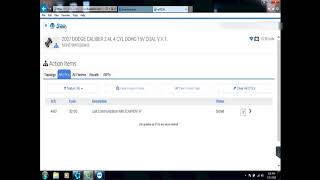
- Using a professional scan tool, check for any available software updates for the Powertrain Control Module, referencing TSB #18-044-26. This must be done with a dealer-level tool 🎬 Watch: How a technician performs a PCM reflash using WiTech. like wiTECH.
- If a software update is available, perform the PCM reflash procedure. This typically costs $100-$250 at a dealership.
- Clear all diagnostic trouble codes and perform a drive cycle to see if the P0604 code returns. The reflash procedure requires a key-off period of at least 75 seconds to complete.
- If the code returns, inspect the wiring harness and connectors at the PCM for any signs of damage, corrosion, or loose pins. Check for a burnt smell.
- If all wiring, grounds, and power supplies are confirmed to be good and the code persists after a reflash, the PCM is faulty and requires replacement.
Parts You'll Likely Need
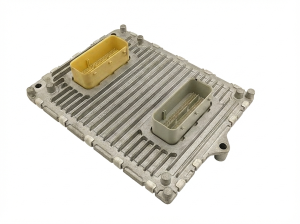
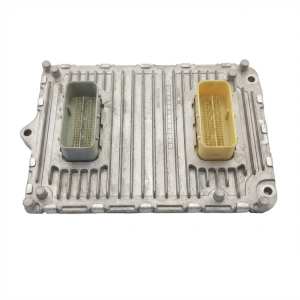
- Powertrain Control Module (PCM)
(OEM #68434924AC (Example for 3.6L), 68434935AB (Example for 5.7L/6.4L))— This is the part that is replaced if a software update and electrical checks do not resolve the internal RAM error. Part numbers are highly specific to VIN, engine, and transmission options and must be verified.
Trusted brands: Mopar (OEM Remanufactured)
OEM price range: $831-$1117
Aftermarket price range: $500-$800
Related Codes That Often Appear With This One
- P062B — This code for 'Internal Control Module Fuel Injector Control Performance' is listed in TSB #18-044-26 as potentially appearing alongside P0604, and is also addressed by the same PCM software update.
- P060C — This code for 'Internal Control Module Main Processor Performance' is also listed in TSB #18-044-26 as being related to the same software issue as P0604.
- P0602 — This code for 'Control Module Programming Error' can appear with P0604, especially after a failed reflash attempt, a voltage spike, or if an aftermarket tuner has corrupted the programming.
Technical Service Bulletins (TSBs) & Recalls
- 18-044-26: Notes that P0604-00 may be present and can be addressed by a PCM software update. It also links this code to P062B and P060C.
Platform-Specific Known Issues
- TSB #18-044-26 explicitly identifies that P0604, along with P062B and P060C, can be stored in the PCM and resolved by updating the module's software. This strongly indicates a known software anomaly rather than a widespread hardware defect.
- The use of aftermarket tuners is popular on the Challenger platform. However, 2015 and newer models have a locked PCM from the factory, requiring either a PCM swap or an unlocking service to apply a custom tune, which can sometimes lead to module errors if not done correctly.
Mechanic-Grade Diagnostic Values
- PCM Power Supply Voltage (while cranking) — expected: Should stay above 9.0 Volts. Failure: A drop below 9.0V indicates excessive draw or a weak battery/connection, which can corrupt the PCM's RAM.
- PCM Ground Circuit Resistance — expected: Below 0.1 Ω. Failure: Resistance higher than 0.1 Ω indicates a poor ground connection, which can cause floating voltages and module instability.
- Battery State of Charge (engine off) — expected: Above 12.4 Volts. Failure: A reading below 12.4V suggests a discharged or failing battery that may not provide stable voltage during the PCM's startup self-test.
- Charging System Voltage (engine running) — expected: Stable between 13.5V and 14.8V. Failure: Voltage that is unstable, too low, or too high (spiking) can cause RAM corruption.
Hidden / Shadow Codes Worth Checking
- P0604-00: The '-00' is an ISO/SAE defined Failure Type Code (FTC) or status byte. A '-00' suffix typically indicates a general or non-specific failure type, meaning the module has detected the RAM error but is not providing a more detailed reason (e.g., circuit short, performance issue). (see via A professional scan tool like the dealer's wiTECH or an advanced aftermarket scanner will display the code with its FTC suffix.)
Scan Tool Commands That Help
- wiTECH 2.0: ECU Flash / Reprogramming — Used to perform the software update specified in TSB 18-044-26. This is the first diagnostic step after verifying power and grounds, as corrupted software is a primary cause.
- wiTECH 2.0: Check PCM VIN / Write VIN — This function is mandatory when replacing the PCM. The new module is blank and must be programmed with the vehicle's specific VIN to communicate with other modules and allow the engine to start.
- wiTECH 2.0: PCM Odometer Adjustment — After installing a new PCM, this function writes the correct mileage from the instrument cluster to the new engine computer, ensuring consistency across modules.
- OEM Scan Tool: Memory Test Routine — Some OEM-level tools have a specific self-test or integrity test for the module's memory. A failure on this test directly confirms an internal hardware fault in the RAM, condemning the PCM.
Wiring & Ground Locations
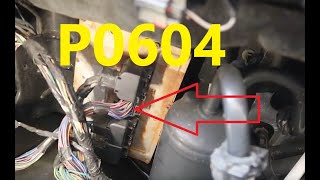
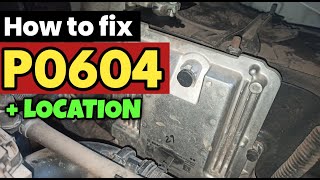
- Powertrain Control Module (PCM) — In the engine bay, located under the plastic cowl cover near the passenger side strut tower.. This is the module setting the code. Its connectors must be inspected for corrosion or damage, and its power/ground circuits must be tested directly at the harness.
- G102 — Typically located on the engine block or cylinder head. A wiring diagram is needed for the exact location on a specific engine.. Wiring diagrams for similar models show G102 as a primary ground point for the PCM. A poor connection here can directly cause internal module faults like P0604.
- PCM Ground Pins — Multiple pins on the PCM connectors serve as grounds. For example, on some 5.7L HEMI PCMs, a key ground is labeled 'PG(GND1)'.. A voltage drop test should be performed on these specific pins to ensure the module has a solid ground path back to the chassis and battery.
- Main Engine/Transmission Ground Strap — A braided metal strap connecting the engine block or transmission case to the vehicle's chassis/frame.. This strap provides the main ground path for the entire powertrain. If it's loose, corroded, or broken, the PCM and other modules can malfunction due to unstable grounds, even if the battery ground is good.
Real Owner Repair Stories
- chevyhhr.net forum user (Chevrolet HHR (different vehicle, but identical electrical principle)) — After the battery was drained completely, a jump start was attempted. The engine would not crank and a P0604 code was stored.
❌ Tried (didn't work) Jump starting the vehicle., Recharging the battery with a slow, low-amperage float charger while it was still connected to the car.
✅ What actually fixed it The owner, an electrical engineer, disconnected the 12V battery from the vehicle entirely, charged it to full capacity with a proper standalone charger, and then reinstalled it. The car started immediately and the code was gone. The theory is that the slow discharge/recharge cycle corrupted the PCM's RAM, and only a complete power-off reset with a fully charged, stable power source could clear the fault.
OEM Part Supersession History
68434935AA→68434935AB— Revision/update to the engine controller.
Heads up: Generally, later revisions (e.g., AB replaces AA) are backward compatible as long as the module is programmed to the vehicle's VIN.5150246AC→5150246AE— Revision/update to the powertrain control module.
Heads up: Later letters in the suffix typically indicate newer software or minor hardware revisions. The key is ensuring the replacement part is for the correct engine and is properly programmed.
Model Year Variations Within This Range
- 2018-2023: Later models in this range may use newer versions of the Global Powertrain Engine Controller (GPEC), such as GPEC4 or GPEC5, compared to earlier GPEC2/GPEC2A versions. While the P0604 fault can occur on any version, the hardware is different, which primarily affects aftermarket tuning. For example, some supercharger kits are compatible with GPEC2 but not the newer, more secure GPEC5 because the tuning software has not been developed for it yet.
- 2019-2023: The physical PCM case has a date code stamped into it, often in a series of small rectangular windows indicating the year and month of manufacture. This can be used to verify the age of a used PCM to ensure it matches the seller's description and is appropriate for the vehicle's model year.
Helpful Videos
We Have This Part in Stock

The information in this article is provided for general reference and educational purposes only. Vehicle specifications, procedures, and part compatibility can vary by production date, trim level, and region. Always consult your vehicle's factory service manual and verify part numbers before purchasing or performing repairs. Safety-critical components such as airbags, seat belts, and braking systems should be installed by a qualified professional.
- Dodge CHALLENGER:
- 🧭 Diagnostic Flowchart
- 🎬 Helpful Videos
- 🛍️ Shop This Part
- What's Unique About the 2019-2023 Dodge CHALLENGER
- Symptoms You May Notice
- Most Likely Causes
- Rare But Worth Checking
- Diagnosis Steps
- Parts You'll Likely Need
- Related Codes That Often Appear With This One
- Technical Service Bulletins (TSBs) & Recalls
- Platform-Specific Known Issues
- Mechanic-Grade Diagnostic Values
- Hidden / Shadow Codes Worth Checking
- Scan Tool Commands That Help
- Wiring & Ground Locations
- Real Owner Repair Stories
- OEM Part Supersession History
- Model Year Variations Within This Range
- 🎟️ Get 5% Off