

P0604 on 2000-2007 Ford Taurus: Internal Memory Error Causes and Fixes
P0604 on a Ford Taurus indicates a RAM error in the main engine computer (PCM). Before replacing the expensive PCM, thoroughly test the battery and alternator, as low voltage is a very common cause. A cranking voltage below 9.6V is a known trigger. If the PCM is faulty, replacement and programming are required.
- P0604 means the engine computer (PCM) has a memory error.
- Before assuming the PCM is bad, ALWAYS test the battery and alternator. Low voltage is the most common trigger for this code.
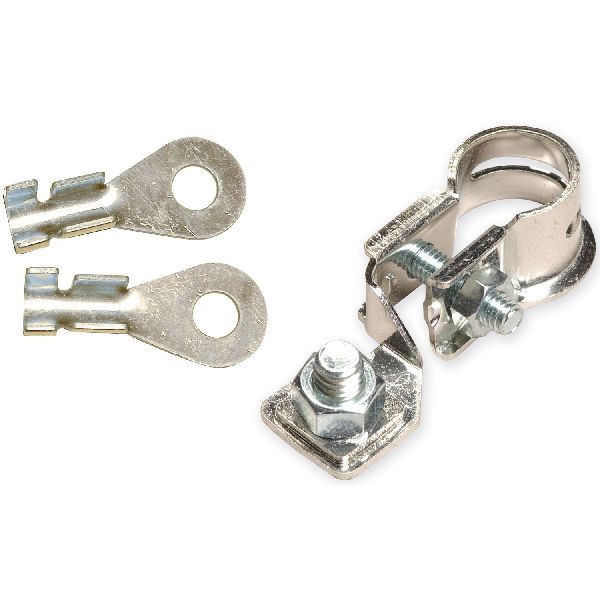
- Check all battery cables and main ground connections for tightness and corrosion.
- If the PCM must be replaced, the new unit requires special programming to work with your car's anti-theft system. This is not a simple plug-and-play repair.
What's Unique About the 2000-2007 Ford Taurus
For the fourth-generation Ford Taurus, a P0604 code often points to external electrical issues rather than immediate PCM failure. These vehicles are of an age where battery, alternator, and grounding problems are common. The most critical platform-specific detail is that if the PCM does need replacement, it must be programmed to the vehicle's Passive Anti-Theft System (PATS). Without this programming, the car will not start. The PCM is located on the passenger side of the firewall in the engine bay.
Symptoms You May Notice
- Check Engine Light is on
- Engine is hard to start or will not start at all
- Engine stalls intermittently, sometimes shortly after starting or when stopping
- Erratic or harsh automatic transmission shifting, or entering 'limp mode'
- Noticeable decrease in fuel economy
- ABS or Traction Control warning lights may illuminate
- Engine seems to misfire or hesitate on acceleration
- Replacing the PCM without first thoroughly testing the battery, alternator, and all power/ground connections. Many PCMs are replaced unnecessarily when the root cause was simply unstable voltage.
Most Likely Causes
- Weak or Failing Battery / Alternator 🔴 High Probability → Shop Alternator As these vehicles age, the battery and charging system components are more likely to degrade. Low voltage during startup is a primary trigger for RAM errors, with a drop below 9.6V while cranking being a common cause. A failing alternator diode can also introduce AC voltage into the system, corrupting the PCM.
How to confirm: Test the battery voltage with a multimeter. It should be at least 12.4V with the engine off. With the engine running, the alternator should produce a stable voltage between 13.7V and 14.7V. Many auto parts stores can perform a load test on both components for free. A Reddit user with a P0604 code noted their issue appeared after needing a jump start, pointing to a low voltage cause.
Typical fix: Replace the battery and/or alternator if they fail testing.
Est. part cost: $100-$250 for a battery, $200-$400 for an alternator. - Loose or Corroded Power/Ground Connections 🟡 Medium Probability Corrosion on battery terminals and chassis ground straps is common over time, leading to intermittent voltage drops and high resistance, which can corrupt the PCM's memory.
How to confirm: Visually inspect the battery terminals for white or blue-green powder. Follow the main negative battery cable to its connection point on the chassis and engine block; check for rust and ensure the connection is tight. Inspect the PCM connectors on the firewall for corrosion or pushed-out pins. A voltage drop test on the PCM's power and ground circuits should show minimal loss; ground resistance should be below 0.1 Ω. 🎬 See how to diagnose and solve bad ground connection issues.
Typical fix: Clean the battery terminals and cable ends with a wire brush. Clean chassis/engine ground points to bare metal and tighten securely. Apply dielectric grease to connectors to prevent future corrosion. Replace corroded cable ends if necessary.
Est. part cost: $5-$20 for cleaning supplies or new terminals. - Faulty Powertrain Control Module (PCM) ⚪ Low Probability → Shop Engine Control Module (ECM) While less common than external electrical faults, the internal components of the PCM (like the RAM chip itself) can fail from age, heat, moisture intrusion, or repeated voltage spikes.
How to confirm: This is a diagnosis of exclusion. If the battery, alternator, and all related wiring/grounds are confirmed to be in perfect condition, the PCM itself is the likely culprit. A professional scan tool may have a module self-test or RAM integrity test that can confirm the internal fault.
Typical fix: Replace the PCM. The new unit must be programmed to the car's VIN and PATS security system.
Est. part cost: $250-$500 for a remanufactured PCM.
Rare But Worth Checking
- PCM Software Corruption: This can happen after an improper 'flash' or software update. If the code appeared immediately after a programming attempt, this is a likely cause. A dealer or specialized shop would need to attempt to re-flash the module with the latest OEM calibration.
- Parasitic Battery Drain: → Shop Vehicle Battery A component on the vehicle may not be shutting off correctly, slowly draining the battery overnight. This leads to a low voltage condition on the next startup, triggering P0604. A parasitic draw test can identify the faulty circuit. A draw above 50-85 milliamps is considered excessive.
Diagnosis Steps
- Read all stored trouble codes with an OBD-II scanner. Note any other codes present, especially U-codes or other module codes.
- Clear the codes. Disconnect the negative battery terminal for 30 minutes to reset the PCM's Keep Alive Memory (KAM). Reconnect and drive the vehicle to see if the P0604 code returns immediately.
- If the code returns, perform a thorough test of the battery. Voltage should be >12.4V engine off. Perform a load test, ensuring cranking voltage does not drop below 9.6V.
- With the engine running, test the alternator output. Voltage should be stable and within the 13.7V-14.7V range. Check for AC ripple voltage, which should not exceed 0.5V AC.
- Inspect all battery cables and terminals for corrosion and tightness. Clean and tighten as needed.
- Locate and inspect the main engine and chassis ground straps. Ensure they are clean, tight, and free of corrosion. Perform a voltage drop test on the ground circuit.
- Visually inspect the wiring harness and connectors at the PCM, located on the passenger-side firewall. Check for any signs of damage, moisture, or corrosion on the pins of the 104-pin connector (often designated C175E).
- Check for any relevant Technical Service Bulletins (TSBs) that may suggest a software re-flash as a solution.
- If all power, ground, and charging system tests pass and no TSBs apply, the PCM is the most likely cause of the fault. Professional diagnosis is recommended for confirmation before replacement.
Parts You'll Likely Need
- Powertrain Control Module (PCM) — This is the required fix if the module itself has an internal hardware failure after all external electrical issues have been ruled out.
Trusted brands: Motorcraft (OEM), Cardone
OEM price range: $400-$600+
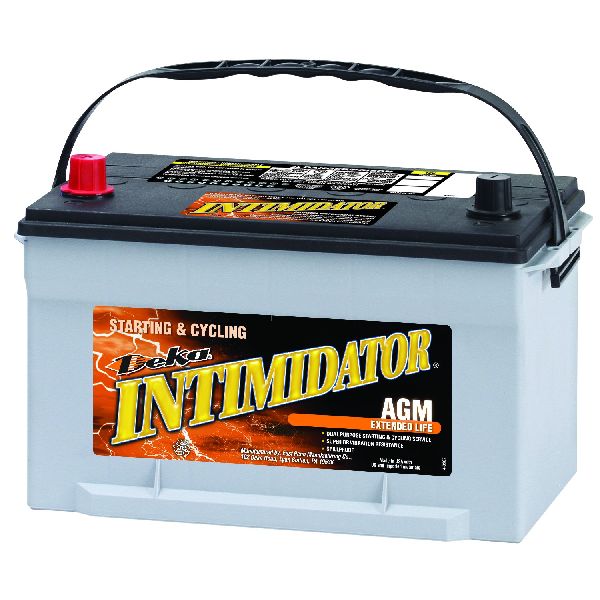
Aftermarket price range: $250-$500 - Battery — A weak or failing battery is a very common trigger for this code due to low voltage during engine cranking.
Trusted brands: Motorcraft, Interstate, DieHard
OEM price range: $150-$250
Aftermarket price range: $100-$200
Related Codes That Often Appear With This One
- P0602 — P0602 (Control Module Programming Error) can appear with P0604 if the issue is related to software corruption or a failed re-flashing attempt.
- U-codes (e.g., U0100) — Communication codes may appear if the PCM is failing and unable to communicate properly with other modules on the vehicle's network (CAN bus).
- P0340 — If a failing camshaft synchronizer is causing erratic signals, it can lead to general engine performance issues and may be accompanied by PCM-related codes like P0604 as the computer struggles with inconsistent data.
Platform-Specific Known Issues
- PCM Location and Water Intrusion: The PCM on the 4th generation Taurus is located on the passenger side of the firewall in the engine compartment. While not as prone to water damage as some other vehicles, its location can expose it to heat and potential moisture, which can degrade the internal electronics over many years.
Mechanic-Grade Diagnostic Values
- PCM Keep Alive Power (KAM) Voltage — expected: Constant ~12.6V at all times, even with key off. Test at pin 55 of the 104-pin connector.. Failure: Voltage below 12V indicates a wiring, fuse, or battery issue that can corrupt the KAM.
- PCM Power Ground Resistance — expected: Less than 0.1 Ω between the PCM ground pins (e.g., Pin 24, 25, 51, 76, 77, 103) and the negative battery terminal.. Failure: Resistance higher than 0.2 Ω indicates a corroded or loose ground connection, causing voltage instability.
- Cranking Voltage at Battery — expected: Should not drop below 9.6V during engine cranking.. Failure: A drop below 9.6V can corrupt the PCM's RAM during its power-on self-test, triggering a false P0604.
- Alternator AC Ripple Voltage — expected: Less than 0.5V AC with the engine running.. Failure: AC voltage greater than 0.5V indicates failing alternator diodes, which introduces 'dirty' power that can damage or confuse the PCM.
Scan Tool Commands That Help
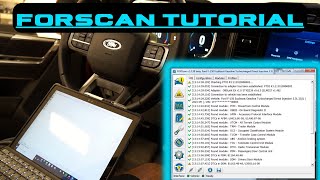
- Ford IDS (or FORScan): PCM Self Test — To command the PCM to run its internal diagnostic routines (Key On Engine Off, Key On Engine Running) and retrieve manufacturer-specific codes that a generic scanner might miss.
- Ford IDS: Programmable Module Installation (PMI) — This is the required function when installing a new or used PCM. It transfers vehicle-specific data (VIN, PATS info, etc.) to the replacement module.
- Ford IDS (or FORScan): Parameter Reset — After installing a replacement PCM, this function is used to synchronize the Passive Anti-Theft System (PATS) between the new PCM and the other modules in the vehicle, allowing the car to start.
- Ford IDS (or FORScan): Output Test Mode (OTM) — Allows the technician to command specific PCM outputs (like cooling fans, relays, etc.) to turn on and off, verifying the PCM's driver circuits and wiring are functional.
Wiring & Ground Locations
- C175E — The main 104-pin PCM connector, located on the passenger side of the firewall in the engine bay.. This is the central connection point for all PCM power, ground, and data lines. Corrosion or pushed-out pins in this connector can directly cause P0604.
- Pin 55 (Keep Alive Power) — On the 104-pin PCM connector.. This pin supplies constant battery voltage to the PCM to maintain its Random Access Memory (RAM). A loss of voltage on this pin, even momentarily, will erase the memory and trigger P0604 on the next startup.
- Pins 24, 25, 51, 76, 77, 103 (Grounds) — On the 104-pin PCM connector.. These are the primary ground paths for the PCM. High resistance on any of these ground circuits will cause unstable operation and can lead to internal memory errors.
Real Owner Repair Stories
- GM Vehicle Owner (as reported by Hands On Auto Training) (GM Vehicle (e.g., Cavalier)) — No crank, P0604, and security-related codes (P0513, P1633).
❌ Tried (didn't work) Reflashing the original PCM., Installing a used PCM, which fixed the P0604 but still had persistent security codes.
✅ What actually fixed it Installing a quality remanufactured PCM and programming it to the vehicle resolved all codes and the no-start condition. This highlights that not all replacement modules are good. - HummerForums.com user (as reported by Go-Parts) (2006 Hummer H3) — P0604, P0601, intermittent no-start, various other codes, security light on.
❌ Tried (didn't work) Initial diagnosis focused on the PCM itself due to the internal error codes.
✅ What actually fixed it The root cause was a faulty ignition switch. It was causing a momentary loss of power to the PCM during cranking and operation, which was enough to corrupt the RAM and trigger the P0604 code. Replacing the ignition switch resolved all issues.
OEM Part Supersession History
4F1A-12A650-VA (Example for 2004 Taurus)→4F1Z-12A650-VA— Standard OEM part number update for service replacement.
Model Year Variations Within This Range
- 2002-2004: A forum user noted that the PCM pinout for a 2004 Taurus was 'completely different' from a 2002 model, despite both being 4th generation. This indicates a significant mid-cycle wiring change. Technicians must use a wiring diagram specific to the exact model year, as pin locations for power, ground, and sensors may not be the same across the entire 2000-2007 range.
Diagnostic Flowchart
Other Known Issues on This Vehicle
Issues unrelated to this code that are worth knowing about as an owner of this generation:
- Automatic Transmission Failure (AX4N/AX4S) 🔴 High → Shop Transmission Assembly — Very common, especially between 80,000 and 150,000 miles. Failures include stripped torque converter splines leading to a sudden loss of all gears, and failed clutch pistons.
- Camshaft Synchronizer Failure (3.0L Vulcan V6) 🔴 High — Common on the 3.0L OHV Vulcan engine. The synchronizer's bushings wear out, causing a distinct 'chirping' or 'squeaking' noise from the engine. Since the synchronizer shaft also drives the oil pump, complete failure can lead to a sudden loss of oil pressure and catastrophic engine damage.
- Ignition Coil Pack Cracking/Failure 🟠 Medium — The epoxy body of the coil pack is known to develop cracks over time due to heat cycles. This allows moisture in, causing misfires (especially in wet weather), rough idle, and hesitation.
- Oil Pan Gasket Leaks 🟡 Low — A very common issue across this generation, leading to persistent oil leaks.
- Broken Front Coil Springs 🔴 High — There was a major recall (NHTSA ID: 12V031000) because the front coil springs could fracture due to corrosion. A fractured spring could contact the front tire, potentially causing a blowout. (Ref: NHTSA Campaign Number: 12V031000)
Used vs. New Parts: Buying Guide for This Vehicle
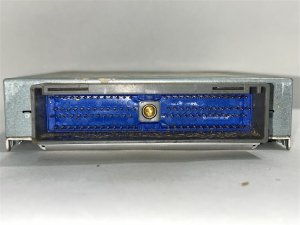
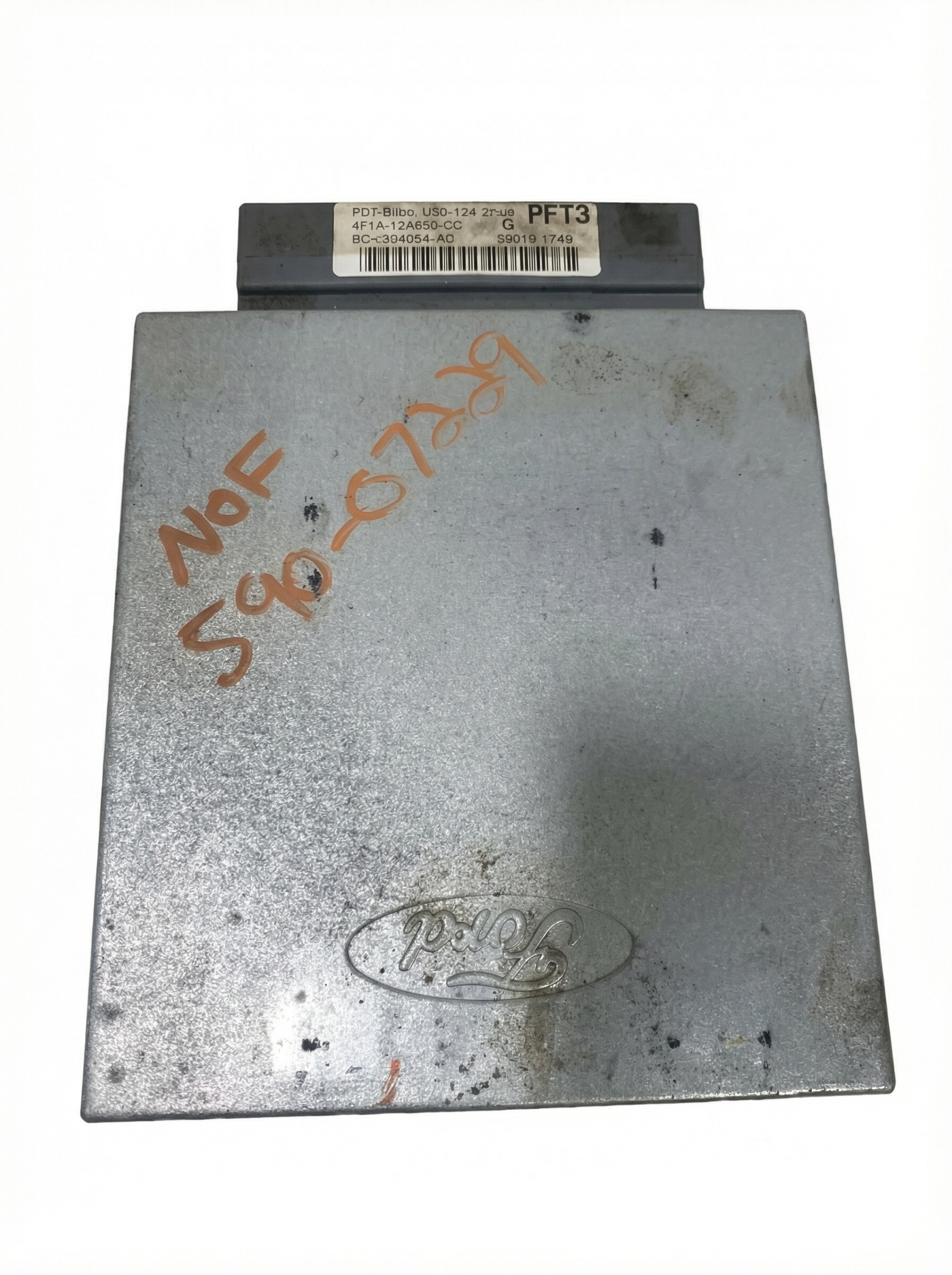
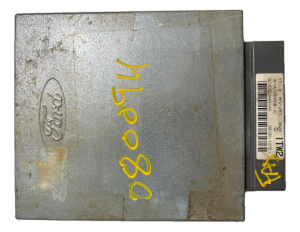
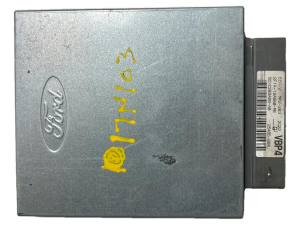
When a used part is the smart pick: A used PCM from a junkyard is a viable and cost-effective option for this vehicle, but ONLY if you have access to Ford's IDS software or a high-level aftermarket tool like FORScan. The used module must be reprogrammed with the vehicle's VIN and the PATS anti-theft system must be reset ('parameter reset') to allow the engine to start.
Donor-vehicle mileage cap: roughly under 150000 miles for the part to have meaningful remaining life.
What to inspect on the donor part:
- Ensure the donor vehicle is the exact same model year and has the same engine/transmission.
- Check the part number on the used PCM to match the original as closely as possible.
- Avoid parts from vehicles with signs of flood damage, fire, or major electrical system damage.
- Ask for the VIN of the donor car, as it can sometimes be helpful during reprogramming.
Aftermarket brands forum-validated for this vehicle:
- Motorcraft (OEM Remanufactured)
- Sellers offering pre-programmed units with a PATS delete service can be a good plug-and-play option for DIYers without advanced scan tools.
Brands owners have reported issues with on this vehicle:
- Cardone: This brand is widely available but has a very mixed reputation among mechanics and DIYers. Many forum posts report receiving multiple dead-on-arrival or quickly-failing units, suggesting poor quality control. While some have success, it is a significant gamble.
Real Owner Stories
Aggregated from forums and TSBs cited above. Mileages and costs reflect what owners reported in those sources.
2000-2007 Ford Taurus
Symptoms: The P0604 code appeared immediately after the vehicle's battery was low enough to require a jump start.
What fixed it: Ensuring the battery was healthy and clearing the code with an OBD-II scanner.
Source hint: Reddit r/Cartalk
Related OBD-II Codes
Frequently Asked Questions
Can a low battery really cause a P0604 code on my 2000-2007 Ford Taurus?
Where is the PCM located on my 4th generation Taurus if I need to inspect it for moisture?
Is there a recall for the front coil springs on this generation of Taurus?
Can I use a used PCM from a junkyard to fix the P0604 error?
My Taurus is shifting harshly and showing P0604; is my transmission failing?
What should the alternator voltage be to ensure it isn't corrupting my PCM?
Helpful Videos
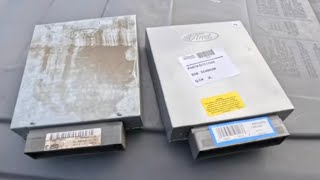

Used OEM Parts in Stock
New Aftermarket Parts Available

The information in this article is provided for general reference and educational purposes only. Vehicle specifications, procedures, and part compatibility can vary by production date, trim level, and region. Always consult your vehicle's factory service manual and verify part numbers before purchasing or performing repairs. Safety-critical components such as airbags, seat belts, and braking systems should be installed by a qualified professional.
- Ford Taurus:
- 🧭 Diagnostic Flowchart
- 🎬 Helpful Videos
- 🛍️ Shop This Part
- What's Unique About the 2000-2007 Ford Taurus
- Symptoms You May Notice
- Most Likely Causes
- Rare But Worth Checking
- Diagnosis Steps
- Parts You'll Likely Need
- Related Codes That Often Appear With This One
- Platform-Specific Known Issues
- Mechanic-Grade Diagnostic Values
- Scan Tool Commands That Help
- Wiring & Ground Locations
- Real Owner Repair Stories
- OEM Part Supersession History
- Model Year Variations Within This Range
- Other Known Issues on This Vehicle
- Used vs. New Parts: Buying Guide for This Vehicle
- Real Owner Stories
- 2000-2007 Ford Taurus
- Related OBD-II Codes
- Frequently Asked Questions
- 🎟️ Get 5% Off