

P0604 on 2007-2014 GMC Acadia: RAM Error, Causes, and Fixes
On a 2007-2014 GMC Acadia, code P0604 often points to a communication or memory issue within the Transmission Control Module (TCM). Before suspecting the module itself, check for a weak battery, bad ground connections, or charging system problems, as these are the most common and cheapest fixes. The TCM is located inside the transmission, making wiring and module replacement more complex.
- P0604 on a 2007-2014 Acadia usually points to an issue with the Transmission Control Module (TCM) or its power supply.
- Always check the battery, terminals, and charging system first. These are the most common and least expensive fixes.
- Do not immediately assume the most expensive part (the module) has failed. Proper diagnosis is key.
- If other codes are present, especially communication (U-codes), diagnose them first as they can cause a P0604 to set.
- Replacing a control module is not a simple swap; it requires professional programming to work with your specific vehicle.
What's Unique About the 2007-2014 Gmc ACADIA
While P0604 is a generic code, on the first-generation GMC Acadia and its Lambda platform mates (Enclave, Traverse, Outlook), it has a known, strong association with the transmission control system. Manufacturer Technical Service Bulletins (TSBs) confirm that this code can be stored specifically in the Transmission Control Module (TCM). A key difference for this platform is the TCM's location: it is a TEHCM (Transmission Electro-Hydraulic Control Module) located *inside* the transmission, bolted to the valve body. 🎬 See this walkthrough on how to access and repair the TCM. This makes it susceptible to thermal stress and vibration, and makes physical access for replacement a labor-intensive job requiring removal of the transmission pan.
Diagnostic Flowchart
Tap your situation to follow the diagnostic path that matches what you're seeing on this vehicle.
Symptoms You May Notice
- Check Engine Light is on
- Transmission may shift harshly or erratically
- Vehicle may stall or have intermittent starting issues
- Traction Control or Stabilitrak warning light may illuminate
- Vehicle may fail an emissions test
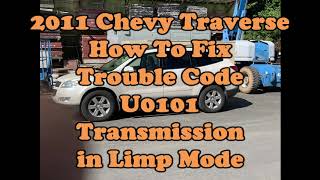
- Loss of communication with the TCM (U0101) may be present
- Erratic door lock behavior when hitting bumps
- Replacing the ECM when the issue is a simple battery or ground connection.
- Replacing transmission components like solenoids when the root cause is electronic (TCM or power supply).
- Immediately condemning the TCM without first thoroughly checking for wiring harness damage 🎬 Watch: How to find and repair common wiring harness damage. near the transmission connector.
Most Likely Causes
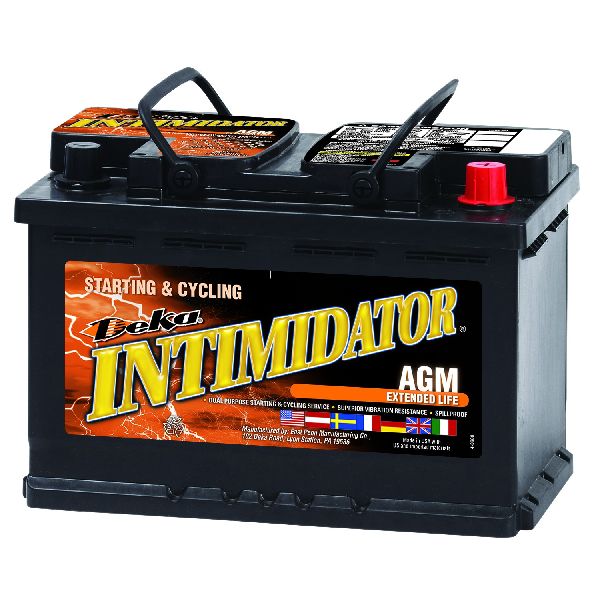
- Low Battery Voltage or Poor Connection 🔴 High Probability → Shop Vehicle Battery Control modules are sensitive to voltage fluctuations. An aging battery, corroded terminals, or a poor ground connection can easily cause transient memory errors, especially after a jump-start or battery change.
How to confirm: Test the battery voltage with a multimeter; it should be above 12.4V with the engine off. Perform a load test on the battery. Inspect and clean battery terminals and main ground straps, especially the one from the battery to the chassis and the engine/transmission to the frame.
Typical fix: Clean battery terminals and ground connections. Important ground points to check include G103 on the cowl and G113 at the engine-to-transmission stud. If the battery fails a load test, replace it.
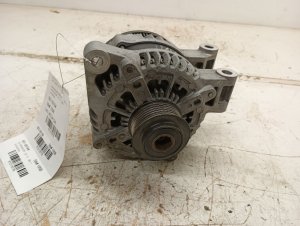
Est. part cost: $100-$250 - Faulty Charging System (Alternator) 🟡 Medium Probability An alternator producing incorrect voltage (too high or too low) can corrupt module memory or cause communication errors.
How to confirm: With the engine running, measure the voltage at the battery terminals. It should be stable, typically between 13.5V and 14.8V. Voltage spikes or drops indicate a faulty alternator or voltage regulator.
Typical fix: Replace the alternator if its output is out of specification.
Est. part cost: $200-$450 - Faulty Transmission Control Module (TCM) 🟡 Medium Probability → Shop Transmission Assembly As indicated by TSBs, the TCM is a primary location for this code. Its location inside the transmission subjects it to heat and vibration, which can lead to internal failure of the RAM chip or other components like the internal pressure switches.
How to confirm: This requires a professional scan tool to communicate directly with the TCM. If power and grounds are good and the code returns immediately after clearing (especially if accompanied by U0101), the module is suspect. Diagnosis is confirmed by ruling out all external factors (power, ground, wiring).
Typical fix: Replace the Transmission Control Module (TEHCM). The new module is located inside the transmission and will require programming to the vehicle's VIN using GM's SPS2 software.
Est. part cost: $300-$700 - Corrupted Software or Programming Issue ⚪ Low Probability
How to confirm: This is diagnosed by attempting to re-flash the module with the latest software from the manufacturer using a J2534 pass-thru device and a subscription to GM's Service Programming System (SPS2). If the process completes and the code does not return, the issue was software-based.
Typical fix: Reprogram (re-flash) the TCM or ECM with updated software using a dealership or properly equipped independent shop's tools.
Est. part cost: $100 - $250
Rare But Worth Checking
- Damaged Wiring or Connectors to TCM: The main wiring harness connector for the transmission can be a major failure point. Wires can chafe against the transmission case or other components, leading to shorts or open circuits. In some cases, a single broken wire (often the power or communication line) can cause a no-communication situation and trigger codes like P0604 and U0101.
- Faulty Engine Control Module (ECM): → Shop Engine Control Module (ECM) While the TCM is more common for this code on an Acadia, a faulty ECM can also be the cause, as it's the central hub of the vehicle's network. This is usually the last item to be considered after all other possibilities are exhausted.
- High Resistance in Communication Enable Circuit: A GM service bulletin points to potential high resistance or an open in the 'Communication Enable' circuit (Circuit 5986), which can be caused by corrosion under the driver's or passenger's front sill plates. This can prevent modules from waking up and communicating properly.
Diagnosis Steps
- Read all stored fault codes with a quality OBD-II scanner. Note any other codes present, especially U-codes like U0101.
- Clear the codes and perform a short test drive to see if the P0604 code returns immediately.
- Thoroughly inspect the battery, battery terminals, and all major power and ground cables. Clean any corrosion and ensure all connections are tight. Pay special attention to grounds G101 (lower engine block), G103 (cowl), and the main transmission-to-chassis ground strap at G113.
- Test the battery's state of charge and health using a multimeter and a load tester. A healthy battery should read ~12.6V engine off.
- With the engine running, test the alternator's output voltage to ensure the charging system is working correctly (typically 13.5V-14.8V).
- Inspect fuses related to the ECM and TCM in the under-hood fuse block.
- Carefully inspect the wiring harness leading to the large round transmission connector. Look for any signs of chafing, rubbing, or broken wires where the harness may contact the engine or transmission case.
- If power and grounds are confirmed good, the next step is to suspect the module itself. This step is best left to a professional.
- A professional technician will test the power, ground, and communication circuits directly at the TCM connector. Ground resistance should be below 0.1 Ω.
- If circuits are good, the final steps are attempting to re-flash the module or replacing the TCM/TEHCM and programming the new unit.
Parts You'll Likely Need
- Battery — A weak or failing battery is a leading cause of module communication and memory codes.
Trusted brands: ACDelco, Interstate, DieHard
OEM price range: $200-$300
Aftermarket price range: $150-$250 - Transmission Control Module (TCM/TEHCM)
(OEM #ACDelco 24256797 (Verify specific part number by VIN, requires programming))— TSBs point to this module as a common source for P0604 on the Acadia. An internal fault requires replacement.
Trusted brands: ACDelco (OEM), Dorman
OEM price range: $500-$700
Aftermarket price range: $300-$500 - Alternator — Incorrect voltage from a failing alternator can cause memory errors in control modules.
Trusted brands: ACDelco, Bosch, Denso
OEM price range: $350-$500
Aftermarket price range: $200-$400
Related Codes That Often Appear With This One
- P0601 — This indicates an internal memory checksum error, another type of module self-test failure. Both codes are mentioned in the same TSBs for the Acadia. [Bulletin #PIP4653E, Bulletin #05-06-04-060A]
- P1621 — This code is also related to control module memory and is cited alongside P0604 in TSBs for this vehicle. [Bulletin #PIP4653E, Bulletin #05-06-04-060A]
- U0100 — This code means 'Lost Communication With ECM/PCM'. If the ECM is failing its RAM test, it may stop communicating with other modules, triggering this U-code.
- U0101 — This code means 'Lost Communication with TCM'. This often appears with P0604 on the Acadia, as the problem is frequently centered around the TCM or its wiring.
Technical Service Bulletins (TSBs) & Recalls
- Bulletin #PIP4653E: Mentions that DTCs P0601, P0603, P0604, P062F or P1621 may be stored in the Transmission Control Module. The diagnostic procedure often leads to replacing the TCM if the code is set inside it, as it indicates an internal, non-serviceable fault.
- Bulletin #05-06-04-060A: Notes that DTCs including P0604 can be shared across multiple control modules and advises technicians to identify which module set the code before starting diagnosis.
Platform-Specific Known Issues
- Internal TCM Location: The Transmission Control Module (TCM) is located inside the transmission oil pan, attached to the valve body. This design, known as a TEHCM, makes it vulnerable to heat and vibration-related failures. Replacement is labor-intensive, requiring removal of the transmission pan and valve body components.
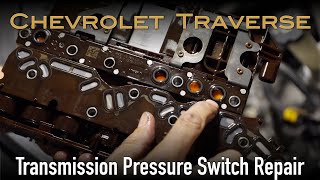
- TEHCM Pressure Switch Failure: A common failure within the TEHCM is not the computer itself, but the laminated plastic discs used for the pressure switches. These can degrade and fail, causing shifting problems and codes. Aftermarket kits from companies like Sonnax are available to rebuild these switches without replacing the entire expensive TEHCM.
Mechanic-Grade Diagnostic Values
- System Voltage (Engine Running) — expected: 13.5V - 14.8V. Failure: Voltage below 13.5V or above 14.8V indicates a charging system fault.
- Module Voltage During Cranking — expected: Above 9.0V. Failure: A drop below 9.0V can cause modules to reset or store memory codes.
- TCM/ECM Ground Circuit Resistance — expected: Below 0.1 Ω. Failure: Resistance higher than 0.1 Ω indicates a poor ground connection that can cause intermittent module errors.
Scan Tool Commands That Help
- GDS2 (GM Global Diagnostic System 2): Vehicle DTC Information — Used as an initial step to query all modules on the vehicle network and see which ones are reporting codes or are not communicating.
- SPS2 (Service Programming System): Reprogram ECU — This function is required to flash the vehicle's VIN and correct operating software into a new or replacement TCM/TEHCM. A subscription is required.
- GDS2: Transmission Adaptive Pressure Learn — This procedure must be run after replacing and programming a new TEHCM to allow the module to learn the hydraulic characteristics of the transmission clutches.
Wiring & Ground Locations
- G113 — Located on the left side of the engine, at the stud where the engine and transmission are joined.. This is a primary ground point for the powertrain. High resistance or corrosion here can directly impact both the ECM and TCM, causing communication and memory faults like P0604.
- G101 — Located on the left front of the engine, on the lower block.. A wiring diagram shows this ground serves the Engine Control Module (ECM) and Transmission Control Module (TCM). A fault here is a direct cause for module issues.
- G103 — Located on the left side of the engine compartment, on the cowl above the brake booster.. This grounds the Body Control Module (BCM) and the Data Link Connector (DLC). A bad ground here can cause network-wide communication issues that could be misinterpreted as a single module fault.
- J153 — A wiring junction (splice) located in the engine harness near the Transmission Control Module (TCM).. Splices are common points of corrosion and failure. A problem at this junction could interrupt power or data signals to the TCM, triggering a P0604.
OEM Part Supersession History
Varies by year (e.g., 24256797)→Component Repair Kits (e.g., Sonnax 124740-70K)— A common failure point within the TEHCM is not the entire module, but the internal pressure switch laminate discs which can degrade. Aftermarket companies developed kits to repair this specific issue without replacing the entire, expensive TEHCM.
Heads up: This is not a direct part supersession, but an alternative repair path. Rebuilding the TEHCM requires special tools and expertise and is an alternative to replacing the complete module.
Helpful Videos
Used OEM Parts in Stock
New Aftermarket Parts Available




The information in this article is provided for general reference and educational purposes only. Vehicle specifications, procedures, and part compatibility can vary by production date, trim level, and region. Always consult your vehicle's factory service manual and verify part numbers before purchasing or performing repairs. Safety-critical components such as airbags, seat belts, and braking systems should be installed by a qualified professional.
- Gmc ACADIA:
- 🧭 Diagnostic Flowchart
- 🎬 Helpful Videos
- 🛍️ Shop This Part
- What's Unique About the 2007-2014 Gmc ACADIA
- Symptoms You May Notice
- Most Likely Causes
- Rare But Worth Checking
- Diagnosis Steps
- Parts You'll Likely Need
- Related Codes That Often Appear With This One
- Technical Service Bulletins (TSBs) & Recalls
- Platform-Specific Known Issues
- Mechanic-Grade Diagnostic Values
- Scan Tool Commands That Help
- Wiring & Ground Locations
- OEM Part Supersession History
- 🎟️ Get 5% Off