

P0604 on 2016-2018 GMC Sierra 1500: RAM Error Causes and Fixes
P0604 on a 2016-2018 Sierra indicates a memory error in a control module, often the ECM or TCM. Before replacing any expensive modules, fully test the battery and clean all power and ground connections, as low voltage or poor connections are the most common triggers for this code. This is heavily emphasized in GM's own service bulletins for this exact issue.
- P0604 indicates a serious memory error in a control module, but don't assume the module is bad.
- The most common cause for this code on a 2016-2018 Sierra is a weak battery, bad alternator, or poor electrical connections.
- Always start your diagnosis by testing the battery and cleaning all main power and ground connections.
- GM has issued service bulletins (TSBs) that specifically point to checking module connections for this code.
- If a module (ECM/TCM) must be replaced, it requires professional programming to work with your truck's VIN.
What's Unique About the 2016-2018 Gmc SIERRA 1500
On this generation of GMC Sierra (K2XX platform), electrical issues are a known point of discussion and are highly sensitive to voltage stability. GM has issued Technical Service Bulletins (TSBs) that directly address code P0604. Specifically, TSB #PIP5609 instructs technicians to verify all ECM power and ground circuits and check for connection issues before replacing the module, explicitly stating a momentary loss of power can cause this DTC. Another bulletin, #PIP4653E, notes that this code can be stored specifically in the Transmission Control Module (TCM), highlighting that the problem may not be with the main engine computer. This platform's sensitivity to grounds is a recurring theme in owner forums, with many electrical gremlins being traced back to poor ground connections.
🎬 Watch: How to find and fix common GM ground issues.Diagnostic Flowchart
Tap your situation to follow the diagnostic path that matches what you're seeing on this vehicle.
Symptoms You May Notice
- Check Engine Light is on
- Vehicle may not start or may be hard to start
- Engine may stall intermittently, sometimes after running for a short period
- Harsh or erratic transmission shifting
- Transmission may enter 'limp mode' (stuck in one gear)
- ABS or Traction Control lights may illuminate
- Reduced engine power or sluggish acceleration
- Unstable or rough idle
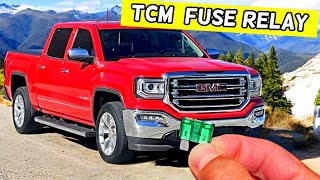
- Immediately replacing the ECM or TCM without first performing a thorough test of the battery, charging system, and checking all related power and ground connections. 🎬 See this guide for locating your TCM fuse and relay. These simpler, cheaper issues are far more common causes, a fact backed by GM's own service bulletin.
Most Likely Causes
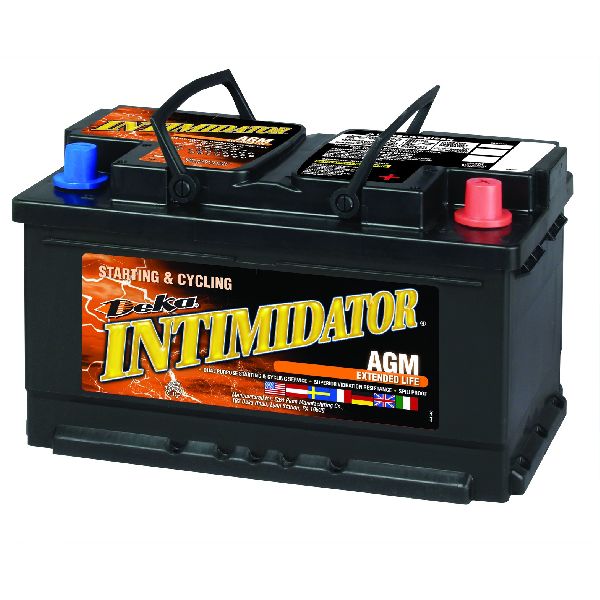
- Low Battery Voltage or Poor Connections 🔴 High Probability → Shop Vehicle Battery Modern trucks like the Sierra have a high electrical demand, and control modules require stable voltage for their Keep Alive Memory (KAM). A weak battery, failing alternator, or corroded terminals can cause a voltage drop during startup, corrupting the module's self-test and triggering a false P0604. This is the first thing TSB #PIP5609 points to as a potential cause.
How to confirm: Test the battery with a multimeter; it should read above 12.4 volts with the engine off and stay above 9.5V during cranking. Test the charging system; it should be between 13.5 and 14.5 volts with the engine running. Inspect and clean all battery terminals and main ground straps, particularly the main engine-to-chassis and battery-to-chassis grounds.
Typical fix: Charge or replace the battery. Clean or replace corroded battery terminals and ground wires. Some owners add redundant ground straps as a preventative measure.
Est. part cost: $150-$350 - Poor Electrical Connections at the Control Module 🟡 Medium Probability Manufacturer TSB #PIP5609 specifically instructs dealers to inspect the engine control module's electrical connections for this code, indicating it's a known issue. The bulletin mentions checking for terminal tension issues, meaning the pins inside the connector may not be making solid contact.
How to confirm: Visually inspect the connectors at the ECM and TCM for any signs of corrosion, moisture, or pushed-out pins. Perform a 'wiggle test' on the harness with the engine running to see if it causes a stall. A voltage drop test on the power and ground circuits at the module connector is the definitive test; resistance on ground circuits should be below 0.1 Ω.
Typical fix: Disconnect the module (with the battery disconnected), clean the connector pins and sockets with electrical contact cleaner, and apply a small amount of dielectric grease before reconnecting securely. If terminal tension is low, the specific pin may need to be replaced or the connector repaired.
Est. part cost: $5-$20 - Faulty Engine Control Module (ECM) or Transmission Control Module (TCM) ⚪ Low Probability → Shop Engine Control Module (ECM) While this code directly translates to an internal module fault, it's often triggered by external issues. However, internal failure of the module's RAM from heat, vibration, or voltage spikes is a possibility and is the final step in the diagnostic process after all external factors are eliminated.
How to confirm: This is a process of elimination. If the battery, charging system, and all related wiring/connections are confirmed to be good via voltage and resistance tests, the module itself is the likely culprit. An advanced scan tool can help determine which module (ECM or TCM) is setting the code.
Typical fix: Replace the faulty module (ECM or TCM). The new module will require programming to the vehicle's VIN by a dealership or a qualified shop with the correct tools like GM's SPS.
Est. part cost: $400-$1000
Rare But Worth Checking
- Software Glitch: Sometimes, the module's software can become corrupted or an update is available to fix logic errors. A dealer or qualified shop can re-flash the module with the latest GM software, which can sometimes resolve the issue without replacing the hardware.
- Damaged Wiring Harness: Less common than poor connections, the wiring harness itself can be damaged. On some GM trucks, the engine harness can chafe against brackets, the upper control arm, or shock tower, leading to intermittent shorts or opens that can trigger a P0604 code.
Diagnosis Steps
- Scan for all stored trouble codes. Note if P0604 is accompanied by other module or communication codes, and use an advanced tool to see which module logged the P0604.
- Perform a complete battery and charging system test. Battery voltage should be >12.4V (engine off) and >9.5V during cranking. Alternator output should be 13.5-14.5V (engine running).
- Inspect the battery terminals and main chassis/engine ground straps for corrosion or looseness. Key grounds on the K2XX platform include battery to chassis, firewall to engine block, and various points on the frame and cylinder heads. Clean and tighten as necessary.
- Perform a voltage drop test on the main power and ground cables to check for hidden resistance.
- If the battery and grounds are good, clear the codes and attempt to start the vehicle. If the code returns immediately, it suggests a hard fault.
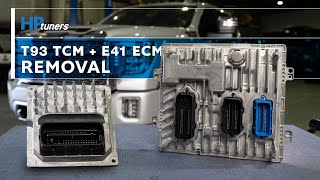
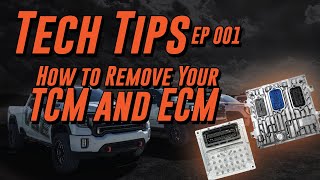
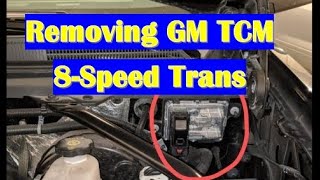
- Disconnect the battery. Locate the ECM (driver's side, front of the engine bay) and TCM and carefully inspect their electrical connectors 🎬 Watch: Step-by-step walkthrough for removing the transmission control module. for corrosion, damage, or loose pins, as recommended by TSB #PIP5609.
- Clean the connectors with electrical contact cleaner and ensure a secure connection. Check for proper pin tension.
- If the code still persists after verifying all power, ground, and data connections are perfect, the control module itself is the most likely cause.
- Confirm which module is setting the code (ECM or TCM) using an advanced scan tool. Replace and reprogram the faulty module. This often involves a crankshaft position variation learn procedure after replacement.
Parts You'll Likely Need
- Battery — A weak or failing battery is the most common trigger for a P0604 code on this platform due to voltage sensitivity during startup self-tests.
Trusted brands: ACDelco, Interstate, DieHard
OEM price range: $200-$350
Aftermarket price range: $150-$250 - Engine Control Module (ECM)
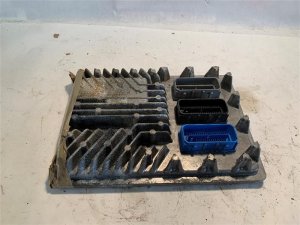
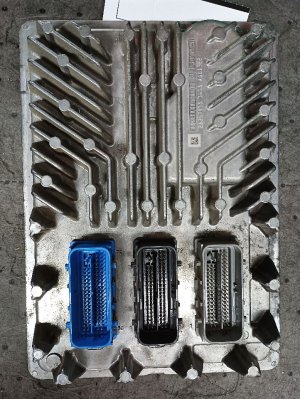
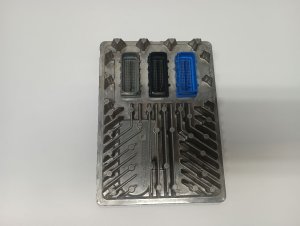
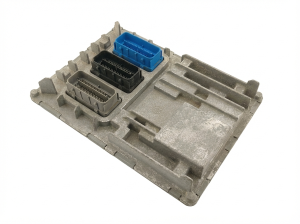
(OEM #e.g., ACDelco 12679078, 12686027 (Verify by VIN))— If all external electrical issues are ruled out, the ECM's internal RAM may have failed, requiring replacement. This is an ACDelco E92 controller for this platform. This part must be programmed to the vehicle.
Trusted brands: ACDelco
OEM price range: $500-$1000
Aftermarket price range: $400-$800 - Transmission Control Module (TCM)
(OEM #e.g., ACDelco 24279973, 24290348 (Verify by VIN))— GM TSBs indicate this code can be stored in the TCM. If transmission symptoms are present and all external electrical issues are ruled out, the TCM may have failed. This is a T87A controller for the 8-speed and 10-speed transmissions. This part must be programmed to the vehicle.
Trusted brands: ACDelco
OEM price range: $250-$450
Aftermarket price range: $200-$350
Related Codes That Often Appear With This One
- P0601, P0603, P0606 — These are also internal control module error codes. TSB #05-06-04-060A notes that these codes can be set together across multiple modules due to a shared underlying problem, like a voltage issue. TSB #PIP5609 also groups these codes together with the same diagnostic advice.
- U0100 — This code means 'Lost Communication With ECM/PCM'. If the ECM is failing its internal self-test due to P0604, it may stop communicating with other modules on the vehicle network, causing them to log this code.
- U0101 — This code means 'Lost Communication With TCM'. If the P0604 code is originating in the TCM, it can cause the module to stop communicating, triggering U0101 in other modules.
Technical Service Bulletins (TSBs) & Recalls
- PIP5609: Addresses codes P0601-P0604 and others, pointing to inspection of ECM electrical connections and power/ground supply. States a momentary loss of power/ground can be the cause.
- 05-06-04-060A: Informs that codes like P0604 can be shared in multiple modules, often due to a common underlying issue like voltage.
- PIP4653E: Notes that P0604 can be stored in the Transmission Control Module, guiding diagnosis toward the TCM if transmission symptoms are present.
Platform-Specific Known Issues
- TSB #PIP5609 specifically highlights that for codes P0601-P0604, the dealer should inspect the engine control module's electrical connections and verify proper power and ground circuits, stating a 'momentary loss of power or ground to the ECM may cause a DTC to set'.
- TSB #PIP4653E notes that P0604 may be found stored in the Transmission Control Module (TCM), which can be a key diagnostic clue if shifting problems are present.
- Owner forums frequently discuss electrical issues on this K2XX platform being resolved by cleaning or upgrading ground straps, particularly the one from the engine block to the firewall/chassis.
Mechanic-Grade Diagnostic Values
- Module Ground Circuit Resistance — expected: Below 0.1 Ω. Failure: A reading higher than 0.1 Ω indicates excessive resistance in the ground path, which can cause module memory faults.
- Voltage at Module during Cranking — expected: Above 9.6V. Failure: Voltage dropping below 9.6V during engine start can cause a 'brown-out' condition, corrupting the module's RAM and triggering a false P0604.
- Charging System Voltage (Engine Running) — expected: 13.5V - 14.8V. Failure: Voltage outside this range, especially spikes above 15.0V, can indicate a faulty alternator regulator that may damage control modules.
Hidden / Shadow Codes Worth Checking
- Symptom Byte (e.g., 0x5A, 0x5B): GM uses single-byte codes that provide more specific details about a primary DTC. For P0604, a symptom byte could specify the nature of the internal RAM error, helping to distinguish a software glitch from a hardware failure. (see via Visible in the DTC data when using a dealer-level scan tool like a GM MDI with GDS2 software.)
Scan Tool Commands That Help
- GDS2 / Tech2: Crankshaft Position Variation Learn — This procedure is mandatory after replacing the ECM. It calibrates the new module to the specific signal of the crankshaft position sensor. Failure to perform this will often result in a persistent Check Engine Light for misfire-related codes.
- GDS2 / Tech2: Idle Learn Reset — Required after replacing or reprogramming the ECM to clear old adaptive idle values and allow the module to learn new ones, preventing idle quality problems.
- GM SPS (Service Programming System): Module Programming/Setup — This is the official GM software required to load the correct VIN, software calibration, and security information into a new ECM or TCM, linking it to the vehicle.
Wiring & Ground Locations
- G101 / G102 — On the K2XX platform, these grounds are typically located on the engine block or cylinder heads. A GM preliminary information bulletin (PIT5562) identified potentially faulty ground bolts at these locations on some 2017 models.. These are primary engine and module grounds. A poor connection here directly impacts the stability of the power supply to the ECM and TCM, a primary cause of P0604.
- Main Battery Ground Cable — Connects the negative battery terminal to the vehicle's frame/chassis, often near the front driver's side of the engine bay.. Corrosion or looseness at this main grounding point creates high resistance for the entire electrical system, leading to voltage drops that can trigger module memory errors during startup.
- ECM Power and Ground Pins — At the E92 ECM connectors (located on the driver's side of the engine bay). Specific pins provide battery positive voltage and signal ground.. A voltage drop test must be performed directly at these pins to confirm the module is receiving stable power and has a solid ground path, as instructed by TSB #PIP5609.
- TCM Fuses/Relays — Located in the underhood fuse block. For 2017-2018 models, this is typically fuse F58 and relay 71.. If the P0604 code is isolated to the TCM, checking its dedicated power supply fuse and relay is a critical diagnostic step before inspecting wiring or the module itself.
Real Owner Repair Stories
- silveradosierra.com forum user (2017 GMC Sierra) — Check engine light with P0604, sometimes accompanied by stabilitrak warnings and other electrical glitches.
❌ Tried (didn't work) Clearing the code (it would return intermittently)., Initial shop diagnosis suggested replacing the ECM.
✅ What actually fixed it The owner replaced the original battery, which was several years old but had not failed completely. While replacing the battery, they thoroughly cleaned the main engine and chassis ground connection points with a wire brush. The code did not return after replacing the battery and cleaning the grounds, indicating the root cause was unstable voltage during startup.
OEM Part Supersession History
e.g., 12674472→e.g., 12679078, 12686027, 12704475— Internal revisions, software compatibility updates, or hardware improvements by the manufacturer (ACDelco).
Heads up: When replacing an ECM, it is critical to use a part number that is listed as compatible with the specific VIN. While a newer part number often supersedes an older one, it must be programmed with the correct software for the vehicle's options.
Model Year Variations Within This Range
- 2016-2018 (with 8-speed 8L90 transmission): The 8-speed transmission (8L90) used in some of these model years is known for issues like harsh shifting and overheating. While not a direct cause of P0604, a failing TCM (T87A) due to heat or internal faults can manifest as a P0604 code. Diagnosis should focus on the TCM if transmission-related symptoms are the primary complaint.
- 2017: A GM Preliminary Information bulletin (PIT5562) was issued for a small number of 2017 Sierra/Silverado trucks built at the Ft. Wayne plant due to improperly hardened ground bolts at key locations like G101 and G102. This manufacturing defect could directly cause a poor ground connection and lead to a P0604 code.
Helpful Videos


Used OEM Parts in Stock
New Aftermarket Parts Available



The information in this article is provided for general reference and educational purposes only. Vehicle specifications, procedures, and part compatibility can vary by production date, trim level, and region. Always consult your vehicle's factory service manual and verify part numbers before purchasing or performing repairs. Safety-critical components such as airbags, seat belts, and braking systems should be installed by a qualified professional.
- Gmc SIERRA 1500:
- 🧭 Diagnostic Flowchart
- 🎬 Helpful Videos
- 🛍️ Shop This Part
- What's Unique About the 2016-2018 Gmc SIERRA 1500
- Symptoms You May Notice
- Most Likely Causes
- Rare But Worth Checking
- Diagnosis Steps
- Parts You'll Likely Need
- Related Codes That Often Appear With This One
- Technical Service Bulletins (TSBs) & Recalls
- Platform-Specific Known Issues
- Mechanic-Grade Diagnostic Values
- Hidden / Shadow Codes Worth Checking
- Scan Tool Commands That Help
- Wiring & Ground Locations
- Real Owner Repair Stories
- OEM Part Supersession History
- Model Year Variations Within This Range
- 🎟️ Get 5% Off