

P0604 on 2008-2010 GMC Sierra 3500: Transmission Control Module RAM Error Guide
On a 2008-2010 GMC Sierra 3500, P0604 indicates an internal memory error, almost always within the Transmission Control Module (TCM). Before replacing the module, thoroughly check the battery, alternator, and all power/ground connections, as these are common culprits. A faulty TCM is the next most likely cause. A professional scan tool is required for accurate diagnosis and programming of a replacement module.
- P0604 on a 2008-2010 Sierra 3500 almost always relates to the Transmission Control Module (TCM), not the engine computer.
- Before suspecting a faulty module, ALWAYS test the battery, charging system, and inspect all main power and ground connections. A simple electrical issue is a very common cause.
- Symptoms are severe and affect drivability, including harsh shifting, getting stuck in gear (limp mode), and potential no-start conditions.
- This is not a simple DIY fix. If the TCM needs replacement, it must be programmed to your truck's VIN by a professional with the correct equipment.
What's Unique About the 2008-2010 Gmc SIERRA 3500
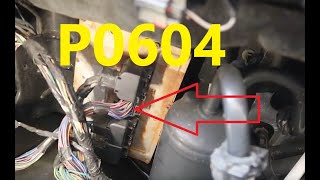
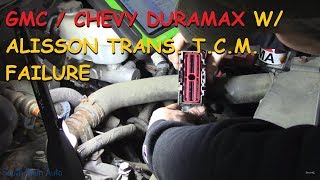
For the GMT900 platform, which includes the 2008-2010 Sierra 3500, the Allison transmission's external A50/T14 control module (TCM) is a known weak point. It is mounted in the engine bay on the fan shroud where it is exposed to significant heat and vibration, which can lead to the breakdown of internal solder joints and electronic components over time. GM has issued service bulletins, like TSB #PIP4653E, that specifically direct technicians to investigate the TCM when a P0604 code appears. 🎬 Watch: A mechanic explains common Allison TCM failure symptoms. This makes it different from many other vehicles where P0604 might default to a generic engine computer fault.
Diagnostic Flowchart
Tap your situation to follow the diagnostic path that matches what you're seeing on this vehicle.
Symptoms You May Notice
- Check Engine Light is on
- Harsh, erratic, or delayed shifting
- Transmission stuck in one gear ('limp mode')
- "Shift Inhibited" message on the driver information center
- Engine stalling or no-start conditions
- Loss of gear indicator display
- ABS or Traction Control lights may illuminate
- Replacing the Engine Control Module (ECM) first. On this specific truck, the provided TSB and extensive owner experiences strongly point to the Transmission Control Module (TCM) as the primary source of a P0604 code.
Most Likely Causes
- Low or Unstable Battery Voltage 🔴 High Probability → Shop Vehicle Battery Modern trucks with complex electronics are highly sensitive to voltage fluctuations. A weak battery or failing alternator can cause momentary voltage drops ('brown-outs') during startup, corrupting a module's RAM self-test and triggering a false P0604. This can also happen after a battery has been deeply discharged and slowly recharged.
How to confirm: Test the battery with a multimeter; it should read above 12.4 volts with the engine off and not drop below 9.6V during cranking. Test the charging system with the engine running; voltage should be stable between 13.5 and 14.5 volts. Load test the battery to confirm its health.
Typical fix: Charge or replace the battery. Clean all battery terminals and cable ends.
Est. part cost: $150-$350 - Poor Power or Ground Connections 🟡 Medium Probability A common failure point on GMT900 trucks is the braided ground strap from the firewall to the back of the driver's side cylinder head, which can corrode and break, causing numerous electrical faults. Bad grounds create unstable voltage for control modules, leading to codes like P0604.
How to confirm: Visually inspect all major ground straps (engine to chassis, battery to chassis) for corrosion, fraying, or looseness. Perform a voltage drop test across the main ground connections; the reading should be less than 0.2V, indicating a good connection. A ground resistance check should be below 0.1 Ω.
Typical fix: Clean corroded ground points with a wire brush until they are shiny metal. Replace any broken or severely corroded ground straps. Many owners add a secondary ground strap for reliability.
Est. part cost: $20-$50 - Faulty Transmission Control Module (TCM) 🟡 Medium Probability → Shop Transmission Assembly The Allison A50/T14 TCMs used in this generation are a known high-failure item due to their location in the hot, high-vibration engine compartment, which leads to internal solder joint and component failure. This is supported by TSB #PIP4653E.
How to confirm: This is a diagnosis of exclusion. If the battery, charging system, and all related wiring/grounds are confirmed to be good, the TCM itself is the likely culprit. A key symptom is the fault appearing only after the truck has warmed up for 15-20 minutes. A professional scan tool can confirm the fault is stored in the TCM and that communication is lost when the fault occurs.
Typical fix: Replace the Transmission Control Module and have the new unit programmed to the vehicle's VIN. Alternatively, send the original module to a specialist for repair and rebuilding.
Est. part cost: $400-$800
Rare But Worth Checking
- Faulty Powertrain Control Module (PCM/ECM): → Shop Engine Control Module (ECM) While the TCM is the usual suspect on this truck, a faulty PCM can, in rare cases, set this code. This should only be considered after the TCM and all wiring have been exhaustively ruled out.
- Wiring Harness Damage: A chafed or corroded wire in the harness leading to the TCM can mimic a module failure. The pins in the TCM connector are also known to back out, causing an intermittent connection that should be checked before condemning the module. Inspect the harness for any signs of physical damage, especially where it might rub against the frame, brackets, or engine components.
- Communication Enable Circuit Failure: GM has noted that high resistance or an open in the Communication Enable circuit (Circuit 5986) can cause various module issues. This circuit's wiring is known to have problems where it runs under the driver's and passenger's front sill plates.
Diagnosis Steps
- Scan for all DTCs in all modules, not just the ECM. Use a professional scan tool to confirm if P0604 is stored in the TCM memory.
- Clear the codes. If the code returns immediately without starting the engine, the module failure is likely hard-set.
- Thoroughly test the battery. It should have at least 12.4V at rest and not drop below 9.6V during cranking. Load test the battery to ensure it's healthy.
- With the engine running, test the alternator output. It should be stable, between 13.5V and 14.5V.
- Inspect the battery terminals and all main power and ground cables. Pay special attention to the engine-to-firewall ground strap (G108) for corrosion or damage.
- Perform a voltage drop test on the main ground cable from the battery to the chassis/engine. The reading should be under 0.2V. Check ground point resistance to chassis; it must be below 0.1 Ω.
- If the issue is intermittent, test drive the vehicle for 15-20 minutes to see if the fault occurs when the engine bay gets hot, which points to a failing TCM.
- If all power and ground sources are verified as good, the fault is likely the TCM itself.
- If replacing the TCM, the new module must be programmed to the vehicle's VIN using a compatible scan tool like a GM MDI or Tech 2. An Allison 'Fast Learn' procedure must also be performed.
Parts You'll Likely Need
- Transmission Control Module (TCM)
(OEM #19435603 (Supersedes older numbers like 24256861, 24257038))— This is the most common component failure for a P0604 code on this vehicle, after power/ground issues are ruled out. It is the A50/T14 model for the Allison transmission.
Trusted brands: ACDelco (OEM), Cardone (Remanufactured), Dorman
OEM price range: $500-$900
Aftermarket price range: $300-$600 - Battery — A weak or failing battery is a leading cause of spurious electronic module codes due to unstable voltage during cranking.
Trusted brands: ACDelco, DieHard, Interstate
OEM price range: $200-$350
Aftermarket price range: $150-$250 - Engine Ground Strap
(OEM #19434466 (G108))— The factory ground strap from the firewall to the engine block is a known weak point on this truck platform and can cause a wide range of electrical issues, including module faults.
Trusted brands: ACDelco, Dorman
OEM price range: $30-$60
Aftermarket price range: $20-$40
Related Codes That Often Appear With This One
- U0101 — This code means 'Lost Communication with TCM'. It is very commonly seen with P0604, as the internal TCM failure causes it to stop communicating on the CAN bus, especially when hot.
- P0700 — This is a generic 'Transmission Control System Malfunction' code. The TCM requests the ECM to turn on the Check Engine Light by sending this code when any transmission-specific fault, like P0604, is detected.
- P0601 — This code for 'Internal Control Module Memory Check Sum Error' is another internal module fault. TSB #PIP4653E groups P0601, P0603, P0604, and P1621 together as having a similar diagnostic path pointing to the TCM.
Technical Service Bulletins (TSBs) & Recalls
- PIP4653E: Mentions that DTCs P0601, P0603, P0604, P062F or P1621 may be stored in the Transmission Control Module, directing diagnosis towards the TCM. It suggests reprogramming the TCM as a potential fix before replacement.
Platform-Specific Known Issues
- Heat-Soak TCM Failure: A very common owner experience is for the truck to run perfectly when cold, but after 15-20 minutes of driving, the TCM heats up, internal connections fail, and the truck suddenly throws a P0604/U0101, goes into limp mode, and displays a 'Shift Inhibited' message. This is believed to be caused by cracking solder balls on the internal BGA microcontroller. After cooling down, it may operate normally again for a short period. This strongly indicates a failing TCM.
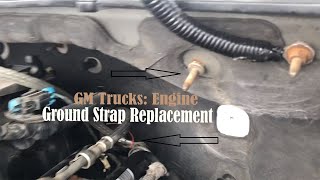
- Corroded Firewall Ground Strap: → Shop Engine Ground Strap Owners on forums frequently report solving a host of electrical gremlins, including module communication codes, by finding the braided ground strap between the firewall and the rear of the engine block is either corroded, frayed, or completely broken. This ground is often identified as G108. It is difficult to see and access, making it an easily missed diagnostic step.
Mechanic-Grade Diagnostic Values
- Communication Enable Circuit 5986 Voltage — expected: Approximately 12 volts with key in ACC or ON position.. Failure: Low or no voltage present when the communication fault occurs. The circuit should be load-tested with a small bulb (e.g., 194 bulb) as it is a low-amperage signal. The BCM will disable the circuit if the current draw exceeds 0.88 amps.
- Main Ground Point Resistance — expected: Below 0.1 Ω. Failure: A reading higher than 0.1 Ω indicates high resistance in the ground path, which can cause module errors.
- Allison Fast Learn Transmission Temperature — expected: Between 105°F and 206°F. Failure: The scan tool will not allow the procedure to start if the transmission fluid temperature is outside this range.
Hidden / Shadow Codes Worth Checking
- Allison Sub-Codes (e.g., '11'): The Allison transmission system can store more detailed sub-codes that are not broadcast on the main OBD-II system. These provide more specific information about an internal fault. (see via On models with an Allison Push Button Shift Selector (PBSS), you can enter a diagnostic mode to view codes by pressing and holding the MODE button for approximately ten seconds until the display changes.)
Scan Tool Commands That Help
- GM Tech 2 / GDS2 or equivalent professional scanner: Allison Transmission 'Fast Learn' — This procedure is required after replacing the TCM or transmission to reset and relearn the clutch apply pressures (TAPs). It helps the TCM adapt to the new hardware quickly. Failure to perform this can result in harsh shifting. The process involves stationary tests in Park, Drive, and Reverse, followed by a series of specific upshifts while driving.
- GM Tech 2 / GDS2: Module Setup / VIN Programming — This is mandatory when installing a new, unprogrammed TCM. The function writes the vehicle's VIN into the new module, allowing it to communicate with the other control units on the vehicle network.
- Allison DOC for PC: TCM Reflash — Used to load, recalibrate, and install new settings or updated firmware onto the TCM. This can resolve software-related glitches or update the module to the latest factory specifications.
Wiring & Ground Locations
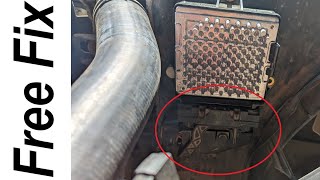
- A50/T14 TCM — In the engine bay, mounted to the fan shroud near the driver's side battery.. This is the physical location of the module that most commonly fails and sets the P0604 code. Its exposure to heat and vibration is a primary cause of failure.
- G108 — Braided ground strap typically located from the rear of the driver's side cylinder head to the firewall.. This is a critical but often overlooked ground for multiple electronic systems. Corrosion or breakage here can cause unstable voltage and communication errors for the TCM, mimicking an internal module fault.
- Circuit 5986 Wiring Path — Under the driver's and passenger's front sill plates.. This 'Communication Enable' circuit from the BCM can develop high resistance or open circuits in these areas due to corrosion or damage. A fault here prevents the TCM from 'waking up' properly, causing communication codes like U0101 and potentially internal self-test failures like P0604.
- Splice J365 — Located within the wiring harness under the passenger's front sill plate.. This is a known splice point for Circuit 5986 that can corrode and cause high resistance, leading to intermittent module communication issues.
Real Owner Repair Stories
- YouTube channel 'TheShopWorldWide' (2007-2011 GMC Sierra 1500 (similar GMT900 platform)) — Code U0101 (Lost Communication with TCM), no gear indicator display, transmission in limp mode.
❌ Tried (didn't work) Visual inspection of TCM wiring harness and connector pins, which all appeared to be in good condition.
✅ What actually fixed it Replaced the TCM with a remanufactured unit. The fix required following a specific reset procedure: fully charge the battery, disconnect the battery for 30 minutes to reset all modules, install the new TCM, then reconnect the battery. The gear indicator immediately returned and the truck functioned normally. - YouTube channel 'plugnplayparts' (Allison 5-speed transmission (common on earlier Duramax models, principle applies)) — Transmission stuck in first gear, intermittent connection issues.
❌ Tried (didn't work) Assuming the TCM itself was bad and needed immediate replacement.
✅ What actually fixed it The problem was found to be the pins within the large TCM connector backing out of their locked position due to harness tension and vibration. The fix was to disconnect the harness, carefully inspect and re-seat all pins until they clicked into place, apply dielectric grease, and reconnect. This resolved the communication issue without replacing the module.
"I Checked Everything" — The Actual Cause
- A common scenario for P0604 is that all external electrical tests (power, grounds, voltage drop) will pass when the vehicle is cold. The fault only appears after 15-20 minutes of driving as the TCM reaches operating temperature. This is because the root cause is not a wiring issue, but an internal failure of the TCM's circuit board, where microscopic cracks in the solder joints of the main processor expand when hot, breaking the connection.
- Technicians may verify all power and ground pins at the TCM connector are good but still have communication issues. The hidden cause can be high resistance in the 'Communication Enable' circuit (Circuit 5986) which comes from the BCM. This low-amperage 'wake-up' signal can be too weak to activate the TCM, but standard voltage tests at the pin might not reveal the problem without performing a load test.
When the Usual Fixes Don't Work
- While the vast majority of P0604 codes on this platform point to a faulty TCM or its related wiring/grounds, there are documented cases where all TCM diagnostics passed and the ultimate cause was a failure of the main Engine Control Module (ECM/PCM). In one such case, after verifying grounds and even trying a known-good TCM, replacing the ECM was the final fix that resolved the communication and drivability issues. This underscores the importance of diagnosing all modules on the network before committing to a TCM replacement.
OEM Part Supersession History
24256861→24257038, then 19435603— Standard part evolution for reliability updates or manufacturing changes.
Heads up: While multiple part numbers exist for the A50/T14 TCM, they must be programmed with the correct VIN-specific calibration to function. A module from another truck, even with the same part number, will not be plug-and-play.
Model Year Variations Within This Range
- 2008-2010: The A50/T14 Allison TCM was used consistently through this period for the Duramax-equipped HD trucks. No significant design changes affecting this specific fault have been noted within this 3-year window. The major change occurred in late 2015 when GM switched to the T87 TCM.
Helpful Videos
We Have This Part in Stock

The information in this article is provided for general reference and educational purposes only. Vehicle specifications, procedures, and part compatibility can vary by production date, trim level, and region. Always consult your vehicle's factory service manual and verify part numbers before purchasing or performing repairs. Safety-critical components such as airbags, seat belts, and braking systems should be installed by a qualified professional.
- Gmc SIERRA 3500:
- 🧭 Diagnostic Flowchart
- 🎬 Helpful Videos
- 🛍️ Shop This Part
- What's Unique About the 2008-2010 Gmc SIERRA 3500
- Symptoms You May Notice
- Most Likely Causes
- Rare But Worth Checking
- Diagnosis Steps
- Parts You'll Likely Need
- Related Codes That Often Appear With This One
- Technical Service Bulletins (TSBs) & Recalls
- Platform-Specific Known Issues
- Mechanic-Grade Diagnostic Values
- Hidden / Shadow Codes Worth Checking
- Scan Tool Commands That Help
- Wiring & Ground Locations
- Real Owner Repair Stories
- "I Checked Everything" — The Actual Cause
- When the Usual Fixes Don't Work
- OEM Part Supersession History
- Model Year Variations Within This Range
- 🎟️ Get 5% Off