

P0604 on 2007-2011 GMC Sierra Denali: TCM RAM Error Causes and Fixes
On a 2007-2011 Sierra Denali, P0604 almost always indicates an internal memory error in the Transmission Control Module (TCM). This module, known as a TEHCM, is located inside the transmission pan. Before replacing it, thoroughly check the battery and key ground connections (G103, G104). A complete TCM replacement, including professional programming, typically costs between $650 and $1600.
- P0604 on a 2007-2011 Sierra Denali almost always points to a problem with the Transmission Control Module (TCM), not the engine computer.
- Before condemning any expensive module, always test the battery and clean the critical engine-to-firewall ground straps (G103, G104), as this is a common and cheap fix.
- The TCM is an internal transmission component (TEHCM) on these trucks, making replacement a labor-intensive job that requires professional programming.
- Driving with this code is a safety risk due to the potential for sudden limp mode, stalling, or unpredictable shifting.
What's Unique About the 2007-2011 Gmc SIERRA DENALI
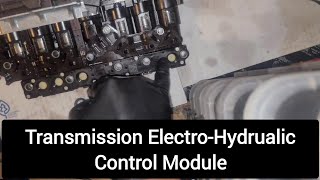
While P0604 is a generic code, its appearance on the GMT900 platform (which includes the 2007-2011 Sierra) has a well-documented history. GM has issued TSBs acknowledging that this code is commonly stored in the Transmission Control Module (TCM) for vehicles with 6-speed automatic transmissions like the 6L80. For these models, the TCM is integrated into the valve body inside the transmission pan, as part of a unit called the Transmission Electro-Hydraulic Control Module (TEHCM). This internal location subjects it to constant heat and vibration, leading to a high failure rate and making the TCM the primary suspect, a distinction from many other vehicles where the main engine computer would be the first consideration.
Diagnostic Flowchart
Tap your situation to follow the diagnostic path that matches what you're seeing on this vehicle.
Symptoms You May Notice
- Check Engine Light is on
- Transmission warning light may be illuminated
- Erratic, harsh, or delayed shifting.
- Transmission may get stuck in one gear (limp mode).
- Vehicle may stall or fail to start.
- Gear position indicator on the dashboard may be blank or incorrect.
- Sudden loss of communication with the TCM, which may feel like the transmission shifted to neutral.
- Replacing the Engine Control Module (ECM) without confirming the code's origin. On this platform, the TCM is the much more likely culprit.
- Replacing the battery without cleaning the corroded engine and firewall ground straps (G103, G104), leading to a quick return of the code.
- Replacing internal transmission solenoids or the valve body when the P0604 code indicates a purely electronic failure of the control module itself.
Most Likely Causes
- Faulty Transmission Control Module (TCM/TEHCM) 🔴 High Probability → Shop Transmission Assembly As identified in GM TSB #PIP4653E, the TCM is a known point of failure for this code on this platform. The TCM is part of the TEHCM, located inside the transmission pan, where it is subjected to constant thermal stress and vibration, which leads to internal electronic failure over time.
How to confirm: After ruling out power/ground issues, a professional scan tool is used to confirm the code is originating from the TCM. If the code returns immediately after clearing or if attempts to re-flash the software fail, the module is condemned.
Typical fix: Replace the Transmission Electro-Hydraulic Control Module (TEHCM) and program it to the vehicle.
Est. part cost: $250-$700 - Low Battery Voltage or Poor Connections 🟡 Medium Probability → Shop Vehicle Battery Control modules are highly sensitive to voltage. The GMT900 platform is known for issues with corroded ground straps, particularly the braided strap from the firewall to the rear of the cylinder head (G104/G108) and the ground on the front of the passenger cylinder head (G103). A poor connection at these points can cause intermittent voltage drops and trigger memory codes like P0604.
How to confirm: Test the battery voltage; it should be above 12.4V with the engine off and 13.5-14.5V when running. Perform a voltage drop test on the main power and ground circuits. Inspect and clean all major ground points on the engine block, frame, and firewall until they are shiny.
Typical fix: Clean all battery terminals and ground connection points (especially G103 and G104) with a wire brush. Apply dielectric grease and retighten. Replace the battery if it fails a load test.
Est. part cost: $0-$250 - Corrupted Module Software ⚪ Low Probability Software glitches can occur, causing the module to fail its RAM self-test. TSB #PIP4653E specifically recommends attempting to reprogram the TCM with the latest calibration as a diagnostic step before condemning the hardware.
How to confirm: A dealership or qualified shop with access to GM's Service Programming System (SPS) can check the current calibration file against the latest available version.
Typical fix: Reprogram or 're-flash' the TCM with the latest software from the manufacturer.
Est. part cost: $100 - $250
Rare But Worth Checking
- Damaged Wiring Harness: The wiring harness leading to the transmission can chafe against brackets, the upper control arm, or the shock tower, causing a short or open circuit that can trigger this code. The main transmission connector should also be inspected for corrosion or backed-out pins.
- Faulty Powertrain Control Module (PCM/ECM): → Shop Engine Control Module (ECM) While TSBs point to the TCM, TSB #05-06-04-060A does state that codes like P0604 can be shared across multiple modules. In a documented case on a 2010 Silverado, a P0604 that returned after a reflash was ultimately fixed by replacing the PCM, not the TCM. The PCM should only be considered after the TCM, wiring, and power/ground systems have been thoroughly ruled out.
Diagnosis Steps
- Check the battery and charging system. Voltage should be above 12.4V engine-off and 13.5-14.5V engine-on. A load test is recommended.
- Using a professional scan tool (like a GM Tech 2 or GDS2), confirm which module (ECM or TCM) has stored the P0604 code. Note any other codes present, especially P0700 or U0101.
- Thoroughly inspect, clean, and tighten all major power and ground connections. Pay special attention to the battery terminals, the main engine-to-firewall ground strap (G104), and the ground on the front of the passenger cylinder head (G103).
- Clear the codes. If P0604 returns immediately, it strongly suggests a hard internal fault in the module.
- If power and grounds are good, check for available software updates for the TCM. A dealership or specialized shop can perform a re-flash.
- If the code returns after a re-flash, the TCM (TEHCM) is internally faulty and must be replaced.
- To replace the TEHCM, the transmission fluid must be drained and the oil pan removed. The TEHCM is part of the valve body assembly.
- After replacement, the new TEHCM must be programmed to the vehicle's VIN using a specialized scan tool and GM's Service Programming System (SPS).
Parts You'll Likely Need
- Transmission Control Module (TCM/TEHCM)
(OEM #24256861 (Commonly cited for 6L80, but has been superseded by numbers like 24275865. Always verify with VIN).)— This is the most common cause of P0604 on this vehicle, as confirmed by manufacturer TSBs. The module, located inside the transmission, fails internally from heat and vibration, requiring replacement.
Trusted brands: ACDelco (OEM)
OEM price range: $300-$700
Aftermarket price range: $200-$450
Related Codes That Often Appear With This One
- P0700 — This code means 'Transmission Control System Malfunction'. It is a general code set by the ECM to inform the rest of the vehicle that the TCM has stored a fault, such as P0604.
- U0101 — This code means 'Lost Communication with TCM'. It is very common with P0604 because the internal RAM error can cause the TCM to crash or reboot, making it stop communicating on the vehicle's data network.
- P0601, P0603, P062F, P1621 — These are also internal control module memory or performance error codes. TSB #PIP4653E and #05-06-04-060A list them together with P0604 as related codes that may be stored in the TCM, often pointing to the same root causes.
Technical Service Bulletins (TSBs) & Recalls
- PIP4653E: Directly links P0604 to the Transmission Control Module (TCM) on this platform and recommends reprogramming as a first step.
- 05-06-04-060A: Notes that internal module codes like P0604 can be shared across multiple modules, highlighting the need to check shared power/ground circuits.
Platform-Specific Known Issues
- Per TSB #PIP4653E, DTCs P0601, P0603, P0604, P062F or P1621 may be stored in the Transmission Control Module, indicating a known pattern of TCM issues. 🎬 Watch: A breakdown of common TCM problems on this Sierra. The bulletin recommends attempting a software reprogram before replacement.
- Per TSB #05-06-04-060A, internal module DTCs like P0604 can be shared across multiple modules, which can complicate diagnosis if not using a proper scan tool to identify the source. This highlights the importance of checking shared power and ground circuits.
- The internal location of the TCM within the 6L80 transmission (as a TEHCM) is a key design factor leading to failure from heat soak, a well-documented issue for this platform.
Mechanic-Grade Diagnostic Values
- TEHCM On/Off Shift Solenoid Resistance — expected: 20 - 40 Ohms. Failure: A reading outside this range indicates a failed solenoid, requiring TEHCM replacement.
- TEHCM PWM Pressure Control Solenoid Resistance — expected: 3 - 8 Ohms (5-6 Ohms is typical). Failure: A reading outside this range indicates a failed solenoid, requiring TEHCM replacement.
- TEHCM Solenoid Signal Voltage (from TCM) — expected: 8.3 - 9.3 Volts. Failure: Voltage outside this range could indicate a problem with the TCM's internal power regulation.
- Ground Resistance at Module Connector — expected: Below 0.1 Ω. Failure: Resistance higher than 0.1 Ω indicates a poor ground connection that can cause module malfunctions.
Hidden / Shadow Codes Worth Checking
- Symptom Byte (e.g., 0x71): GM uses a two-digit hexadecimal code to provide specific details for a primary DTC. For P0604, a symptom byte of '71' can mean 'Invalid Serial Data Received,' which points more toward a software or communication glitch than a hard RAM failure. (see via Visible in the DTC data when using a dealer-level scan tool like a GM MDI with GDS2 software or a Tech 2.)
Scan Tool Commands That Help
- GDS2 / Tech 2: Service Programming System (SPS) — This is a mandatory function used after replacing the TEHCM. It connects to GM's servers to download the correct VIN-specific software and calibration files to the new module. Failure to perform this will result in a no-start or immediate limp mode.
- GDS2 / Tech 2: Transmission Service Fast Learn — This procedure must be run after a new TEHCM is programmed. It allows the new module to learn the hydraulic and electronic characteristics of the specific transmission's clutches. Skipping this step will likely result in harsh or erratic shifting.
- GDS2 / Tech 2: Solenoid Cleaning Process — If solenoid performance codes are present with P0604, this automated function cycles all solenoids to flush out potential debris. It can be attempted before condemning the TEHCM for a solenoid-related fault.
Wiring & Ground Locations
- G103 — On the front of the passenger-side cylinder head.. This is a primary engine component ground. Corrosion or looseness here can create unstable voltage for multiple modules, including the ECM and TCM, potentially triggering memory-related codes like P0604.
- G104 / G108 — A braided ground strap, typically running from the firewall on the driver's side to the rear of the driver's side cylinder head.. This is a critical body-to-engine ground. Degradation of this strap is a very common GMT900 issue that causes a host of difficult-to-diagnose electronic problems, including module communication and memory faults.
- TEHCM 16-pin Connector — Located on the side of the TEHCM assembly, inside the transmission oil pan.. This is the sole data and power connection for the TCM. When the pan is off, it must be inspected for corrosion from fluid intrusion or backed-out pins, which would cause the same symptoms as a failed module.
- Engine Harness Chafe Points — The engine harness may chafe against the corner of the ECM/TCM bracket, the driver's side upper control arm, and the shock tower bolt.. A bulletin for later models highlights these specific chafe points. While for a newer generation, the principle applies: a short in the harness can cause erratic signals and codes. Inspecting these areas is a valuable step if a clear cause isn't found.
Real Owner Repair Stories
- TahoeYukonForum.com user (2011 Chevrolet Tahoe (same GMT900 platform)) — Check engine light on, transmission stuck in 3rd gear (limp mode).
❌ Tried (didn't work) Not specified, but the diagnosis went to a professional shop.
✅ What actually fixed it A transmission shop diagnosed a failed Transmission Control Module (TCM). Replacing the TEHCM and programming the new module resolved all symptoms and cleared the P0604 code. - YouTube channel 'The Fab Forums' (2007-2011 GMC Sierra 1500 (same GMT900 platform)) — Transmission in limp mode, no gear indicator on the dash, U0101 (Lost Communication with TCM) code present.
❌ Tried (didn't work) Thoroughly inspected all wiring harnesses for damage., Checked and cleaned ground connections., Disconnected battery to reset modules.
✅ What actually fixed it After confirming wiring and grounds were good, the owner replaced the internal TEHCM (TCM), which resolved the communication codes and limp mode.
OEM Part Supersession History
24256861→24275865, 19431596 (and others)— GM updated the TEHCM hardware and software over the years to improve reliability, addressing issues with internal pressure switches, solenoid performance, and heat tolerance.
Heads up: TEHCMs from different year groups are generally NOT interchangeable due to hardware and software differences. A 2011+ TEHCM will not work in a 2007-2009 vehicle. You must use the correct part number for the vehicle's specific year and VIN.
Model Year Variations Within This Range
- 2007-2010: These earlier TEHCMs are known to be more prone to pressure switch failures and issues with torque converter clutch apply solenoids sticking under heat.
- 2011+: Later model year TEHCMs (like P/N 24256861) featured improved solenoids and gaskets, making them more reliable than the earlier units. However, they are not backward compatible without correct programming and matching hardware.
Helpful Videos
We Have This Part in Stock



The information in this article is provided for general reference and educational purposes only. Vehicle specifications, procedures, and part compatibility can vary by production date, trim level, and region. Always consult your vehicle's factory service manual and verify part numbers before purchasing or performing repairs. Safety-critical components such as airbags, seat belts, and braking systems should be installed by a qualified professional.
- Gmc SIERRA DENALI:
- 🧭 Diagnostic Flowchart
- 🎬 Helpful Videos
- 🛍️ Shop This Part
- What's Unique About the 2007-2011 Gmc SIERRA DENALI
- Symptoms You May Notice
- Most Likely Causes
- Rare But Worth Checking
- Diagnosis Steps
- Parts You'll Likely Need
- Related Codes That Often Appear With This One
- Technical Service Bulletins (TSBs) & Recalls
- Platform-Specific Known Issues
- Mechanic-Grade Diagnostic Values
- Hidden / Shadow Codes Worth Checking
- Scan Tool Commands That Help
- Wiring & Ground Locations
- Real Owner Repair Stories
- OEM Part Supersession History
- Model Year Variations Within This Range
- 🎟️ Get 5% Off