

P0604 on 2012-2015 GMC Sierra Denali: RAM Error Causes and Fixes
On a 2012-2015 Sierra Denali, P0604 indicates a memory error, often in the Transmission Control Module (TCM). Before suspecting a bad module, fully test the battery and clean all power and ground connections, as low voltage is the most common trigger. A voltage drop below 9.6V during cranking is a key indicator. If the TCM is faulty, replacement and programming are required.
- P0604 is a serious memory error in a control module, but the cause is often simple.
- Before condemning any expensive computer, ALWAYS fully test the battery and clean all main power and ground connections. This resolves the issue in many cases.
- On this specific truck, GM service bulletins point towards the Transmission Control Module (TCM) as a common culprit, especially if you have shifting problems.
- Do not assume the main engine computer (PCM) is bad. Use a scan tool to confirm which module logged the fault.
- If a module must be replaced, it will require professional programming to work with your vehicle's VIN. This is not a simple plug-and-play repair.
What's Unique About the 2012-2015 Gmc SIERRA DENALI
The 2012-2015 Sierra Denali spans two vehicle generations: the GMT900 (2012-2013) and the K2XX (2014-2015). Both are known for being sensitive to voltage fluctuations. GM Technical Service Bulletins, like PIP4653E, specifically point to the Transmission Control Module (TCM) as a common source for P0604 on this platform, especially if transmission symptoms are present. On models with the 6-speed automatic transmission, the TCM is often part of the Transmission Electro-Hydraulic Control Module (TEHCM) located inside the transmission oil pan. Unlike a generic interpretation, the first suspect on these trucks is often the TCM or the power supplied to it, not necessarily the main engine computer (PCM).
Diagnostic Flowchart
Tap your situation to follow the diagnostic path that matches what you're seeing on this vehicle.
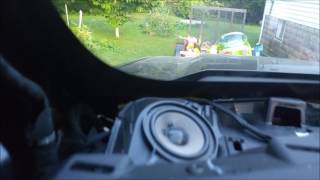
Generation note: This range covers the end of the GMT900 platform (2012-2013) and the start of the K2XX platform (2014-2015). While the cause is similar, the K2XX trucks have more complex electrical systems and different ground locations (like G218) that are known trouble spots. TSBs provided apply to both generations, indicating a shared vulnerability. TSB PIT5405C specifically addresses 🎬 Watch: How to locate and fix the G218 ground issue electrical issues on 2014-2017 trucks caused by a poor ground at G218.
Symptoms You May Notice
- Check Engine Light is on
- Transmission may shift harshly, erratically, or get stuck in one gear ('limp mode')
- Engine may stall, run rough, or fail to start
- Service StabiliTrak or Traction Control warning lights may illuminate
- Gear position indicator on the dashboard may be blank or incorrect
- Noticeable decrease in fuel economy
- Vehicle may crank but not fire
- Replacing the PCM when the fault is actually in the TCM. TSB #PIP4653E specifically warns technicians to verify which module has stored the code.
- Replacing sensors. P0604 is an internal module error, not a problem with sensor inputs.
- Replacing a module when the root cause was a simple weak battery or corroded ground strap.
Most Likely Causes
- Weak or Failing Battery 🔴 High Probability → Shop Vehicle Battery Modern trucks have a high electrical demand. Control modules require stable voltage (typically above 12.4V) to maintain their Keep Alive Memory (KAM). A voltage drop during cranking below 9.6V is a very common cause for this code.
How to confirm: Test the battery with a multimeter; it should read above 12.4 volts with the engine off. Perform a load test to check its health. Check the charging system; it should be between 13.5 and 14.5 volts with the engine running. Critically, monitor voltage during cranking to ensure it does not drop below 9.6V.
Typical fix: Charge or replace the battery. Clean battery terminals. This is the most frequently reported successful fix in owner forums.
Est. part cost: $150-$350 - Poor Power or Ground Connections 🟡 Medium Probability Corrosion on battery terminals, main engine grounds, or chassis grounds is common and creates electrical resistance, leading to voltage drops that upset control modules. Key grounds on the GMT900 platform include the braided strap from the firewall to the rear of the cylinder head (G104/G108) and the ECM/TCM ground on the front of the engine block (G101). On K2XX trucks, ground G218 under the driver's side dash is a known trouble spot per TSB PIT5405C.
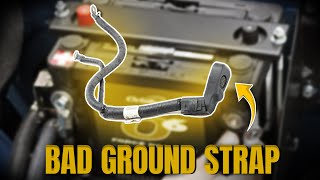
How to confirm: Visually inspect all major power and ground connections for looseness or corrosion. Perform a voltage drop test on the power and ground circuits of the suspect module. Resistance on the ground side should be less than 0.1 ohms. A broken or corroded engine-to-firewall strap is a very common 🎬 Watch: How to test for a bad engine ground strap failure point.
Typical fix: Disconnect, clean all mating surfaces with a wire brush until shiny, apply dielectric grease, and securely retighten all ground connections. Some owners add a secondary ground strap as a preventative measure.
Est. part cost: $5-$20 - Faulty Transmission Control Module (TCM) 🟡 Medium Probability → Shop Transmission Assembly As documented in GM TSB #PIP4653E, the TCM is a common point of failure for this code on this platform. Its location, often inside the transmission as part of the TEHCM, exposes it to heat and vibration, leading to internal failure over time.
How to confirm: Use a professional scan tool to see if the P0604 code is stored specifically in the TCM. If power and grounds to the TCM are good and the code persists, the module is suspect. The failure may be heat-related, occurring only after 15-20 minutes of driving when the transmission warms up.
Typical fix: First, attempt to reprogram the TCM with the latest software, as recommended by TSB #PIP4653E. If that fails, the TCM must be replaced and programmed to the vehicle's VIN.
Est. part cost: $200-$500
Rare But Worth Checking
- Faulty Powertrain Control Module (PCM): → Shop Engine Control Module (ECM) While the TCM is more common on this platform, the PCM can also fail and set this code. This is usually a diagnosis of exclusion after the battery, grounds, and TCM have been ruled out. A YouTube repair video shows a successful fix by replacing and reprogramming the PCM after other steps failed.
- Failing Alternator: → Shop Alternator An alternator producing unstable voltage (too high or too low) can corrupt module memory. Check for a 'Service Battery Charging System' message and verify charging voltage is stable and within the 13.5-14.7V range.
- Aftermarket Tuner: If an aftermarket performance tuner is installed, it may have caused a programming error. Flashing the vehicle back to the stock factory tune can sometimes resolve the code.
Diagnosis Steps
- Connect a professional-grade scan tool (e.g., GM MDI) that can read codes from all modules. Identify which module(s) have stored the P0604 code.
- Check battery voltage and the charging system. The battery should be over 12.4V engine-off, and the alternator should produce 13.5-14.5V engine-on. Perform a load test and check that voltage does not drop below 9.6V during cranking.
- Thoroughly inspect, clean, and tighten all battery terminals and the main power and ground connections. Pay special attention to the engine-to-firewall ground strap (G104/G108 on GMT900) and the G218 ground on K2XX models. Verify ground circuit resistance is below 0.1 ohms.
- If power and grounds are good, clear the codes and test drive. Note if the code returns immediately (hard fault) or after the vehicle warms up (heat-related issue).
- If the code was isolated to the TCM, check for available software updates per TSB #PIP4653E. A dealer or qualified shop can perform a reflash.
- If a reflash does not fix the issue, or if the code returns immediately, the control module itself (most likely the TCM) is faulty and needs to be replaced and programmed.
Parts You'll Likely Need
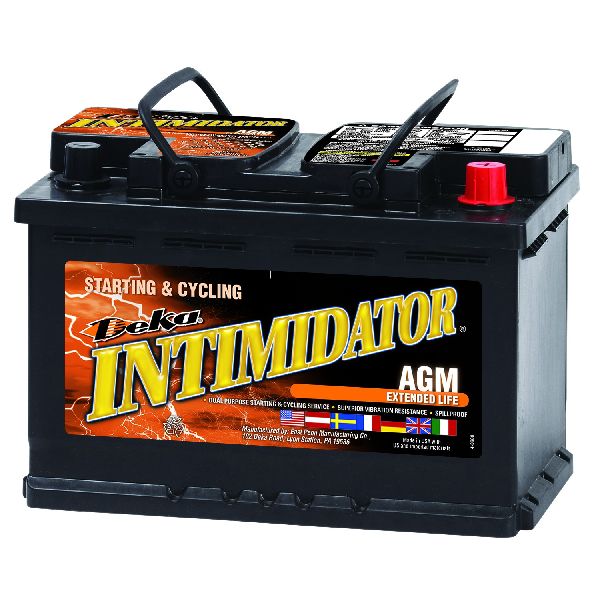
- Battery — A weak or failing battery causing low voltage is the most frequent trigger for a false P0604 code.
Trusted brands: ACDelco, DieHard, Optima
OEM price range: $200-$300
Aftermarket price range: $150-$250 - Transmission Control Module (TCM)
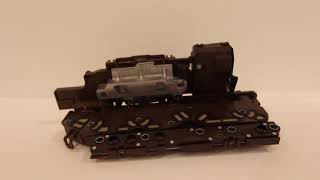
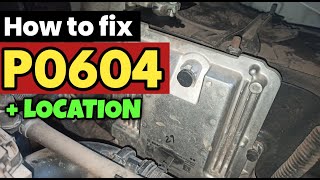
(OEM #GM 19431596 (supercedes 24256861, 19435614 for Allison-equipped HDs, verify by VIN for 1500s))— This is the most commonly failed module for this code on this platform, as cited by GM TSBs. For many 6-speed models, this is part of the internal TEHCM assembly. 🎬 See this walkthrough on removing the TCM from the transmission
Trusted brands: ACDelco, Dorman
OEM price range: $300-$500
Aftermarket price range: $200-$400
Related Codes That Often Appear With This One
- P0700 — This code, 'Transmission Control System Malfunction,' is a general fault requested by the TCM. Its presence with P0604 strongly suggests the problem originates in the transmission control system.
- P0601, P0602, P0603, P0606 — These are all internal control module error codes. TSB #05-06-04-060A notes they can be set together, indicating a failing module or a significant power supply issue.
- U0101 — This is 'Lost Communication with TCM'. If the TCM's internal fault is severe, it may stop communicating on the vehicle's network, causing other modules to report a loss of communication with it. This is a strong indicator of TCM failure, especially if it occurs when hot.
Technical Service Bulletins (TSBs) & Recalls
- PIP4653E: Notes that P0604 can be stored in the TCM, causing a Malfunction Indicator Lamp. Recommends reprogramming as a first step.
- 05-06-04-060A: Informs technicians that P0604 is one of several control module DTCs that can be shared in multiple modules.
- PIT5405C: Details various electrical issues on K2XX trucks caused by a poor ground at G218.
Platform-Specific Known Issues
- TSB #PIP4653E specifically highlights that DTCs P0601, P0603, P0604, P062F, or P1621 may be stored in the Transmission Control Module, advising technicians to verify the location of the code and attempt a reflash before replacement.
- TSB #05-06-04-060A is an informational bulletin noting that P0604 and other related internal module codes can be shared across multiple modules, often pointing to a systemic issue like low voltage rather than an isolated failure.
- TSB #PIT5405C identifies a poor ground at G218 (under the driver's side dash) on 2014-2017 K2XX trucks as a cause for numerous electrical problems, including communication DTCs that can accompany P0604.
Mechanic-Grade Diagnostic Values
- Control Module Ground Circuit Resistance — expected: Below 0.1 Ω. Failure: A reading higher than 0.1 Ω indicates excessive resistance that can cause voltage drops and module memory errors.
- Battery Voltage During Cranking — expected: Above 9.6V. Failure: Voltage dropping below 9.6V during engine start can cause a 'brown-out' condition, corrupting module RAM and setting false P0604 codes.
- Battery Cable Voltage Drop Test (per TSB PIT5405) — expected: Below 200 mV. Failure: A reading above 200 mV while cranking the engine indicates high resistance in the positive or negative battery cables, which can starve modules of stable voltage.
- Charging System Voltage (Engine Running) — expected: 13.5V - 14.7V. Failure: Voltage spikes above 15.0V or unstable voltage outside the expected range can corrupt module memory.
- Battery Cable Clamp Nut Torque — expected: 7 Nm (62 lb in). Failure: Loose battery cable clamps are a primary cause of intermittent voltage supply issues.
Hidden / Shadow Codes Worth Checking
- Symptom Byte (e.g., '71'): GM uses two-digit hexadecimal symptom bytes to add context to a DTC. For P0604, a symptom byte of '71' indicates 'Invalid Serial Data Received,' which points more toward a software or communication problem rather than a hardware RAM failure. (see via Visible in the DTC data when using a dealer-level scan tool like a GM MDI with GDS2 software.)
Scan Tool Commands That Help
- GDS2 / Tech 2: Module Reprogramming / Reflashing — Used as a primary diagnostic step when P0604 is isolated to the TCM, per TSB #PIP4653E. This updates the module with the latest software, which can fix known glitches that cause the code.
- GDS2 / J2534 Pass-Thru Device: Transmission Service Fast Learn (Fast Adapt) — This procedure is mandatory after replacing or reprogramming the TEHCM (internal TCM). It resets and relearns transmission adaptive values. A simple battery disconnect is not sufficient to perform this function.
- Specialized Bench Equipment: TCM Cloning — If the original TEHCM still communicates but is faulty, some third-party services can perform a 'clone' by reading all data (including VIN and programming) from the old module and writing it to a new one. This creates a plug-and-play replacement that doesn't require on-vehicle programming.
Wiring & Ground Locations
- G218 — For 2014-2015 K2XX models: Under the driver's side dash, typically behind the kick panel or lower trim.. This is a primary body control module (BCM) ground. TSB PIT5405C notes that a poor connection here causes widespread electrical issues, including many DTCs like U0101 (Lost Comm with TCM) that are often seen with P0604. The fault is often the dash insulator mat being trapped under the ground terminal.
- G104 / G108 — For 2012-2013 GMT900 models: Braided ground strap from the firewall to the rear of the cylinder head.. This is a critical engine-to-chassis ground. Corrosion or breakage of this strap is a very common cause of unstable voltage to the engine and transmission control modules, triggering memory-related codes like P0604.
- TEHCM (Internal TCM) — For 6-speed 6L80/6L90 transmissions, the TCM is integrated into the valve body inside the transmission oil pan.. Physical access requires draining the transmission fluid and removing the oil pan and valve body. This makes diagnosis and replacement significantly more labor-intensive than an external module.
- TCM Connector (External) — On trucks with an external TCM (e.g., Allison transmission), the 80-way connector is on the module itself.. For direct testing, key pins on the 80-way connector (based on GMT900 data) are Pin 10 (Battery Positive Voltage) and Pin 9 (Ground). These can be used for voltage drop tests to verify power supply directly at the module.
Real Owner Repair Stories
- YouTube user 'DanielJaegerFilms' (2010 Chevrolet Silverado (GMT900 platform, similar to 2012-2013 models)) — Check Engine Light with code P0604.
❌ Tried (didn't work) Removing aftermarket wiring, Reprogramming/updating the original PCM software
✅ What actually fixed it Replacing the Powertrain Control Module (PCM) with a new unit and performing the required post-installation procedures (VIN programming, idle learn, crank position learn) resolved the code. - Reddit user in r/AskAMechanic (2014 GMC Sierra 5.3L 6L80) — Needing to replace TEHCM.
❌ Tried (didn't work) Installing a non-OEM remanufactured TEHCM from Transtar.
✅ What actually fixed it The user reported the aftermarket TEHCM was Dead on Arrival (DOA) and would not communicate for initial programming. The implicit solution is to use a genuine ACDelco part or a reputable remanufacturer to avoid faulty replacement parts.
"I Checked Everything" — The Actual Cause
- In the context of P0604, the equivalent of a 'smoke test clean' is when battery, alternator, and all visible ground connections test perfectly, yet the code persists. In these cases, the root cause is often a hard internal failure of the control module itself, where a software reflash fails to solve the problem, necessitating module replacement.
- Another scenario is a hidden defect in a connection, such as the dash insulator mat being trapped under the G218 ground terminal on K2XX trucks. The ground nut may feel tight, but no proper electrical contact is being made, which a simple visual or torque check would miss.
When the Usual Fixes Don't Work
- While TSBs and common wisdom for this platform point heavily toward the Transmission Control Module (TCM) as the primary culprit for P0604, it should not be the only suspect. A documented repair on a similar GMT900 truck showed that after a software reflash failed to fix the code, the ultimate solution was the replacement of the main Powertrain Control Module (PCM), not the TCM. This demonstrates that while the TCM is a high-probability cause, a full diagnosis of exclusion is necessary before committing to a costly TEHCM replacement inside the transmission.
OEM Part Supersession History
24256861 (and others)→19431596— Revision and update for Allison-equipped HD trucks.
Heads up: Part fitment for the 2015 model year specifically notes 'EXCEPT 2015 1/2 MODEL YEAR BREAK POINT(AVF)', meaning this part may not work on later 2015 models. VIN verification is critical.Multiple (e.g., 24256939, 24261870, 24275873)→Remanufactured TEHCM units (e.g., Sonnax GM6L-TEHCM-C6)— Consolidation of multiple original part numbers into a single remanufactured solution for the 6L80/6L90 TEHCM.
Heads up: While these are designed to replace many original parts, the vehicle's VIN must be programmed into the new module using a tool like GDS2 for it to function. They are not plug-and-play unless 'cloned' from the original module.
Model Year Variations Within This Range
- 2014-2015 (K2XX Platform): The most notorious ground-related electrical issue shifts from the GMT900's engine bay straps to the G218 ground located inside the cabin, under the driver's side dash.
- 2014-2015 (K2XX Platform): The 6L80 transmission was programmed to run at a higher operating temperature (often 195°F+) compared to earlier models, intended to improve fuel efficiency. Some technicians and owners believe this accelerated heat contributes to premature failure of the internal TEHCM and torque converter.
- 2014-2015 (K2XX Platform): The 5.3L V8 engine was updated to the EcoTec3 platform, featuring direct injection. The 2012-2013 GMT900 models used port injection. This represents a significant change in the engine management system.
Helpful Videos




We Have This Part in Stock



The information in this article is provided for general reference and educational purposes only. Vehicle specifications, procedures, and part compatibility can vary by production date, trim level, and region. Always consult your vehicle's factory service manual and verify part numbers before purchasing or performing repairs. Safety-critical components such as airbags, seat belts, and braking systems should be installed by a qualified professional.
- Gmc SIERRA DENALI:
- 🧭 Diagnostic Flowchart
- 🎬 Helpful Videos
- 🛍️ Shop This Part
- What's Unique About the 2012-2015 Gmc SIERRA DENALI
- Symptoms You May Notice
- Most Likely Causes
- Rare But Worth Checking
- Diagnosis Steps
- Parts You'll Likely Need
- Related Codes That Often Appear With This One
- Technical Service Bulletins (TSBs) & Recalls
- Platform-Specific Known Issues
- Mechanic-Grade Diagnostic Values
- Hidden / Shadow Codes Worth Checking
- Scan Tool Commands That Help
- Wiring & Ground Locations
- Real Owner Repair Stories
- "I Checked Everything" — The Actual Cause
- When the Usual Fixes Don't Work
- OEM Part Supersession History
- Model Year Variations Within This Range
- 🎟️ Get 5% Off