

P0604 on 2007-2014 GMC Yukon: Internal RAM Error Causes and Fixes
This code indicates a Random Access Memory (RAM) error within a control module, most often the Transmission Control Module (TCM) or Powertrain Control Module (PCM). The most common causes are low battery voltage or a software glitch requiring a reflash, though a failing module is also possible. Before replacing any parts, thoroughly check battery health, all ground connections, and for available software updates.
- P0604 on a 2007-2014 Yukon points to a memory error in a control module, often the TCM.
- Before replacing any expensive modules, always check the battery, its connections, and all major ground straps first.
- The issue could be a simple software glitch that a dealer or qualified shop can fix by reprogramming (reflashing) the module.
- Driving with this code is a risk, as it can lead to stalling or unpredictable transmission behavior.
What's Unique About the 2007-2014 Gmc YUKON
On the 2007-2014 (GMT900 generation) GMC Yukon, the P0604 code is 🎬 Watch: A quick breakdown of the P0604 code on GMCs frequently associated with the Transmission Control Module (TCM), as noted in official GM Technical Service Bulletins. These bulletins suggest the code can be set alongside other module communication codes and may not always indicate a complete module failure. Often, the root cause can be a software anomaly that requires reprogramming (a "reflash") or an unstable voltage supply, rather than an immediate need 🎬 See common causes and fixes for internal RAM errors to replace the expensive control module.
Diagnostic Flowchart
Tap your situation to follow the diagnostic path that matches what you're seeing on this vehicle.
Symptoms You May Notice
- Check Engine Light is on
- Transmission may shift harshly or erratically
- Vehicle may enter 'limp mode' with reduced power
- Engine may stall intermittently or fail to start
- ABS or Traction Control lights may also illuminate
- Vehicle may crank but not fire
- In some cases, no noticeable symptoms other than the Check Engine Light
- Replacing the Powertrain Control Module (PCM) or Transmission Control Module (TCM) without first checking for low battery voltage, poor grounds, or available software updates. These are much cheaper and more common fixes.
Most Likely Causes
- Low Battery Voltage or Poor Connections 🔴 High Probability → Shop Vehicle Battery Control modules are highly sensitive to voltage fluctuations. An aging battery, corroded terminals, or a weak alternator can cause temporary memory loss during startup, triggering a P0604 code. The Keep Alive Memory (KAM) can be lost if voltage drops, leading to this fault. GM TSB #05-06-04-060A specifically mentions that low voltage conditions can set this code and should be investigated first.
How to confirm: Test the battery with a multimeter; it should read ~12.6V with the engine off and 13.7V-14.7V with the engine running. Inspect battery terminals and all major ground straps for corrosion or looseness. Key grounds are at the radiator core support (G100/G101), cylinder heads (G103/G104), and frame.
Typical fix: Clean battery terminals and ground connections thoroughly. If the battery is weak or old (over 4-5 years), replace it.
Est. part cost: $150-$300 - Control Module Software Glitch 🟡 Medium Probability GM has issued TSBs (#PIP4653E, #05-06-04-060A) indicating that various control module codes, including P0604, can be set and may require a software update. This suggests known software bugs can cause this error, and a reflash is the first step before module replacement.
How to confirm: A professional technician with a GM-compatible scan tool (like a Tech 2 or MDI with SPS software) can check the current software calibration ID against the latest available from GM.
Typical fix: Reprogramming (reflashing) the affected module (TCM or PCM) with the latest software from the manufacturer. This is a labor-only job.
Est. part cost: $0 (parts), labor only - Failing Control Module (TCM/PCM) ⚪ Low Probability While less common than software or voltage issues, the internal hardware of the module can fail due to heat, vibration, or age, causing a permanent RAM error. This is often a diagnosis of last resort.
How to confirm: This is a process of elimination. If the battery, connections, and software are all confirmed to be good and the code immediately returns after clearing, the module itself is the likely culprit. A technician may also perform a RAM integrity test with a high-end scan tool.
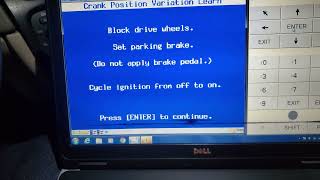
Typical fix: Replace the faulty control module. The new module will require programming to the vehicle's VIN, followed by procedures like a crankshaft position variation learn and theft deterrent relearn.
Est. part cost: $300-$800
Rare But Worth Checking
- Faulty Aftermarket Tuner or Device: If you have an aftermarket performance programmer or even a remote start/radio connected to the CAN bus, it may have corrupted the module's software or be causing network interference. A user on Reddit with a 2009 Suburban noted they removed an aftermarket CAN-bus connected radio as part of their diagnosis. Always try returning the vehicle to its stock tune and disconnecting such devices first.
- Wiring Harness Damage: Corroded or damaged wiring or pins at the control module connector can cause intermittent power loss and trigger this code. A visual inspection of the harness is warranted, paying close attention to the large connectors at the PCM and TCM.
- Other Failing Modules on CAN Bus: A fault in a completely different module can sometimes cause communication errors that manifest as a P0604 in the PCM or TCM. One owner of a 2009 Suburban reported that removing a faulty park assist module resolved other electrical gremlins during their P0604 diagnosis.
Diagnosis Steps
- Disconnect any aftermarket tuners or CAN bus devices. Return the vehicle to its stock programming if applicable.
- Check and record any other stored DTCs. Note which module stored the P0604 (PCM or TCM).
- Clear all DTCs and see if the P0604 code returns immediately without starting the engine. An immediate return often points towards a hard fault in the module or a persistent software issue.
- Thoroughly inspect the battery, its terminals, and the main engine/body ground connections. Test battery voltage (should be ~12.6V off, 13.7-14.7V running).
- Specifically locate and inspect the main ground points for tightness and corrosion: G100/G101 (radiator support), G103 (passenger side cylinder head), and G104 (driver side rear of cylinder head).
- Inspect the wiring harness and connectors at the TCM (located on the driver's side of the transmission) and the PCM (located in the engine bay, driver's side) for any signs of damage or corrosion.
- If all physical checks pass, consult a professional shop to check for available software updates for the TCM and PCM using GM's Service Programming System (SPS).
- If the code persists after a software update, the control module itself is likely faulty and requires replacement and programming.
Parts You'll Likely Need
- Transmission Control Module (TCM) — On this platform, the TCM is a common source for the P0604 code, as indicated by GM's service bulletins. Failure can be due to software or internal hardware. The TCM for the 6L80 transmission is internal to the transmission on the valve body.
Trusted brands: ACDelco
OEM price range: $350-$600
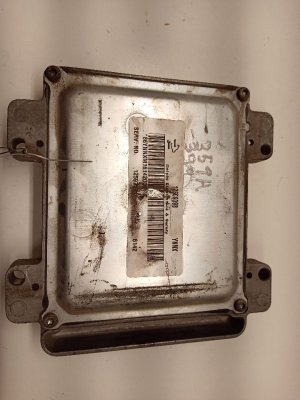
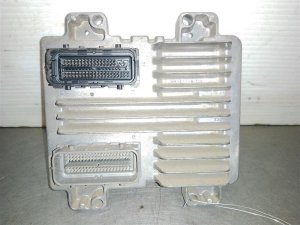
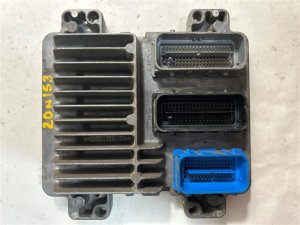
Aftermarket price range: $250-$450 - Powertrain Control Module (PCM/ECM) — If the code is not isolated to the TCM, the main engine computer (often an E38 model in these trucks) could be the source of the RAM error.
Trusted brands: ACDelco
OEM price range: $400-$800
Aftermarket price range: $300-$600
Related Codes That Often Appear With This One
- P0601 — This indicates an Internal Control Module Memory Check Sum Error, another type of internal module fault. Both are mentioned together in GM TSB #05-06-04-060A.
- P0603 — This code relates to a Keep Alive Memory (KAM) error, often triggered by a power disconnect (like a dead battery), which is a primary cause for P0604 as well.
- P062F — This is an Internal Control Module EEPROM Error. Like P0604, it points to an internal memory fault within the module and is cited in the same TSBs.
- P1621 — This GM-specific code relates to Control Module Long Term Memory Performance and is also listed alongside P0604 in manufacturer bulletins as a shared internal module fault code.
Technical Service Bulletins (TSBs) & Recalls
- PIP4653E: Addresses various DTCs, including P0604, that may be stored in the Transmission Control Module.
- 05-06-04-060A: Addresses various DTCs, including P0604, that can be shared across multiple modules.
Platform-Specific Known Issues
- GM Technical Service Bulletin #PIP4653E notes that DTCs P0601, P0603, P0604, P062F, or P1621 may be stored in the Transmission Control Module (TCM) and advises technicians to investigate them.
- GM Technical Service Bulletin #05-06-04-060A informs technicians that P0604 is one of several codes that can be shared across multiple modules, indicating a potential software or communication issue rather than a single failed part. It specifically advises checking for and repairing any low voltage conditions before diagnosing these DTCs.
- A detailed repair on a 2010 Silverado with P0604 showed that even after trying a software reflash, the code returned immediately, leading to a PCM replacement. The fix required a new PCM, programming the VIN, and performing a crankshaft position relearn, idle learn, and theft deterrent relearn.
Mechanic-Grade Diagnostic Values
- Battery/System Voltage (Engine Running) — expected: 13.7V - 14.7V. Failure: Voltage below 13.5V or above 14.8V can cause module communication and memory errors.
- TCM/PCM Power Supply Pin Voltage (Key On) — expected: ~12.6V (Battery Voltage). Failure: Low or no voltage indicates a blown fuse, open in the power supply wire, or ignition switch issue.
- TCM/PCM Ground Circuit Resistance — expected: Less than 0.5 Ohms. Failure: High resistance points to a corroded, loose, or broken ground connection, which is a common cause of module faults.
- CAN Bus Terminating Resistance — expected: ~60 Ohms (measured between CAN High and CAN Low wires with battery disconnected). Failure: A reading of ~120 Ohms indicates one of the two terminating resistors (in the PCM and TCM) is offline. A reading near 0 Ohms indicates a short between the two CAN wires.
Scan Tool Commands That Help
- GM Tech 2 / GDS2: Crankshaft Position Variation Learn — This procedure is mandatory after replacing the PCM or crankshaft position sensor. Failure to perform it will often set a P1336 or other codes and may cause misfire detection issues. It syncs the sensor's signal with the actual crankshaft position.
- GM Tech 2 / GDS2: Module Setup / Reprogramming (using SPS) — Used to flash the module with the latest GM software calibration to fix known bugs, or to program a new module to the vehicle's VIN and specific configuration.
- GM Tech 2 / GDS2: Idle Learn Reset — After replacing or reprogramming the PCM, this function resets the learned idle values. The engine must then be run to relearn the proper idle speed.
- GM Tech 2 / GDS2: Theft Deterrent Relearn — Required after replacing the PCM to sync the new module with the vehicle's immobilizer system. Without this, the vehicle will not start.
Wiring & Ground Locations
- G100 & G101 — On the radiator core support, one on each side (driver and passenger).. These are primary forward body grounds. Poor connection here can affect various systems, including lighting and modules located in the front of the vehicle.
- G103 & G104 — G103 is on the front of the passenger side cylinder head. G104 is on the rear of the driver side cylinder head.. These are critical engine-to-chassis grounds. A poor connection at G104 is a known issue that can cause a host of electrical problems, including module communication errors and no-start conditions, as it is a primary ground for the PCM.
- G105 — On the front left side of the engine block, near the crankshaft pulley.. Provides a direct ground path for engine components.
- G303 — On the left (driver's side) B-pillar, behind the trim panel.. Main interior body ground. While less likely to cause a P0604, poor interior grounds can cause strange behavior in other modules on the CAN bus.
- TCM Fuse — In the underhood fuse block. Often labeled 'TCM' or 'TRANS'. For example, on a 2010 Yukon, it may be a 15A fuse.. A blown fuse will cut all power to the Transmission Control Module, causing it to go offline and potentially setting codes in other modules.
- TCM Connector (6L80) — The main 16-pin circular connector on the passenger side of the transmission case. The TCM itself (TEHCM) is inside the transmission oil pan.. This is the single point of connection for power, ground, and CAN bus communication to the internal TCM. It is susceptible to corrosion, fluid intrusion, and damaged pins.
Real Owner Repair Stories
- YouTube channel 'Big Dog50001' (2010 Chevrolet Silverado 5.3L (Similar GMT900 platform)) — Check Engine Light with code P0604.
❌ Tried (didn't work) Checked alternator output (was good at 14.9V)., Removed aftermarket wiring., Reprogrammed/updated the existing PCM software with a Tech 2.
✅ What actually fixed it The P0604 code returned immediately after the software update, indicating a hard internal fault. The problem was resolved by replacing the Engine Control Module (ECM/PCM) and performing the necessary relearn procedures (crankshaft variation, idle, theft deterrent).
OEM Part Supersession History
12597121, 12612384, 12625455→12633238— Hardware and software updates for improved performance and reliability.
Heads up: The service number 12633238 is generally specified for 2010-2014 model year trucks and SUVs with the E38 PCM. While earlier E38s exist, using the correct service number for the vehicle's model year is critical for successful programming.
Model Year Variations Within This Range
- 2007-~2009: Many early GMT900 Yukons were equipped with the 4-speed 4L60-E transmission. This transmission uses an external Transmission Control Module (TCM) that is separate from the valve body, making it easier to access and replace than later models.
- ~2009-2014: Most Yukons from 2009 onward came with the 6-speed 6L80-E transmission. On these models, the TCM is integrated with the valve body and solenoids into a single unit called the TEHCM (Transmission Electro-Hydraulic Control Module). This module is located inside the transmission oil pan, requiring transmission service to replace.
Helpful Videos
Used OEM Parts in Stock
New Aftermarket Parts Available

The information in this article is provided for general reference and educational purposes only. Vehicle specifications, procedures, and part compatibility can vary by production date, trim level, and region. Always consult your vehicle's factory service manual and verify part numbers before purchasing or performing repairs. Safety-critical components such as airbags, seat belts, and braking systems should be installed by a qualified professional.
- Gmc YUKON:
- 🧭 Diagnostic Flowchart
- 🎬 Helpful Videos
- 🛍️ Shop This Part
- What's Unique About the 2007-2014 Gmc YUKON
- Symptoms You May Notice
- Most Likely Causes
- Rare But Worth Checking
- Diagnosis Steps
- Parts You'll Likely Need
- Related Codes That Often Appear With This One
- Technical Service Bulletins (TSBs) & Recalls
- Platform-Specific Known Issues
- Mechanic-Grade Diagnostic Values
- Scan Tool Commands That Help
- Wiring & Ground Locations
- Real Owner Repair Stories
- OEM Part Supersession History
- Model Year Variations Within This Range
- 🎟️ Get 5% Off