

P0604 on 2007-2011 GMC Yukon Denali: Internal RAM Error Causes and Fixes
This code indicates an internal memory error, most often in the Transmission Control Module (TCM) on this vehicle. The fix usually requires professional diagnosis to confirm the faulty module, followed by replacement and programming of the TCM, which is located inside the transmission pan.
- P0604 on a 2007-2011 Yukon Denali is a serious code indicating an internal memory failure, most likely within the Transmission Control Module (TCM).
- Do not immediately replace the main engine computer (ECM); GM service bulletins point specifically to the TCM as the common culprit.
- Before replacing any modules, always verify the battery is healthy and that the module has clean, tight power and ground connections, especially the grounds on the engine block and frame.
- This is not a DIY-friendly repair. Replacement of the TCM requires dropping the transmission pan and programming the new module to the vehicle, a job for a professional.
What's Unique About the 2007-2011 Gmc YUKON DENALI
While P0604 can occur on any vehicle, GM has issued specific Technical Service Bulletins (TSBs) for this platform that guide technicians toward investigating the Transmission Control Module (TCM) first. TSBs like PIP4653E and 05-06-04-060A note that P0604 often appears with other internal module codes and is frequently isolated to the TCM. This is a critical distinction, as it prevents unnecessary and expensive replacement of the main engine computer (ECM). Furthermore, the TCM in these vehicles is located inside the transmission oil pan, making its replacement a more labor-intensive job than on vehicles with an externally mounted module.
Diagnostic Flowchart
Tap your situation to follow the diagnostic path that matches what you're seeing on this vehicle.
Symptoms You May Notice
- Check Engine Light is on
- Transmission may shift harshly, erratically, or not at all
- Vehicle may get stuck in one gear (e.g., 1st or 3rd)
- Vehicle may enter 'limp mode,' limiting engine power and speed
- Engine may stall intermittently or fail to start
- Traction Control or StabiliTrak warning lights may illuminate
- Noticeable decrease in fuel economy
- Gear indicator on the dashboard may be blank or incorrect
- Replacing the Engine Control Module (ECM) when the fault is actually in the Transmission Control Module (TCM). The provided TSBs specifically warn about this.
- Replacing sensors. This code indicates a module brain-power issue, not a faulty sensor input.
Most Likely Causes
- Faulty Transmission Control Module (TCM) 🔴 High Probability → Shop Transmission Assembly As documented in GM Technical Service Bulletin #PIP4653E, the TCM is a common point of failure for this code on this platform. The module's location inside the transmission exposes it to constant heat and vibration, which can lead to solder joint failure and memory corruption over time.
How to confirm: A professional technician will use a scan tool to check for communication with the TCM and run internal diagnostics. If the code is isolated to the TCM and power/grounds are good, the module is condemned.
Typical fix: Replace the Transmission Control Module and program it to the vehicle's VIN. This requires dropping the transmission pan. 🎬 Watch this walkthrough on how to remove the TCM.
Est. part cost: $200-$500 - Poor Power or Ground Connection to a Control Module 🟡 Medium Probability The GMT900 platform has several key ground points on the frame and engine block that are susceptible to corrosion from road spray, which can cause voltage drops and trigger module errors. A forum user on Tahoe Yukon Forum described a litany of electrical issues that were ultimately traced to loose battery terminals and poor grounds.
How to confirm: Perform a voltage drop test on the power and ground circuits for the TCM and ECM. Resistance on the ground side should be less than 0.1 ohms. Key grounds to inspect on a GMT900 truck include the front of each cylinder head (G103, G102), the frame behind the front wheels, and the main battery ground to the chassis. 🎬 See how to find and fix bad grounds on Chevy trucks.
Typical fix: Disconnect, clean all mating surfaces with a wire brush or sandpaper until shiny, apply dielectric grease, and securely retighten all ground connections.
Est. part cost: $5-$50 - Corrupted Module Software ⚪ Low Probability Software glitches can occur. In some cases, the diagnostic procedure for P0604 begins with attempting to reprogram the module with the latest software before condemning the hardware.
How to confirm: A dealership or qualified shop can check the current software calibration version against the latest available version from GM using a service like TIS2WEB.
Typical fix: Reprogram or 'reflash' the suspect control module (TCM or ECM) with the latest software.
Est. part cost: $0 (if part of another repair) - $200
Rare But Worth Checking
- Faulty Powertrain Control Module (PCM/ECM): → Shop Engine Control Module (ECM) While the TSBs point to the TCM, the PCM can also fail and set this code. This should only be considered after the TCM and its wiring have been thoroughly checked. A user on a Chevrolet forum reported this code returning immediately after two consecutive ECM replacements, indicating a deeper wiring or ground issue was likely the true cause.
- Weak or Failing Battery/Alternator: → Shop Alternator Low or unstable system voltage can cause memory errors in control modules. If the battery is old or the alternator is not charging correctly (should be 13.5-14.5 volts when running), it can trigger this and other electronic fault codes.
Diagnosis Steps
- Connect a professional-grade scan tool and check which module has stored the P0604 code. Note all other codes present. Confirm if P0700 is also present, reinforcing a transmission-related issue.
- Check battery voltage and the charging system. Voltage should be above 12.4V with the engine off and between 13.5V and 14.5V with the engine running.
- Thoroughly inspect, clean, and tighten all major power and ground connections. On this truck, pay special attention to the battery terminals, the main ground strap to the firewall, and the engine block grounds located on the front of the cylinder heads.
- If connections are good, perform a voltage drop test on the power and ground circuits of the suspect module (TCM) to ensure it's receiving stable power under load.
- If power and grounds are confirmed to be good, the next step is to check for available software updates for the module. A dealership or specialized shop can perform a reflash.
- If the code returns immediately after a reflash, the control module itself is faulty and needs to be replaced.
- To replace the TCM, the transmission fluid must be drained and the pan removed. After replacement, the new module must be programmed to the vehicle's VIN using a specialized scan tool.
Parts You'll Likely Need
- Transmission Control Module (TCM)
(OEM #Part numbers vary by year and specific vehicle options. The correct part is the Transmission Electro-Hydraulic Control Module (TEHCM) 🎬 Watch: A mechanic explains common TEHCM and TCM replacement issues. located inside the 6L80 transmission. Always verify the correct part number with a dealer using the vehicle's VIN.)— This is the most common point of failure for a P0604 code on this vehicle, as identified by GM's own service bulletins. It is an integrated unit containing the TCM, solenoids, and pressure switches.
Trusted brands: ACDelco (GM Genuine), Dorman (Remanufactured)
OEM price range: $300-$500
Aftermarket price range: $200-$400
Related Codes That Often Appear With This One
- P0700 — This is a generic code indicating the TCM has detected a fault. It often acts as a 'request' for the ECM to turn on the Check Engine Light and will almost always be present alongside a more specific TCM code like P0604.
- P0601 — This code indicates an Internal Control Module Memory Check Sum Error. Both P0601 and P0604 are mentioned together in TSBs and point to an internal failure of the same control module.
- P0603 — This code indicates an Internal Control Module Keep Alive Memory (KAM) Error. It often appears with P0604 and points to a power supply or internal module issue.
- P1621 — This is a GM-specific code for Control Module Long Term Memory Performance. TSB #PIP4653E lists it alongside P0604 as a code that may be stored in the TCM.
- U0100 — This code means 'Lost Communication With ECM/PCM'. If the primary module is failing, it may stop communicating on the vehicle's network, triggering this code in other modules.
Technical Service Bulletins (TSBs) & Recalls
- PIP4653E: Advises that DTCs P0601, P0603, P0604, P062F or P1621 may be stored in the Transmission Control Module (TCM), indicating a potential TCM fault.
- 05-06-04-060A: Informs that control module DTCs like P0604 can be shared in multiple modules, highlighting the need for careful diagnosis.
Platform-Specific Known Issues
- Internal TCM Location: On the GMT900 platform with the 6L80/6L90 transmission, the Transmission Control Module (TCM) is not a simple bolt-on part on the outside of the transmission. It is located inside the transmission, attached to the valve body. This means replacing it requires draining the transmission fluid, removing the transmission pan, and then removing the module. This significantly increases the labor time and complexity compared to an externally mounted module.
Mechanic-Grade Diagnostic Values
- TCM/TEHCM Ground Circuit Resistance — expected: Less than 0.5 Ohms. Failure: Resistance higher than 0.5 Ohms indicates a corroded, loose, or broken ground connection.
- TCM/TEHCM Power Supply Pin Voltage — expected: ~12.6V (Battery Voltage). Failure: Low or no voltage indicates a blown fuse, wiring issue, or problem with the power supply circuit.
- 6L80 On/Off Shift Solenoid Resistance (Bench Test) — expected: 20-40 Ohms. Failure: A reading outside this range indicates a failed solenoid within the TEHCM.
- 6L80 PWM Solenoid Resistance (Pressure Control, TCC) — expected: 3-8 Ohms. Failure: A reading outside this range indicates a failed solenoid within the TEHCM.
- TCM/TEHCM Sensor Supply Voltage — expected: 8.3 - 9.3 Volts. Failure: Voltage outside this range indicates a fault within the TCM's voltage regulation circuits.
Scan Tool Commands That Help
- GM Tech 2 / GDS2: Solenoid Cleaning — If a solenoid performance DTC is present or a solenoid fails an air test, this automated function can be run to cycle all solenoids and flush debris. It should be attempted before condemning the entire TEHCM.
- GM Tech 2 / GDS2: Module Setup / Relearn Procedures — After replacing the TCM/TEHCM or ECM, several relearn procedures are mandatory, including Idle Learn Reset, Crankshaft Position Variation Learn, and Theft Deterrent Relearn. Failure to perform these can result in a no-start, poor running, or persistent codes.
- GM Tech 2 / GDS2: Circuit Status Check (e.g., PC Sol. 2 CKT Status) — When diagnosing, this allows a technician to see the electrical status of a specific circuit as reported by the control module. It can display 'OK', 'Open/Short to GND', or 'Short to Volts', helping to pinpoint wiring faults without extensive manual testing.
Wiring & Ground Locations
- TCM Connector Pin 9 & 10 — At the main 16-way transmission case connector for the internal TEHCM.. Based on similar platform wiring, Pin 10 (often Orange) is the main battery positive voltage supply, and Pin 9 (often Black/White) is the main ground. Verifying full battery voltage at Pin 10 and near-zero resistance to ground at Pin 9 is a critical first step before condemning the module.
- G101 — On the lower front of the engine block.. This ground location serves the Engine Control Module (ECM) and the Transmission Control Module (TCM). A poor connection here can directly cause communication and internal memory errors in both modules.
- G102 / G103 — G102 is on the rear of the driver's side cylinder head. G103 is on the front of the passenger's side cylinder head.. These are primary engine grounds. G102 grounds the ignition coils, and G103 is another critical engine block ground. While Pass 2 mentioned them, their precise location is key for a technician to find and clean them.
- G106 — Located on the front center of the frame cross rail, under the crank pulley.. This is a major frame ground that has a jumper connection to G101 (the ECM/TCM ground). Corrosion at this point on the frame can compromise the ground quality for the engine's control modules.
Real Owner Repair Stories
- YouTube video by 'Dan's Vlog' (2010 Chevrolet Silverado (GMT900 Platform)) — Charging light came on, vehicle died at idle, P0604 code stored.
❌ Tried (didn't work) Initial diagnosis pointed to the alternator, but it tested good at 14.9V., Removed aftermarket wiring., Updated/reflashed the existing ECM software.
✅ What actually fixed it The P0604 code returned immediately after reflashing. The final fix was replacing the Engine Control Module (ECM) with a new unit and performing all required setup procedures (VIN programming, idle learn, crankshaft position variation learn).
When the Usual Fixes Don't Work
- While the TSBs and common wisdom point to the TCM as the primary cause, it is not always the fault. In a documented case on a 2010 Silverado, the vehicle exhibited a P0604 code that persisted even after a software reflash of the original ECM. The final repair was the replacement of the ECM itself, not the TCM. In another unresolved case, a vehicle owner replaced the ECM, checked all grounds, and removed aftermarket electronics, but the P0604 code continued to appear, suggesting the root cause can sometimes be a very elusive wiring or network issue that evades even common and advanced diagnostic steps.
Model Year Variations Within This Range
- 2009+: Starting in 2009, the 6-speed 6L80 automatic transmission became more widespread, replacing the 4-speed in many Yukon models. The Yukon Denali used the 6L80 for the entire 2007-2011 range. However, the internal TEHCM of the 6L80 is not the same across all years, and swapping transmissions from different year ranges may require swapping the TEHCM and torque converter to ensure compatibility.
Helpful Videos

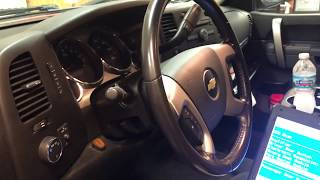

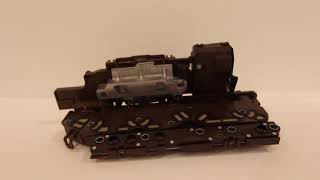
We Have This Part in Stock
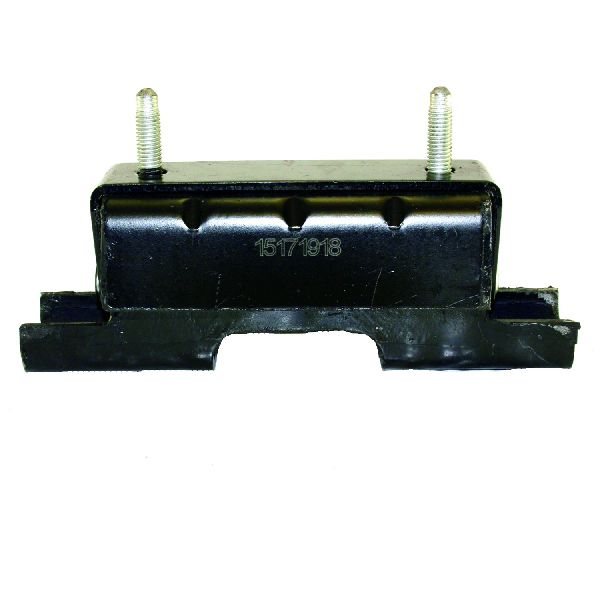
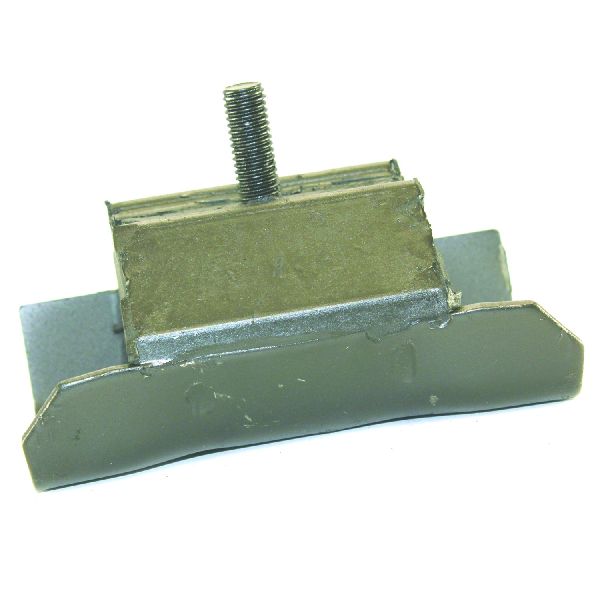

The information in this article is provided for general reference and educational purposes only. Vehicle specifications, procedures, and part compatibility can vary by production date, trim level, and region. Always consult your vehicle's factory service manual and verify part numbers before purchasing or performing repairs. Safety-critical components such as airbags, seat belts, and braking systems should be installed by a qualified professional.
- Gmc YUKON DENALI:
- 🧭 Diagnostic Flowchart
- 🎬 Helpful Videos
- 🛍️ Shop This Part
- What's Unique About the 2007-2011 Gmc YUKON DENALI
- Symptoms You May Notice
- Most Likely Causes
- Rare But Worth Checking
- Diagnosis Steps
- Parts You'll Likely Need
- Related Codes That Often Appear With This One
- Technical Service Bulletins (TSBs) & Recalls
- Platform-Specific Known Issues
- Mechanic-Grade Diagnostic Values
- Scan Tool Commands That Help
- Wiring & Ground Locations
- Real Owner Repair Stories
- When the Usual Fixes Don't Work
- Model Year Variations Within This Range
- 🎟️ Get 5% Off