

P0604 on 2007-2009 Hummer H2: Transmission Control Module (TCM) RAM Error Causes and Fixes
This code indicates an internal Random Access Memory (RAM) error within a control module, most commonly the Transmission Control Module (TCM) on this vehicle. The most likely fix is replacing the TCM, which requires special programming. Expect costs to range from $700 to over $1,200 for a professional repair.
- P0604 on a 2007-2009 Hummer H2 almost always points to a fault within the Transmission Control Module (TCM).
- Symptoms are primarily transmission-related, such as harsh shifting or getting stuck in gear.
- The 2008-2009 models with the 6L80-E transmission are particularly prone to this issue due to the heat-sensitive TCM (TEHCM) being located inside the transmission.
- This is not a DIY-friendly repair. The fix involves replacing the TCM, which is often inside the transmission, and requires professional programming tools.
- Before replacing the module, always verify the battery is healthy and all main power and ground connections are clean and tight.
What's Unique About the 2007-2009 Hummer H2
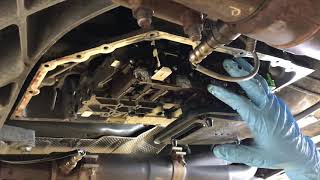
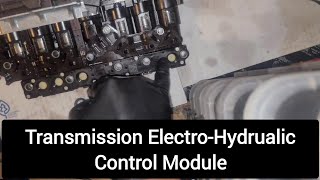
For the 2007-2009 Hummer H2, this isn't just a generic engine computer code. GM has issued specific bulletins (PIP4653E and 05-06-04-060A) that directly link P0604 to the Transmission Control Module (TCM). The 2008 model year introduced a new 6-speed 6L80-E automatic transmission, which has an internally located TCM (called a TEHCM - Transmission Electro-Hydraulic Control Module). This module is submerged in hot transmission fluid, making it prone to failure from heat and vibration. 🎬 Watch: Why the 6L80 transmission is prone to these failures. This design makes diagnosis and repair different from the 2007 model's externally-mounted TCM and often requires replacing the entire valve body/TEHCM assembly inside the transmission pan.
Diagnostic Flowchart
Tap your situation to follow the diagnostic path that matches what you're seeing on this vehicle.
Generation note: Yes, this range covers a significant powertrain update. The 2007 H2 uses a 6.0L V8 with a 4L65-E transmission and an externally mounted TCM. The 2008-2009 H2 models were upgraded to a 6.2L V8 with a 6L80-E transmission. The 6L80-E contains the TCM (TEHCM) inside the transmission oil pan, making replacement more labor-intensive and costly.
Symptoms You May Notice
- Check Engine Light (Malfunction Indicator Lamp) is on
- Harsh or erratic transmission shifting
- Transmission gets stuck in one gear (limp mode)
- Vehicle may stall or fail to start
- ABS or Traction Control lights may also illuminate
- Failure to downshift when slowing down
- Loss of communication with the TCM on a scan tool
- Replacing the entire transmission when only the internal control module (TCM/TEHCM) is faulty.
- Replacing the Engine Control Module (ECM) when the fault is in the Transmission Control Module (TCM).
- Replacing individual shift solenoids when the TEHCM assembly is the actual point of failure.
Most Likely Causes
- Faulty Transmission Control Module (TCM/TEHCM) 🔴 High Probability → Shop Transmission Assembly GM TSB #PIP4653E specifically identifies internal module faults as the cause for this code. For 2008-2009 models with the 6L80-E, the TEHCM is located inside the hot transmission pan, leading to a high rate of heat-related electronic failure.
How to confirm: After ruling out power/ground issues, a professional scan tool is used to check for codes stored specifically in the TCM. If P0604 is present and returns immediately after clearing, and power/grounds are good, the module is condemned.
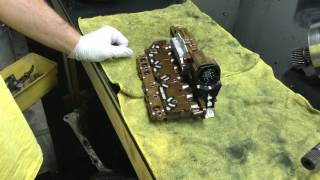
Typical fix: Replacement of the Transmission Control Module. For 2008-2009 models, this involves dropping the transmission pan and replacing 🎬 See how to remove the valve body and internal module. the entire TEHCM/valve body assembly. The new module must be programmed to the vehicle's VIN.
Est. part cost: $400-$950 - TCM Software/Firmware Corruption 🟡 Medium Probability Software glitches can cause modules to fail self-tests, especially after a battery replacement or jump-start. TSBs often recommend checking for and applying software updates as a first-line diagnostic step before hardware replacement.
How to confirm: A dealer or qualified shop with access to GM's software service (TIS2Web or Techline Connect) can check if a newer calibration is available for the TCM.
Typical fix: Reprogramming the TCM with the latest factory software. If the code returns after a re-flash, the module hardware is faulty.
Est. part cost: $0 - Poor Power or Ground Connection to the TCM ⚪ Low Probability Vibration and corrosion can affect key grounding points. On GM trucks of this era, grounds G103 (front of passenger-side cylinder head) and G104 (top left rear of engine) are critical for stable module operation. A loose or corroded connection at these points can cause intermittent voltage drops, triggering memory faults like P0604.
How to confirm: Inspect the TCM wiring harness for damage. Locate and clean the main engine-to-chassis ground straps and specific module ground points like G103. Check battery voltage (should be >12.4V at rest, 13.7-14.7V running).
Typical fix: Disassembling, cleaning, and securing corroded or loose ground terminals. Repairing any damaged wires in the harness.
Est. part cost: $5-$50
Diagnosis Steps
- Scan the vehicle for all stored Diagnostic Trouble Codes (DTCs). Use a scan tool capable of communicating with the TCM, not just the ECM. Note if P0604 is isolated to the TCM.
- Check and verify battery health and charging system operation. Perform a load test on the battery. Ensure voltage is stable and within specification (above 12.4 volts at rest, 13.7-14.7V when running).
- Inspect the main power and ground connections for the ECM and TCM. Specifically locate, disassemble, and clean ground points G103 (front of right cylinder head) and G104 (rear of left cylinder head).
- Visually inspect the TCM wiring harness for any signs of chafing, melting, or physical damage, paying close attention to where the harness runs near exhaust components.
- For 2008-2009 models, check the condition and level of the transmission fluid. Dark, burnt-smelling fluid is an indicator of excessive heat, which is a primary cause of TEHCM failure.
- Using a professional scan tool, check for any available software updates for the Transmission Control Module. If an update is available, perform the re-flash procedure.
- If the code persists after verifying power, grounds, and software, the Transmission Control Module (TCM/TEHCM) is defective and requires replacement.
- After installation, the new TCM must be programmed with the correct software and vehicle identification number (VIN) using a GM-specific programming interface 🎬 Watch: A professional walkthrough of the TCM programming process. like SPS2 (Techline Connect).
Parts You'll Likely Need
- Transmission Control Module (TEHCM)
(OEM #24256861 (For 2008-2009 H2 with 6L80-E))— This is the most common cause of P0604 on the 2008-2009 models, as confirmed by GM's TSBs and extensive owner reports. The internal RAM of the module fails due to heat and vibration.
Trusted brands: ACDelco, Dorman (Remanufactured)
OEM price range: $600-$950
Aftermarket price range: $400-$700 - Transmission Control Module (TCM)
(OEM #24252114 / 24234503 (For 2007 H2 with 4L65-E))— For the 2007 model, this external module can fail, though it is generally more robust than the later internal TEHCM. Failure is less common but is still the primary cause of P0604 on this specific year.
Trusted brands: ACDelco
OEM price range: $450-$700
Aftermarket price range: $300-$500
Related Codes That Often Appear With This One
- P0601 — This is another internal control module memory error (Read Only Memory), often set alongside P0604 as cited in TSBs PIP4653E and 05-06-04-060A.
- P0603 — This code indicates an internal control module Keep Alive Memory (KAM) error, also mentioned in TSB PIP4653E.
- P062F — An internal control module EEPROM error, also listed in TSBs PIP4653E and 05-06-04-060A as being related to module failure.
- P1621 — A manufacturer-specific code for Control Module Long Term Memory Performance, cited in TSBs PIP4653E and 05-06-04-060A as part of the same group of faults.
- U0101 — Indicates a loss of communication with the TCM. This often occurs when the TCM/TEHCM fails internally and stops communicating on the CAN bus.
Technical Service Bulletins (TSBs) & Recalls
- PIP4653E: Discusses various internal module DTCs, including P0604, being stored in the Transmission Control Module, indicating module failure.
- 05-06-04-060A: An informational bulletin about a group of internal control module DTCs (including P0604) that can appear in various modules.
Platform-Specific Known Issues
- Concrete Repair Story: Dealer TEHCM Replacement: An owner of a 2008 Hummer H2 on a popular forum reported experiencing erratic shifting and the P0604 code. The dealership diagnosed the issue as a failed internal transmission control module. The repair involved replacing the entire valve body assembly which contains the TEHCM, at a cost of over $1,500, which successfully resolved the issue.
- TSB #PIP4653E: This GM bulletin explicitly notes that P0604 may be stored in the Transmission Control Module along with other internal fault codes (P0601, P0603, P062F, P1621), and the recommended procedure is to replace the TCM after verifying the fault.
- TSB #05-06-04-060A: This informational bulletin confirms that P0604 is one of several internal control module codes that can be shared across multiple modules, but context from other TSBs and real-world data points strongly to the TCM in the H2.
Mechanic-Grade Diagnostic Values
- 6L80 TEHCM Shift Solenoid (On/Off type) Resistance — expected: 20-40 Ohms. Failure: A reading outside this range indicates a failed solenoid, requiring TEHCM replacement.
- 6L80 TEHCM Pressure Control Solenoid (PWM type) Resistance — expected: 3-8 Ohms. Failure: A reading outside this range points to a faulty solenoid, necessitating TEHCM replacement.
- 6L80 TEHCM Solenoid Operating Voltage (Supplied by TCM) — expected: 8.3 - 9.3 Volts. Failure: Voltage outside this range could indicate an internal TEHCM fault or a vehicle-side power supply issue.
- Battery Voltage at Rest — expected: >12.4 Volts. Failure: Lower voltage can cause various control module errors, including P0604.
- Charging System Voltage (Engine Running) — expected: 13.7 - 14.7 Volts. Failure: Voltage outside this range indicates an alternator or charging system problem that can corrupt module memory.
Scan Tool Commands That Help
- GM Tech2 / MDI / MDI2 with TIS2Web or Techline Connect (SPS2): Replace and Reprogram ECU — This function is mandatory after installing a new TEHCM. It flashes the module with the correct VIN-specific calibration files. Failure to perform this step will result in a no-start condition or immediate limp mode.
- GM Tech2 / MDI / MDI2: Solenoid Valve Characterization Reprogramming / Fast Learn — After programming the new TEHCM, a transmission service fast learn or relearn procedure must be performed. This allows the new module to learn the hydraulic characteristics and clutch fill volumes, ensuring smooth shifting.
- Kent-Moore DT-47825 Test Plate & GM Tech2: Solenoid Air Test — For advanced bench-top diagnosis, this special tool allows a technician to command individual solenoids on the TEHCM with a scan tool and check for proper mechanical operation with compressed air before installing it in the transmission.
Wiring & Ground Locations
- G103 — On the front of the right (passenger side) cylinder head.. This is a primary engine harness ground. A poor connection here can cause voltage instability for multiple control modules, including the TCM, potentially triggering memory-related fault codes like P0604.
- G104 — At the rear of the left (driver side) cylinder head.. Another critical engine harness ground. Similar to G103, corrosion or looseness at this point can lead to intermittent and difficult-to-diagnose electronic faults.
- TEHCM Main Connector — On the outside of the transmission case (for 2008-2009 models), where the main vehicle harness connects to the internal TEHCM.. This is the single point of connection for all power, ground, and communication signals to the internal control module. Corrosion or bent pins in this connector can directly cause P0604 or a total loss of communication (U0101).
- G203 — At the lower right side of the dash, behind the right kick panel.. This is an interior ground point that can affect various control modules inside the cabin. While less likely to be the primary cause, it should be checked if other electrical issues are present.
Real Owner Repair Stories
- Hummer Forums (2008 Hummer H2, 90k miles) — After sitting for 5 years, the vehicle would drive normally for a few minutes, then suddenly act as if in neutral before downshifting hard to 1st gear. ABS and traction control lights were also on. Restarting the car would temporarily fix the issue.
❌ Tried (didn't work) Changing the transmission fluid., Replacing the Body Control Module (BCM) without programming it.
✅ What actually fixed it The user was advised that replacing a BCM without programming it to the vehicle's VIN is a critical error that can cause a cascade of communication issues across modules, including the TCM, leading to the reported symptoms. The implied fix is to have the BCM and potentially the TCM properly diagnosed and programmed by a qualified shop.
OEM Part Supersession History
24256861→This part number is frequently listed but may be superseded by newer revisions. It has also been subject to supply shortages. An interchangeable part number sometimes cited is 24257038.— GM often updates TEHCMs to improve hardware (solenoids, pressure switches) and thermal tolerance.
Heads up: A new TEHCM must be programmed using GM's Service Programming System (SPS) after installation; it will not work out of the box. Some services offer to clone the data from the old module to a new one, which can avoid the need for SPS programming.
Model Year Variations Within This Range
- 2007: Uses the 4-speed 4L65-E transmission with an externally mounted TCM. The TCM is less prone to heat failure than the later internal design, but can still fail. Diagnosis involves checking power, ground, and communication at the external module connector.
- 2008-2009: Uses the 6-speed 6L80-E transmission with an internal Transmission Electro-Hydraulic Control Module (TEHCM). This module is the most common cause of P0604 due to its location inside the hot transmission pan. Replacement requires dropping the pan and replacing the entire TEHCM/valve body assembly.
Helpful Videos

We Have This Part in Stock



The information in this article is provided for general reference and educational purposes only. Vehicle specifications, procedures, and part compatibility can vary by production date, trim level, and region. Always consult your vehicle's factory service manual and verify part numbers before purchasing or performing repairs. Safety-critical components such as airbags, seat belts, and braking systems should be installed by a qualified professional.
- Hummer H2:
- 🧭 Diagnostic Flowchart
- 🎬 Helpful Videos
- 🛍️ Shop This Part
- What's Unique About the 2007-2009 Hummer H2
- Symptoms You May Notice
- Most Likely Causes
- Diagnosis Steps
- Parts You'll Likely Need
- Related Codes That Often Appear With This One
- Technical Service Bulletins (TSBs) & Recalls
- Platform-Specific Known Issues
- Mechanic-Grade Diagnostic Values
- Scan Tool Commands That Help
- Wiring & Ground Locations
- Real Owner Repair Stories
- OEM Part Supersession History
- Model Year Variations Within This Range
- 🎟️ Get 5% Off