

P0604 on 2020-2025 Hyundai Palisade: RAM Error Causes and Fixes
This code indicates a memory error in the engine computer (PCM), but the cause is almost always external. Before suspecting a bad PCM, thoroughly test the battery and check all power and ground connections. A weak battery causing voltage to drop below 9.5V during cranking or a poor connection is the most common cause and a much cheaper fix.
- P0604 on a Palisade is most likely caused by a simple electrical issue, not a failed computer.
- Before buying any parts, fully test the battery, its connections, and the alternator's output.
- Do not replace the Powertrain Control Module (PCM) unless all other possibilities have been professionally eliminated, as it is very expensive and requires dealer programming.
- Driving with this code is unsafe due to the risk of the engine stalling unexpectedly.
What's Unique About the 2020-2025 Hyundai Palisade
While P0604 is a generic code, on modern Hyundai platforms like the Palisade and its sibling the Kia Telluride, it's most frequently a symptom of an underlying electrical system issue rather than a true internal PCM failure. The vehicle's electronics are highly sensitive to voltage stability. A weak battery, failing alternator, or poor ground connection is far more likely to trigger this code than the PCM itself failing. Owners should exhaust all electrical diagnostic paths before considering the costly replacement of the engine computer.
🎬 Watch: A detailed breakdown of P0604 causes and fixes.Symptoms You May Notice
- Check Engine Light is on
- Engine may crank but fail to start
- Intermittent stalling, sometimes while driving or when coming to a stop
- Rough or unstable idle
- Harsh or erratic automatic transmission shifting
- Reduced engine power or hesitation
- ABS or Traction Control lights may also illuminate
- Replacing the PCM first. The PCM is rarely the actual point of failure. Replacing it without first diagnosing the battery and electrical connections is a very expensive and common mistake.
Most Likely Causes
- Weak or Failing Battery 🔴 High Probability → Shop Vehicle Battery Modern vehicles like the Palisade have a high electrical demand and are very sensitive to voltage drops. A weak battery can cause voltage to fall below the stable threshold (~9.5V) during engine startup, corrupting the PCM's RAM. This is the most common cause reported by owners.
How to confirm: With the engine off, use a multimeter to test battery voltage; a healthy battery should read ~12.6V. Then, have a helper crank the engine while you monitor the voltage. If it drops below 9.5V, the battery is weak and likely the cause. Most auto parts stores can also perform a load test.
Typical fix: Replace the battery. 🎬 See this step-by-step guide for a Palisade battery replacement. Use a high-quality AGM battery that meets or exceeds OEM specifications.
Est. part cost: $150-$300 - Poor Battery Terminal or Ground Connections 🟡 Medium Probability → Shop Vehicle Battery Corrosion can build up on battery terminals and ground straps, creating resistance that mimics a weak battery and causes voltage instability for the PCM.
How to confirm: Visually inspect the battery terminals for corrosion (white or blue-green powder). Follow the main negative battery cable to the chassis and engine block, ensuring the connections are clean, tight, and free of rust. A key ground point is often located on the chassis just below the under-hood fuse box. Use a multimeter to check for voltage drop between the battery negative post and the PCM ground point; it should be less than 0.1 volts (100mV).
Typical fix: Clean the battery terminals and all relevant ground connection points with a wire brush. Apply dielectric grease to prevent future corrosion. Tighten all connections securely.
Est. part cost: $5-$15 - Failing Alternator ⚪ Low Probability → Shop Alternator An alternator that is failing may produce insufficient voltage to run the vehicle and charge the battery, or it could produce voltage spikes, either of which can corrupt PCM memory.
How to confirm: With the engine running, use a multimeter to test the voltage at the battery terminals. A healthy alternator should produce a steady voltage between approximately 13.5V and 14.8V.
Typical fix: Replace the alternator. 🎬 Watch: How to replace the alternator and serpentine belt.
Est. part cost: $300-$600
Rare But Worth Checking
- Corrupted PCM Software: This can sometimes occur after an interrupted software update or a significant voltage spike. A dealership can perform a software reflash, which is worth trying before replacing the entire module.
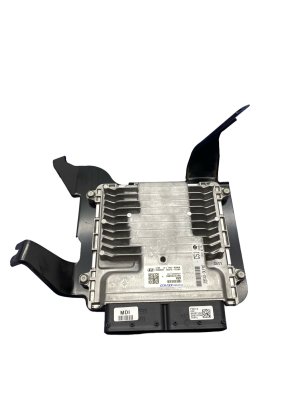
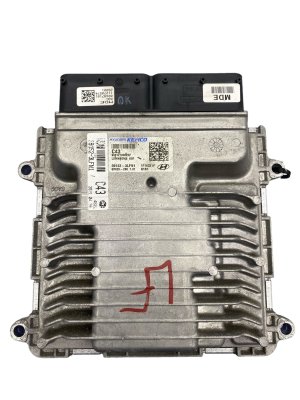
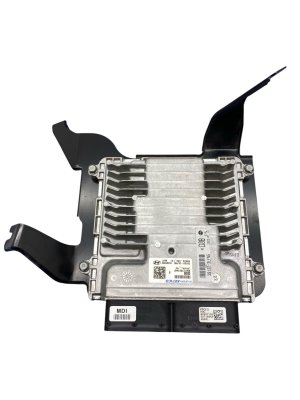
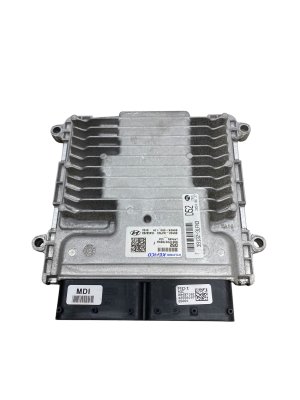
- Faulty Powertrain Control Module (PCM): → Shop Engine Control Module (ECM) This is the least likely cause. The PCM itself has an internal hardware failure. This should only be considered after all battery, charging system, wiring, and ground issues have been definitively ruled out.
Diagnosis Steps
- Scan for Codes: Use an OBD-II scanner to confirm P0604 is the primary code. Note any other codes present.
- Inspect the Battery: Visually inspect the battery terminals for looseness or corrosion. Clean and tighten as needed.
- Test Battery Voltage: With the engine off, check for ~12.6V. During cranking, ensure voltage does not drop below 9.5V.
- Test the Charging System: With the engine running, check for a steady alternator output of 13.5V-14.8V at the battery.
- Inspect PCM Connections: Locate the PCM (under the hood, near the airbox on the driver's side) and carefully inspect its connectors for any signs of corrosion, moisture, or loose pins. Ensure they are seated securely.
- Check Main Grounds: Trace the negative battery cable to its grounding points on the chassis and engine. A common and critical ground point is a bolt on the chassis near the under-hood fuse box. Perform a voltage drop test on the main PCM ground; it should be less than 0.1V.
- Clear Codes and Test Drive: After performing the above checks, clear the code and drive the vehicle to see if it returns. If it does not, the issue was likely a poor connection or temporary low voltage.
- Consider a PCM Reflash: If the code returns and all electrical systems test perfectly, contact a Hyundai dealership to check for any available PCM software updates (reflash). This may cost between $150-$250.
- Diagnose the PCM: If all other steps fail, the PCM itself may be faulty. This step is best left to a professional, as it requires specialized tools to confirm and a programmed replacement part.
Parts You'll Likely Need
- AGM Battery — A weak battery causing low voltage during startup is the most frequent trigger for P0604.
Trusted brands: Bosch, Interstate, DieHard
OEM price range: $250-$350
Aftermarket price range: $150-$300 - Powertrain Control Module (PCM)
(OEM #39122-3LFN0)— This is the 'fix of last resort' if all electrical and software issues have been ruled out. Note: Multiple part numbers exist; always verify with VIN. This part is NOT plug-and-play and requires dealer programming.
Trusted brands: Hyundai (OEM)
OEM price range: $1100-$1300
Aftermarket price range: $600-$900 (Remanufactured)
Related Codes That Often Appear With This One
- P0602 — P0602 indicates a 'Control Module Programming Error'. It can appear with P0604 if a voltage issue or failed update has corrupted both the RAM and the core programming.
- U-series codes (e.g., U0100) — U-codes indicate a loss of communication between modules. If the PCM is malfunctioning due to a RAM error, it may stop communicating with other modules like the Transmission Control Module (TCM) or ABS module.
- P0562 — P0562 (System Voltage Low) is a direct companion code that points to the most common root cause: a failing battery or charging system problem causing unstable voltage to the PCM.
Technical Service Bulletins (TSBs) & Recalls
- TSB 22-ST-005H-1: While not for P0604, this TSB addresses a known issue with 'C-MDPS WORM SHAFT BEARING NOISE' on 2020-2022 Palisades, showing active TSB support for the platform.
Platform-Specific Known Issues
- A notable issue for 2020-2022 Palisades is the recall for the accessory tow hitch wiring harness (NHTSA 22V-633). This faulty module can allow moisture intrusion, leading to short circuits and, in some cases, fire. While not a direct cause of P0604, a shorting module on the vehicle's electrical system can create voltage instability that could potentially contribute to PCM memory errors. Owners experiencing other electrical gremlins alongside P0604 should investigate if this recall applies and has been completed.
Mechanic-Grade Diagnostic Values
- Battery Voltage During Cranking — expected: > 9.5V. Failure: Voltage dropping below 9.5V indicates a weak battery, the most common cause of P0604.
- Alternator Charging Voltage (Engine Running) — expected: 13.5V - 14.8V. Failure: Voltage that is too low, too high, or fluctuating wildly can corrupt PCM memory.
- PCM Power Ground Resistance — expected: < 0.1 Ω. Failure: Resistance higher than 0.1 Ohms indicates a poor ground connection, which can cause floating voltage and module errors.
- PCM Power Ground Voltage Drop — expected: < 50 mV. Failure: A higher voltage reading indicates excessive resistance in the ground circuit.
Scan Tool Commands That Help
- Hyundai GDS (Global Diagnostic System): ECU Recovery / Software Update — Use this dealer-level function to reflash the PCM with the latest software. This can fix internal logic errors that may falsely trigger a P0604 code, especially if a previous update was interrupted.
- Professional Scan Tool: RAM Integrity Test / Memory Test — After confirming power and grounds are perfect, use this function to command the PCM to perform a self-test on its RAM. A failure of this commanded test strongly points towards an internal PCM hardware fault.
Wiring & Ground Locations
- PCM Location — Under the hood, on the driver's side, underneath the airbox assembly.. This is the location of the module itself and its main connectors. Visual inspection for corrosion or damage here is a key step.
- Main Power Connector — At the ICU Junction Block (driver's side dash fuse box), white 4-pin plug (B), pin 4 provides +12V constant power.. This is a primary power feed for vehicle electronics. A fault at this connection could cause voltage instability for multiple modules, including the PCM.
- Main Chassis Ground — A dedicated ground bolt on the chassis frame, typically located near the under-hood fuse box or battery.. This is the primary return path for the PCM's electrical circuit. Corrosion or looseness here is a common cause of intermittent electrical faults like P0604.
OEM Part Supersession History
39122-3LFN0→Unknown— This part number is consistently cited for 2020-2022 models. Some used part vendors also list 39152-3LFN0 as an equivalent, though this is not officially confirmed as a supersession.
Heads up: The PCM for 2023+ models is likely different due to the significant interior technology and electronics refresh. Always verify the part number with the vehicle's VIN.
Model Year Variations Within This Range
- 2023-2025: The Palisade received a major facelift for the 2023 model year. While the engine and transmission remained the same, the dashboard, infotainment system (new 12-inch screen), and other interior electronics were significantly updated. This means the PCM for 2023+ models likely has a different part number and software calibration than the 2020-2022 models (PN 39122-3LFN0) to accommodate these changes.
Diagnostic Flowchart
Other Known Issues on This Vehicle
Issues unrelated to this code that are worth knowing about as an owner of this generation:
- Excessive Oil Consumption 🟠 Medium — Reported by some owners, sometimes as early as 5,500 miles. Can be over 1 quart per 1,000 miles. Not universal, but a known concern.
- Tow Hitch Wiring Harness Fire Risk 🔴 High — Affects 2020-2022 models equipped with the genuine accessory tow hitch. Debris and moisture can cause an electrical short. (Ref: NHTSA Recall 22V-633 / Hyundai Recall 235)
- Harsh or Erratic Transmission Shifting 🟡 Low → Shop Transmission Assembly — Some owners report harsh shifts, particularly when cold or at low speeds. In rare cases, transmissions have required replacement, sometimes due to being shipped with no fluid from the factory. (Ref: Hyundai Bulletin 24-AT-002H addresses incorrect ratio codes.)
- Seat Belt Buckle Malfunction 🔴 High — Widespread issue affecting 2020-2025 models where buckles may not latch properly, especially in cold weather. (Ref: NHTSA Recall 25V607000 / Hyundai Recall 283)
- Third-Row Side Curtain Airbag Improper Deployment 🔴 High — Affects 2020-2025 models; airbags may not meet federal safety standards for occupant protection in certain crash scenarios. (Ref: NHTSA Campaign 26V034 / Hyundai Recall 292)
- Motor Driven Power Steering (MDPS) Noise 🟡 Low — A clicking or grinding noise may develop from the steering column. A known issue across many Hyundai models, including the 2020-2022 Palisade. (Ref: Hyundai TSB 22-ST-005H-1)
Used vs. New Parts: Buying Guide for This Vehicle
When a used part is the smart pick: A used PCM is a high-risk, but potentially cost-saving option ONLY if it is sourced from a reputable specialist that provides VIN programming before shipping. A standard junkyard PCM will not work due to the vehicle's immobilizer system. A mail-in repair service for your original module is often a safer and more reliable choice than a random used part.
Donor-vehicle mileage cap: roughly under 100000 miles for the part to have meaningful remaining life.
What to inspect on the donor part:
- Check for any signs of corrosion on the connector pins.
- Inspect the casing for water marks, cracks, or evidence of being pried open.
- Ensure all mounting tabs are intact.
- Verify the part number on the sticker exactly matches the original module.
OEM-only on this vehicle (don't cheap out):
- Powertrain Control Module (PCM). Due to complex VIN-specific programming and immobilizer integration, a new OEM part or a professionally repaired/reprogrammed original unit is strongly recommended.
Aftermarket brands forum-validated for this vehicle:
- Flagship One (For pre-programmed OEM modules)
- Various eBay mail-in repair services (For repairing your original module)
Brands owners have reported issues with on this vehicle:
- Unbranded, 'plug-and-play' modules from non-specialist online marketplaces. These rarely work correctly and cannot be programmed to the vehicle.
Real Owner Stories
Aggregated from forums and TSBs cited above. Mileages and costs reflect what owners reported in those sources.
2020 Hyundai Palisade 3.8L V6 — 108000 miles
Symptoms: Harsh upshifts when the engine is cold, described as the transmission or clutch slipping.
What fixed it: The owner's report suggests symptoms associated with PCM memory issues affecting transmission control, though a specific part replacement wasn't finalized in the snippet.
Source hint: Reddit r/HyundaiPalisade thread titled 'Transmission/Clutch Slipping'
2021 Hyundai Palisade 3.8L V6
Symptoms: The vehicle died twice and would not start.
What fixed it: Dealer replaced the battery under warranty due to a bad cell.
Source hint: palisadeforums.org thread titled 'Dead Battery Issues'
2020-2025 Kia Telluride 3.8L V6 — 3710 miles
Symptoms: Clicking starter and a no-start condition; battery voltage was reading only 8 volts.
What fixed it: Replacement of the battery under warranty due to an internal fault.
Source hint: YouTube thread titled 'How to Change a Car Battery | KIA TELLURIDE | DIY Car Maintenance'
Related OBD-II Codes
Frequently Asked Questions
Could the tow hitch recall on my 2021 Palisade be related to the P0604 code?
My Palisade is stalling and showing P0604; could it be the battery even if the car still cranks?
Is there a TSB for the harsh shifting I'm experiencing alongside this code?
How much does it cost to have a Hyundai dealer reflash the PCM on a Palisade?
Where is the main ground point I should check on my 2022 Palisade to resolve P0604?
Does the Kia Telluride suffer from the same P0604 issues as the Palisade?
Helpful Videos


We Have This Part in Stock

The information in this article is provided for general reference and educational purposes only. Vehicle specifications, procedures, and part compatibility can vary by production date, trim level, and region. Always consult your vehicle's factory service manual and verify part numbers before purchasing or performing repairs. Safety-critical components such as airbags, seat belts, and braking systems should be installed by a qualified professional.
- Hyundai Palisade:
- 🧭 Diagnostic Flowchart
- 🎬 Helpful Videos
- 🛍️ Shop This Part
- What's Unique About the 2020-2025 Hyundai Palisade
- Symptoms You May Notice
- Most Likely Causes
- Rare But Worth Checking
- Diagnosis Steps
- Parts You'll Likely Need
- Related Codes That Often Appear With This One
- Technical Service Bulletins (TSBs) & Recalls
- Platform-Specific Known Issues
- Mechanic-Grade Diagnostic Values
- Scan Tool Commands That Help
- Wiring & Ground Locations
- OEM Part Supersession History
- Model Year Variations Within This Range
- Other Known Issues on This Vehicle
- Used vs. New Parts: Buying Guide for This Vehicle
- Real Owner Stories
- 2020 Hyundai Palisade 3.8L V6 — 108000 miles
- 2021 Hyundai Palisade 3.8L V6
- 2020-2025 Kia Telluride 3.8L V6 — 3710 miles
- Related OBD-II Codes
- Frequently Asked Questions
- 🎟️ Get 5% Off