

P0604 on 2016-2025 Hyundai Tucson: RAM Error Causes and Fixes
P0604 on a Hyundai Tucson almost always points to an electrical system issue, not a failed engine computer. Before replacing any expensive parts, test the battery, check its connections, and inspect the charging system, as low voltage is the most common trigger. This code often appears after a battery replacement or jump-start due to voltage instability.
- P0604 is an electrical fault code. Do not assume the expensive PCM is bad.
- The #1 cause is a weak battery or unstable power supply. Fully test the battery and charging system first.
- Inspect, clean, and tighten all battery terminals and main ground connections before proceeding with further diagnostics.
- Driving with this code is risky due to the potential for sudden stalling or a no-start condition.
- If the PCM does need replacement, it requires professional installation and programming.
What's Unique About the 2016-2025 Hyundai Tucson
While P0604 is a generic code, on modern, electronically-dense vehicles like the Tucson, it is frequently triggered by underlying power supply issues rather than a true PCM failure. These vehicles are highly sensitive to voltage fluctuations. A weak battery, a failing alternator, or a poor ground connection can easily corrupt the PCM's memory during startup, triggering this code. Therefore, a thorough electrical system check is the most critical first step before considering PCM replacement.
Generation note: This guide covers the third generation (TL, 2016-2021) and fourth generation (NX4, 2022-2025) Hyundai Tucson. The common causes and diagnostic steps for P0604 are consistent across both generations as they relate to fundamental electrical principles. Note that a significant electrical recall concerning the ABS module was issued for the 2016-2021 (TL) models, highlighting the sensitivity of the vehicle's electrical systems and the importance of checking for open recalls.
Symptoms You May Notice
- Check Engine Light is on
- Engine may stall intermittently or not start at all
- Rough or erratic idling
- Harsh or improper transmission shifting
- Reduced engine power and poor acceleration
- Failure to pass an emissions test
- Battery or charging system warning light may be illuminated
- Replacing the PCM without first testing the battery and charging system. An unstable power supply is the most common cause of P0604, and a new PCM will not fix it.
Most Likely Causes
- Low Battery Voltage or Failing Battery 🔴 High Probability → Shop Vehicle Battery Modern ECUs require stable voltage. A weak battery can cause voltage to drop below the required threshold (e.g., 9.5V) during engine cranking, corrupting the PCM's RAM. This is a very common trigger after a jump-start or battery replacement.
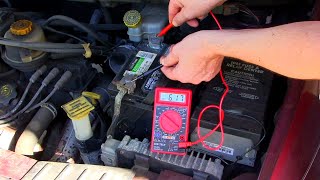
How to confirm: Test the battery with a multimeter. 🎬 Watch: How to test your battery and alternator at home. A healthy battery should read ~12.6V with the engine off. During cranking, the voltage should not drop below 9.5-10V. A load test at an auto parts store is the most definitive test.
Typical fix: Recharge or replace the battery. Ensure battery terminals are clean and tight.
Est. part cost: $150-$350 - Failing Alternator / Charging System Fault 🟡 Medium Probability → Shop Alternator An alternator that is undercharging or overcharging creates an unstable voltage supply, which can trigger memory errors in the PCM. A failing diode in the alternator can also introduce AC voltage into the DC system, damaging electronics.
How to confirm: With the engine running, use a multimeter to check the voltage at the battery terminals. It should be stable, typically between 13.5V and 14.8V. Any significant fluctuations or readings outside this range point to a problem.
Typical fix: Replace the alternator.
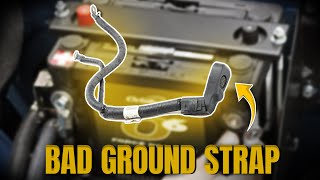
Est. part cost: $300-$700 - Poor PCM Power or Ground Connections 🟡 Medium Probability Corrosion or loose connections on battery terminals, main engine/chassis grounds, 🎬 See how to identify and fix a bad ground cable. or the PCM connector itself can create high resistance and intermittent voltage drops, mimicking a bad battery.
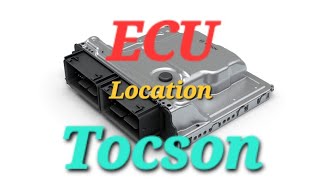
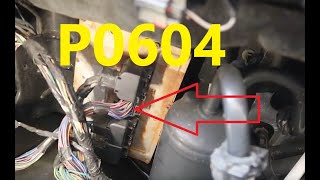
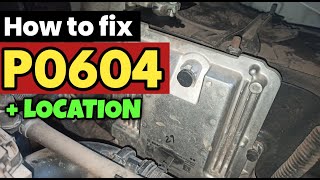
How to confirm: Visually inspect all main ground straps and the PCM connectors for corrosion, looseness, or damage. The main PCM is located behind the battery. 🎬 Watch this quick video to locate your Tucson's ECU. Perform a voltage drop test on the ground circuit; resistance should be less than 0.1 ohms.
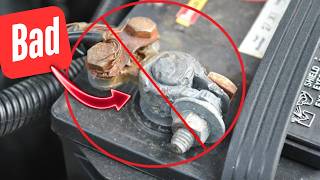
Typical fix: Clean all grounding points and PCM connectors with a wire brush and electrical contact cleaner. Tighten all connections securely.
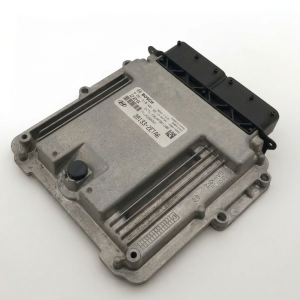
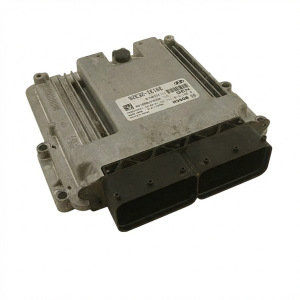
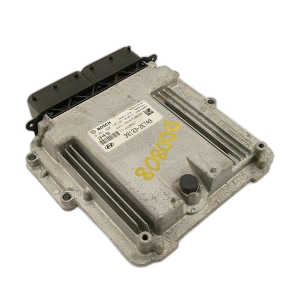
Est. part cost: $5-$20 - Faulty Powertrain Control Module (PCM) ⚪ Low Probability → Shop Engine Control Module (ECM) While this code directly points to an internal PCM fault, it is rarely the actual cause. All external electrical factors must be ruled out first. However, there are documented cases of internal PCM failure on the Tucson platform.
How to confirm: This is a process of elimination. If the battery, charging system, wiring, and grounds are all confirmed to be in perfect condition, and the code still returns immediately after being cleared, the PCM is likely faulty. A professional scan tool may have a specific RAM integrity test.
Typical fix: Replace the PCM. This must be done by a professional, as the new unit needs to be programmed to the vehicle's VIN and immobilizer system.
Est. part cost: $800-$1500
Rare But Worth Checking
- Corrupted PCM Software: This can happen after an improper or interrupted software update (reflash) or from using a low-quality aftermarket tuner. A dealer may need to reflash the PCM with the latest factory software. A Reddit user reported a similar error code after a failed head unit software update, highlighting the sensitivity of the vehicle's electronics.
Diagnosis Steps
- Read all stored trouble codes with an OBD-II scanner. Note any other codes that are present, especially U-codes or charging system codes.
- Clear the codes and start the engine. See if the P0604 code returns immediately. If it doesn't, it may have been a temporary glitch from a voltage drop.
- Perform a thorough battery test. Check the voltage with the engine off (~12.6V) and while cranking (should stay above 9.5V). Have the battery load-tested.
- Test the charging system. With the engine running, ensure the alternator is producing a stable voltage between 13.5V and 14.8V.
- Inspect all electrical connections. Start with the battery terminals, ensuring they are clean and tight. Follow the main ground straps from the battery to the chassis and from the engine to the chassis. Clean and tighten them.
- Locate the PCM (behind the battery) and inspect its electrical connectors for any signs of corrosion, moisture, or bent/damaged pins.
- Check fuses related to the PCM/ECM in the vehicle's fuse boxes.
- If all the above steps check out perfectly and the code persists, the issue is likely internal to the PCM, requiring professional diagnosis or replacement.
Parts You'll Likely Need
- Battery — A weak or failing battery is the most frequent cause of voltage drops that trigger a P0604 code.
Trusted brands: Bosch, Interstate, DieHard
OEM price range: $200-$400
Aftermarket price range: $150-$350 - Powertrain Control Module (PCM)
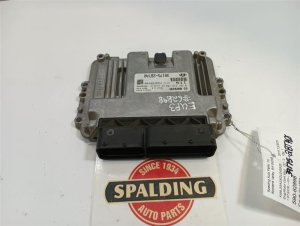
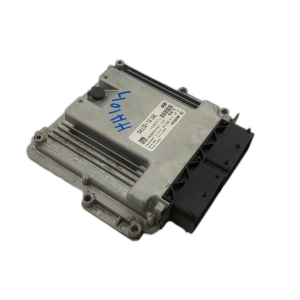
(OEM #Varies by year/engine. Examples: 39133-2ETA8 (2016-18 1.6T), 39175-2BTA5 (2017-18 1.6T), 39133-2ETA2 (2016-18 2.0L). Always verify with VIN.)— This is the 'fix of last resort' when all electrical system checks have passed, and the PCM is confirmed to have an internal hardware failure.
Trusted brands: Hyundai (OEM), Cardone (Remanufactured)
OEM price range: $800-$1500
Aftermarket price range: $500-$1000
Related Codes That Often Appear With This One
- P0602 — P0602 indicates a 'Control Module Programming Error'. They can appear together if there is a software corruption issue or after a failed reprogramming attempt.
- U-series codes (e.g., U0100) — U-codes indicate communication loss between modules. A PCM with a RAM error or suffering from severe voltage issues may fail to communicate properly on the vehicle's CAN bus network.
- P0605 — P0605 indicates a Read-Only Memory (ROM) error, a close cousin to the RAM error. A Reddit user with a 2025 Tucson reported a P0605 code that ultimately required a PCM replacement, showing that internal module failures, while rare, do occur.
Technical Service Bulletins (TSBs) & Recalls
- 21-01-010H - Recall Campaign 195: ABS Fuse Kit Installation and Software Update for 2016-2021 Tucson models.
- 21-01-023H-2 - Service Campaign 966: Engine Monitoring Logic (KSDS) update for various Hyundai models, which shows the manufacturer's use of software updates to address hardware monitoring.
Platform-Specific Known Issues
- Recall 195 (NHTSA 20V-520): Affecting 2016-2021 Tucson models, this recall addresses an electrical short in the ABS module that could pose a fire risk. The fix involves installing a new fuse kit and, in some cases, a software update. While not directly causing P0604, it highlights the sensitivity of the vehicle's electrical systems and the importance of checking for open recalls.
Mechanic-Grade Diagnostic Values
- PCM Power Supply / Battery Voltage (Engine Off) — expected: ~12.6 Volts. Failure: Below 12.4V indicates a weak or discharged battery that can cause memory errors.
- Battery Voltage (During Engine Cranking) — expected: Should not drop below 9.5 Volts. Failure: A drop below 9.5V indicates a weak battery unable to sustain the required voltage for the PCM during startup, a very common cause of P0604.
- Charging System Voltage (Engine Running) — expected: Stable between 13.5 - 14.8 Volts. Failure: Voltage that is unstable, below 13.5V (undercharging), or above 14.8V (overcharging) points to a faulty alternator that can corrupt PCM memory.
- Main Ground Circuit Resistance — expected: Less than 0.1 Ohms. Failure: Resistance higher than 0.1 Ω indicates a poor ground connection, which creates an unstable voltage reference for the PCM.
Scan Tool Commands That Help
- Hyundai GDS (Global Diagnostic System): Variant Coding — This function is mandatory after installing a new PCM. It introduces the new module to the vehicle's network, allowing it to be recognized and function correctly. Failure to perform variant coding will result in a no-start condition and/or set additional communication DTCs.
- Hyundai GDS or J2534 Pass-through Device: ECU Reflash / Reprogramming — Used to update the PCM with the latest factory software. This can resolve P0604 if the cause is a known software glitch or data corruption. This is often tried before replacing the PCM hardware.
- Professional Scan Tool (e.g., GDS): Memory Integrity Test — Some OEM-level tools have a specific routine to directly test the PCM's RAM. A 'fail' result from this test is a strong confirmation of an internal hardware fault, justifying PCM replacement.
Wiring & Ground Locations
- Main Chassis Ground — Follow the main negative battery cable to where it bolts directly to the vehicle's chassis/frame.. This is the primary ground reference for the entire electrical system. Corrosion or looseness here can cause widespread voltage instability, directly triggering a P0604 code.
- Engine Block Ground — A braided strap typically running from the engine block or cylinder head to the chassis/firewall.. Provides the ground path for the alternator and various engine sensors. A poor connection here can cause charging system faults and erratic sensor readings, leading to PCM errors.
- PCM Connectors — Located on the Powertrain Control Module, which is typically found behind the battery in the engine bay.. The pins for the PCM's main power and ground are in these connectors. Any corrosion, moisture, or bent pins can directly interrupt the PCM's power supply and cause internal memory faults.
OEM Part Supersession History
Varies by Year/Engine/Features→Varies— Hardware revisions and software updates.
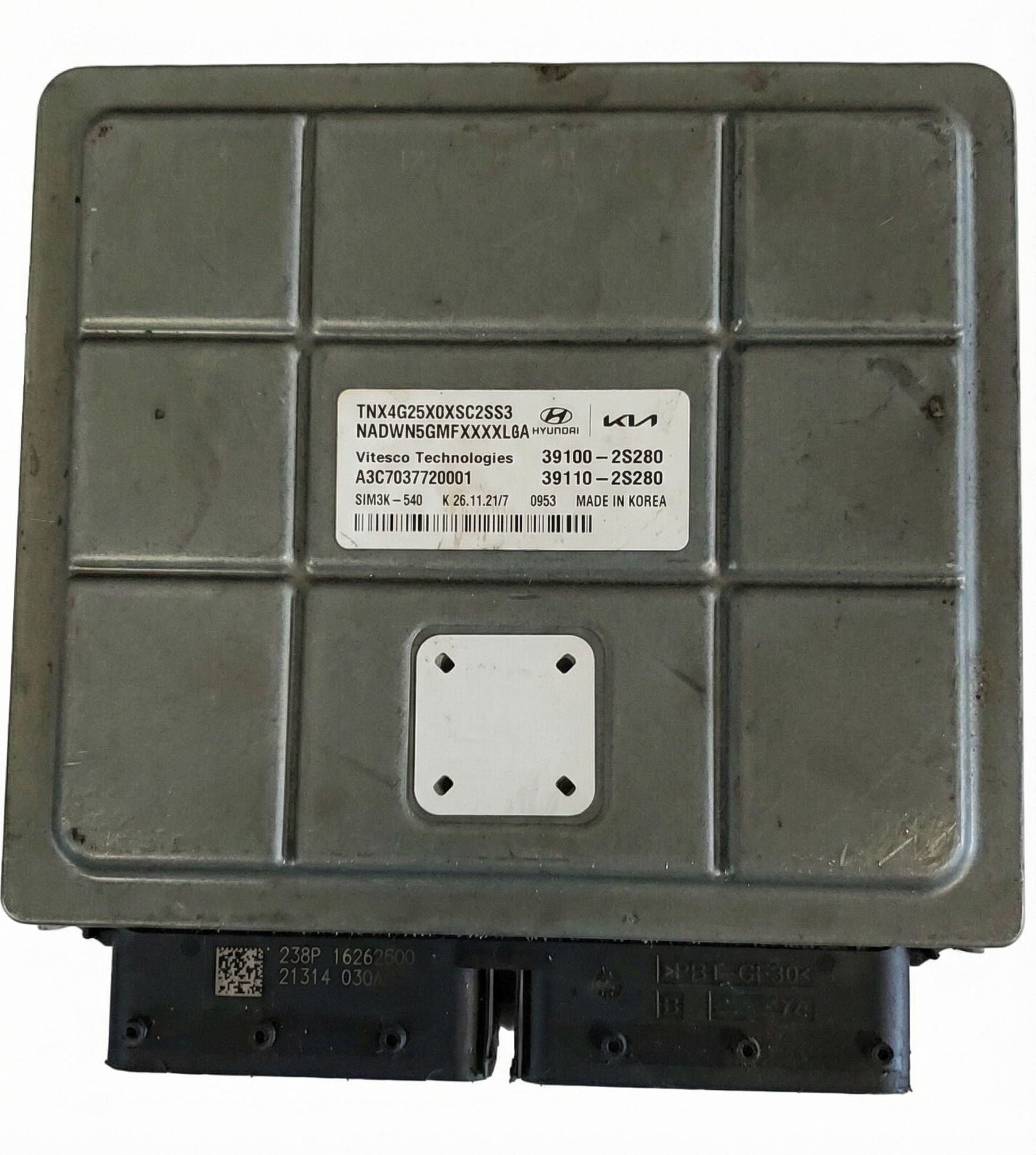
Heads up: Part numbers are extremely specific. A PCM from a 2.0L will not work in a 1.6T. A unit for a push-button start vehicle may not work in a vehicle with a conventional key. Always match the OEM part number on the original module exactly. Examples: 39133-2ETA9 (2016-18 2.0L), 39131-2E326 (2020-21 2.0L), 39110-2S341 (2024 2.5L).
Model Year Variations Within This Range
- 2016-2021 (TL) vs 2022-2025 (NX4): The PCM hardware and part numbers are entirely different due to changes in engine offerings (e.g., 2.0L/2.4L in TL vs 2.5L in NX4) and electrical architecture. Diagnostic tools may also differ, with newer models requiring the VCI-2 interface for the GDS system.
Diagnostic Flowchart
Other Known Issues on This Vehicle
Issues unrelated to this code that are worth knowing about as an owner of this generation:
- Theta-II GDI Engine Failure 🔴 High — Widespread across multiple model years, particularly 2016-2018. Can occur at various mileages, often preceded by a knocking sound. A class-action lawsuit and multiple recalls were issued. (Ref: NHTSA Recalls 15V-568, 17V-226; Class-action settlement provided extended warranties.)
- Excessive Oil Consumption 🟠 Medium — Common on 2.0L and 2.4L engines. Owners report needing to add a quart of oil every 1,000-2,000 miles. Often linked to piston ring or PCV valve issues. (Ref: Multiple TSBs exist for oil consumption testing, but no single recall covers all affected vehicles.)
- 7-Speed Dual-Clutch Transmission (DCT) Hesitation and Failure 🔴 High → Shop Transmission Assembly — Affects models with the 1.6L Turbo engine (primarily 2016-2018). Symptoms include shuddering, hesitation from a stop, and complete failure to engage gears. (Ref: Hyundai issued a recall (NHTSA 16V-628) to reprogram the Transmission Control Module (TCM) logic, but many owners still report issues.)
- ABS Module Fire Risk 🔴 High — Affects 2016-2021 models. An electrical short can occur within the ABS module, creating a fire risk even when the vehicle is parked and turned off. (Ref: Recall 195 (NHTSA 20V-520) involves installing a new, lower-amperage fuse kit to protect the circuit.)
Used vs. New Parts: Buying Guide for This Vehicle
When a used part is the smart pick: A used OEM Powertrain Control Module (PCM) is a cost-effective option if, and only if, the OEM part number on the donor unit is an exact match to the original. This is not a plug-and-play fix; you must have a confirmed plan and budget for a professional with a Hyundai GDS or equivalent J2534 tool to program the used module to your vehicle's VIN and immobilizer system.
Donor-vehicle mileage cap: roughly under 150000 miles for the part to have meaningful remaining life.
What to inspect on the donor part:
- Verify the OEM part number on the sticker matches your original module EXACTLY.
- Inspect the connectors for any bent, broken, or corroded pins.
- Check the module's case for any signs of physical damage, pry marks, or water intrusion.
- If possible, get the VIN of the donor car to verify its original configuration (engine, transmission, etc.).
OEM-only on this vehicle (don't cheap out):
- Powertrain Control Module (PCM): While remanufactured units from specialists exist, there are no true 'aftermarket' new PCMs. Stick with a used OEM unit or a new one from the dealer.
Aftermarket brands forum-validated for this vehicle:
- For related fixes: Bosch, Interstate, or DieHard for batteries; quality brands like Denso or Valeo for alternators.
Brands owners have reported issues with on this vehicle:
- Avoid generic, unbranded 'chips' or tuners that claim to boost performance, as they are a known cause of software corruption that can lead to a P0604 code.
Real Owner Stories
Aggregated from forums and TSBs cited above. Mileages and costs reflect what owners reported in those sources.
2025 Hyundai Tucson SEL
Symptoms: Sudden breakdown and no-power situation on the highway; vehicle threw a P060500 code (ROM error).
What fixed it: The dealer diagnosed an internal failure and replaced the entire PCM.
Source hint: Reddit - r/HyundaiTucson - 'New 2025 Tucson SEL | Sudden breakdown and DTC code'
2017 Hyundai Tucson
Symptoms: The infotainment system entered a boot loop with an 'Error Code 604' displayed on the screen.
What fixed it: The issue occurred during an attempted head unit software update.
Source hint: Reddit - r/Hyundai - '2017 Tucson - Software Update Failed (Error Code 604)'
Related OBD-II Codes
Frequently Asked Questions
Does Recall 195 apply to my 2016-2021 Hyundai Tucson, and could it be related to my P0604 code?
I have a 2017 Tucson and saw 'Error Code 604' during a software update. Is this the same as P0604?
Can a weak battery really trigger a P0604 code on a 2016-2025 Tucson?
Where is the PCM located on my Tucson if I need to check the connections?
Is there a specific engine monitoring update I should know about for my Hyundai?
Will I need to program a new PCM if I replace it to fix P0604?
Helpful Videos


![What is P0604 Engine Code [Quick Guide]](https://img.youtube.com/vi/gPBoZ1Gfyv4/mqdefault.jpg)
We Have This Part in Stock

The information in this article is provided for general reference and educational purposes only. Vehicle specifications, procedures, and part compatibility can vary by production date, trim level, and region. Always consult your vehicle's factory service manual and verify part numbers before purchasing or performing repairs. Safety-critical components such as airbags, seat belts, and braking systems should be installed by a qualified professional.
- Hyundai Tucson:
- 🧭 Diagnostic Flowchart
- 🎬 Helpful Videos
- 🛍️ Shop This Part
- What's Unique About the 2016-2025 Hyundai Tucson
- Symptoms You May Notice
- Most Likely Causes
- Rare But Worth Checking
- Diagnosis Steps
- Parts You'll Likely Need
- Related Codes That Often Appear With This One
- Technical Service Bulletins (TSBs) & Recalls
- Platform-Specific Known Issues
- Mechanic-Grade Diagnostic Values
- Scan Tool Commands That Help
- Wiring & Ground Locations
- OEM Part Supersession History
- Model Year Variations Within This Range
- Other Known Issues on This Vehicle
- Used vs. New Parts: Buying Guide for This Vehicle
- Real Owner Stories
- 2025 Hyundai Tucson SEL
- 2017 Hyundai Tucson
- Related OBD-II Codes
- Frequently Asked Questions
- 🎟️ Get 5% Off