

P0604 on 2010-2013 Mazda 3: Internal Memory Error Causes and Fixes
This code indicates a PCM memory error, but the most likely cause is a weak battery or bad electrical connections. Before suspecting a costly PCM failure, test the battery and clean all power and ground connections. A new battery costs around $150-$250 and is a common fix.
- P0604 is a PCM memory error, but it's usually caused by a bad battery or poor electrical connections, not a bad PCM.
- Always start diagnosis by load-testing the battery and cleaning all main power and ground connections.
- Do not replace the expensive Powertrain Control Module (PCM) unless all other electrical possibilities have been professionally ruled out.
- Driving with this code is risky as the engine could stall at any time.
What's Unique About the 2010-2013 Mazda 3
For the second-generation Mazda 3 (2010-2013), the P0604 code is more often an electrical issue rather than a true PCM failure. These vehicles are now old enough that their original batteries and ground connections are common failure points. A voltage drop during engine cranking is a very common trigger for this specific code, leading many owners to mistakenly suspect a more expensive computer problem. Forum discussions frequently point to a new battery resolving the code, especially if the battery is over three years old. Additionally, corroded ground points, particularly the main chassis ground under the battery tray and the passenger-side engine mount ground, are known culprits for causing erratic electrical behavior that can trigger this code.
Symptoms You May Notice
- Check Engine Light is on
- Engine may stall unexpectedly, especially at idle or when stopping
- Hard starting or no-start condition
- Rough idle or hesitation during acceleration
- Harsh or erratic automatic transmission shifting
- Other warning lights, such as for the anti-lock brakes (ABS) or traction control, may illuminate
- Failure to pass emissions testing due to OBD-II monitor issues
- Replacing the PCM before testing the battery and checking grounds. An unstable power supply is the most common cause of P0604, and replacing the computer will not fix it.
Most Likely Causes
- Weak or Failing Battery 🔴 High Probability → Shop Vehicle Battery As these vehicles age, the original or replacement batteries lose their ability to hold a sufficient charge, especially under the load of starting the engine. A voltage drop below the required threshold during cranking is a very common trigger for P0604.
How to confirm: Have the battery load-tested at an auto parts store. A simple voltage check is not enough. A healthy battery should read ~12.6V at rest and maintain voltage above 10V while cranking. A Reddit user with a similar Mazda platform fixed a recurring communication code by replacing a 3-year-old battery that tested with low Cold Cranking Amps (250CCA on a 600CCA battery) despite having enough power to start the car.
Typical fix: Replace the vehicle's 12V battery.
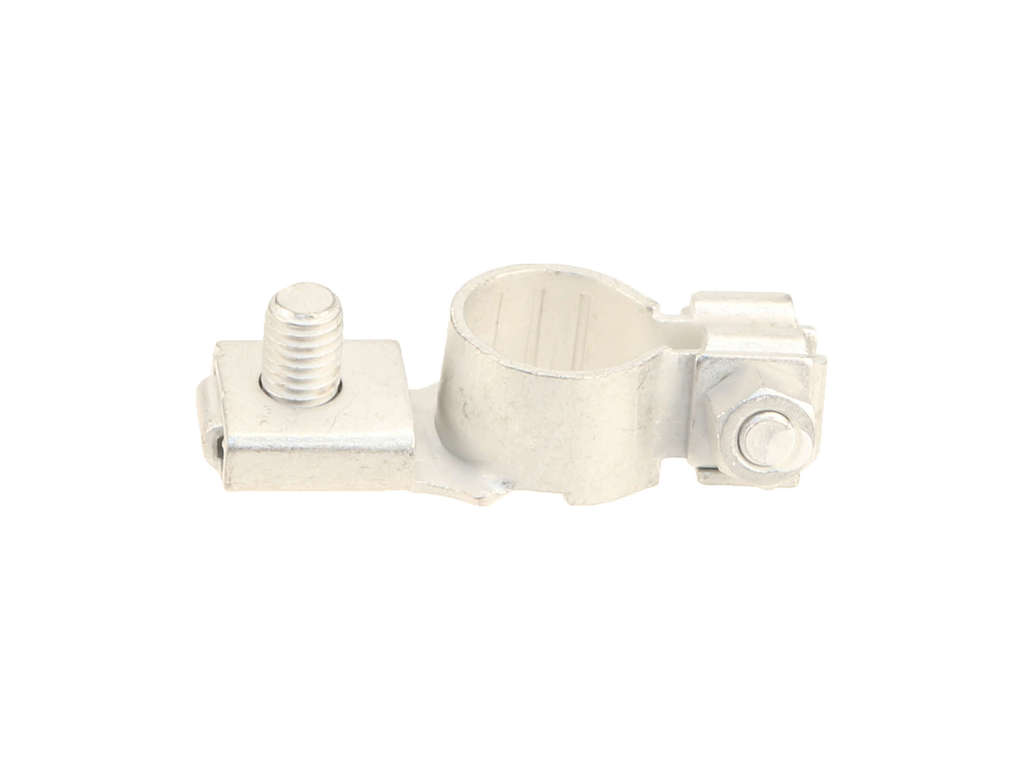
Est. part cost: $150-$250 - Corroded or Loose Battery Terminals / Ground Straps 🟡 Medium Probability → Shop Engine Ground Strap Over time, moisture and atmospheric exposure cause corrosion on battery terminals and chassis ground points, creating electrical resistance that can mimic a weak battery. Key ground points on this platform are the main chassis ground (often under the battery tray), the passenger-side engine mount, and connections on the transmission housing.
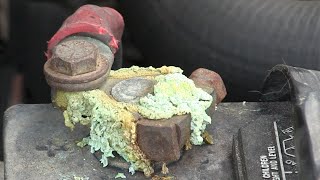
How to confirm: Visually inspect the battery terminals for white or greenish crust. Follow the main negative cable to the chassis and the engine-to-chassis ground strap for signs of corrosion or looseness. A wiring diagram shows key grounds at the passenger motor mount and front of the transmission. A user on an NC4x4 forum fixed a low voltage code by thoroughly cleaning heavily corroded battery terminals.
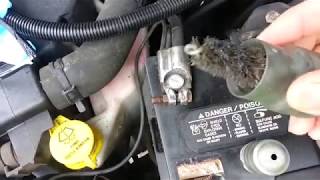
Typical fix: Disconnect the battery, thoroughly clean the terminals, cable ends, and all chassis/engine ground contact points with a wire brush until they are bright metal. Apply dielectric grease to prevent future corrosion. 🎬 See how to clean battery terminals and grounds
Est. part cost: $5-$15 for cleaning tools and grease - Failing Alternator / Charging System ⚪ Low Probability → Shop Alternator The alternator provides power while the engine is running. If it fails, it can cause low voltage or voltage spikes that corrupt the PCM's memory.
How to confirm: With the engine running, test the voltage at the battery terminals. It should be stable, between 13.5 and 14.8 volts. If it's too low, too high, or fluctuates wildly, the alternator is likely faulty.
Typical fix: Replace the alternator.
Est. part cost: $200-$400 - Internal PCM Failure ⚪ Low Probability While less common, the PCM can fail internally due to age, heat cycles, or voltage spikes. Water intrusion can also damage the PCM; one owner reported a mechanic found water damage on a salvage-yard PCM that was causing issues.
How to confirm: This is a diagnosis of exclusion. If the battery, connections, and charging system are all confirmed to be in perfect working order and the code returns immediately after being cleared, the PCM is the likely culprit. Mazda's official diagnostic procedure for P0604 leads to PCM replacement as the final step if the code persists after being cleared.
Typical fix: Replace the Powertrain Control Module. This requires programming the new unit to the vehicle's VIN and immobilizer system, which typically requires dealer-specific tools (Mazda M-MDS).
Est. part cost: $600-$1200
Rare But Worth Checking
- Blown PCM-related Fuse:
- Damaged Engine Wiring Harness: → Shop Engine Wiring Harness
Diagnosis Steps
- Read all stored fault codes. Address any other power or communication-related codes first.
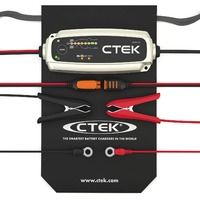
- Fully charge and load test the 12V battery. Replace if it fails the load test, regardless of its resting voltage or age. A battery under 4 years old can still be faulty.
- Inspect and clean the battery terminals and cable ends until they are bright metal. Ensure connections are tight.
- Inspect the main ground points. Key locations include the negative battery cable connection to the chassis, the ground strap under the battery tray, and the ground on the passenger-side engine mount. Ensure they are clean, tight, and free of corrosion.
- With the engine running, use a multimeter to check the alternator's output voltage at the battery. It should be stable, between 13.5V and 14.8V.
- Check for any blown fuses related to the PCM/ECU in the engine bay and interior fuse panels.
- If all electrical tests pass, clear the P0604 code.
- Drive the vehicle to see if the code returns. If it returns quickly, check for any available PCM software updates from a Mazda dealer, as a reflash can sometimes resolve software corruption.
- Inspect the engine wiring harness near the starter motor for chafing, especially on 2010 models, per recall 5309D. 🎬 Watch: Diagnosing a 2010 Mazda 3 no-start and PCM issue
- If no updates are available and all previous steps have been exhausted, replacement of the PCM is the final step. This must be followed by immobilizer programming by a dealer or a specialized shop.
Parts You'll Likely Need
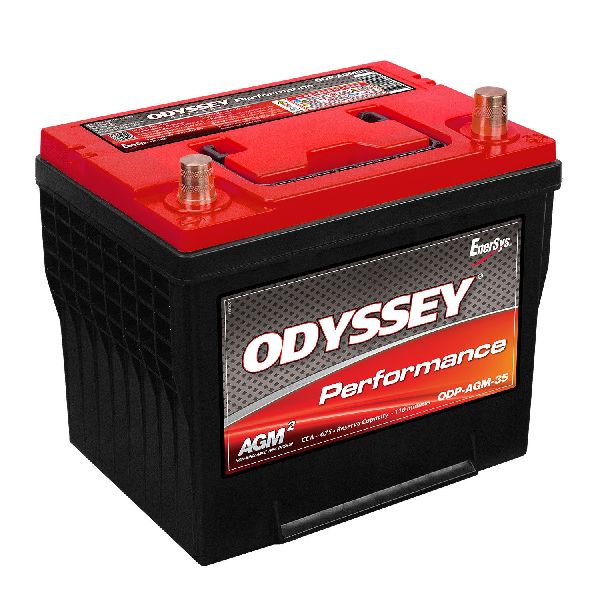
- 12V Automotive Battery — A weak battery is the most frequent trigger for a false P0604 code on this vehicle due to voltage drops during startup.
Trusted brands: Bosch, Duralast, DieHard, Interstate
OEM price range: $200-$300
Aftermarket price range: $150-$250 - Powertrain Control Module (PCM)
(OEM #L539-18-881D (Example for 2010 2.5L))— This is the part that is replaced as a last resort when all electrical issues are ruled out and the code points to a true internal hardware failure.
Trusted brands: Mazda (OEM), Cardone (Remanufactured)
OEM price range: $800-$1200
Aftermarket price range: $250-$600
Related Codes That Often Appear With This One
- U0100 — If the PCM is malfunctioning or has unstable power, it can cause a loss of communication with other modules on the vehicle's network.
- P0602 — This code indicates a 'Control Module Programming Error' and can appear with P0604 after a failed software update, battery replacement, or significant voltage fluctuation.
Technical Service Bulletins (TSBs) & Recalls
- Recall 09V142000 (Mazda 5309D): For some 2010 Mazda 3 models, addresses a potential for the engine wiring harness to chafe against the starter motor, which could cause a short circuit and engine control malfunction.
Mechanic-Grade Diagnostic Values
- Battery Voltage (Key Off) — expected: ~12.6V or higher. Failure: Below 12.4V indicates a discharged or failing battery.
- Battery Voltage (During Cranking) — expected: Should not drop below 9.6V. Failure: A drop below 9.6V indicates a weak battery unable to sustain the required voltage, a common trigger for P0604.
- Alternator Output Voltage (Engine Running) — expected: Stable between 13.5V and 14.8V. Failure: Voltage below 13.5V or above 14.8V, or fluctuating wildly, points to a faulty alternator or voltage regulator.
- PCM Ground Circuit Resistance — expected: Below 0.1 Ω. Failure: Resistance higher than 0.1 Ω indicates a poor ground connection, which can cause voltage instability at the PCM.
Scan Tool Commands That Help
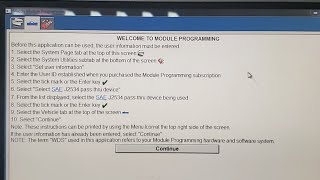
- Mazda M-MDS (Mazda Modular Diagnostic System): Module Reprogramming / Programmable Module Installation (PMI) — This function is used to flash the PCM with updated software, which can sometimes resolve internal logic errors causing P0604. It is also a mandatory first step when installing a new PCM to load vehicle-specific data.
- Mazda M-MDS (or equivalent high-end tool like Autel MaxiSys): Immobilizer System Parameter Reset / Key Programming — This is a mandatory security function required after replacing the PCM. It pairs the new/used PCM with the vehicle's immobilizer module and keys. Without this step, the car will not start due to an anti-theft error.
- Mazda M-MDS: KOEO/KOER Self Test — After clearing the DTC, performing a Key-On-Engine-Off or Key-On-Engine-Running self-test can help verify if the internal RAM malfunction is immediately detected again, confirming a hard fault.
Wiring & Ground Locations
- Main Engine Ground — On the passenger-side, a main lug is bolted onto the aluminum intake manifold bracket, right next to the engine mount.. This point provides direct metal-to-metal contact with the cylinder head and subframe, making it a critical ground path. Corrosion or looseness here can cause unstable voltage to the PCM.
- Chassis Ground — Under the battery tray. Another key ground runs from the negative battery terminal directly to the chassis.. This is a primary ground point for the entire electrical system. High resistance here affects all modules, including the PCM, and can trigger low-voltage codes like P0604.
- Transmission Ground — A ground point is located on the transmission housing.. Ensures the transmission case is properly grounded to the chassis, which is important for the stability of sensors and modules mounted on or near it.
- PCM Location — Located in the engine compartment, at the rear of the engine bay.. Knowing the physical location is necessary for inspecting the PCM connectors for corrosion, damage, or water intrusion, and for performing pin-out voltage tests.
Real Owner Repair Stories
- Mazda Forum User (2004 Mazda 3 1.6L (European model, similar immobilizer system)) — Suspected faulty ECU/PCM.
❌ Tried (didn't work) The owner purchased a used PCM from eBay.
✅ What actually fixed it A workshop mechanic advised that the used PCM might not be programmable if it wasn't 'reset' before removal from the donor car. A moderator clarified that using the Mazda M-MDS, a technician should be able to transfer the necessary data from the old PCM to the replacement and perform the immobilizer key programming, making the used part viable. This highlights that the dealer tool is the key to success.
OEM Part Supersession History
L539-18-881D→L539-18-881J (example of revision)— Mazda often releases updated part numbers to address hardware revisions or software calibration changes. For example, a software update from version 'D' to 'J' indicates multiple revisions.
Heads up: PCMs are highly specific to the engine, transmission, and model year. A PCM from a 2.0L will not work in a 2.5L. A PCM from a 2012+ Skyactiv model is not compatible with a 2010-2011 non-Skyactiv model. Always match the part number or verify by VIN.
Model Year Variations Within This Range
- 2012-2013: Starting in 2012, Mazda introduced the 2.0L Skyactiv-G engine alongside the existing 2.0L MZR and 2.5L MZR engines. The PCM for a Skyactiv engine is completely different and not interchangeable with the non-Skyactiv (MZR) engines. Diagnosis and part numbers must be specific to the engine type.
Diagnostic Flowchart
Other Known Issues on This Vehicle
Issues unrelated to this code that are worth knowing about as an owner of this generation:
- Melting/Sticky Dashboard 🟠 Medium — Very common, especially in warmer climates. Can cause dangerous windshield glare. (Ref: Mazda issued a warranty extension (10 years/unlimited miles) for 2010 models and a separate SSP (SSPA9) for 2010-2013 models for warping.)
- Premature Clutch Failure (Manual Transmission) 🔴 High — Widespread complaints of clutches failing well under 100,000 km, sometimes as low as 12,000 miles. Often blamed on driver error by dealers. (Ref: A class-action lawsuit was filed regarding this issue for 2010-2015 models. TSB CSP09 offered a reimbursement program for some 2.5L models.)
- Failing Passenger-Side Engine Mount 🟠 Medium — Extremely common failure item. The hydraulic mount leaks fluid and collapses, causing significant vibration at idle and clunking noises. (Ref: TSB 01-013/13 was issued for a squeaking noise from the rear mount, but the primary failure is the passenger-side mount.)
- Broken Seat Height Lifter Links 🔴 High — Common enough to trigger a recall. The driver's seat may suddenly incline or feel loose. (Ref: Recall 0917B (NHTSA ID 17V098000) was issued for 2010-2011 models to reinforce or replace the seat adjuster unit.)
Used vs. New Parts: Buying Guide for This Vehicle
When a used part is the smart pick: A used PCM from a salvage yard is a cost-effective option ONLY if you have access to a Mazda dealership or a specialized independent shop with the proper M-MDS diagnostic tool. The part is useless without the ability to perform the immobilizer parameter reset.
Donor-vehicle mileage cap: roughly under 80000 miles for the part to have meaningful remaining life.
What to inspect on the donor part:
- Verify the part number on the used PCM exactly matches the original.
- Ensure the donor vehicle had the same engine (2.0L MZR, 2.5L MZR, or 2.0L Skyactiv) and transmission type (manual or automatic).
- Inspect the connectors for any bent, corroded, or pushed-out pins.
- Avoid any units with signs of water damage, physical impact, or a burnt smell.
OEM-only on this vehicle (don't cheap out):
- Powertrain Control Module (PCM) - While remanufactured units from brands like Cardone exist, OEM (new or used) is often recommended for best compatibility. The critical factor is the subsequent programming, not just the part itself.
Aftermarket brands forum-validated for this vehicle:
- Flagship One (FS1)
- Cardone (Remanufactured)
Brands owners have reported issues with on this vehicle:
- Unbranded, no-name programmers or chip tuners from online marketplaces, as they are a potential cause of software corruption leading to P0604.
Real Owner Stories
Aggregated from forums and TSBs cited above. Mileages and costs reflect what owners reported in those sources.
2014 Mazda 3 (3rd Gen)
Symptoms: Recurring communication code; battery was 3 years old and tested with only 250CCA despite being rated for 600CCA.
What fixed it: Replacing the 3-year-old battery that had low Cold Cranking Amps.
Source hint: Reddit r/mazda3 - A user with a P0600 code on a similar platform (3rd gen Mazda 3)
2010-2013 Mazda 3
Symptoms: Low voltage code and electrical issues.
What fixed it: Thoroughly cleaning heavily corroded battery terminals.
Source hint: NC4x4 forum
2010-2013 Mazda 3
Symptoms: Internal PCM issues and memory errors.
What fixed it: Replacing the PCM after finding water damage on a salvage-yard unit.
Source hint: Internal PCM Failure section
Related OBD-II Codes
Frequently Asked Questions
Could the engine wiring harness recall for the 2010 Mazda 3 be related to my P0604 code?
Is there a specific ground point on the 2010-2013 Mazda 3 I should check for this code?
Does Mazda have a specific diagnostic procedure for P0604 on this vehicle?
Can I replace the PCM myself on my 2012 Mazda 3?
Could a battery that still starts my car be the cause of P0604?
Are there any software updates for the PCM that might fix this?
Helpful Videos
![How to [EASILY] Replace the Battery - Mazda 3 (2010-2013)](https://img.youtube.com/vi/xgkcKMSob7k/mqdefault.jpg)

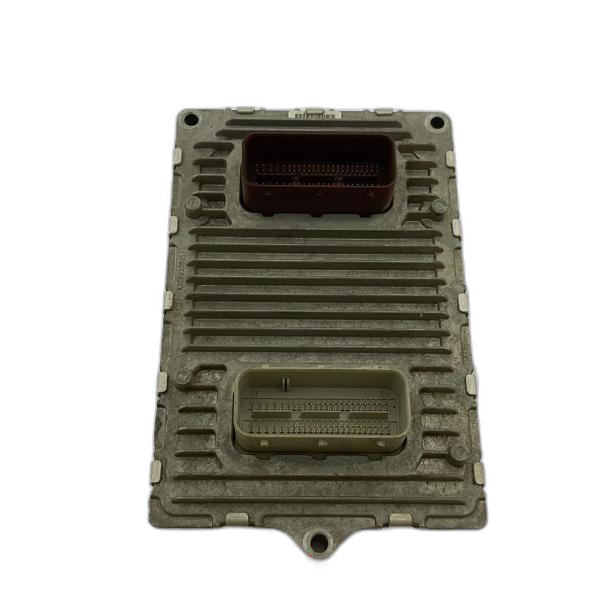
Used OEM Parts in Stock
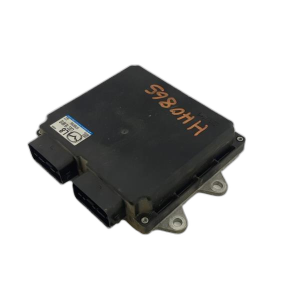
New Aftermarket Parts Available


The information in this article is provided for general reference and educational purposes only. Vehicle specifications, procedures, and part compatibility can vary by production date, trim level, and region. Always consult your vehicle's factory service manual and verify part numbers before purchasing or performing repairs. Safety-critical components such as airbags, seat belts, and braking systems should be installed by a qualified professional.
- Mazda 3:
- 🧭 Diagnostic Flowchart
- 🎬 Helpful Videos
- 🛍️ Shop This Part
- What's Unique About the 2010-2013 Mazda 3
- Symptoms You May Notice
- Most Likely Causes
- Rare But Worth Checking
- Diagnosis Steps
- Parts You'll Likely Need
- Related Codes That Often Appear With This One
- Technical Service Bulletins (TSBs) & Recalls
- Mechanic-Grade Diagnostic Values
- Scan Tool Commands That Help
- Wiring & Ground Locations
- Real Owner Repair Stories
- OEM Part Supersession History
- Model Year Variations Within This Range
- Other Known Issues on This Vehicle
- Used vs. New Parts: Buying Guide for This Vehicle
- Real Owner Stories
- 2014 Mazda 3 (3rd Gen)
- 2010-2013 Mazda 3
- 2010-2013 Mazda 3
- Related OBD-II Codes
- Frequently Asked Questions
- 🎟️ Get 5% Off