

P0604 on 2007-2010 Pontiac G6: Internal Memory Error Causes and Fixes
On a 2007-2010 Pontiac G6, code P0604 typically indicates an internal Random Access Memory (RAM) failure in the Transmission Control Module (TCM). Before replacing the module, thoroughly test the battery under load and inspect all TCM power and ground connections, as voltage issues are a common trigger. The most frequent fix is replacing the externally-mounted T42 TCM, which requires professional programming. Expect costs to range from $400 to over $950 depending on the part and labor.
- P0604 on a Pontiac G6 is a serious code that most often points to a faulty Transmission Control Module (TCM), not the main engine computer.
- Before condemning the module, always perform a load test on the battery and thoroughly inspect all power and ground connections, especially the main ground on the transmission stud. Low or unstable voltage is a very common cause for this code.
- Replacement of the TCM is not a simple DIY job; it requires professional programming to match the vehicle's VIN and security system.
- Check for other codes appearing alongside P0604, as GM has documented several related internal module faults that often appear together and can help confirm the TCM is the source.
What's Unique About the 2007-2010 Pontiac G6
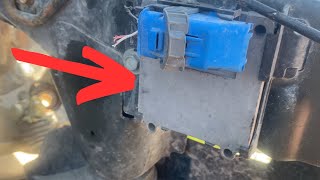
For the Pontiac G6 and its platform mates like the Chevy Malibu and Saturn Aura, the P0604 code is frequently associated with the Transmission Control Module (TCM) rather than the main Engine Control Module (ECM). General Motors issued TSBs (PIP4653E and 05-06-04-060A) acknowledging that this code, along with several other internal module faults, can appear in the TCM. On many G6 models, the TCM is a T42 controller located on the front of the transmission, making it externally accessible, unlike the internal TEHCM units found in some other GM vehicles which require removing the transmission pan. This makes it crucial to diagnose the transmission system first, rather than immediately suspecting the main engine computer.
Diagnostic Flowchart
Tap your situation to follow the diagnostic path that matches what you're seeing on this vehicle.
Symptoms You May Notice
- Check Engine Light is on
- Transmission may shift harshly, erratically, or with delays
- Vehicle may stall or have difficulty starting, sometimes a no-crank condition
- Transmission may get stuck in one gear (limp mode)
- Reduced fuel economy
- ABS or Traction Control lights may illuminate simultaneously
- Loss of communication with the TCM via a scan tool
- Replacing the Engine Control Module (ECM) when the fault is in the Transmission Control Module (TCM).
- Replacing transmission solenoids or other internal transmission parts when the issue is electronic and external to the transmission case.
- Replacing the TCM without first performing a thorough battery, charging system, and ground circuit inspection.
Most Likely Causes
- Transmission Control Module (TCM) Internal Failure 🔴 High Probability → Shop Transmission Assembly As cited in GM TSBs PIP4653E and 05-06-04-060A, the T42 TCM is a known point of failure for this code on this platform due to factors like heat and vibration in the engine bay.
How to confirm: After ruling out power/ground issues, a professional scan tool must be used to confirm the P0604 code is stored in the TCM. If the code returns immediately after clearing (even without starting the engine), the module's internal RAM is likely damaged.
Typical fix: Replace the Transmission Control Module and program it to the vehicle's VIN using GM-specific tools.
Est. part cost: $175-$600 - Low Battery Voltage or Poor Connection 🟡 Medium Probability → Shop Vehicle Battery All control modules, including the TCM, are sensitive to voltage. Voltage fluctuations during cranking or due to a weak battery, failing alternator, or poor ground connections can corrupt the temporary memory and trigger a false P0604 code.
How to confirm: Perform a full battery and charging system test. This includes a load test on the battery, not just a simple voltage check. Voltage should be above 12.4V engine off and 13.5V-14.5V running. Clean and tighten battery terminals and check the main power and ground connections to the chassis, engine block, and TCM. A voltage drop test on the TCM's power and ground circuits is the definitive test.
Typical fix: Charge or replace the battery. Clean, tighten, or replace corroded battery terminals and ground straps.
Est. part cost: $100-$250 - Wiring or Connector Issues at the TCM ⚪ Low Probability The TCM is located in the engine bay on the transmission, where it is exposed to heat, moisture, and vibration that can degrade wiring or connectors over time, leading to high resistance or intermittent opens.
How to confirm: Visually inspect the TCM wiring harness and connectors for any signs of corrosion, moisture, backed-out pins, or physical damage. Perform a 'wiggle test' on the harness while monitoring module communication or voltage.
Typical fix: Repair the damaged wiring or clean/replace the connectors. Ensure the connector is fully seated and the locking tab is engaged.
Est. part cost: $10-$100
Rare But Worth Checking
- Engine Control Module (ECM) Failure: → Shop Engine Control Module (ECM) While TSBs point to the TCM, the P0604 code is a generic internal memory error that can technically occur in any module, including the ECM. If TCM replacement doesn't solve the issue, the ECM could be the culprit, though this is much less common for this specific platform.
- Corrupted Software / Failed Reflash: A failed software update or a random glitch can corrupt the module's memory, triggering a P0604 code even if the hardware is physically sound. Sometimes, attempting to reflash the existing TCM with the latest GM calibration can resolve the issue, and should be considered before replacement.
Diagnosis Steps
- Scan for all diagnostic trouble codes. Use a professional scan tool to verify that P0604 is set in the Transmission Control Module (TCM) and not another module.
- Check and document any other codes present.
- Perform a comprehensive battery and charging system test, including a load test on the battery. Ensure voltage is stable and within spec (over 12.4V off, 13.5-14.5V running).
- Inspect and clean all battery terminals and chassis/engine ground connections. A common ground point for the G6 TCM is on a transmission stud under the throttle body; inspect it for corrosion or looseness. 🎬 Watch: How to identify and fix a bad ground connection.
- Attempt to clear the code. If it returns immediately without the engine running, it strongly suggests a hard internal fault in the module.
- Visually inspect the wiring harness and connectors at the TCM for corrosion, damage, or loose pins. The TCM is typically located on the front of the transmission. 🎬 See this walkthrough on TCM location and replacement steps.
- With a wiring diagram, perform a voltage drop test on the TCM's main power and ground pins to ensure it's receiving a clean, stable power supply.
- If a professional GM scan tool is available, check for any available software updates (reflashes) for the TCM, as recommended in TSB PIP4653E. 🎬 Watch: Troubleshooting common TCM programming and communication failures.
- If all power, grounds, and wiring are confirmed good and the code persists, the TCM is faulty and should be replaced and programmed.
Parts You'll Likely Need
- Transmission Control Module (TCM)
(OEM #24252114)— This is the most common point of failure for a P0604 code on a Pontiac G6, as documented by manufacturer TSBs. It is the T42 controller for many applications.
Trusted brands: ACDelco, GM Genuine Parts
OEM price range: $250-$600
Aftermarket price range: $175-$400
Related Codes That Often Appear With This One
- P0601 — This is an Internal Control Module Memory Check Sum Error, another internal fault often cited in the same TSBs (PIP4653E).
- P0603 — This indicates an Internal Control Module Keep Alive Memory (KAM) Error, related to memory retention and often triggered by power interruptions.
- P062F — This is an Internal Control Module EEPROM Error, another related internal memory fault mentioned in TSB PIP4653E.
- P1621 — This code relates to Control Module Long Term Memory Performance and is also listed in the same TSBs as a potential TCM fault.
- U0100 — Lost Communication With ECM/PCM. A failing TCM can sometimes disrupt the CAN bus network, causing communication codes with other modules.
Technical Service Bulletins (TSBs) & Recalls
- PIP4653E: Addresses multiple DTCs, including P0604, set in the Transmission Control Module.
- 05-06-04-060A: Informs technicians that codes like P0604 can be found in various control modules.
Platform-Specific Known Issues
- TSB #PIP4653E notes that DTCs P0601, P0603, P0604, P062F, or P1621 may be stored in the Transmission Control Module (TCM) and may require a software update or module replacement. The bulletin specifically instructs technicians to verify the code is set in the TCM before proceeding.
- TSB #05-06-04-060A is an informational bulletin that communicates that P0604 and other internal fault codes can be shared across multiple modules, reinforcing the need for careful diagnosis to identify which module is actually at fault.
- Real-World Repair Story: Bad Ground: A user on a popular forum described a no-start condition on a Pontiac G6 that was initially diagnosed as a bad starter or neutral safety switch. After extensive testing, the problem was traced to a corroded ground wire in the harness connector for the park/neutral switch, which shares a ground circuit with the TCM. Wiggling the harness would allow the car to start temporarily. The ultimate fix was repairing the bad ground pin, not replacing any modules. This highlights the critical importance of checking ground circuits before replacing expensive parts.
Mechanic-Grade Diagnostic Values
- CAN Bus Network Resistance — expected: Approximately 60 Ohms. Failure: A reading of ~120 Ohms indicates a break in the circuit or a faulty terminating resistor in one of the main control modules (ECM or BCM).
- TCM Ground Circuit Voltage Drop — expected: Less than 0.1 Volts. Failure: Voltage readings significantly higher than 0.1V (or reading battery voltage, e.g., 12V) on a ground wire indicate high resistance or an open in the ground circuit. This is a critical test before condemning the TCM.
Scan Tool Commands That Help
- GM Techline Connect (formerly TIS2Web/SPS): Replace and Reprogram ECU — This function is mandatory when installing a new or used Transmission Control Module (TCM). It downloads the correct VIN-specific software and calibrations to the module, allowing it to communicate with other vehicle systems.
- GM Tech 2 / GDS2: Transmission Adaptive Pressure Reset — After a new TCM is programmed, this function should be performed to clear learned shift adapts. This allows the TCM to begin a fresh learning process for clutch apply pressures, ensuring smooth shifts.
Wiring & Ground Locations
- G105 / G107 — On a transmission case stud, located under the throttle body in the engine bay.. This is a critical ground point shared by the TCM, ECM, Park/Neutral Position Switch, and other sensors. Corrosion or looseness at this stud is a well-documented cause of no-start conditions, communication loss with the TCM (U0100), and can trigger false P0604 codes due to unstable power.
- G109 — Located on the left front of the engine compartment.. Serves as another ground point for the TCM and other engine management components. A wiring diagram for a 2009 G6 confirms the TCM utilizes this ground.
- TCM Main Connector (49-way) — Connected to the T42 TCM, which is mounted on the front of the transmission assembly.. This is the primary interface for all TCM power, ground, and data lines. Pins can back out or corrode, causing intermittent faults. A voltage drop test should be performed at the power and ground pins of this connector before replacing the module.
Real Owner Repair Stories
- YouTube channel 'ScannerDanner' (Pontiac G6 (year not specified, but within the 2007-2010 range)) — No-crank, no-start condition. Intermittent loss of communication with the TCM.
❌ Tried (didn't work) Initial diagnosis pointed towards a faulty Park/Neutral Position Switch or a bad TCM.
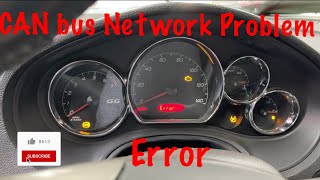
✅ What actually fixed it The root cause was a corroded ground wire for the Park/Neutral Position Switch at the shared G105 ground stud on the transmission. The wire had high resistance, causing the TCM to receive an incorrect signal and preventing the car from starting. The fix was to repair the corroded wire at the ground lug, not replace any modules. - YouTube channel 'A2Z automotive' (2007 Pontiac G6 3.5L) — No-crank, no-start, error message on the cluster, and communication problems between modules.
❌ Tried (didn't work) Scanning for codes showed communication loss.
✅ What actually fixed it The problem was traced to the main ground point on top of the transmission housing (G105/G107). Multiple ground wires in the loom had broken off from the ring terminal, severing the ground connection for the ECM and TCM. The fix involved cutting open the harness, cleaning the wires, and crimping on a new ring terminal to re-establish a solid ground.
Model Year Variations Within This Range
- 2007-2010: Pontiac G6 models could be equipped with either a 4-speed automatic (4T45E) or a 6-speed automatic (6T40/6T45, primarily on V6 models from 2008 onwards). While both use an external TCM, the specific module and its programming are different. The 4T45E is an evolution of the 4T40E, while the 6T40/6T45 (GF6) is a different family of transmissions. It is critical to ensure the replacement TCM is correct for the specific transmission type installed in the vehicle.
Helpful Videos


We Have This Part in Stock







The information in this article is provided for general reference and educational purposes only. Vehicle specifications, procedures, and part compatibility can vary by production date, trim level, and region. Always consult your vehicle's factory service manual and verify part numbers before purchasing or performing repairs. Safety-critical components such as airbags, seat belts, and braking systems should be installed by a qualified professional.
- Pontiac G6:
- 🧭 Diagnostic Flowchart
- 🎬 Helpful Videos
- 🛍️ Shop This Part
- What's Unique About the 2007-2010 Pontiac G6
- Symptoms You May Notice
- Most Likely Causes
- Rare But Worth Checking
- Diagnosis Steps
- Parts You'll Likely Need
- Related Codes That Often Appear With This One
- Technical Service Bulletins (TSBs) & Recalls
- Platform-Specific Known Issues
- Mechanic-Grade Diagnostic Values
- Scan Tool Commands That Help
- Wiring & Ground Locations
- Real Owner Repair Stories
- Model Year Variations Within This Range
- 🎟️ Get 5% Off