

P0604 on 2003-2010 Pontiac Vibe: Internal Memory Error Causes and Fixes
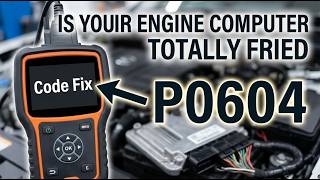
P0604 on a Pontiac Vibe indicates an internal memory error in the Powertrain Control Module (PCM). Before replacing the PCM, thoroughly test the battery and check all power/ground connections, as low voltage is a common trigger. For 2005-2008 models with the 1.8L 1ZZ-FE engine, a known PCM defect and recall is a very likely cause.
- P0604 indicates an internal memory error in the PCM, a serious fault that makes the vehicle unsafe to drive.
- For 2005-2008 models, immediately check if your vehicle's VIN is part of GM Safety Recall #10282 for a known faulty PCM.
- Before assuming the PCM is bad, ALWAYS test the battery and charging system. Low voltage during startup is the most common cause of a false P0604 code.
- PCM replacement is not a simple DIY job; it requires professional programming to sync with your vehicle's security systems.
What's Unique About the 2003-2010 Pontiac Vibe
The Pontiac Vibe is mechanically a Toyota Matrix, meaning it uses a highly reliable Toyota/Denso PCM. While durable, these units are not immune to failure. A significant issue for this platform is a safety recall (GM #10282, NHTSA #10V384000) for 2005-2008 models with the 1.8L 1ZZ-FE engine due to improperly manufactured PCMs that could fail, causing stalling. The defect involves potential cracks developing on solder points or varistors on the PCM's circuit board. For any Vibe in this year range, checking for this recall is a critical first step. Outside of the recall, these vehicles are also sensitive to low battery voltage, which can falsely trigger a P0604 code during engine cranking.
Generation note: This guide covers two generations of the Pontiac Vibe. The first generation (2003-2008) is based on the Toyota Corolla platform and used Toyota 1.8L engines (1ZZ-FE or 2ZZ-GE). The second generation (2009-2010) used Toyota 1.8L (2ZR-FE) or 2.4L (2AZ-FE) engines. A critical safety recall for faulty PCMs specifically affects certain 2005-2008 first-generation models with the 1.8L 1ZZ-FE engine and two-wheel drive.
Symptoms You May Notice
- Check Engine Light is on
- Engine may stall unexpectedly while driving or after starting
- No-start or hard-starting condition
- Harsh or erratic automatic transmission shifting
- Reduced engine performance or loss of power
- ABS or Traction Control lights may illuminate
- Engine runs rough or misfires
- Replacing the PCM without first testing the battery and charging system. An unstable power supply is the most common trigger for a false P0604 code.
Most Likely Causes
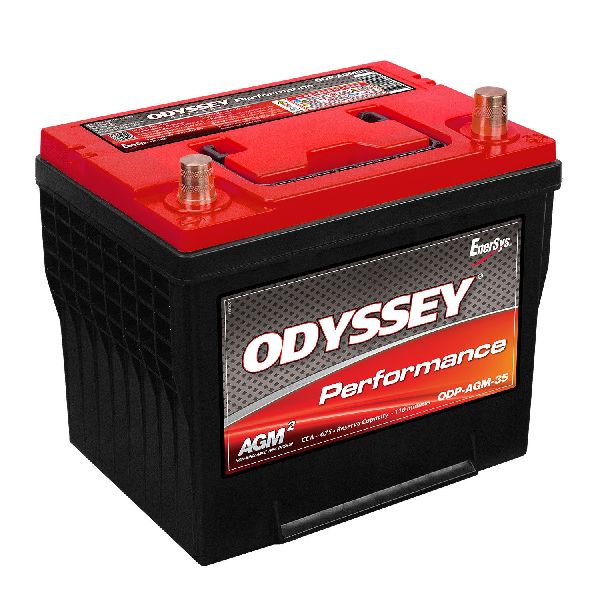
- Weak or Failing Battery / Unstable Voltage 🔴 High Probability → Shop Vehicle Battery Like most modern vehicles, the Vibe's PCM is sensitive to voltage. A weak battery's voltage can drop below the required threshold during cranking, corrupting the RAM self-test and triggering a false P0604 code. This is a very common trigger for this specific code across all makes.
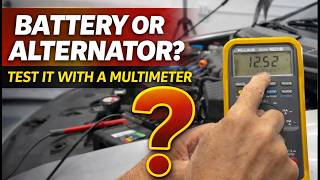
How to confirm: Perform a battery load test. 🎬 Watch: How to test your battery and alternator with a multimeter A healthy battery should read ~12.6V with the engine off and must not drop below 9.6V while cranking. With the engine running, alternator output should be stable between 13.7V and 14.7V.
Typical fix: Replace the vehicle's battery.
Est. part cost: $120-$250 - Defective Powertrain Control Module (PCM) 🟡 Medium Probability → Shop Engine Control Module (ECM) A safety recall was issued for 2005-2008 Vibe models with the 1.8L 2WD powertrain due to improperly manufactured PCMs that could develop cracks on the circuit board, leading to failure. This is a well-documented point of failure for this specific vehicle and engine combination.
How to confirm: First, check if the vehicle is part of recall #10282 by entering the VIN on the NHTSA website. If not, this is diagnosed by exclusion. If the battery, alternator, and all power/ground connections to the PCM are confirmed to be good and the code returns immediately after clearing, the PCM is likely faulty.
Typical fix: Replace the PCM. The new unit must be programmed to the vehicle's VIN. Some suppliers offer pre-programmed units.
Est. part cost: $200-$700 - Poor PCM Power or Ground Connections ⚪ Low Probability Over time, main power and ground connections can corrode or loosen, creating high resistance and causing voltage drops to the PCM that mimic a failing battery. This can cause random memory integrity issues.
How to confirm: Inspect and clean the battery terminals, main engine ground strap, and chassis ground points. Use a multimeter to check for voltage drop between the battery negative post and the PCM ground pins at the connector (should be less than 0.1V).
Typical fix: Clean all corrosion from terminals and connection points with a wire brush and ensure all connections are tight.
Est. part cost: $0-$10
Rare But Worth Checking
- Corrupted PCM Software: In some instances, a software glitch or a failed reprogramming attempt can cause a RAM error. A dealer or specialized shop may be able to 'reflash' the module with updated software, which should be considered before replacement if no hardware faults are found.
- Failing Alternator: → Shop Alternator An alternator with a faulty voltage regulator can produce voltage spikes or drops while running, which can corrupt the PCM's memory and trigger this code. A user on the GenVibe forums suspected a failing voltage regulator as the cause of stalling and electrical issues.
Diagnosis Steps
- Check for Recalls: For 2005-2008 models, first verify if the vehicle is covered under GM Safety Recall #10282 for a faulty PCM.
- Scan for Other Codes: Use an OBD-II scanner to check for any other stored codes that could provide more context.
- Test the Battery and Charging System: Perform a full load test on the battery. Check that the voltage does not drop below 9.6V during cranking. With the engine running, verify the alternator output is stable and within the 13.7V-14.7V range.
- Inspect Power and Grounds: Disconnect the battery. Thoroughly inspect and clean the battery terminals, the main engine-to-chassis ground strap, and the PCM's own ground connections. Ensure they are free of corrosion and tight.
- Clear Code and Test Drive: Reconnect the battery, clear the P0604 code, and start the vehicle. If the code returns immediately, it points more strongly to an internal PCM hardware failure. A user on a GenVibe forum noted that simply disconnecting the battery to reset the ECU was a recommended first step for stalling issues. 🎬 Watch: How to fix a rough idle after disconnecting the battery
- Verify PCM Power/Ground at Connector: If you have the tools, use a wiring diagram to back-probe the PCM connector and verify it is receiving correct battery voltage and has a solid ground connection (less than 0.1 Ω resistance to ground).
- Consider a PCM Reflash: Before replacement, consult a dealer or qualified shop to see if a software update (reflash) is available for the PCM, as this can sometimes resolve internal logic errors.
- Replace PCM: If all other steps fail, the PCM is defective and needs to be replaced and programmed to the vehicle.
Parts You'll Likely Need
- Powertrain Control Module (PCM/ECM)
(OEM #88973585, 19184259, 89661-01140, 89661-02K42 (Varies by year/options, confirm with VIN))— This is the most likely part to have failed if the battery and wiring are confirmed to be good, especially on 2005-2008 models affected by the recall.
Trusted brands: ACDelco (GM Genuine), Denso (OEM)
OEM price range: $400-$700
Aftermarket price range: $200-$500 (Remanufactured) - Vehicle Battery — A weak battery is the most common trigger for a false P0604 code, causing a voltage drop during startup that corrupts the PCM's self-test.
Trusted brands: ACDelco, Interstate, DieHard
OEM price range: $180-$250
Aftermarket price range: $120-$200
Related Codes That Often Appear With This One
- P0606 — This code indicates a more general PCM processor fault. P0604 is a specific type of internal memory error, and they can sometimes appear together, pointing strongly to a failing PCM.
- U0100 — This code means 'Lost Communication With ECM/PCM'. If the PCM is failing internally, it may stop communicating with other modules on the vehicle's data network, triggering this code.
- P0602 — This code indicates a 'Control Module Programming Error'. It can appear alongside P0604, especially after a failed software update, battery replacement, or voltage spike, suggesting a software or memory corruption issue.
Technical Service Bulletins (TSBs) & Recalls
- GM Safety Recall #10282: Powertrain Control Module (PCM) may have been improperly manufactured and could fail, causing engine stall. The recall involves inspecting the PCM's production number and replacing it if necessary.
- TSB Bulletin #05-06-04-060A: This informational bulletin provides guidance to technicians regarding control module Diagnostic Trouble Codes (DTCs) including P0604, noting that these codes can be shared across multiple modules.
Platform-Specific Known Issues
- GM Safety Recall #10282 (NHTSA #10V384000): Affects certain 2005-2008 Pontiac Vibe 2WD models with the 1.8L (1ZZ-FE) engine. The PCM may have been improperly manufactured, leading to potential cracks in solder joints, which can cause stalling or a no-start condition.
- Owner Experience with PCM Failure: A user on the GenVibe forum with an '06 Vibe described symptoms of stalling and loss of power. After taking it to the dealership, the problem was diagnosed and repaired under warranty as a faulty PCM.
Mechanic-Grade Diagnostic Values
- PCM Constant Power (BATT pin) to Ground — expected: 9 to 14 Volts (always). Failure: Voltage below 9V indicates a power supply issue (battery, fuse, wiring) that can trigger P0604.
- PCM Switched Power (+B pin) to Ground — expected: 9 to 14 Volts (with ignition ON). Failure: No voltage or low voltage with the key on points to a faulty ignition switch, EFI relay, or wiring.
- PCM Ground Pins to Chassis Ground (Voltage Drop) — expected: Less than 0.1 Volts. Failure: Voltage higher than 0.1V indicates high resistance in the ground circuit, which can cause logic errors in the PCM.
- Alternator AC Ripple Voltage — expected: Less than 0.5V AC. Failure: AC voltage exceeding 0.5V indicates failing alternator diodes, which can introduce electrical noise and corrupt PCM memory.
Scan Tool Commands That Help
- Techstream (Toyota/Scion/Lexus Software): Health Check — Performs a comprehensive scan of all modules to identify any communication (U-prefix) codes that may be stored alongside P0604, pointing to a network issue rather than just an internal PCM fault.
- Techstream (Toyota/Scion/Lexus Software): VIN Registration / Immobilizer Key Learn — This is a required procedure after replacing the PCM. It programs the vehicle's VIN into the new module and syncs it with the immobilizer system to allow the engine to start.
- Tech 2 (GM Software) or Techstream: Clear All DTCs — After addressing a potential power supply issue (e.g., replacing a weak battery), this command should be used to clear the P0604 code. If the code returns immediately without cranking the engine, it strongly suggests a hard internal failure of the PCM.
Wiring & Ground Locations
- PCM Location — For 2003-2008 models, the PCM is located behind the glove box. For 2009-2010 models, it is typically on the driver's side of the engine bay, under the upper radiator hose.. Knowing the physical location is essential for inspecting connectors for corrosion or damage and for performing pinout voltage tests.
- G104 / G105 / G106 (1ZZ-FE Engine) — These are primary engine ground points located on the rear of the cylinder head.. A poor connection at these main engine grounds can cause unstable voltage and intermittent electrical issues, potentially triggering a false P0604.
- G107 / G108 — Located on the chassis between the battery and the left front fender.. These are critical chassis ground points. Corrosion or looseness here can affect the entire vehicle's electrical system, including the PCM's power supply.
OEM Part Supersession History
89661-42B00→89661-42B01— Standard part revision by the manufacturer.89661-42A60→89661-42A61— Standard part revision by the manufacturer.
Model Year Variations Within This Range
- 2003-2008: First-generation models use PCMs specific to the 1ZZ-FE and 2ZZ-GE engines. The 2005-2008 1.8L (1ZZ-FE) 2WD models are subject to a major safety recall for faulty PCMs.
- 2009-2010: Second-generation models use different PCMs designed for the 2ZR-FE (1.8L) and 2AZ-FE (2.4L) engines. These are not part of the earlier recall but still require VIN and immobilizer programming upon replacement.
Diagnostic Flowchart
Other Known Issues on This Vehicle
Issues unrelated to this code that are worth knowing about as an owner of this generation:
- Excessive Oil Consumption (2.4L 2AZ-FE Engine) 🔴 High — Common on 2009-2010 models with the 2.4L engine, often starting around 50k-70k miles. Owners report burning over a quart of oil in 1,000-3,000 miles. (Ref: Toyota issued a warranty enhancement for this issue on its models, but GM did not for the Vibe.)
- Leaking Intake Manifold Gasket (1.8L 1ZZ-FE Engine) 🟠 Medium — Common on first-generation (2003-2008) models. The gasket can degrade over time, causing vacuum leaks.
- Check Engine Light Due to Loose Gas Cap 🟡 Low — A frequently reported issue across all model years (2003-2010).
- Front Brake Rotor Warping 🟡 Low — Some owners of 2003-2010 models report pulsating brake pedals due to premature wear or warping of the front brake rotors.
Used vs. New Parts: Buying Guide for This Vehicle
When a used part is the smart pick: A used PCM from a junkyard is a viable, cost-effective option if the original unit has a confirmed internal hardware failure (and is not just suffering from a voltage supply issue). It is critical to match the part number exactly from a donor vehicle with the same year, engine, transmission, and drivetrain (FWD/AWD).
Donor-vehicle mileage cap: roughly under 150000 miles for the part to have meaningful remaining life.
What to inspect on the donor part:
- Match the OEM part number on the case EXACTLY.
- Ensure the donor vehicle was not in a flood or had significant front-end damage.
- Check the connector pins on the used PCM for any signs of corrosion, moisture, or physical damage.
OEM-only on this vehicle (don't cheap out):
- Powertrain Control Module (PCM) - While used OEM units are acceptable, avoid non-reputable aftermarket or 'repaired' modules without a lifetime warranty and programming services included.
Aftermarket brands forum-validated for this vehicle:
- Flagship One (FS1)
- Cardone (Remanufactured)
Brands owners have reported issues with on this vehicle:
- Unknown eBay or Amazon sellers offering 'unlocked' or 'plug-and-play' modules without requiring a VIN for programming. These often fail to work with the factory immobilizer system.
Real Owner Stories
Aggregated from forums and TSBs cited above. Mileages and costs reflect what owners reported in those sources.
2006 Pontiac Vibe 1.8L
Symptoms: The vehicle experienced stalling and a sudden loss of power while driving.
What fixed it: The dealership diagnosed the issue as a faulty PCM and replaced the unit under warranty.
Source hint: GenVibe Forum - 'Stall and loss of power': https://forums.genvibe.com/phpBB3/viewtopic.php?t=35398
2005-2008 Pontiac Vibe 1.8L 2WD
Symptoms: Engine stalling or a no-start condition due to potential cracks in the PCM circuit board solder joints.
What fixed it: Inspection of the PCM production number and replacement of the module under GM Safety Recall #10282.
Source hint: GM Safety Recall #10282 (NHTSA #10V384000)
2007 Pontiac Vibe
Symptoms: An owner reported a dangerous situation where the vehicle stalled in heavy traffic, nearly causing an accident. Diagnostic codes P0604 and P0607 were found.
What fixed it: The owner identified the failing part as the ECM/PCM. Although the owner noted the part has associated recalls, they reported the manufacturer stated their specific vehicle was not covered. (NHTSA ODI #10483218)
Related OBD-II Codes
Frequently Asked Questions
Is there a recall for the PCM on my 2005-2008 Pontiac Vibe 1.8L 2WD?
Can a weak battery cause a P0604 code on my Vibe?
My 2006 Vibe is stalling and losing power; could this be the PCM?
Can I use a PCM from a Toyota Matrix or Corolla to fix my P0604?
What should the voltage readings be for a healthy Vibe charging system?
Does the P0604 code affect the transmission on the Vibe?
Helpful Videos


We Have This Part in Stock


The information in this article is provided for general reference and educational purposes only. Vehicle specifications, procedures, and part compatibility can vary by production date, trim level, and region. Always consult your vehicle's factory service manual and verify part numbers before purchasing or performing repairs. Safety-critical components such as airbags, seat belts, and braking systems should be installed by a qualified professional.
- Pontiac Vibe:
- 🧭 Diagnostic Flowchart
- 🎬 Helpful Videos
- 🛍️ Shop This Part
- What's Unique About the 2003-2010 Pontiac Vibe
- Symptoms You May Notice
- Most Likely Causes
- Rare But Worth Checking
- Diagnosis Steps
- Parts You'll Likely Need
- Related Codes That Often Appear With This One
- Technical Service Bulletins (TSBs) & Recalls
- Platform-Specific Known Issues
- Mechanic-Grade Diagnostic Values
- Scan Tool Commands That Help
- Wiring & Ground Locations
- OEM Part Supersession History
- Model Year Variations Within This Range
- Other Known Issues on This Vehicle
- Used vs. New Parts: Buying Guide for This Vehicle
- Real Owner Stories
- 2006 Pontiac Vibe 1.8L
- 2005-2008 Pontiac Vibe 1.8L 2WD
- 2007 Pontiac Vibe
- Related OBD-II Codes
- Frequently Asked Questions
- 🎟️ Get 5% Off