

P0604 on 2005-2012 Porsche 911: Internal Memory Error Causes and Fixes
P0604 indicates a RAM (Random Access Memory) error in your 911's engine computer (DME). Before condemning the expensive DME, check for a weak battery, failing alternator, or loose/corroded ground straps, as these are the most common triggers. A new battery is a ~$250 fix, while a new DME can cost over $2,000.
- P0604 on a 911 is serious and points to a problem with the engine computer's memory.
- Do not assume the computer is bad. The most likely cause is a weak battery, failing alternator, or a bad ground connection.
- Start your diagnosis by fully testing the battery and charging system. This simple step can save you from a very expensive and unnecessary DME replacement.
- If the DME does need to be replaced, it is not a DIY job. It requires programming by a Porsche dealer or a specialist with the correct tools.
- Check for any recently installed aftermarket electronics, as improper wiring is a known cause of strange electrical problems on these cars.
What's Unique About the 2005-2012 Porsche 911
The 2005-2012 Porsche 911 (997 generation) is known for its sensitivity to battery voltage. A P0604 code on these cars is frequently a symptom of a power supply issue rather than a true failure of the DME itself. Owners on forums have traced complex electrical issues, including a flurry of unrelated fault codes, to a failing battery. A thorough electrical system check, including the main engine ground strap (OEM P/N 997-607-030-00), is the critical first step before assuming the expensive DME is faulty. Early 997 models (2005-2006) are also known for issues with the main alternator-to-starter/battery cable, which can develop high resistance and cause charging problems and voltage instability, mimicking a bad alternator.
🎬 See how to fix slow crank and starter cable issuesGeneration note: This range covers the Porsche 911 997.1 (2005-2008) and 997.2 (2009-2012) generations. The 997.1 uses a Bosch Motronic ME7.8 DME with the M97 engine, which is susceptible to IMS bearing and bore scoring issues. The 997.2 introduced the completely redesigned 9A1 engine with a Siemens SDI DME, which eliminated the IMS bearing entirely and is less prone to bore scoring. While the DMEs and engines are different, the primary causes for P0604, especially those related to battery voltage and grounds, are common to both generations.
Symptoms You May Notice
- Check Engine Light is on.
- Engine may crank but fail to start.
- Intermittent stalling, sometimes without warning.
- Rough idle or misfires.
- Multiple other warning lights may appear, such as for the ABS or PSM (Porsche Stability Management), due to communication errors or low voltage.
- Transmission may shift harshly or go into a limp mode.
- Car may not start at all, with no crank, if the fault is related to the immobilizer system.
- Replacing the DME immediately without first testing the battery and charging system. The majority of P0604 codes are caused by power supply issues, not a failed computer.
Most Likely Causes
- Low or Unstable Battery Voltage 🔴 High Probability → Shop Vehicle Battery The 997 platform's complex electronics are highly sensitive to voltage fluctuations. A weak battery can cause data corruption in the DME's RAM during engine cranking or shutdown, triggering a P0604 code as a 'ghost' fault.
How to confirm: Use a multimeter to check the battery voltage with the car off; it should be above 12.4V. Have the battery professionally load-tested. Check voltage while the engine is running; it should be between 13.5V and 14.5V, indicating a healthy alternator. During cranking, voltage should not drop below 9.6V.
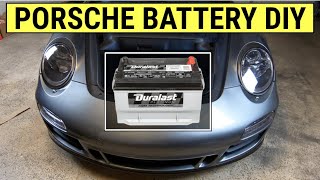
Typical fix: Replace the battery if it fails a load test. 🎬 Watch: How to replace a dead battery on your 911 Ensure the new battery is properly registered to the vehicle's system using a compatible scan tool if it's a newer AGM type.
Est. part cost: $200-$350 - Poor Power or Ground Connections 🟡 Medium Probability The main engine-to-chassis ground strap can corrode or fray over time, creating high resistance. This can cause voltage drops that starve the DME and other modules, leading to memory errors. Early 997s also had a known issue with the alternator/starter cable developing high resistance.
How to confirm: Visually inspect the battery terminals for corrosion. Follow the main negative battery cable to its chassis connection point. Locate and inspect the main engine ground strap (a braided cable) for corrosion, fraying, or looseness. Check the main power connections at the DME for any signs of damage or moisture. Perform a voltage drop test on the main power and ground cables.
Typical fix: Clean all corroded terminals with a wire brush and apply dielectric grease. Tighten any loose connections. Replace damaged cables or ground straps. The engine ground strap is a common replacement part (P/N: 997-607-030-00). 🎬 Watch this tutorial on locating and fixing ground strap problems
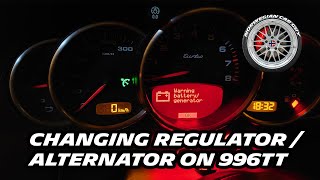
Est. part cost: $50-$120 - Failing Alternator ⚪ Low Probability → Shop Alternator
How to confirm: With the engine running, measure the voltage at the battery terminals. If the voltage is below 13.2V or above 14.8V, the alternator or its voltage regulator is likely faulty.
Typical fix: Replace the alternator and serpentine belt.
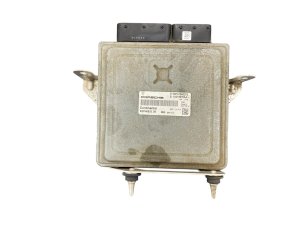
Est. part cost: $400-$800 - Faulty Engine Control Module (DME) ⚪ Low Probability → Shop Engine Control Module (ECM) While not common, internal components on the DME's circuit board can fail from age, heat cycles, or voltage spikes. This is often a diagnosis of exclusion.
How to confirm: This is a diagnosis of exclusion. If the battery, alternator, all power/ground wiring, and software have been confirmed to be good, the DME itself is the likely point of failure. A specialist can perform bench tests on the unit or attempt to clone the original DME to a functioning used unit.
Typical fix: Replace the DME. The new unit must be programmed to the car's VIN and immobilizer by a Porsche dealer or qualified independent specialist using a PIWIS tester. Alternatively, a specialist can clone the original DME's data onto a used, matching part number DME.
Est. part cost: $1500-$2500
Rare But Worth Checking
- Corrupted Software or Failed Aftermarket Tune: If the code appeared after a software update or installation of an aftermarket performance tune, the flash may have been corrupted. Some owners on forums report strange DME behavior after tuning. Reverting to the stock Porsche software can be a diagnostic step.
- Improperly Installed Aftermarket Electronics: A documented case on a 997 forum showed that incorrectly wired aftermarket lights caused widespread electrical faults. Any device that taps into the car's power can cause instability that triggers a P0604 code.
- Failing DME Relay: The DME relay supplies power to the engine computer and fuel pump. While a failure typically results in a no-start or stalling condition, intermittent faults or chattering could potentially cause voltage fluctuations at the DME, contributing to memory errors. Symptoms often include the engine cranking but not starting.
- Failing Ignition Switch: → Shop Ignition Switch The electronic ignition switch in the 997 is a known failure point that can cause a host of bizarre, intermittent electrical issues, including no-start conditions and communication faults between modules. A faulty switch can interrupt power to the DME during startup or shutdown, potentially corrupting RAM and triggering P0604.
Diagnosis Steps
- Read all fault codes from all vehicle modules using a Porsche-compatible scanner (like a Durametric or PIWIS). Note any other codes present, especially communication (U-codes) or voltage-related faults.
- Clear the codes, start the engine, and see if P0604 returns immediately. If it doesn't, it may be an intermittent issue related to voltage dips.
- Perform a thorough battery and charging system test. Measure voltage at the battery with the car off (>12.4V) and running (~13.5-14.5V). Crucially, perform a load test on the battery, as a battery with good static voltage can still fail under load.
- Inspect all major power and ground connections. This includes battery terminals, the chassis ground point, and especially the engine-to-chassis ground strap (P/N 997-607-030-00), which is a known weak point for corrosion. Also inspect the main alternator/starter power cable for heat damage or corrosion, a known issue on 2005-2006 models.
- Visually inspect the DME and its connectors for any signs of water damage, corrosion, or physical damage. The DME is located in the rear of the cabin, behind the rear seats, under a metal cover.
- If the vehicle has an aftermarket engine tune, consult with the tuner or attempt to flash the DME back to the original factory software. A corrupted tune can cause internal conflicts.
- If all of the above steps fail to resolve the issue, the DME is the most likely cause. The vehicle should be taken to a qualified Porsche specialist for advanced diagnostics and potential DME replacement and programming.
Parts You'll Likely Need
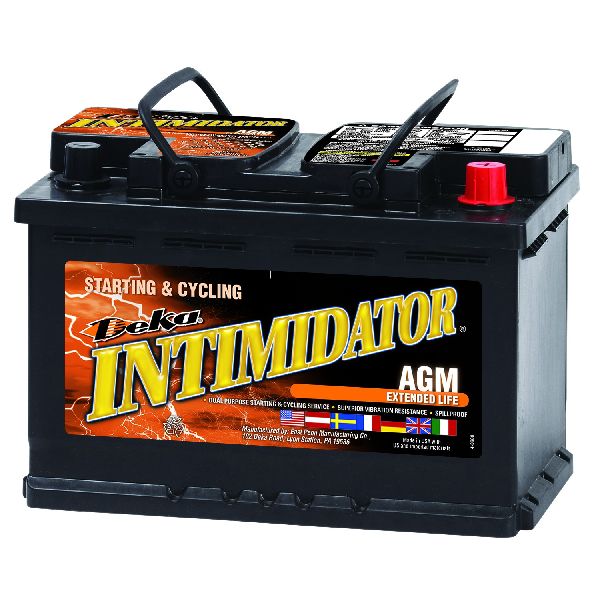
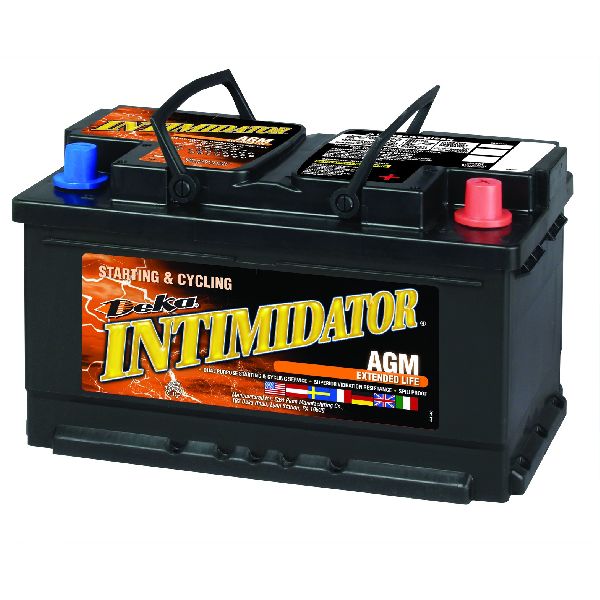
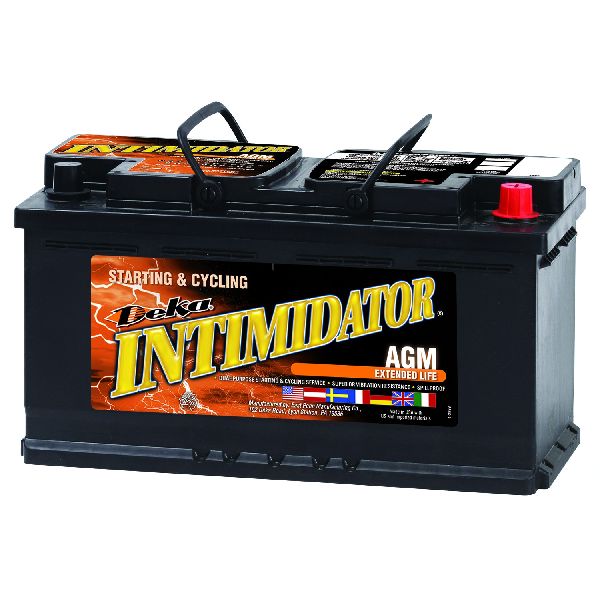
- Battery — A weak or failing battery is the most common trigger for a P0604 code on a Porsche 911 due to voltage instability.
Trusted brands: Bosch, Interstate, Moll (OEM)
OEM price range: $300-$450
Aftermarket price range: $200-$350 - Engine Ground Strap
(OEM #997-607-030-00)— This strap provides the main ground connection for the engine. Corrosion or damage is common and creates electrical resistance, leading to voltage problems for the DME.
Trusted brands: Genuine Porsche
OEM price range: $50-$70
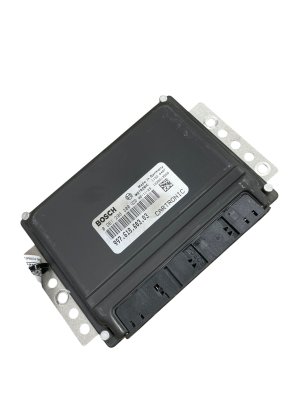
Aftermarket price range: $30-$50 - Digital Motor Electronics (DME) / Engine Control Module (ECM) — This is the 'fix' if all external electrical factors have been ruled out and the module has an internal hardware failure. Replacement requires professional programming.
Trusted brands: Bosch (OEM for 997.1), Siemens (OEM for 997.2)
OEM price range: $2000-$3000
Aftermarket price range: $1000-$1800 (Remanufactured)
Related Codes That Often Appear With This One
- U0100 — This code means 'Lost Communication With ECM/PCM'. It often appears with P0604 because the internal RAM error can cause the DME to stop communicating with other modules on the vehicle's network.
- P1095, P1096 — These codes relate to the mass air flow sensors. On a 997, a flurry of seemingly unrelated codes, including MAF and catalyst codes, can sometimes be triggered by an underlying battery or voltage issue, which is also the root cause of P0604.
- P0455 — This indicates a major leak in the EVAP system. While seemingly unrelated, some owners have reported seeing this code in conjunction with other electrical faults when the root cause was an unstable power supply or a failing ignition switch creating system-wide electronic havoc.
Technical Service Bulletins (TSBs) & Recalls
- While no specific TSB for P0604 on the 997 was found, Porsche has issued numerous software update campaigns (e.g., WSC3) for various models to re-program the DME for improved robustness and to fix other software-related issues. This establishes a precedent for flashing the DME as a potential fix for software-induced faults.
Platform-Specific Known Issues
- Rennlist Forum: "A bunch of fault codes, can it be the battery?": → Shop Vehicle Battery A user on Rennlist reported a 'salad of different codes' including catalyst efficiency, window lifter, and display communication faults appearing at once. Other members immediately suggested the root cause was likely a failing battery, which is a very common scenario on the 997 platform leading to widespread, seemingly unrelated electronic faults.
- 6SpeedOnline: "Battery Not Charging 997 S, New Alternator and Battery": → Shop Alternator A user on 6SpeedOnline detailed a frustrating diagnostic process where they replaced both the alternator and battery, yet the car still had charging issues and slow cranking. The eventual culprit was the main alternator-to-starter power cable, which had developed high internal resistance, a known issue on early (2005-2006) 997 models.
Mechanic-Grade Diagnostic Values
- System Voltage Maintenance During Programming — expected: 13.5V - 14.5V. Failure: Voltage dropping below 13.5V or exceeding 14.5V during a DME flash or coding session.
- Ground Connection Resistance — expected: Below 0.1 Ω. Failure: A reading higher than 0.1 Ω between the ground point and the negative battery terminal indicates excessive resistance.
- Cranking Voltage at Control Module — expected: Above 9.0V - 9.6V. Failure: Voltage dropping below 9.0V at the module's power pin during engine cranking can corrupt RAM.
Scan Tool Commands That Help
- PIWIS (Porsche): DME Automatic Programming — This function is used when replacing a DME. The PIWIS tester reads data from the old DME, stores it, and then writes the vehicle-specific configuration (VIN, immobilizer data) to the new module.
- PIWIS (Porsche): Re-program DME Control Unit — Used to apply official software updates from Porsche. This can resolve software-related bugs that may cause performance issues or, in rare cases, faults like P0604. This is often done as part of a workshop campaign.
- PIWIS (Porsche): Extended Identification — After a software update, this function is used to verify that the new, correct data record and part number index have been successfully written to the DME.
- Durametric (Aftermarket): Read Actual Values — While Durametric cannot perform DME programming, its 'Actual Values' function is crucial for monitoring live system voltage as seen by various modules, helping to diagnose intermittent voltage drops that could trigger a P0604.
Wiring & Ground Locations
- DME (Digital Motor Electronics) — In the rear of the passenger cabin, behind the rear seats. In coupe models, the rear carpet must be lifted to expose a metal cover protecting the DME.. This is the control module that has set the P0604 code. Physical inspection for water intrusion or connector damage is a key diagnostic step.
- Main Engine Ground Strap — A braided cable connecting the engine block to the chassis, often visible in the engine bay. Part number 997-607-030-00.. This is the primary ground path for the engine and its electronics. Corrosion or looseness here is a very common cause of voltage instability that leads to DME memory errors.
- Main Battery Ground Point — Located in the front trunk (frunk) where the negative battery cable bolts to the chassis body.. A loose or corroded connection here affects the entire vehicle's electrical system and can cause widespread, intermittent faults.
- Ground Point 'GP' locations — Porsche wiring diagrams identify multiple critical ground points with a 'GP' designator. For example, a ground point is located in the driver's side footwell near the fuse box.. Multiple electronic modules share common grounding points. A fault at one of these locations can cause communication errors and voltage issues for several systems at once, including the DME.
Real Owner Repair Stories
- PistonHeads UK Forum (2005 Porsche 997 Cabriolet C2) — Intermittent no-start, car would not recognize key, steering wheel lock would not disengage. Other electrical anomalies included non-functioning trunk/engine lights and disabled PASM/Sport Chrono buttons.
❌ Tried (didn't work) Repeatedly inserting the key until it was recognized, disconnecting the battery to reset the DME (temporary fix).
✅ What actually fixed it Replacement of the 'ignition tumbler and control module'. A Porsche technician identified this as a common failure on the 997, where the electronic ignition switch module fails and causes widespread, seemingly unrelated electrical problems. - 6SpeedOnline Forum (2005 Porsche 911 Carrera S (997)) — Battery would repeatedly die despite testing good. Slow cranking. Car required jump starts. New alternator and new battery were installed but the charging system voltage remained too low.
❌ Tried (didn't work) Replacing the alternator, replacing the battery.
✅ What actually fixed it The problem was a faulty main alternator/battery power cable. This cable had developed high internal resistance, preventing the alternator from properly charging the battery and causing system-wide low voltage. Replacement of the cable resolved all charging and starting issues.
OEM Part Supersession History
997-618-159-05→997-618-159-07— Revision of the electronic ignition switch. The original part, often made in Australia, was prone to failure.
Heads up: The newer part is a direct, improved replacement for the older, failure-prone switch.
Model Year Variations Within This Range
- 2009-2012 (997.2): The interior received a significant tech update, most notably the Porsche Communication Management (PCM) 3.0 system, which introduced a touchscreen interface and Bluetooth connectivity. HVAC controls were also revised, and options for cooled seats became available.
- 2005-2008 (997.1) vs 2009-2012 (997.2): The engine and DME are completely different. The 997.1 uses a Bosch ME7.8 DME with the M97 engine. The 997.2 uses a Siemens SDI DME with the new 9A1 direct-injection engine. This change is the most significant difference in the 997 generation, affecting performance, reliability (no IMS bearing in 9A1), and diagnostics.
Diagnostic Flowchart
Other Known Issues on This Vehicle
Issues unrelated to this code that are worth knowing about as an owner of this generation:
- Intermediate Shaft (IMS) Bearing Failure 🔴 High — Affects 997.1 models (2005-2008) with the M97 engine. The failure rate for the single-row bearing used from 2005 is lower than earlier 996 models but remains a significant concern. Failure can be catastrophic to the engine. The issue was eliminated in 997.2 models (2009-2012) with the 9A1 engine.
- Cylinder Bore Scoring 🔴 High — Primarily affects the larger 3.8L M97 engines in 997.1 Carrera S models, though can occur in 3.6L cars. Symptoms include a rhythmic ticking noise (piston slap), increased oil consumption, and one sooty tailpipe. The issue is less common on the 997.2's 9A1 engine due to design changes.
- Cracked Ignition Coils 🟠 Medium — A common issue across the 997 range. Cracks in the plastic coil housing can lead to moisture intrusion, causing misfires (especially in damp weather), rough idle, and a flashing Check Engine Light.
- Coolant Pipe Leaks 🟠 Medium — On 997.1 Turbo and GT models with the Mezger engine, the factory-glued coolant pipes can fail, causing a sudden and massive coolant leak. On Carrera models, leaks are more common from aging rubber seals and plastic connections in the complex cooling system.
- Rear Main Seal (RMS) Leaks 🟡 Low — A common oil leak location on M96/M97 engines, appearing between the engine and transmission. While often just a minor weep, a significant leak can contaminate the clutch on manual transmission cars.
Used vs. New Parts: Buying Guide for This Vehicle
When a used part is the smart pick: For this repair, a used DME is a viable and cost-effective option ONLY if you use a specialized service to 'clone' your original DME's data onto the used unit. This process copies the immobilizer and VIN information, making the used part plug-and-play. A used DME without cloning is useless as it is locked to the donor car.
Donor-vehicle mileage cap: roughly under 100000 miles for the part to have meaningful remaining life.
What to inspect on the donor part:
- The Bosch or Siemens part number on the used DME MUST exactly match your original DME's part number.
- Ensure the donor DME comes from a vehicle that was not involved in a flood or fire.
- Check for any physical damage to the casing or pins of the connector.
- Buy from a reputable recycler that offers a warranty or return policy in case the unit is dead on arrival.
OEM-only on this vehicle (don't cheap out):
- Digital Motor Electronics (DME): While a used OEM unit can be cloned, a brand new unit must be sourced from Porsche and programmed by a dealer or specialist with a PIWIS tester. There are no new aftermarket DMEs available.
Aftermarket brands forum-validated for this vehicle:
- For DME repair/cloning services, companies like ECU Doctors and other automotive electronics specialists have a reputation in the Porsche community for successfully cloning or repairing original units.
Brands owners have reported issues with on this vehicle:
- Avoid generic 'performance chips' from unknown brands on eBay or Amazon. A bad tune is a known way to corrupt DME software and potentially cause a P0604 code.
Real Owner Stories
Aggregated from forums and TSBs cited above. Mileages and costs reflect what owners reported in those sources.
2005 Porsche 911 (997) Carrera S
Symptoms: The car experienced charging issues and slow cranking even after replacing the alternator and the battery.
What fixed it: Replacing the main alternator-to-starter power cable, which had developed high internal resistance.
Source hint: 6SpeedOnline: "Battery Not Charging 997 S, New Alternator and Battery"
2006 Porsche 911 (997)
Symptoms: A 'salad of different codes' appeared at once, including catalyst efficiency, window lifter, and display communication faults.
What fixed it: Replacing the failing battery, which was causing widespread electronic faults across the platform.
Source hint: Rennlist Forum: "A bunch of fault codes, can it be the battery?"
Porsche 911 (997) Turbo
Symptoms: No-start condition accompanied by multiple fault codes.
What fixed it: Correcting improperly wired aftermarket lights that were causing external electrical interference.
Source hint: 6speedonline.com thread on a 997 Turbo with a no-start and multiple fault codes
Porsche 911 (997) Turbo (Tuned)
Symptoms: The DME was logging false over-rev codes (Range 4 and 5) and erroneous data.
What fixed it: Identified as an issue with the aftermarket tune causing the DME to record incorrect memory data.
Source hint: Rennlist.com thread regarding tuned 997 Turbo reporting false over-rev codes
Related OBD-II Codes
Frequently Asked Questions
Could a weak battery really cause a P0604 code on my 997?
Is there a specific ground strap I should check on my 2005-2012 Porsche 911 to resolve this?
My 2005 Carrera S has slow cranking and charging issues; could this be related to P0604?
Has Porsche issued any software updates or TSBs that might address DME faults like P0604?
Can my aftermarket engine tune cause a P0604 internal memory error?
Where is the DME located in the 997 if I need to inspect it for water damage?
Helpful Videos

Used OEM Parts in Stock
New Aftermarket Parts Available


The information in this article is provided for general reference and educational purposes only. Vehicle specifications, procedures, and part compatibility can vary by production date, trim level, and region. Always consult your vehicle's factory service manual and verify part numbers before purchasing or performing repairs. Safety-critical components such as airbags, seat belts, and braking systems should be installed by a qualified professional.
- Porsche 911:
- 🧭 Diagnostic Flowchart
- 🎬 Helpful Videos
- 🛍️ Shop This Part
- What's Unique About the 2005-2012 Porsche 911
- Symptoms You May Notice
- Most Likely Causes
- Rare But Worth Checking
- Diagnosis Steps
- Parts You'll Likely Need
- Related Codes That Often Appear With This One
- Technical Service Bulletins (TSBs) & Recalls
- Platform-Specific Known Issues
- Mechanic-Grade Diagnostic Values
- Scan Tool Commands That Help
- Wiring & Ground Locations
- Real Owner Repair Stories
- OEM Part Supersession History
- Model Year Variations Within This Range
- Other Known Issues on This Vehicle
- Used vs. New Parts: Buying Guide for This Vehicle
- Real Owner Stories
- 2005 Porsche 911 (997) Carrera S
- 2006 Porsche 911 (997)
- Porsche 911 (997) Turbo
- Porsche 911 (997) Turbo (Tuned)
- Related OBD-II Codes
- Frequently Asked Questions
- 🎟️ Get 5% Off