

P0604 on 2007-2010 Saturn VUE: Internal Memory Error Causes and Fixes
On a 2007-2010 Saturn VUE, code P0604 typically indicates an internal memory failure in the Transmission Control Module (TCM). For second-generation models (2008-2010) with the 6-speed automatic, this almost always points to the Transmission Electro-Hydraulic Control Module (TEHCM) located inside the transmission. The most common fix is replacing the TEHCM, which requires professional programming. Expect costs to range from $650 to $1500 for a professional repair.
- P0604 on a Saturn VUE is a serious code that almost always points to a problem with the Transmission Control Module (TCM), not the main engine computer.
- Symptoms are directly related to transmission performance, including harsh shifting and potentially getting stuck in gear.
- Before condemning the expensive TCM, always rule out simpler issues like a weak battery or bad ground connections.
- This is not a DIY-friendly repair. The replacement module is often located inside the transmission and requires special tools and VIN-specific programming to work.
What's Unique About the 2007-2010 Saturn VUE
The 2007-2010 Saturn VUE spans two distinct generations, which significantly affects diagnosis. The 2007 model is the final year of the first generation. The 2008-2010 models are the second generation (a rebadged Opel Antara/Chevrolet Captiva Sport) and are the primary focus for this P0604 issue. For these second-generation models with the 6-speed 6T70 or 6T45 automatic transmission, this P0604 code is a well-documented issue pointing to the Transmission Electro-Hydraulic Control Module (TEHCM). The TEHCM integrates the TCM with the valve body solenoids inside the transmission, subjecting it to heat, vibration, and potential fluid contamination, leading to a high failure rate. TSBs PIP4653E and 05-06-04-060A confirm that GM was aware of this type of memory fault occurring in various control modules, with PIP4653E specifically directing technicians to check the TCM.
Diagnostic Flowchart
Tap your situation to follow the diagnostic path that matches what you're seeing on this vehicle.
Generation note: Yes, this range covers two generations. The 2007 model is the last of the first generation (GM Theta platform), which had different engine options, including a Honda V6. The 2008-2010 models are the second generation, a rebadged Opel Antara with GM engines (like the 2.4L Ecotec) and transmissions (like the 6T70). The TEHCM failure is most commonly associated with the second-generation models equipped with 6-speed automatic transmissions.
Symptoms You May Notice
- Check Engine Light is on
- Harsh or erratic shifting
- Transmission gets stuck in one gear (limp mode)
- Hesitation or delay when accelerating
- Vehicle may not start or may stall intermittently
- RPMs shoot up between shifts (shift flares)
- Replacing the entire transmission when only the internal control module (TEHCM) is faulty.
- Replacing the Powertrain Control Module (PCM) when the code is actually being set by the Transmission Control Module (TCM).
- Replacing the TEHCM without first checking for and fixing low battery voltage or poor ground connections.
Most Likely Causes
- Faulty Transmission Control Module (TCM/TEHCM) 🔴 High Probability → Shop Transmission Assembly As identified in GM Technical Service Bulletin #PIP4653E, the TCM is a common failure point on this platform, often setting this specific code. These modules are located inside the transmission, where they are subject to constant heat cycles and vibration, leading to internal electronic failure (like cracked solder joints) over time. This is a widely reported issue on forums for the VUE and its platform mates.
How to confirm: A professional scan tool is needed to confirm that the P0604 code is stored in the TCM. If a software reflash fails to resolve the issue and power/grounds to the module are good, the module itself is condemned.
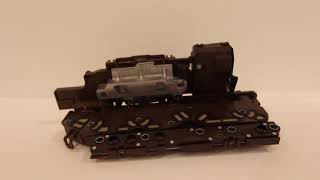
Typical fix: The TCM, which is integrated with the valve body solenoids into a single unit called a TEHCM, must be replaced. The new unit must be programmed to the vehicle's VIN using GM's Service Programming System (SPS).
Est. part cost: $300-$800 - Low Battery Voltage or Poor Connections 🟡 Medium Probability → Shop Vehicle Battery All modern control modules are sensitive to voltage. A weak battery, failing alternator, or corroded terminals can cause voltage drops during startup, which can corrupt a module's RAM self-test and falsely trigger a P0604 code. This should always be the first check before condemning an expensive module.
How to confirm: Test the battery voltage with the engine off (should be >12.4V). Check the charging system output with the engine running (should be 13.5V-14.5V). Inspect all battery terminals and main ground straps (at the chassis and engine block) for corrosion or looseness.
Typical fix: Charge or replace the battery. Clean or tighten battery terminals and ground connections. Clear the codes and see if P0604 returns.
Est. part cost: $0-$250 - Corrupted TCM Software ⚪ Low Probability As per TSB PIP4653E, reprogramming the TCM is a recommended first step. Voltage spikes from jump-starting or intermittent connection issues can sometimes corrupt the module's software, leading to memory-related fault codes.
How to confirm: A GM-specific scan tool (Tech 2 or MDI) can check the current software calibration against the latest version available on GM's TIS2Web service.
Typical fix: Reflashing (reprogramming) the TCM with the latest software calibration. This is often a dealer or specialty shop-only procedure.
Est. part cost: $100-$250 (for programming labor)
Rare But Worth Checking
- Faulty Powertrain Control Module (PCM/ECM): → Shop Engine Control Module (ECM) While the TSBs and common experience point to the TCM, a P0604 code can technically be set by any module. If the transmission is shifting perfectly but there are engine performance issues, the PCM could be the source, though this is unlikely for this specific vehicle.
- Wiring or Connector Issues: Damage to the main wiring harness leading to the transmission or corrosion in the main connector can mimic a module failure by interrupting power, ground, or data signals. A thorough visual inspection is warranted before replacing parts.
Diagnosis Steps
- Scan for all DTCs to confirm which module stored the P0604 code (it will likely be the TCM). Note any other codes present, like P0700 or U0101.
- Check and test the battery. Ensure it is fully charged (>12.4V) and passes a load test.
- With the engine running, verify the alternator is charging correctly (13.5V-14.5V).
- Inspect battery terminals and the main chassis/engine ground connections for tightness and corrosion.
- Clear the DTCs, drive the vehicle, and see if the code returns. If it returns immediately, it suggests a hard fault.
- If the code returns, inspect the main electrical connector at the transmission case and the associated wiring harness for any visible damage, corrosion, or pushed-out pins.
- If available, use a professional scan tool to check for TCM software updates. Reprogramming the module is a required step before condemning it, per TSB PIP4653E.
- If wiring, power, grounds, and software are all confirmed to be good, the TEHCM is the cause and requires replacement and programming.
Parts You'll Likely Need
- Transmission Control Module (TCM/TEHCM)
(OEM #24256524 (Supersedes older numbers, check VIN for exact fit))— This is the most common point of failure for a P0604 code on this platform, as documented by GM's own service bulletins and extensive owner reports.
Trusted brands: ACDelco (OEM), Dorman (Remanufactured), Cardone (Remanufactured)
OEM price range: $500-$800
Aftermarket price range: $300-$550 - Transmission Fluid and Filter Kit — Required when replacing the TEHCM, as the transmission pan must be removed for access.
Trusted brands: ACDelco, Wix, ATP
OEM price range: $50-$100
Aftermarket price range: $30-$70
Related Codes That Often Appear With This One
- P0700 — This code, "Transmission Control System Malfunction," is a general code set by the PCM to turn on the check engine light when the TCM has stored a specific fault, like P0604.
- P0601 — This code indicates an Internal Control Module Memory Check Sum Error. Both P0601 and P0604 point to internal module failure and are mentioned together in GM TSBs. [Bulletin #PIP4653E, Bulletin #05-06-04-060A]
- U0101 — This code means "Lost Communication With TCM". If the TEHCM is failing, it can stop communicating on the vehicle's data network entirely, leading to this code alongside the internal fault code.
Technical Service Bulletins (TSBs) & Recalls
- PIP4653E: Addresses DTCs P0601, P0603, P0604, P062F or P1621 stored in the Transmission Control Module. The primary instruction is to attempt reprogramming before replacing the module.
- 05-06-04-060A: An informational bulletin communicating that DTCs like P0604 can be shared across multiple modules, guiding technicians in their diagnostic approach.
Platform-Specific Known Issues
- TSB PIP4653E specifically notes that DTC P0604 may be found stored in the Transmission Control Module on 2008 models, instructing technicians to reprogram the module before replacement.
- TSB 05-06-04-060A is an informational bulletin for technicians acknowledging that P0604 is one of several codes that can be set across multiple modules, advising them on how to approach diagnosis.
- A user on SaturnFans.com described the classic symptoms for their 2008 VUE: RPMs shooting up, trouble going over 30 mph, and a check engine light. A GMC dealership diagnosed a P0604 and recommended TCM replacement, which aligns with the known TEHCM failure pattern.
Mechanic-Grade Diagnostic Values
- TEHCM On/Off Shift Solenoid Resistance — expected: 20 - 40 Ohms. Failure: A reading outside this range indicates a failed solenoid winding.
- TEHCM PWM Solenoid Resistance (Shift and Line Pressure) — expected: 3 - 8 Ohms. Failure: A reading outside this range indicates a failed solenoid winding.
- TEHCM Pressure Switch Resistance (at rest) — expected: 0.5 - 10 Ohms. Failure: A reading of O.L. (Open Line) at rest, or a failure for the reading to go to O.L. when the switch is depressed, indicates a faulty switch.
- Battery Voltage During Cranking — expected: Above 9.6V. Failure: Voltage dropping below 9.6V during crank can cause modules to reset and store false memory codes like P0604.
- Charging System Voltage (Engine Running) — expected: Stable and below 15.0V. Failure: Voltage spikes above 15.0V from a faulty alternator can corrupt module RAM.
Hidden / Shadow Codes Worth Checking
- Symptom Byte (e.g., P0604 71): GM uses two-digit hexadecimal symptom bytes to add detail to a DTC. For example, a symptom byte of '71' can indicate 'Invalid Serial Data Received', pointing towards a software or communication issue rather than a pure hardware failure. (see via Visible only with a dealer-level scan tool like a GM GDS2 or Tech 2. Basic OBD-II readers will not display them.)
Scan Tool Commands That Help
- GM Factory Scan Tool (Tech 2 / GDS2): Clean Valve Body / Service Clean Function — This function rapidly pulses the solenoids to dislodge internal debris. It can be used as a diagnostic step if solenoid performance codes are present or suspected, before condemning the entire TEHCM.
- GM Factory Scan Tool (Tech 2 / GDS2) with TIS2Web: SPS (Service Programming System) — This is required to flash the vehicle's VIN and the latest GM software/calibrations to a new TEHCM. The vehicle will not operate correctly without this step.
Wiring & Ground Locations
- G103 — At the left side of the engine compartment.. A wiring diagram for the 2008 Vue XE lists the Transmission Control Module (TCM) as a component connected to this ground point. A poor connection here could cause low voltage or intermittent power to the TCM, triggering memory faults like P0604.
- G105 — At the left rear of the engine.. This is another primary engine ground. Ensuring all main engine grounds are clean and tight is a crucial first step before condemning any control module.
- G106 — On the engine, at the left front top corner.. This ground point is also tied into the main engine harness and is critical for the proper operation of various engine controls.
- TEHCM Connector — On the TEHCM unit itself, inside the transmission side cover/pan.. The main 20-pin connector seal can leak, allowing transmission fluid to compromise the electrical connection. The connector and harness should be inspected for damage or corrosion when the TEHCM is accessed.
Real Owner Repair Stories
- SaturnFans.com forum user (via Go-Parts.com article) (2007 Saturn Outlook (platform mate)) — Check Engine Light with P0604, harsh shifting, transmission stuck in 'limp mode'.
❌ Tried (didn't work) Owner suspected a voltage issue but did not report testing it.
✅ What actually fixed it The user took the vehicle to a dealer who diagnosed and replaced the Transmission Control Module (TCM), which resolved all symptoms and cleared the code. - Saturn Forum user (2008 Saturn Vue XR) — Hard shifting around 3rd gear.
❌ Tried (didn't work) Dealer replaced the electronic module (TEHCM), but the problem returned after 1-2 months., Dealer then replaced ignition coil and spark plug #5, but the problem returned after 10 days.
✅ What actually fixed it The story was unresolved, but highlights a common diagnostic pitfall. After two failed electronic fixes, the dealer then claimed a transmission leak was found and quoted a full transmission replacement, demonstrating how an initial P0604 can lead to escalating and potentially incorrect repairs.
OEM Part Supersession History
24256524→24041956— Standard part evolution and updates by the manufacturer.
Heads up: While 24256524 is the most commonly cited number for this repair, numerous other part numbers exist and may be compatible. It is critical to verify the correct TEHCM part number for the specific vehicle using its VIN before ordering.
Model Year Variations Within This Range
- 2008-2009: Models in these years with the 6T70/6T75 transmission are subject to Special Coverage 14404B for a potentially fractured 3-5-R wave plate. This mechanical failure can cause loss of 3rd, 5th, and Reverse gears and may produce debris that damages the TEHCM, leading to codes like P0604.
Helpful Videos
We Have This Part in Stock

The information in this article is provided for general reference and educational purposes only. Vehicle specifications, procedures, and part compatibility can vary by production date, trim level, and region. Always consult your vehicle's factory service manual and verify part numbers before purchasing or performing repairs. Safety-critical components such as airbags, seat belts, and braking systems should be installed by a qualified professional.
- Saturn VUE:
- 🧭 Diagnostic Flowchart
- 🎬 Helpful Videos
- 🛍️ Shop This Part
- What's Unique About the 2007-2010 Saturn VUE
- Symptoms You May Notice
- Most Likely Causes
- Rare But Worth Checking
- Diagnosis Steps
- Parts You'll Likely Need
- Related Codes That Often Appear With This One
- Technical Service Bulletins (TSBs) & Recalls
- Platform-Specific Known Issues
- Mechanic-Grade Diagnostic Values
- Hidden / Shadow Codes Worth Checking
- Scan Tool Commands That Help
- Wiring & Ground Locations
- Real Owner Repair Stories
- OEM Part Supersession History
- Model Year Variations Within This Range
- 🎟️ Get 5% Off