

P0605 on 2007-2013 Chevrolet Silverado: Internal ECM ROM Error Causes and Fixes
P0605 on a 2007-2013 Silverado indicates a fatal internal error in the Engine Control Module (ECM). The most common fix is replacing the ECM, which requires professional programming. Before replacement, always check battery voltage and all ECM power and ground connections to rule out simpler issues.
- P0605 is a critical code indicating a failure within the Engine Control Module (ECM) itself.
- Do not continue to drive the vehicle, as it can stall or fail to start at any moment.
- Before condemning the expensive ECM, thoroughly test the battery, alternator, and all power/ground connections to the module.
- ECM replacement is the most common fix, but it requires professional programming to sync with your truck's VIN and security system.
- A failed aftermarket tune can sometimes cause this code; a factory software re-flash may be a possible fix if the hardware is not damaged.
What's Unique About the 2007-2013 Chevrolet Silverado
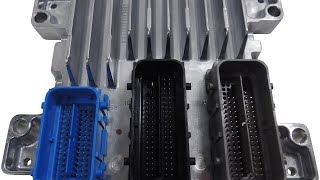
For the GMT900 generation Silverado (2007.5-2013), the P0605 code is a straightforward but serious issue. The ECMs used, primarily the ACDelco E38 and E67, are known to develop internal failures like cold solder joints on the main processor after years of heat cycles in the engine bay. There are no widespread, unique design flaws that make these trucks inherently prone to this specific code. However, like any vehicle of this era, causes are typically age-related hardware failure, electrical issues like bad grounds, or problems from a failed aftermarket tune. The diagnosis is direct: if electrical inputs are good, the ECM itself has failed.
Generation note: The 2007-2013 range primarily covers the GMT900 generation. The 2007 model year was a transition, including both the older 'Classic' GMT800 and the new GMT900 body style. This guide applies to the GMT900 trucks (2007.5-2013). The ECMs used in this generation, like the E38, are known for specific failure modes that can lead to this code.
Symptoms You May Notice
- Check Engine Light is on
- Engine will not start or has an extended crank time
- Engine may stall unexpectedly, especially when coming to a stop
- Noticeable decrease in engine performance and fuel economy
- Vehicle may enter 'limp mode' with reduced power
- ABS or Traction Control lights may illuminate
- Erratic gauge behavior or all warning lights illuminating at once
- Cooling fans run constantly or not at all
- Replacing sensors (like O2 or MAF sensors) before diagnosing the control module itself.
- Replacing the battery without testing the charging system and ECM connections first.
- Replacing the transmission control module (TCM) when communication codes are present, as the ECM is often the gateway.
Most Likely Causes
- Internal ECM Hardware Failure 🔴 High Probability The E38 and E67 ECMs in these trucks are susceptible to failure from heat and vibration. Common internal issues include cracked solder joints on the main processor, failing capacitors, or failure of internal driver circuits.
How to confirm: After confirming all power/ground connections are good and the battery is healthy, the ECM is condemned. This is a process of elimination. A diagnostic scan may also show multiple communication (U-series) codes alongside the P0605.
Typical fix: Replace the Engine Control Module (ECM) and have it professionally programmed to the vehicle's VIN. Many online vendors sell pre-programmed or 'cloned' units.
Est. part cost: $250-$500 - Poor Power or Ground Connections to ECM 🟡 Medium Probability Corrosion on battery terminals, loose main ground straps, or damage to the ECM wiring harness can interrupt the stable voltage required by the module. Key ground locations on GMT900 trucks are on the frame below the driver's door, on the engine block, and near the radiator support.
How to confirm: Perform a voltage drop test on the ECM's power and ground circuits. Visually inspect all ground straps from the engine to the chassis and the battery terminals for corrosion or looseness. Check for continuity and resistance on the ground wires at the ECM connector.
Typical fix: Clean or replace corroded battery terminals, tighten or replace faulty ground straps, and repair any damaged wiring in the ECM harness. A common fix involves adding redundant ground wires.
Est. part cost: $10-$100 - Low Battery Voltage or Failing Alternator ⚪ Low Probability → Shop Alternator Low voltage during startup or voltage spikes from a bad alternator can sometimes cause control modules to set internal fault codes. These trucks are known to have frequent battery failures.
How to confirm: Test the battery with a load tester to ensure it's healthy (should be >12.4V). With the engine running, test alternator output (typically 13.5V-14.5V).
Typical fix: Replace the battery or alternator if they fail testing.
Est. part cost: $150-$400 - Corrupted Software from Failed Programming/Tuning ⚪ Low Probability An incomplete or improper software flash, often from an aftermarket performance tuner, can corrupt the ROM data. GM has issued TSBs like 08-06-04-006K to help dealers identify non-GM calibrations, which can void warranties.
How to confirm: This is usually known by the vehicle's owner or can be suspected if an aftermarket tuning device is present. A dealer or specialized shop can attempt to re-flash the ECM. In some cases, the code appears after changing tunes.
Typical fix: Attempt to re-flash the ECM with factory GM software. If the re-flash fails, the ECM must be replaced.
Est. part cost: $0-$200 (for re-flash labor)
Rare But Worth Checking
- Water Intrusion: Less common, but leaks from a windshield seal or cowl can allow water to drip onto the ECM or its connectors, causing corrosion and failure. The ECM is located in the engine bay, typically on the driver's side, making it vulnerable.
Diagnosis Steps
- Verify the P0605 code is present using an OBD-II scanner. Check for any other communication (U-series) or sensor codes.
- Check the battery. Ensure it is fully charged (above 12.4 volts) and passes a load test.
- Inspect battery terminals and main chassis/engine grounds for cleanliness and tightness. On GMT900s, pay special attention to the ground strap from the engine block to the frame.
- With the engine running, check the alternator output voltage to ensure it's within the correct range (typically 13.5-14.5 volts).
- Carefully inspect the ECM connectors for any signs of corrosion, moisture, or bent pins.
- Perform a voltage drop test on the ECM's power and ground circuits to ensure the module is receiving clean, stable power. Refer to a factory service manual for the correct pinout.
- If an aftermarket tuner was used, attempt to return the vehicle to the stock tune.
- If all external electrical checks pass, the fault is internal to the ECM.
- Attempt to have a dealership or qualified shop re-flash the ECM with the latest GM software. If this fails or the code returns immediately, the ECM is faulty.
- Replace the ECM and have the new unit programmed to the vehicle.
Parts You'll Likely Need
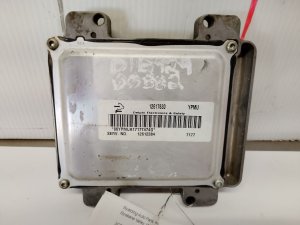
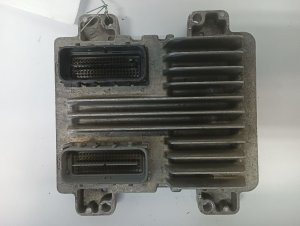
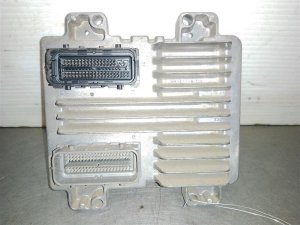
- Engine Control Module (ECM)
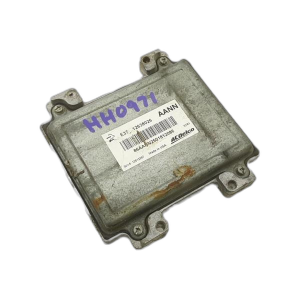
(OEM #12612384 (Service number for many 2008 V8 models, check VIN for exact fitment))— This is the most common fix for a P0605 code after all external electrical issues have been ruled out. The code indicates an internal, unrecoverable memory error.
Trusted brands: ACDelco (GM Genuine Parts)
OEM price range: $400-$750
Aftermarket price range: $250-$500
Related Codes That Often Appear With This One
- U0100 - Lost Communication With ECM/PCM 'A'
- U0073 - Control Module Communication Bus 'A' Off
- P0300 - Random/Multiple Cylinder Misfire Detected
- P0700 - Transmission Control System (MIL Request)
Technical Service Bulletins (TSBs) & Recalls
- TSB 08-06-04-006K: Information for Identifying Non-GM ECM Calibration Use and Power-Up Hardware. This bulletin details how dealers can detect aftermarket tunes, which can cause this code and may lead to warranty denial for related component failures.
Platform-Specific Known Issues
- The E38 and E67 ECMs used in this generation are known to be sensitive to voltage fluctuations and can develop internal solder joint failures over time due to their location in the hot engine bay.
- Grounding points on the frame and engine block are known to corrode, leading to intermittent electrical issues that can mimic ECM failure. Proactively cleaning and securing these grounds is a common preventative measure among owners.
Mechanic-Grade Diagnostic Values
- ECM Power Supply Voltage at Connector Pins — expected: 12.0V+ (Battery Voltage). Failure: Voltage below 12.0V or significant voltage drop compared to battery indicates a wiring or power supply issue.
- ECM Ground Circuit Resistance — expected: Less than 0.5 Ohms. Failure: Resistance higher than 0.5 Ohms between the ECM ground pins and the negative battery terminal indicates a poor ground connection.
- 5-Volt Reference Circuit Voltage — expected: 5.0V ± 0.2V. Failure: Voltage outside this range can indicate an internal ECM fault or a shorted sensor on the 5V reference line, which can sometimes trigger internal module errors.
Scan Tool Commands That Help
- GM Techline Connect (SPS2): Replace and Reprogram ECU — This is the mandatory function used when installing a new or used ECM. It downloads the correct factory calibration from GM's servers and writes it to the module, programming the VIN and operating system.
- GM GDS2 (Global Diagnostic System 2): Immobilizer Learn / VTD Relearn — After programming a new ECM with SPS2, this function is required to synchronize the new ECM with the vehicle's anti-theft system (Vehicle Theft Deterrent) and Body Control Module (BCM). Without this, the vehicle will not start.
- GM GDS2 or Tech2: Crankshaft Position System Variation Learn — After a new ECM is installed and programmed, this procedure is necessary to calibrate the new module to the specific tolerances of the engine's crankshaft position sensor for accurate misfire detection. This is often the final step.
Wiring & Ground Locations
- ECM Connector X1 (Black) — The E38/E67 ECM has two main connectors, typically located on the driver's side of the engine bay. X1 is a 73-pin connector.. This connector contains key power and ground pins. Pin 20 (RD/WH) is Battery Positive Voltage, Pin 19 (PK) is Ignition 1 Voltage, and Pin 73 is a primary ground. Verifying stable voltage and a clean ground at these pins is the first step in ruling out external electrical issues.
- ECM Connector X2 (Gray) — The second connector on the E38/E67 ECM is an 80-pin gray connector.. This connector also contains critical ground pins. Pins 71, 72, and 80 are all grounds. A failure in any of these can cause intermittent and unpredictable ECM behavior that could lead to a P0605.
- G103 — On the front of the passenger side (right) cylinder head.. This is a primary engine ground location. While not a direct ECM ground, a poor connection here can create electrical noise and voltage differentials that affect all engine electronics, including the ECM.
- G104 — At the left rear corner of the engine, where a ground strap connects the back of the cylinder head to the firewall.. This is a critical engine-to-body ground. Corrosion or looseness here is a common cause of various electrical gremlins on GMT900 trucks.
- G100 / G101 — Located on the lower left (G100) and lower right (G101) of the radiator core support.. These are primary chassis grounds for the forward lighting and other front-end components. While less likely to directly cause a P0605, they are part of the overall vehicle grounding scheme that must be intact for stable module operation.
Real Owner Repair Stories
- LS1Tech Forum User (2008 Corvette with LS3 (uses E38 ECM)) — After wiring in a nitrous controller by tapping into the ECM, the car would start and immediately stall with a 'REDUCED ENGINE POWER' message and throttle body codes.
❌ Tried (didn't work) Initially tapped into the TPS Signal wire at Pin 65 (Dark Green) of the E38 ECM.
✅ What actually fixed it The user discovered there are two TPS signal pins. The issue was resolved by moving the wire tap from Pin 65 to Pin 63 (Purple). This highlights the sensitivity of the ECM's inputs and how incorrect wiring, even if seemingly minor, can cause significant operational issues that could be misdiagnosed as internal ECM failure.
OEM Part Supersession History
12612384→This part number is a service number and may be superseded by newer calibrations or hardware revisions from GM. There is no single public supersession list. When ordering, it is critical to provide the vehicle's VIN to a GM dealer or a reputable programmer to get the exact correct and latest part number for that specific application.— Hardware updates, software patches, and calibration changes.
Heads up: Using an ECM from another vehicle, even with the same service number, will not work without professional programming. The VIN, security credentials (theft-deterrent), and specific vehicle options (RPO codes) must be programmed.
Model Year Variations Within This Range
- 2007-2013: The two primary ECMs used were the E38 and E67. The E38 was most common on naturally aspirated V8 engines (LS3, and various truck engines). The E67 was often used for more complex applications like factory supercharged engines (LSA/LS9) or engines with different control requirements. While they are similar, their internal hardware and software capabilities differ, and they are not interchangeable. Diagnosis for P0605 is identical, but the replacement part number will vary.
Diagnostic Flowchart
Other Known Issues on This Vehicle
Issues unrelated to this code that are worth knowing about as an owner of this generation:
- Active Fuel Management (AFM) Lifter Failure 🔴 High — Very common, especially on 5.3L and 6.2L engines. Can occur at any mileage but more frequent over 60,000 miles. (Ref: Multiple TSBs exist, including 15-06-01-002N, which details diagnosis and repair for collapsed lifters causing misfires and engine noise.)
- Excessive Oil Consumption 🟠 Medium — Widespread issue on AFM-equipped 5.3L engines, often starting around 50,000-100,000 miles. Often caused by issues with the PCV system in the driver-side valve cover or stuck piston rings. (Ref: TSB 10-06-01-008I (and later revisions) addresses oil consumption and provides diagnostic procedures.)
- Cracked Dashboard 🟡 Low — Extremely common across all GMT900 trucks and SUVs, regardless of mileage or sun exposure. Cracks typically appear on the driver's side above the instrument cluster or around the passenger airbag. (Ref: No recall was issued, GM generally considers it a cosmetic issue. A class-action lawsuit was filed concerning the problem.)
- Fuel Level Sensor Failure 🟠 Medium — Common failure around the 100,000-mile mark, causing an inaccurate or erratic fuel gauge reading.
Used vs. New Parts: Buying Guide for This Vehicle
When a used part is the smart pick: A used ECM from a salvage yard is a viable and cost-effective option ONLY if you use a cloning service or have access to GM's Techline Connect (SPS2) for programming. A 'cloned' ECM has the data from your original module transferred to the donor, making it plug-and-play. Otherwise, a used ECM is a blank slate that requires professional programming.
Donor-vehicle mileage cap: roughly under 80000 miles for the part to have meaningful remaining life.
What to inspect on the donor part:
- Ensure no physical damage to the case or connectors.
- Check for zero corrosion or bent pins in the connector sockets.
- Obtain the VIN of the donor vehicle to cross-reference its original configuration if possible.
- Purchase from a reputable salvage yard that offers a warranty or return policy.
OEM-only on this vehicle (don't cheap out):
- Engine Control Module (ECM) - While sold by various 'remanufacturers', all are rebuilt original GM units. There are no 100% new aftermarket-manufactured ECMs for this platform.
Aftermarket brands forum-validated for this vehicle:
- ACDelco (GM Genuine): The OEM part, often remanufactured.
- Flagship One (FS1) / Garrett Tuning: Companies that specialize in selling pre-programmed or cloned ECMs, which simplifies installation. Reviews can be mixed regarding shipping times and customer service.
- Cardone: A major remanufacturer of electronic parts, including ECMs. Quality can be inconsistent according to forum discussions, with some users having success and others receiving multiple faulty units.
Brands owners have reported issues with on this vehicle:
- Be cautious of anonymous sellers on platforms like eBay offering 'rebuilt' units with no clear brand name or warranty. Given the complexity and need for programming, a reputable vendor is crucial.
Real Owner Stories
Aggregated from forums and TSBs cited above. Mileages and costs reflect what owners reported in those sources.
C6 Corvette with E38 ECM (shared with Silverado)
Symptoms: Stalling, multiple warning lights illuminating, and numerous communication codes (U-codes) appearing.
What fixed it: Replacing the ECM after attempts to re-flash the software and check the wiring failed to solve the issue.
Source hint: CorvetteForum thread titled 'Bad E38 ECM - it happens'
Vehicle with an E38 ECM
Symptoms: The vehicle ran terribly when cold but would run fine after it warmed up, suggesting a temperature-sensitive internal fault like a cold solder joint.
What fixed it: The issue was resolved after ECM replacement.
Source hint: EFILive Forum thread titled 'E38 ecm failure'
Ford PowerStroke (illustrating a tuning issue)
Symptoms: A P0605 code appeared immediately after the owner changed from a 'race' tune to a 'street' tune using an aftermarket programmer.
What fixed it: The cause was identified as corrupted software from the tune change. The fix is to attempt to re-flash the ECM with a known good or factory software file.
Source hint: PowerStrokeArmy thread titled 'P0605?'
Chevrolet Malibu (Cross-Manufacturer Reference)
Symptoms: An owner reported the check engine light appearing multiple times for code P0605, along with an EVAP monitor not ready status and a malfunction indicator light at approximately 61,737 miles.
What fixed it: The owner noted the dealer claimed it was repaired, but the issue persisted (NHTSA ODI #10582861).
Related OBD-II Codes
Frequently Asked Questions
My 2011 Silverado has an aftermarket performance tune. Could this be the cause of my P0605 code?
Why are the E38 and E67 ECMs in these 2007-2013 Silverados known to fail?
Besides the check engine light, what other strange electrical symptoms can a failing ECM cause on my truck?
My truck has a P0605 code. Should I just replace the ECM immediately?
Where are the most important ground locations to check on my GMT900 Silverado for electrical issues?
If I buy a new ECM for my Silverado, is it a simple plug-and-play installation?
Helpful Videos
Used OEM Parts in Stock
New Aftermarket Parts Available



The information in this article is provided for general reference and educational purposes only. Vehicle specifications, procedures, and part compatibility can vary by production date, trim level, and region. Always consult your vehicle's factory service manual and verify part numbers before purchasing or performing repairs. Safety-critical components such as airbags, seat belts, and braking systems should be installed by a qualified professional.
- Chevrolet Silverado:
- 🧭 Diagnostic Flowchart
- 🎬 Helpful Videos
- 🛍️ Shop This Part
- What's Unique About the 2007-2013 Chevrolet Silverado
- Symptoms You May Notice
- Most Likely Causes
- Rare But Worth Checking
- Diagnosis Steps
- Parts You'll Likely Need
- Related Codes That Often Appear With This One
- Technical Service Bulletins (TSBs) & Recalls
- Platform-Specific Known Issues
- Mechanic-Grade Diagnostic Values
- Scan Tool Commands That Help
- Wiring & Ground Locations
- Real Owner Repair Stories
- OEM Part Supersession History
- Model Year Variations Within This Range
- Other Known Issues on This Vehicle
- Used vs. New Parts: Buying Guide for This Vehicle
- Real Owner Stories
- C6 Corvette with E38 ECM (shared with Silverado)
- Vehicle with an E38 ECM
- Ford PowerStroke (illustrating a tuning issue)
- Chevrolet Malibu (Cross-Manufacturer Reference)
- Related OBD-II Codes
- Frequently Asked Questions
- 🎟️ Get 5% Off