

P0605 on 1999-2003 Ford F-250: Causes and Fixes for PCM ROM Error
P0605 on a 1999-2003 Ford F-250 indicates a critical internal error in the Powertrain Control Module (PCM). On 7.3L Power Stroke diesels, this is most often caused by a faulty aftermarket performance chip. On all engines, check for poor battery connections, bad grounds, or water intrusion before condemning the PCM. The ultimate fix is usually a replacement PCM.
- P0605 is a critical code that makes the truck unsafe to drive due to the risk of stalling.
- If you have a 7.3L Power Stroke diesel, the first step is to remove any aftermarket performance chip.
- Before replacing the expensive PCM, always verify the battery, alternator, and all power/ground connections are clean and tight.
- Check for signs of water leaks around the PCM, as this is a known failure point on these trucks.
- PCM replacement requires professional programming to match your truck's VIN and keys.
What's Unique About the 1999-2003 Ford F-250
For the 1999-2003 F-250, the cause of P0605 is often engine-dependent. On the highly popular 7.3L Power Stroke diesel, the number one cause is a faulty or improperly installed aftermarket performance 'chip' that plugs directly into the PCM. These chips are extremely common and known to fail or cause damage to the PCM's connector pins from repeated installation and removal, leading to this code. For both gas and diesel models, these trucks are also known for water leaks from the windshield or cowl area, which can drip directly onto the PCM and its connectors, causing corrosion and internal failure.
Symptoms You May Notice
- Engine will not start (cranks but does not fire).
- Engine stalls unexpectedly while driving.
- Check Engine Light is on.
- Wait To Start (WTS) light does not come on or flickers (on diesel models).
- Erratic or rough running, especially when cold.
- Loss of communication with the diagnostic scan tool.
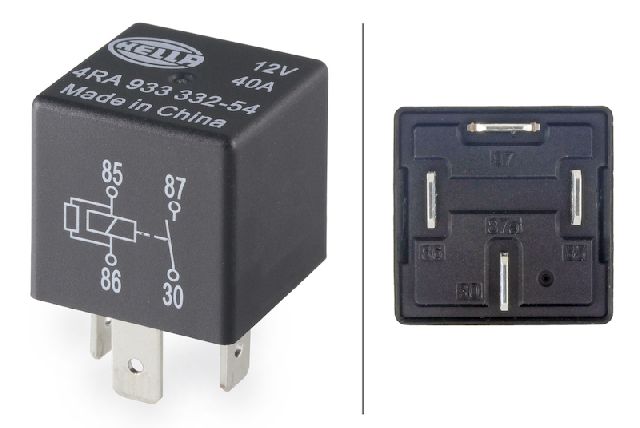
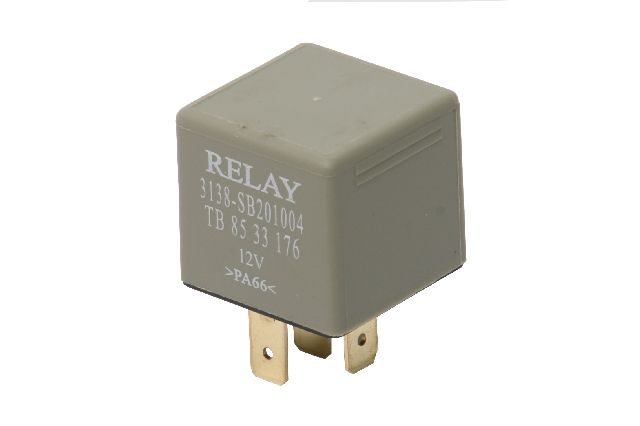
- Rapidly clicking relays under the dash.
- Replacing fuel system components like the fuel pump or injectors. While these can cause a no-start, they typically set different trouble codes. P0605 is specifically an internal electronic fault within the PCM.
- Replacing the Camshaft Position Sensor (CPS). A bad CPS is a very common cause of a no-start 🎬 Watch this step-by-step guide to diagnosing a 7.3L no-start condition. or stalling on the 7.3L engine, but it typically sets codes P0340 or P0344. If P0605 is present, the PCM is the primary suspect.
Most Likely Causes
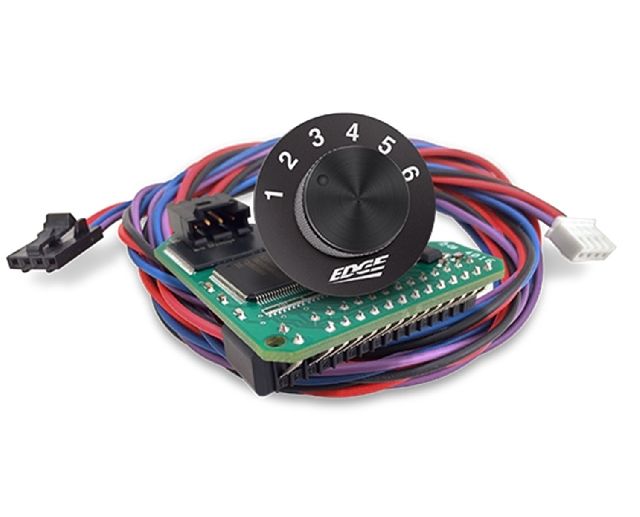
- Faulty or Improperly Installed Aftermarket Performance Chip/Tuner (7.3L Diesel) 🔴 High Probability The 7.3L Power Stroke is one of the most commonly modified diesel engines, and many have had performance 'chips' installed directly onto the PCM. These chips are a frequent failure point, and removing them with the batteries connected can also damage the PCM.
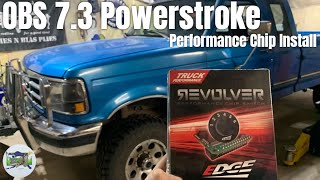
How to confirm: Visually inspect the PCM for a plug-in chip. 🎬 Watch this video to see how a performance chip is installed on the PCM. The PCM is located on the driver's side firewall, near the emergency brake pedal assembly. If a chip is present, disconnect both vehicle batteries, then carefully remove the chip. Reconnect the batteries and see if the code clears and the truck starts.
Typical fix: Remove the faulty chip. If the truck runs correctly after removal, the chip was the issue. If a performance tune is still desired, replace it with a new one from a reputable brand. In some cases, the PCM connector pins are damaged and the PCM may need to be sent for repair.
Est. part cost: $200-$600 for a new performance chip. - Faulty Powertrain Control Module (PCM) 🔴 High Probability → Shop Engine Control Module (ECM) The code P0605 is a direct report of an internal PCM memory error. This can be caused by age, heat cycles, voltage spikes, or physical damage like water intrusion. This is the most likely cause if no aftermarket tuner is present and power/grounds are confirmed to be good.
How to confirm: This is typically diagnosed by exclusion. If all other potential causes (power/ground issues, tuners, wiring) have been ruled out, the PCM itself is the culprit. A professional may attempt a re-flash first, but this is often unsuccessful for a ROM error.
Typical fix: Replace the PCM with a new or remanufactured unit. The replacement PCM must be programmed with the vehicle's specific VIN and key information. Reputable rebuilders like Diesel Technology of Chattanooga and SIA Electronics offer repair services.
Est. part cost: $300-$800 for a remanufactured PCM. - Poor Power or Ground Connections to PCM 🟡 Medium Probability These trucks are prone to corrosion on battery terminals and chassis grounds. Unstable voltage or a bad ground can disrupt the PCM's internal self-test, triggering a false P0605 code, especially during cranking.
How to confirm: Check battery voltage with the engine off (>12.4V) and running (13.7-14.7V). Inspect and clean all battery terminals and the main PCM ground connections. On Super Duty trucks, primary grounds are located on the inner fenders (G100, G101) and near the cylinder heads (G104). Perform a voltage drop test on the power and ground circuits to identify hidden resistance.
Typical fix: Clean or replace corroded battery terminals and ground straps. Ensure all connections are tight and free of corrosion. Applying dielectric grease can prevent future issues.
Est. part cost: $10-$50 for cables and cleaning supplies. - Water Intrusion into PCM or Connectors 🟡 Medium Probability Leaking windshield seals and clogged cowl drains are common issues on this generation of Super Duty trucks, allowing water to drip onto the PCM and its main connector 🎬 See how to find and fix common cab water leaks. in the engine bay or inside the cab.
How to confirm: Visually inspect the area around the PCM (driver's side firewall) for signs of water stains, rust, or corrosion. Unplug the PCM connector (with batteries disconnected) and check for moisture or green/white corrosion on the pins.
Typical fix: Thoroughly dry the connector and PCM. Clean any corrosion with an electrical contact cleaner. If the PCM is internally damaged, it will need replacement. The source of the water leak must also be repaired to prevent recurrence.
Est. part cost: $10-$20 for cleaner, plus potential PCM replacement cost.
Rare But Worth Checking
- Failed Handheld Programmer Flash: If a handheld tuner was used to flash the PCM and the process was interrupted or the file was corrupt, it can cause a P0605 code. Attempting to return the PCM to the stock tune may resolve the issue.
- Failing Alternator Diodes: → Shop Alternator A failing alternator can produce excessive AC ripple voltage (electrical noise) on the DC system. This can disrupt the PCM's sensitive internal operations and trigger a P0605. A multimeter capable of reading AC voltage can be used to check for this at the battery terminals while the engine is running; it should be less than 0.5V AC.
Diagnosis Steps
- Check for any aftermarket performance chips or tuners. If present, disconnect the batteries, then remove the chip/tuner completely and re-test. This is the #1 cause on 7.3L diesels.
- Thoroughly inspect the battery, terminals, and all main power and ground cables for tightness and corrosion. Clean as necessary. Pay special attention to the main PCM grounds on the inner fender and engine block.
- Test the battery and charging system. Ensure battery voltage is above 12.4V with the engine off, and that the alternator is charging between 13.7V and 14.7V with the engine running. Check for excessive AC ripple voltage from the alternator.
- Inspect the PCM and its main connector for any signs of water intrusion, corrosion, or physical damage. Check for bent or damaged pins on the PCM where a chip may have been installed.
- Check PCM-related fuses. On 7.3L models, a blown fuse #22 under the dash can cause a no-start and no 'Wait to Start' light, which can be related to PCM power issues.
- If all the above checks are good, the issue is likely an internal PCM failure. An attempt to re-flash the PCM with the latest factory software can be made by a professional, but a ROM error often indicates a hardware failure.
- If a re-flash is unsuccessful or not possible, the PCM must be replaced and programmed.
Parts You'll Likely Need
- Powertrain Control Module (PCM)
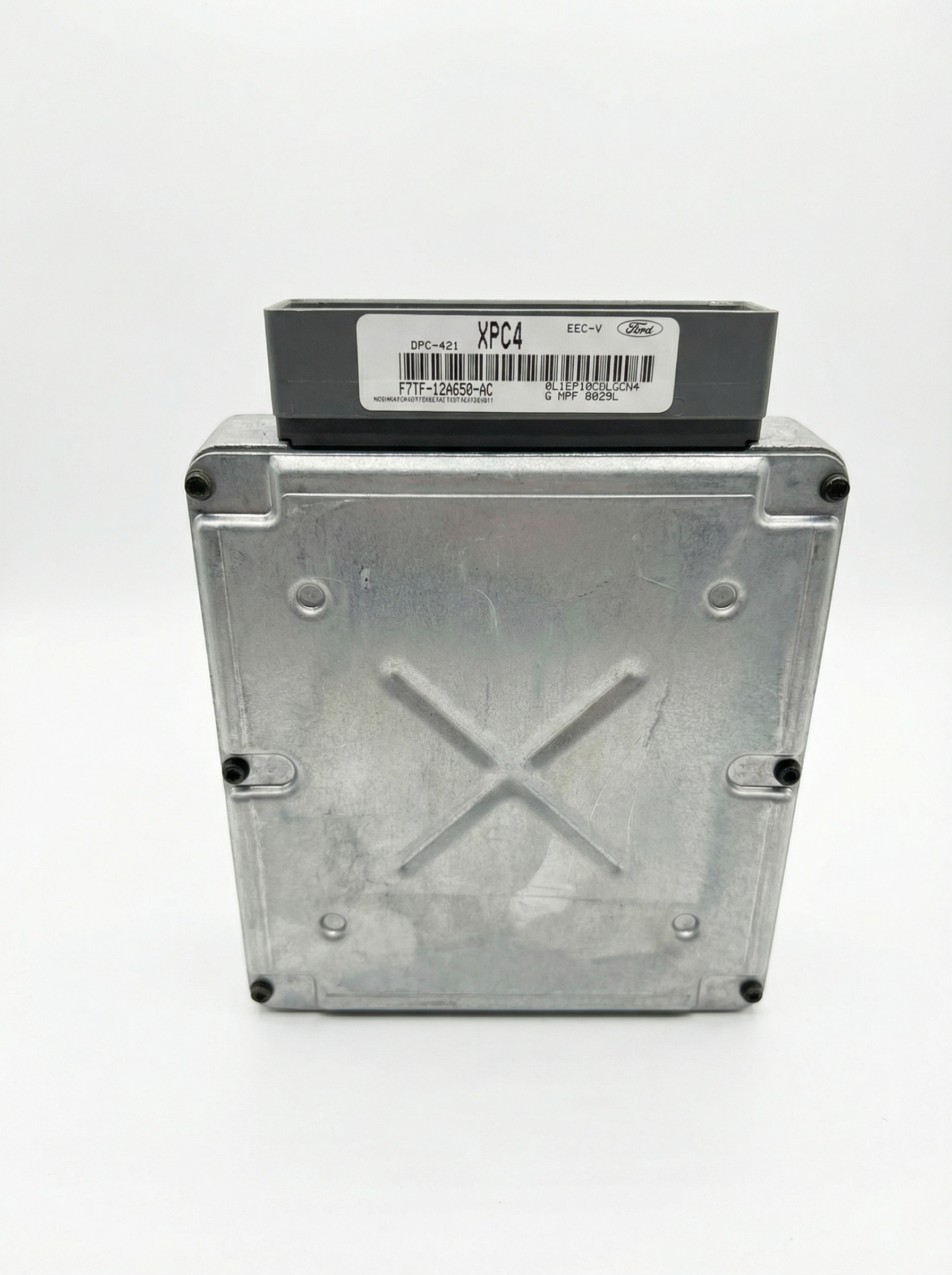
(OEM #Varies by year/engine/transmission. For 7.3L, common codes are DPC-402, DPC-422, etc. Match the code on your original PCM.)— This code indicates an internal ROM error, and if external factors like power supply and tuners are ruled out, the module itself has failed and requires replacement.
Trusted brands: Motorcraft (OEM/Reman), Blue Streak, Cardone (Remanufactured), Diesel Technology of Chattanooga (Rebuild Service), SIA Electronics (Rebuild Service)
OEM price range: $600-$900
Related Codes That Often Appear With This One
- P0603 — This code for 'Internal Control Module Keep Alive Memory (KAM) Error' often appears with P0605. It can be triggered by disconnecting the batteries or by using an aftermarket tuner, and its presence alongside P0605 reinforces the likelihood of a PCM or tuning-related issue.
- U0100 — This code means 'Lost Communication With ECM/PCM'. It often appears with P0605 because if the PCM has a critical internal fault, it may stop communicating with other modules on the vehicle's network.
- P1668 — This code indicates a communication error between the PCM and the Injector Driver Module (IDM) on 7.3L Power Stroke engines. It can appear with P0605 when the PCM is failing internally, disrupting its ability to communicate with other critical modules.
Platform-Specific Known Issues
- On 7.3L Power Stroke models, aftermarket performance chips are the leading cause of P0605.
- Water leaks from the upper windshield seal or cowl area are a known problem that can lead to a wet and damaged PCM.
- Damage to the PCM connector from repeated chip installation/removal is a known issue that can cause P0605 even with the chip removed.
Mechanic-Grade Diagnostic Values
- PCM Power Pins (71 & 97) to Ground — expected: Battery Voltage (approx. 12.6V KOEO, 13.7-14.7V KOER). Failure: Voltage below 10.5V, especially during cranking, indicates a poor power supply or high resistance in the circuit.
- PCM Keep Alive Power (Pin 55) to Ground — expected: Constant Battery Voltage (approx. 12.6V) with key on or off.. Failure: No voltage indicates a blown fuse (check fuse #22 under dash) or a break in the KAPWR circuit, which often sets a P0603.
- PCM Ground Pins (25, 51, 76, 77, 103) to Battery Negative Terminal — expected: Less than 5 ohms, ideally less than 1 ohm.. Failure: High resistance indicates a corroded or loose ground connection, a primary cause of false PCM codes.
- Alternator AC Ripple Voltage — expected: Less than 0.5V AC with engine running.. Failure: Voltage greater than 0.5V AC indicates failing alternator diodes, which introduce electrical noise that can disrupt PCM operation and trigger a P0605.
Scan Tool Commands That Help
- Ford IDS (Integrated Diagnostic System): KOEO & KOER Self-Tests — This is the first step with a professional tool. It confirms if P0605 is an active, hard fault and can reveal other manufacturer-specific codes that generic scanners might miss.
- Ford IDS (or equivalent professional scanner): Parameter Reset — This is a mandatory step after installing a new or used PCM. It synchronizes the replacement PCM with the vehicle's Passive Anti-Theft System (PATS) module and keys, allowing the engine to start.
- Ford IDS (or J2534 pass-thru device): Module Reprogramming / Blank Path Programming — Used to attempt a re-flash of the PCM with updated factory software, which can sometimes fix corruption issues. It is also used to program a new 'blank' PCM when the original is non-communicative.
- Ford IDS (or equivalent): Keep Alive Memory (KAM) Reset — This function clears the adaptive memory in the PCM. It is required after a Parameter Reset on some models to ensure the PCM learns correctly. Disconnecting the battery for 5+ minutes can be an alternative.
Wiring & Ground Locations
- G100 — On the left-hand (driver's) side rear of the engine compartment, near the firewall.. This is a primary engine and PCM ground. Corrosion or looseness here can cause unstable power and trigger false PCM codes.
- G101 — On the left-hand (driver's) side inner fender apron.. Another critical chassis and PCM ground point. Its location on the fender makes it susceptible to corrosion from the elements.
- G104 — On the right-hand (passenger's) side fender apron, often near the battery.. This ground is crucial for various engine bay components and can affect PCM stability if compromised.
- PCM Connector (C1027 or C175) — A large, 104-pin connector bolted to the PCM on the driver's side firewall.. This is the main data and power interface for the PCM. It's a common point for water intrusion, corrosion, and bent pins from performance chip installation.
Real Owner Repair Stories
- Ford Truck Enthusiasts Forums (2001 F-350 7.3L with 250,000+ miles) — Losing power, seemed to have a dying cylinder, rough running.
❌ Tried (didn't work) Swapping injectors to chase a contribution code, clearing codes which would return within 20 miles.
✅ What actually fixed it The user was experiencing P0605 along with multiple injector high/low side open codes (P1272, P1273, etc.) after installing new injectors. The discussion pointed to the P0605 not necessarily being a bad PCM, but potentially an issue with the Injector Driver Module (IDM) or the engine wiring harness causing feedback that the PCM interprets as an internal fault. The user suspected the IDM was the root cause since the P0605 only appeared during the KOEO test. - Ford Truck Enthusiasts Forums (1997 F-250 7.3L (similar issue applies to 99-03)) — Momentary engine cutout, especially on rough roads, which progressed to a crank-no-start. WTS light flickered rapidly before final failure.
❌ Tried (didn't work) Checking fuses, initial CPS suspicion was ruled out by seeing RPM on tach during crank.
✅ What actually fixed it The owner discovered the truck had an aftermarket performance chip installed, which he was not aware of. The P0605 code was a direct result of the chip. The flickering WTS light and stalling were classic symptoms of a failing chip or a poor connection at the PCM where the chip was installed. - NHTSA ODI #763013 — An owner of a similar Ford model reported that after a previous repair failed to fix their vehicle, a technician found code P0605 and stated the PCM needed replacing, even though it had been replaced just over a year prior.
OEM Part Supersession History
Varies (e.g., DPC-402 family)→Varies (e.g., DPC-422 family)— Hardware revisions, software updates, and changes for different emissions or transmission calibrations.
Heads up: PCMs from 1999-2001 F-series are generally interchangeable with each other (with correct transmission/emissions spec), and 2002-2003 are interchangeable with each other. However, a 1999-2001 PCM is NOT compatible with a 2002-2003 truck (and vice-versa) due to significant changes in the engine wiring harness and PCM pinouts. Also, F-series PCMs are not interchangeable with Excursion PCMs. Always match the DPC code family when sourcing a replacement.
Model Year Variations Within This Range
- Early 1999 (built before 12/98): Early 1999 models used a different turbo, intake plenums, and had different PCM programming compared to 'late 1999' and later models. While P0605 diagnosis is similar, sourcing a compatible PCM requires careful matching to the early-99 specs.
- 2002-2003: The PCM wiring harness and pinout changed for the 2002 model year. A PCM from a 1999-2001 truck will not function correctly in a 2002-2003 truck, even if it plugs in. For example, the throttle position sensor input may not work.
Diagnostic Flowchart
Other Known Issues on This Vehicle
Issues unrelated to this code that are worth knowing about as an owner of this generation:
- 7.3L Power Stroke Camshaft Position Sensor (CPS) Failure 🔴 High — Extremely common. Can fail at any mileage, causing sudden stalling or no-start. Many owners carry a spare sensor and wrench in the glovebox. (Ref: Recall 07S57 was issued to replace the original black sensor with an improved gray one.)
- 5.4L/6.8L 2-Valve Spark Plug Ejection 🔴 High — A well-known issue on 1999-2003 gas engines due to insufficient thread engagement in the aluminum cylinder heads. Can happen at any mileage, often without warning. (Ref: TSB 07-21-2014 details the authorized thread repair procedure using a specific insert kit (e.g., Time-Sert).)
- Front Hub/Wheel Bearing Assembly Failure (4x4 Models) 🟠 Medium — The sealed front wheel bearing/hub assemblies are a common wear item, often failing between 100,000 and 150,000 miles. Symptoms include a grinding or roaring noise from the front end.
- Leaking Windshield Seal 🟠 Medium — The factory windshield seal is prone to drying out and developing leaks, particularly at the upper corners. This can lead to water damage inside the cab, including the fuse panel and PCM.
- 7.3L Power Stroke Fuel Bowl Heater Short Circuit 🟠 Medium — The heating element in the fuel filter housing can short out, which typically blows fuse #22 (30A) in the under-dash fuse panel. This results in a no-start and no 'Wait to Start' light because the fuse also powers the PCM.
Used vs. New Parts: Buying Guide for This Vehicle
When a used part is the smart pick: A used PCM from a junkyard is a very common and cost-effective repair for this vehicle, provided the part numbers are an exact match. Since the VIN is not stored in the 7.3L PCM, and mileage is stored in the cluster, a used unit is often a direct swap followed by a PATS relearn.
Donor-vehicle mileage cap: roughly under 150000 miles for the part to have meaningful remaining life.
What to inspect on the donor part:
- Match the DPC code (e.g., DPC-422) on your old PCM to the donor PCM. This is more important than the tear tag or other numbers.
- Inspect the 104-pin connector on the donor PCM for any signs of corrosion, water damage (chalky residue), or bent/damaged pins.
- Look at the back of the PCM where a chip would be installed. Ensure the plastic cover is intact and there are no scratches or signs of forced entry, which could indicate damage from a previous chip.
- Ask for the donor vehicle's configuration (auto/manual transmission, 49-state vs. California emissions) to ensure compatibility.
Aftermarket brands forum-validated for this vehicle:
- Motorcraft (Remanufactured)
- Cardone (Remanufactured)
- SIA Electronics (Repair Service)
- Diesel Technology of Chattanooga (Repair Service)
Brands owners have reported issues with on this vehicle:
- Unknown or unbranded PCMs from online marketplaces without a warranty or clear return policy.
Real Owner Stories
Aggregated from forums and TSBs cited above. Mileages and costs reflect what owners reported in those sources.
2001 Ford Excursion 7.3L Diesel
Symptoms: The owner reported a P0605 code and sought advice on whether to condemn the PCM immediately.
What fixed it: The owner was advised to check batteries and connections first before replacing the PCM.
Source hint: TheDieselStop.com thread titled '01 excursion p0605 code'
1999-2003 Ford F-250 7.3L Diesel
Symptoms: No-start condition with a P0605 code present.
What fixed it: After checking all powers and grounds, the PCM was replaced to resolve the internal memory error.
Source hint: Diesel Technician Society forum thread
1999-2003 Ford F-250 7.3L Diesel
Symptoms: P0605 code, no-start, and flickering Wait To Start (WTS) lights.
What fixed it: Identified as a link to bad grounds or a failing aftermarket chip.
Source hint: Ford-Trucks.com forum threads
Related OBD-II Codes
Frequently Asked Questions
I have a 7.3L Power Stroke and my 'Wait to Start' light is flickering or not coming on at all. Is this related to P0605?
Can my aftermarket performance chip cause a P0605 code on my F-250?
Where are the main PCM grounds located on my Super Duty that I should check?
My F-250 won't start and the relays under the dash are clicking rapidly. Is my PCM bad?
Is there a recall for the stalling issues on my 1999-2003 7.3L F-250?
Can a leaky windshield cause my PCM to fail with a P0605 code?
Helpful Videos



Used OEM Parts in Stock
New Aftermarket Parts Available


The information in this article is provided for general reference and educational purposes only. Vehicle specifications, procedures, and part compatibility can vary by production date, trim level, and region. Always consult your vehicle's factory service manual and verify part numbers before purchasing or performing repairs. Safety-critical components such as airbags, seat belts, and braking systems should be installed by a qualified professional.
- Ford F-250:
- 🧭 Diagnostic Flowchart
- 🎬 Helpful Videos
- 🛍️ Shop This Part
- What's Unique About the 1999-2003 Ford F-250
- Symptoms You May Notice
- Most Likely Causes
- Rare But Worth Checking
- Diagnosis Steps
- Parts You'll Likely Need
- Related Codes That Often Appear With This One
- Platform-Specific Known Issues
- Mechanic-Grade Diagnostic Values
- Scan Tool Commands That Help
- Wiring & Ground Locations
- Real Owner Repair Stories
- OEM Part Supersession History
- Model Year Variations Within This Range
- Other Known Issues on This Vehicle
- Used vs. New Parts: Buying Guide for This Vehicle
- Real Owner Stories
- 2001 Ford Excursion 7.3L Diesel
- 1999-2003 Ford F-250 7.3L Diesel
- 1999-2003 Ford F-250 7.3L Diesel
- Related OBD-II Codes
- Frequently Asked Questions
- 🎟️ Get 5% Off