

P0605 on 2012-2018 Ford Focus: Internal PCM ROM Error Causes and Fixes
P0605 on a 2012-2018 Ford Focus indicates a fatal internal error in the main engine computer (PCM). The most common fix is replacing the PCM, which is costly and requires professional programming. Before replacing it, always check the battery, alternator, and all PCM ground connections first, especially the main ground point under the battery tray (G101).
- P0605 is a critical code indicating the engine computer (PCM) has failed. Do not drive the vehicle, as it can stall at any time.
- Before spending money on a new PCM, you must rule out simpler issues. Thoroughly test the battery, alternator, and check all PCM-related ground wires for corrosion or damage, especially the one under the battery tray.
- Replacing the PCM is not a DIY job. The new module is expensive and must be professionally programmed to your car's VIN and security system.
- A software reflash at a dealership is a possible but less common fix that should be attempted before replacement if power and grounds are good.
- The vehicle covered, the 2012-2018 Ford Focus, belongs to a single generation (Mk3), so these issues are consistent across the model years, though some problems like the DPS6 transmission were more pronounced in earlier years of the generation.
What's Unique About the 2012-2018 Ford Focus
For the 2012-2018 Ford Focus (Mk3 generation), a P0605 code is a serious issue, typically pointing to a failed Powertrain Control Module (PCM). While the ultimate cause is often the PCM itself, these vehicles are notoriously sensitive to voltage. A weak battery, failing alternator, or poor ground connection can trigger this internal memory error, so these should be meticulously checked before condemning the expensive computer. The main ground point under the battery tray is a known weak spot for corrosion. 🎬 Watch: How to clean the battery ground connection Ford has also issued numerous PCM software updates for this platform to fix other drivability issues (like those related to the canister purge valve recall 18S32), highlighting that software integrity is crucial.
Symptoms You May Notice
- Engine will not start, or cranks but does not fire.
- Sudden engine stalling while driving, sometimes without the ability to restart.
- Vehicle enters 'limp mode' with severely reduced power.
- Check Engine Light is on solid.
- Multiple other warning lights (ABS, Traction Control, Battery) may be illuminated simultaneously.
- Rough or erratic idling.
- Transmission shifting problems or flashing gear indicator (PRNDL).
- Loss of communication with the OBD-II scanner.
- Replacing sensors like the crankshaft or camshaft position sensor. While these can cause a no-start, they will set their own specific codes and do not cause a P0605.
- Replacing the battery without testing the alternator. A faulty alternator can quickly damage a new battery and cause the P0605 code to return.
Most Likely Causes
- Faulty Powertrain Control Module (PCM) 🔴 High Probability → Shop Engine Control Module (ECM) Internal components can fail over time due to heat cycles and vibration. This is the most common final diagnosis after other possibilities are eliminated.
How to confirm: After confirming all power/ground inputs are good and a software reflash is unsuccessful or impossible, the PCM is condemned. This is a process of elimination.
Typical fix: Replace the PCM and have it programmed by a dealer or qualified shop with Ford-specific tools.
Est. part cost: $400-$1200 - Low Battery Voltage or Failing Alternator 🟡 Medium Probability → Shop Alternator Modern control modules are highly sensitive to voltage. A weak battery or unstable voltage from a bad alternator can cause memory corruption during startup self-tests and trigger a ROM error.
How to confirm: Test the battery with a digital multimeter; it should be above 12.4V with the engine off. With the engine running, voltage should be stable between 13.5V and 14.5V. Perform a load test on the battery.
Typical fix: Replace the battery and/or alternator.
Est. part cost: $150-$600 - Poor PCM Power or Ground Connections 🟡 Medium Probability Corrosion on battery terminals, main chassis grounds, or the PCM connectors can interrupt the power supply, causing the module to reset or fail its self-test. The ground point under the battery tray (G101) is a common trouble spot on the Focus.
How to confirm: Visually inspect all battery cables, ground straps from the engine to the chassis, and the PCM connectors for looseness, corrosion, or damage. Specifically check the ground point under the battery tray. Perform a voltage drop test on the ground circuit to confirm a solid connection.
Typical fix: Clean or replace corroded terminals, cables, or ground straps. Repair damaged wiring. Cleaning the G101 ground to bare metal is a common preventative fix.
Est. part cost: $10-$150 - Corrupted PCM Software ⚪ Low Probability An interrupted software update (at a dealer or with a handheld tuner) or a glitch from an aftermarket performance tune can corrupt the data in the ROM.
How to confirm: This is difficult to confirm directly but can be suspected if the code appeared after a tuning attempt. A dealership can check the current software version against their records and attempt a reflash.
Typical fix: Attempt to reflash the PCM with the latest official Ford software. If an aftermarket tuner was used, it must be properly uninstalled first. If the reflash fails, the hardware is likely bad.
Est. part cost: $150-$300 for labor
Rare But Worth Checking
- Water Intrusion: A clogged cowl drain or leaking windshield can allow water to drip onto the PCM or its connectors, causing corrosion and short circuits. The PCM on this Focus is located in the driver-side front wheel well, making it vulnerable to moisture if the fender liner is damaged or removed.
Diagnosis Steps
- Scan for all diagnostic trouble codes. Note any communication (U-codes) or other PCM-related codes like P0606.
- CRITICAL: Test the battery and charging system. Ensure battery voltage is above 12.4V (engine off) and alternator output is 13.5-14.5V (engine running). A simple voltage check is not enough; perform a load test on the battery.
- Inspect all PCM power and ground circuits. Disconnect the battery. Remove the battery and battery tray to access the primary ground point (G101) on the chassis. Disassemble, clean all contact surfaces to bare metal, and reassemble with dielectric grease. Inspect PCM connectors for corrosion or water damage.
- Check for blown fuses related to the PCM in both the under-hood and in-cabin fuse boxes.
- If all power and grounds are confirmed to be good, the next step is to attempt a PCM software reflash using OEM-approved tools (Ford IDS). This can correct corrupted data but will fail if the hardware is damaged.
- If the code returns immediately after a reflash, or if the reflash fails, the PCM hardware is faulty.
- Replace the Powertrain Control Module (PCM). The new module must be programmed to the vehicle's VIN and security system by a professional.
Parts You'll Likely Need
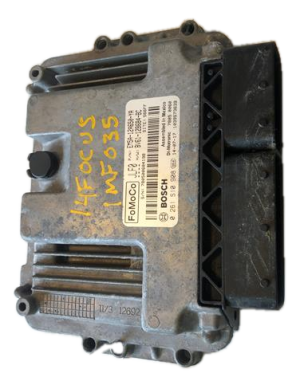
- Powertrain Control Module (PCM)
(OEM #CM5A-12A650-Axx (Example format, VIN specific))— This is the most common fix for a P0605 code, as it indicates an irreparable internal hardware failure of the module itself. Part numbers are VIN-specific; an example for a 2012-2014 Focus is CM5A-12A650-ASC or similar.
Trusted brands: Motorcraft (OEM), Cardone (remanufactured), FS1 (remanufactured)
OEM price range: $600-$1200
Aftermarket price range: $400-$800
Related Codes That Often Appear With This One
- U0100 — This code indicates 'Lost Communication With ECM/PCM'. It often appears with P0605 because the internal failure prevents the PCM from communicating with other modules on the vehicle's network.
- P068A — This code, 'ECM/PCM Power Relay De-Energized Too Early', has been noted on Ford Focus models and points to a power supply issue that can precede or cause a P0605. 🎬 See this guide to locate the ECU relay
- P0606 — This code for 'ECM/PCM Processor Fault' is a very similar internal module failure. TSB 16-0129 for the DPS6 transmission notes that P0606 can be set alongside communication codes and may require TCM replacement.
Technical Service Bulletins (TSBs) & Recalls
- TSB 16-0129: Addresses loss of power/no-start on DPS6-equipped cars, mentions code P0606 (a close relative of P0605) and communication codes, often leading to TCM replacement.
- TSB 18-2062: Details repairs for a chafing wiring harness on 2012-2014 models causing numerous electrical faults and drivability problems.
- Recall 18S32 / 19S22: Relates to the canister purge valve, requiring a PCM software update to prevent stalling.
Platform-Specific Known Issues
- While not for P0605 specifically, Ford issued recall 18S32 / 19S22 for some Focus models which involved a mandatory PCM software update to prevent stalling caused by a faulty canister purge valve, showing the importance of software on this platform.
- TSB 18-2062 was issued for 2012-2014 Focus models for various drivability issues and a host of DTCs caused by wiring harness chafing. While P0605 is not listed, it highlights the platform's vulnerability to wiring problems that can affect the PCM.
- TSB 16-0129 addresses no-start and loss of power issues on vehicles with the DPS6 transmission, linking communication codes like U0100 and internal processor fault P0606 to a faulty Transmission Control Module (TCM), which is separate but communicates with the PCM.
Mechanic-Grade Diagnostic Values
- CAN Bus Resistance at PCM Connector C175b — expected: 54 to 66 ohms between pins C175b-59 (CAN High) and C175b-58 (CAN Low) with battery disconnected.. Failure: Resistance outside this range indicates a problem with the CAN bus wiring or a terminating resistor in another module.
- PCM Power and Ground Circuit Resistance — expected: Less than 5 ohms on all power and ground circuits when measured from the PCM connector to the battery terminals or chassis ground.. Failure: Resistance higher than 5 ohms indicates corrosion or a damaged wire that needs to be repaired.
Scan Tool Commands That Help
- Ford IDS (Integrated Diagnostic System): Programmable Module Installation (PMI) — This function is used when replacing the PCM. It transfers the as-built data, VIN, and security information from the old module to the new one. If the old module is dead, this data must be retrieved from Ford's servers.
- Ford IDS (Integrated Diagnostic System): Module Self-Test — This is an on-demand test that commands the PCM to check its own internal memory and processors. A failure on this test, resulting in a P0605, definitively condemns the PCM if power and grounds are verified good.
- FORScan: PCM Module Firmware Update — Advanced users can use FORScan to re-flash the PCM with updated calibration files from Ford's software service. This is a high-risk procedure that can permanently damage the PCM if interrupted or done incorrectly.
Wiring & Ground Locations
- PCM (Powertrain Control Module) — Located in the front driver-side wheel well, behind the fender liner.. This location makes it vulnerable to water intrusion from a damaged fender liner or deep puddles, which can cause corrosion and internal short circuits leading to P0605.
- G101 — On the chassis frame rail, under the battery tray in the left front of the engine compartment.. This is a primary ground point for the PCM. Corrosion here is very common and causes intermittent power loss to the PCM, triggering internal self-test failures like P0605.
- G102 / G104 — Both are located on the left front of the engine compartment, near the battery junction box.. These are additional engine bay grounds that support various systems. While G101 is the main culprit, ensuring all engine bay grounds are clean is a critical diagnostic step.
- C175b — This is the main, large electrical connector for the Powertrain Control Module.. All power, ground, and network communication signals for the PCM pass through this connector. Technicians perform voltage and resistance tests at its pins to diagnose faults without having to pierce wires.
Real Owner Repair Stories
- Ford Truck Enthusiasts forum user 'copyman' (2006 Ford F-150 (Note: Different vehicle, but same code and a Ford-specific outcome)) — Check engine light with P0605, intermittent parking brake light.
❌ Tried (didn't work) Checking parking brake switch, checking master cylinder fluid/wiring, living with the light for a year.
✅ What actually fixed it The user took the truck to a Ford dealer, who performed a PCM reflash. The check engine light did not return. - Reddit user 'JaysDome' (Not specified, but general auto repair context.) — Car would not run.
❌ Tried (didn't work) Extensive diagnosis, suspecting a bad PCM.
✅ What actually fixed it Purchased a remanufactured PCM from RockAuto (Cardone brand). The car fired right up after installation. - NHTSA ODI #763013 (Ford F-150 cross-reference) — An owner reported that after a dealer had the vehicle for a few days, they received code P0605 and were told the PCM needed replacing, despite it being replaced a little over a year prior.
OEM Part Supersession History
CM5A-12A650-ABA→CM5A-12A650-ASC, among others.— Internal hardware and software revisions to improve reliability and address bugs.
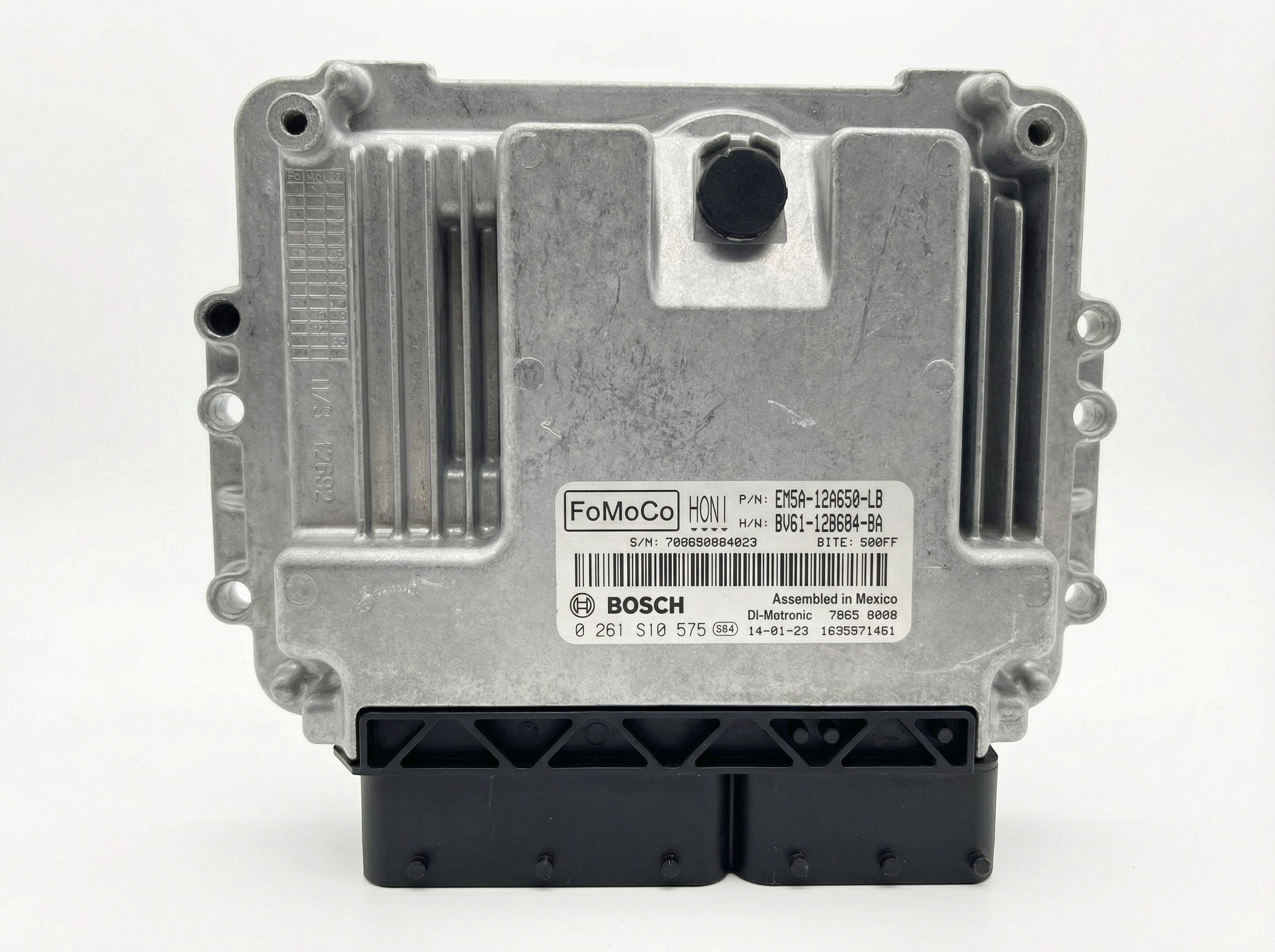
Heads up: While many part numbers may physically fit, the internal hardware code (e.g., BV61-12B684-BA) and software calibration must match the vehicle's VIN and options. Using the wrong hardware code can cause unpredictable issues even after programming.
Model Year Variations Within This Range
- 2012-2013: Early production Focus models used PCMs with specific hardware codes (e.g., BV61-12B684-Bx).
- 2013-2014: A different PCM hardware code (e.g., BB5A-12B684-AC) was introduced for some 2013 models, with part numbers like EM5A-12A650-PC. This highlights that part compatibility is strictly tied to the VIN, not just the model year.
Diagnostic Flowchart
Other Known Issues on This Vehicle
Issues unrelated to this code that are worth knowing about as an owner of this generation:
- PowerShift (DPS6) Dual-Clutch Automatic Transmission Failure 🔴 High — Extremely common on non-ST models with automatic transmissions. Issues include shuddering, hesitation, and complete failure of clutch packs or the Transmission Control Module (TCM). (Ref: Multiple class-action lawsuits, warranty extensions (e.g., 14M02), and TSBs like 16-0129 address related symptoms.)
- Canister Purge Valve Failure 🟠 Medium — Very common across all 2.0L engines. A stuck-open valve causes rough idle, stalling after refueling, and can deform the fuel tank. (Ref: Ford Recall 18S32 / 19S22 / 22S43. The fix involves a PCM software update and, if necessary, replacement of the valve.)
- Passenger-Side Hydraulic Engine Mount Collapse 🟠 Medium — A frequent failure item. The fluid-filled mount collapses, causing severe vibration at idle and clunking noises. (Ref: No recall, but it is a widely documented problem. Owners often recommend using the OEM Motorcraft part for replacement as aftermarket versions can cause more vibration.)
- Electronic Power Steering Assist Failure 🔴 High — More common on earlier 2012-2014 models. Can result in a sudden loss of power steering, making the vehicle difficult to control. (Ref: TSB 18-2062 addresses wiring harness issues that can cause various drivability problems, including codes related to steering sensors.)
Used vs. New Parts: Buying Guide for This Vehicle
When a used part is the smart pick: A used PCM from a junkyard is a viable option ONLY if you have access to advanced tools like Ford IDS to perform a 'Programmable Module Installation' (PMI). A used module cannot be simply swapped in; it must be professionally reprogrammed with your car's VIN and security data. It makes sense if the cost of the used module plus programming is significantly less than a pre-programmed remanufactured unit.
Donor-vehicle mileage cap: roughly under 100000 miles for the part to have meaningful remaining life.
What to inspect on the donor part:
- Match the OEM part number AND the hardware code (e.g., BV61-12B684-BC) exactly.
- Inspect the donor vehicle for flood or fire damage.
- Ensure the connectors on the used PCM are clean, with no bent or corroded pins.
- Obtain the VIN of the donor vehicle if possible, as it can help with the reprogramming process.
OEM-only on this vehicle (don't cheap out):
- Powertrain Control Module (PCM) - While remanufactured units are common, buying a brand new OEM Motorcraft part or a reputable remanufactured unit that is pre-programmed to your VIN is the most reliable, albeit most expensive, option. Avoid unbranded, 'refurbished' units from unknown online sellers.
Aftermarket brands forum-validated for this vehicle:
- Cardone (Remanufactured): Widely available and a common choice, though quality can sometimes be inconsistent. Success stories exist where they work perfectly out of the box.
- FS1 (Flagship One): Specializes in pre-programmed modules and is often cited as a reliable source for VIN-specific replacements.
Brands owners have reported issues with on this vehicle:
- No specific brands are universally cited as 'avoid at all costs', but extreme caution is advised for non-branded, suspiciously cheap modules from marketplaces like eBay or Amazon without a clear warranty and programming service.
Real Owner Stories
Aggregated from forums and TSBs cited above. Mileages and costs reflect what owners reported in those sources.
2012 Ford Focus
Symptoms: The car would not start and threw codes P0605 and U0100.
What fixed it: After verifying the battery and grounds were in good condition, the owner had the dealer replace the PCM.
Cost: $1000-$1100
Source hint: Focus Fanatics: P0605 and U0100 - Car won't start
2012-2018 Ford Focus 2.0L
Symptoms: The vehicle experienced P0605 and P0606 codes for an extended period while still running.
What fixed it: The community identified this as a sign of imminent PCM hardware failure, noting that while a software reflash is a possible attempt, it is often an unlikely permanent fix for these specific codes.
Source hint: Reddit r/FordFocus: P0605 P0606 codes
2012-2018 Ford Focus 2.0L
Symptoms: The owner encountered a P0605 code and was using an aftermarket remote starter.
What fixed it: The PCM was successfully reflashed by a dealer.
Source hint: Ford Truck Enthusiasts: P0605 code
Related OBD-II Codes
Frequently Asked Questions
Could my 2012 Ford Focus no-start issue be related to the DPS6 transmission instead of the PCM?
Is there a specific ground point I should check on my Focus for the P0605 code?
Does the recall for the canister purge valve (18S32 / 19S22) involve the PCM?
Can an aftermarket remote starter or performance tuner cause a P0605 on my Ford?
If I need to replace the PCM, can I just plug in a used one from another Focus?
How can I tell if my battery is causing the P0605 ROM error?
Helpful Videos
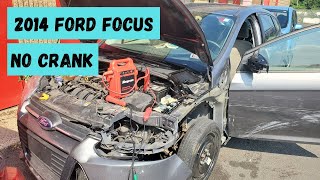
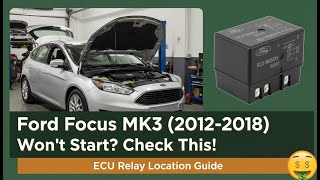

We Have This Part in Stock
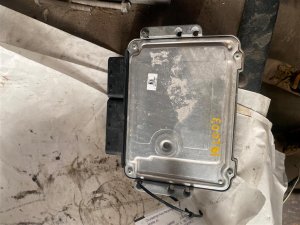
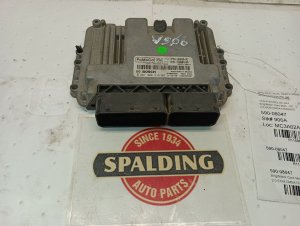

The information in this article is provided for general reference and educational purposes only. Vehicle specifications, procedures, and part compatibility can vary by production date, trim level, and region. Always consult your vehicle's factory service manual and verify part numbers before purchasing or performing repairs. Safety-critical components such as airbags, seat belts, and braking systems should be installed by a qualified professional.
- Ford Focus:
- 🧭 Diagnostic Flowchart
- 🎬 Helpful Videos
- 🛍️ Shop This Part
- What's Unique About the 2012-2018 Ford Focus
- Symptoms You May Notice
- Most Likely Causes
- Rare But Worth Checking
- Diagnosis Steps
- Parts You'll Likely Need
- Related Codes That Often Appear With This One
- Technical Service Bulletins (TSBs) & Recalls
- Platform-Specific Known Issues
- Mechanic-Grade Diagnostic Values
- Scan Tool Commands That Help
- Wiring & Ground Locations
- Real Owner Repair Stories
- OEM Part Supersession History
- Model Year Variations Within This Range
- Other Known Issues on This Vehicle
- Used vs. New Parts: Buying Guide for This Vehicle
- Real Owner Stories
- 2012 Ford Focus
- 2012-2018 Ford Focus 2.0L
- 2012-2018 Ford Focus 2.0L
- Related OBD-II Codes
- Frequently Asked Questions
- 🎟️ Get 5% Off