

P0605 on 2007-2018 Jeep Wrangler: Internal PCM Failure Causes and Fixes
P0605 on a Jeep Wrangler indicates a critical internal failure of the Powertrain Control Module (PCM). The vehicle may not start or could stall while driving. The most common fix is replacing the PCM, which requires VIN programming. Before replacement, always verify battery, grounds, and fuses. Expect costs to range from $800 to $2,000.
- P0605 is a critical code indicating the engine computer (PCM) has failed an internal self-test and likely needs replacement.
- Do not drive the vehicle, as it is unsafe and could stall at any moment.
- Before replacing the expensive PCM, you must verify the battery, alternator, and all PCM-related power and ground connections are in perfect condition.
- PCM replacement requires VIN-specific programming to work with the vehicle's anti-theft system.
- Do not confuse a P0605 PCM failure with a TIPM failure, which is another common but separate electrical issue on these Jeeps.
What's Unique About the 2007-2018 Jeep Wrangler
For the 2007-2018 Jeep Wrangler JK, this code is a straightforward, serious issue regardless of whether you have the earlier 3.8L V6 or the later 3.6L Pentastar V6. Unlike some codes that point to common sensor failures, P0605 almost always points directly to the PCM itself. While external electrical issues can sometimes trigger module faults on Jeeps, P0605 is specifically a ROM checksum error, making an internal hardware failure the most probable cause. There are no widespread recalls or TSBs to re-flash the software for this specific error, reinforcing that it's typically a hardware replacement scenario. It's also important not to confuse a P0605 PCM failure with the more common, but separate, issue of a failing Totally Integrated Power Module (TIPM), which causes different, more random electrical symptoms.
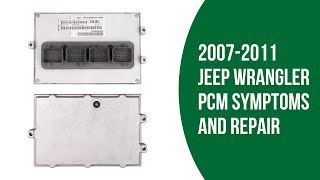
Generation note: The 2007-2018 year range covers the entire Jeep Wrangler JK generation. This generation used two primary engines: the 3.8L V6 (2007-2011) 🎬 Watch: 2007-2011 Jeep Wrangler PCM symptoms and replacement guide and the 3.6L Pentastar V6 (2012-2018). The P0605 code is a potential issue on both powertrains, leading to the same diagnosis of PCM failure.
Symptoms You May Notice
- Check Engine Light is on
- Engine will not start (cranks but does not fire)
- Engine fails to crank (no-crank, no-start condition)
- Engine stalls unexpectedly while driving or at idle
- Noticeable loss of power and poor acceleration
- Rough or erratic idling
- Harsh or incorrect automatic transmission shifting
- Vehicle enters 'limp mode' with severely restricted power
- Multiple other seemingly unrelated trouble codes appear simultaneously
- Replacing sensors like the Crankshaft or Camshaft Position Sensor. These sensors can cause similar symptoms like no-start or stalling, but they will typically set their own specific trouble codes.
- Replacing the battery without diagnosing the charging system. If the alternator is faulty, it will quickly ruin a new battery and the problem will persist.
- Confusing a PCM failure with a TIPM failure. While both cause electrical problems, TIPM failures are usually more random and affect a wider range of body electronics (wipers, horn, fuel pump relay), whereas P0605 is specific to the PCM's core processing.
Most Likely Causes
- Failed Powertrain Control Module (PCM) 🔴 High Probability → Shop Engine Control Module (ECM) Internal components like memory chips and processors can fail over time due to heat cycles, vibration, and age. The JK's PCM is located in the engine bay, where it is exposed to significant heat and potential moisture, which can accelerate failure of solder joints or internal silicon.
How to confirm: After confirming all power, ground, and related fuses are good, the diagnosis is made by exclusion. A professional scan tool may also be able to confirm the internal fault via a failed module self-test.
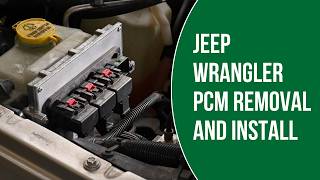
Typical fix: Replace the Powertrain Control Module. 🎬 See this step-by-step PCM removal and replacement tutorial The new module must be programmed with the vehicle's VIN and configuration.
Est. part cost: $500-$1500 - Low Battery Voltage or Charging System Fault ⚪ Low Probability → Shop Vehicle Battery Jeep electrical systems can be sensitive to voltage. A weak battery or failing alternator can cause voltage spikes or drops during startup that may corrupt the PCM's self-test process or, in some cases, cause permanent damage to the module.
How to confirm: Test the battery voltage with a multimeter (should be ~12.6V engine off). Test the alternator output with the engine running (should be ~13.5-14.5V). A simple voltage test is the first step before suspecting the PCM.
Typical fix: Replace the battery and/or alternator if they fail voltage tests.
Est. part cost: $150-$600 - Poor PCM Power or Ground Connections ⚪ Low Probability Wranglers are often exposed to water, mud, and vibration, which can lead to corrosion or loosening of critical ground straps and connector pins for the PCM. A poor ground can cause voltage irregularities that the PCM may interpret as an internal fault.
How to confirm: Visually inspect and physically check the PCM connectors for corrosion, damage, or loose pins. Locate and test the main engine and PCM ground points for tightness and cleanliness. This is a crucial, though often overlooked, diagnostic step.
Typical fix: Clean, repair, or tighten the affected wiring, connectors, or ground points.
Est. part cost: $0-$50
Rare But Worth Checking
- Interrupted PCM Software Update: If the code appeared immediately after a failed attempt to reflash or program the PCM (e.g., with an aftermarket tuner), the software may be corrupted. This is rare in normal circumstances but can happen during service or with performance tuning.
Diagnosis Steps
- Confirm the P0605 code is present using an OBD-II scanner. Note any other codes, especially other P06xx or U-series codes.
- Check the battery. Ensure it is fully charged (approx. 12.6 volts) and passes a load test. A weak battery is a common source of electrical gremlins.
- With the engine running, check the alternator output with a multimeter. It should be between 13.5 and 14.5 volts.
- Inspect all fuses in the Totally Integrated Power Module (TIPM) / fuse box related to the PCM, ECU, or ECM. Replace any that are blown.
- Disconnect the battery. Carefully inspect the three large PCM wiring connectors in the engine bay for any signs of corrosion, moisture, or bent/damaged pins. Ensure they are fully seated.
- Locate and inspect the main PCM ground wires. On a JK, key grounds are on the engine block and firewall. Ensure they are clean, tight, and free of corrosion.
- If all external factors (power, grounds, fuses, connectors) check out and the code persists after being cleared, the PCM is almost certainly the cause of the fault.
- The final step is to replace and program the PCM. This is best done by a professional with the correct tools.
Parts You'll Likely Need
- Powertrain Control Module (PCM)
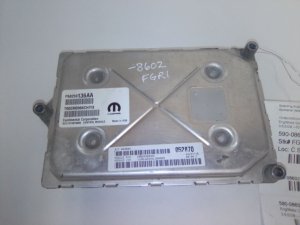
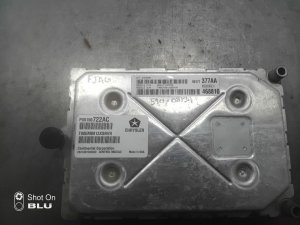
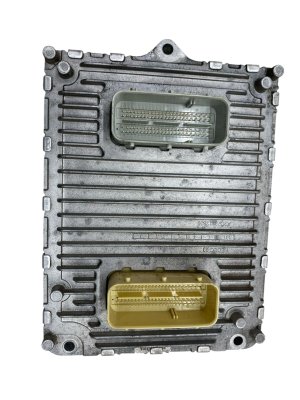
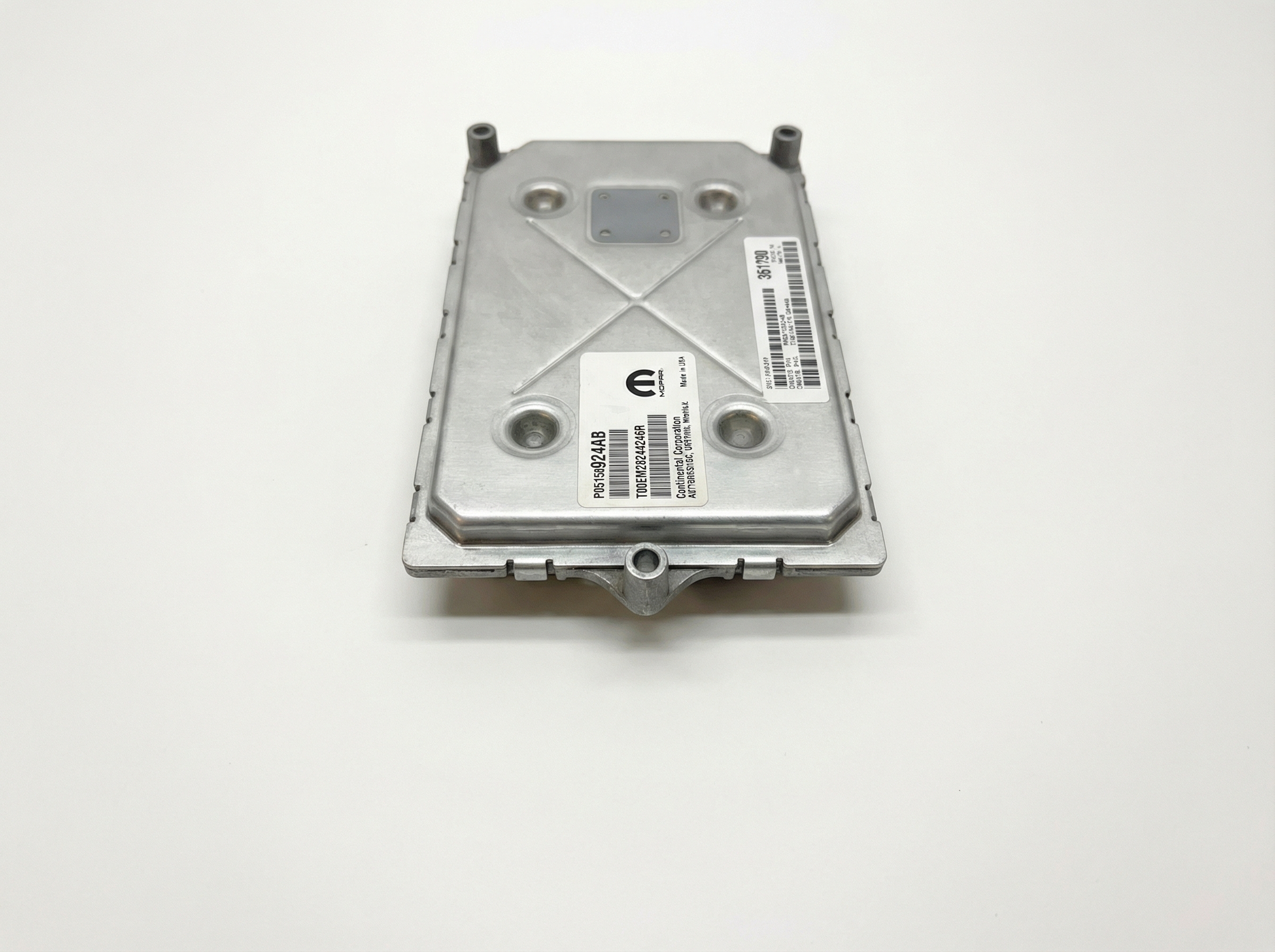
(OEM #Example Mopar PNs: 68025118AF, 5187811AD (Part numbers are VIN-specific and must be matched exactly))— This is the part that has failed its internal self-test, as indicated by the P0605 code. It is the most common and definitive fix.
Trusted brands: Mopar (OEM), Cardone (Remanufactured), FS1 (Flagship One), Auto Computer Performance
OEM price range: $800-$1500
Aftermarket price range: $500-$900
Related Codes That Often Appear With This One
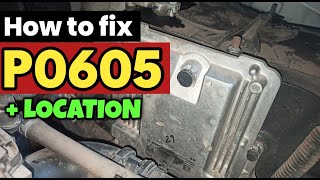
- P0601, P0604, P0606 — These are all related internal control module error codes. P0601 (Memory Check Sum Error), 🎬 Watch: Understanding the P0605 internal ROM error code P0604 (RAM Error), and P0606 (PCM Processor Fault) all point to a failing computer and often appear together with P0605 as the PCM's internal systems degrade.
- U0100 — This code means 'Lost Communication With ECM/PCM'. When the PCM is failing internally, it may stop communicating with other modules on the vehicle's network, triggering this code in other computers (like the ABS or instrument cluster module).
Technical Service Bulletins (TSBs) & Recalls
- TSB 09-002-14 REV. B - Relates to early 3.6L Pentastar cylinder head failures, a separate known issue.
- NHTSA 16V-288 / FCA Recall S40 - Pertains to clockspring failure due to dust intrusion on 2011-2016 RHD and earlier JK models.
- TSB XF1 - A warranty extension for the steering damper to address 'Death Wobble' complaints.
Platform-Specific Known Issues
- PCM Location and Heat Soak: The Jeep Wrangler JK's PCM is mounted on the firewall in the engine bay, near the battery. This location exposes it to significant engine heat and potential water intrusion from the cowl area. Over many years and heat cycles, this can contribute to the degradation of internal electronic components and solder joints, potentially leading to premature failure and codes like P0605.
Mechanic-Grade Diagnostic Values
- PCM Power and Ground Circuit Voltage Drop — expected: Less than 0.05 Volts (50 millivolts). Failure: A reading higher than 50 mV indicates excessive resistance from loose connections or corrosion in the circuit.
- PCM Ground Circuit Resistance (to chassis ground) — expected: Less than 5.0 Ohms. Failure: High or infinite resistance indicates an open or poor ground connection, which can cause module errors.
- PCM 5-Volt Sensor Supply — expected: Approximately 5.0 Volts. Failure: No voltage or significantly lower voltage indicates an internal PCM failure or a short in a sensor circuit.
Scan Tool Commands That Help
- wiTECH (Chrysler/Jeep Dealer Tool): Restore Vehicle Configuration — This function is used after installing a new or used PCM. It writes the vehicle's original VIN, mileage, and configuration data to the replacement module.
- wiTECH (Chrysler/Jeep Dealer Tool): PCM Replaced — This procedure, found within the WCM/RFH module functions, is necessary when installing a used PCM to sync the security information (SKIM) between the modules, allowing the vehicle to start.
- wiTECH or advanced aftermarket scanner: Throttle Pedal Learn, Brake Pedal Learn, Clutch Pedal Learn (manual) — These relearn procedures are required after a new PCM is installed and programmed to calibrate the new module to the pedal position sensors.
Wiring & Ground Locations
- G102 — Located in the engine bay, just to the left of the passenger side headlamp assembly, near the power steering reservoir.. This is a primary engine bay ground. Corrosion or looseness here can cause unstable voltage to various components, including potentially affecting the PCM.
- G103 and G105 — Located on the passenger side of the engine bay.. These are critical engine bay grounds. A poor connection at these points can directly impact PCM operation and trigger various electrical faults.
- G300 — Located on the body floor, between the front seats under the center console.. This is a major interior body ground point. While less likely to be the primary cause for a P0605, ensuring all major grounds are clean and tight is part of a thorough diagnosis.
- PCM Connectors (C1, C2, C3) — The PCM is mounted to the firewall in the engine bay. The three large multi-pin connectors plug directly into it.. All power, ground, and data signals for the PCM pass through these connectors. Inspecting the pins for corrosion, damage, or moisture is a critical step before condemning the PCM.
- PCM Ground Pins — On the 3.8L engine, pins 31 and 32 of the black PCM connector are grounds. On the 3.6L, multiple ground pins exist, such as pin 2 on the C2 connector.. These specific pins provide the ground path for the PCM. A voltage drop test should be performed directly at these pins to confirm the integrity of the ground circuit before it enters the PCM.
Real Owner Repair Stories
- JK-Forum.com user (2008 Jeep Wrangler X) — Crank-no-start condition, P0605 code present.
❌ Tried (didn't work) Verified battery was good., Checked electrical connections.
✅ What actually fixed it The final resolution was replacing the Powertrain Control Module (PCM). - WranglerForum.com user (2012 Jeep Wrangler) — Vehicle stalled, P0605 code appeared along with other codes.
❌ Tried (didn't work) Initial diagnosis was uncertain due to multiple codes.
✅ What actually fixed it The consensus from forum members, and the likely fix, was a failed PCM, as multiple simultaneous codes often point to the main computer failing.
Model Year Variations Within This Range
- 2007-2011: These models use the 3.8L V6 engine. The PCM is specific to this engine and its associated 42RLE automatic or NSG370 manual transmission. The wiring and pinouts differ from later models.
- 2012-2018: These models use the 3.6L Pentastar V6 engine with a different PCM (often a GPEC2 controller) and either a WA580 automatic or NSG370 manual transmission. The PCM connectors and pinouts are different from the 3.8L era.
- 2015-2018: For these model years, the PCM is often 'locked,' requiring an unlocked replacement PCM to be purchased if using aftermarket tuners. A standard replacement does not have this issue, but it's a key difference for the performance modification community.
Diagnostic Flowchart
Other Known Issues on This Vehicle
Issues unrelated to this code that are worth knowing about as an owner of this generation:
- Totally Integrated Power Module (TIPM) Failure 🔴 High → Shop Fuse Box — Common on 2007-2015 models. Can cause random electrical issues like fuel pump failure, horn honking, or wipers activating on their own.
- Cracked Exhaust Manifolds (3.8L V6) 🟠 Medium — Very common on the 2007-2011 models with the 3.8L engine, causing an exhaust tick noise, especially when cold.
- Clockspring Failure 🔴 High — Extremely common issue affecting 2007-2016 models, leading to an airbag light and loss of horn/cruise control functions. Subject to multiple recalls. (Ref: Recalls S40/NHTSA 16V-288, X68 Warranty Extension)
- Early 3.6L Pentastar Cylinder Head Failure 🔴 High — Affected a percentage of 2012-2013 models, causing a ticking noise and misfire codes (P0300, P0302, P0304, P0306) due to worn valve seats on the left-side cylinder head. (Ref: TSB 09-002-14 REV. B)
- Front Axle "Death Wobble" 🔴 High — A notorious issue on all JK years, though not universal. Caused by worn steering or suspension components (track bar, ball joints) leading to violent shaking after hitting a bump at speed. (Ref: TSB XF1 (related to steering damper))
- 3.8L V6 Oil Consumption 🟠 Medium — Common for the 2007-2011 engine to consume significant amounts of oil, especially after 100,000 miles.
- Water Leaks from Hard/Soft Tops 🟡 Low — A very common complaint across all model years involving leaks from door seals and top panels, often requiring seal adjustment or replacement.
Used vs. New Parts: Buying Guide for This Vehicle
When a used part is the smart pick: A used PCM can be a cost-effective option if you have access to a professional with a capable scan tool like Chrysler's wiTECH. A used module is electronically viable but absolutely requires reprogramming of the VIN and a security relearn (SKIM) to function in a new vehicle. Without this programming, the Jeep will not start.
Donor-vehicle mileage cap: roughly under 120000 miles for the part to have meaningful remaining life.
What to inspect on the donor part:
- Match the part number EXACTLY. Even a single digit difference can mean incompatibility.
- Source from a vehicle with the same year, engine, and transmission.
- Inspect the connectors on the used PCM for any bent pins, corrosion, or physical damage.
- Avoid modules from flood-damaged or heavily wrecked vehicles.
OEM-only on this vehicle (don't cheap out):
- Powertrain Control Module (PCM) - While remanufactured units from reputable sources are common, a brand new OEM Mopar unit or a professionally remanufactured one is the safest bet. Avoid cheap, unverified sellers as programming is complex and critical.
Aftermarket brands forum-validated for this vehicle:
- Flagship One (FS1) (Remanufactured, Pre-programmed)
- Cardone (Remanufactured)
- Auto Computer Performance (Programming Services)
Brands owners have reported issues with on this vehicle:
- Generic, no-name sellers on marketplaces without a warranty or programming support. A PCM is not a simple plug-and-play part.
Real Owner Stories
Aggregated from forums and TSBs cited above. Mileages and costs reflect what owners reported in those sources.
2008 Wrangler X 3.8L V6
Symptoms: Owner experienced a crank-no-start condition where the engine would turn over but fail to fire, accompanied by the P0605 code.
What fixed it: After verifying the battery and connections were good, the fix was replacing the PCM.
Source hint: JK-Forum.com: '2008 Wrangler X - P0605 Code'
2012 Wrangler 3.6L Pentastar V6
Symptoms: The vehicle stalled unexpectedly and multiple other seemingly unrelated trouble codes appeared simultaneously with the P0605.
What fixed it: Replacement of the failed PCM (Global Powertrain Engine Controller).
Source hint: WranglerForum.com: 'P0605 Internal Control Module Read Only Memory (ROM) Error'
2011 Wrangler JKU 3.8L V6
Symptoms: The owner described the Jeep stalling while driving.
What fixed it: Replacement of the Powertrain Control Module.
Source hint: Reddit r/Jeep: 'P0605 code on my 2011 JKU'
Related OBD-II Codes
Frequently Asked Questions
Where is the PCM located on my Jeep Wrangler JK, and does its position cause P0605?
Can a bad battery cause a P0605 code on a 2007-2018 Wrangler?
Does TSB 09-002-14 REV. B relate to my P0605 code?
Is there a recall for the electrical issues causing my Jeep to stall?
If I replace my PCM to fix P0605, can I just plug the new one in?
Could my 'Death Wobble' or steering damper issue be related to the P0605 code?
Helpful Videos
We Have This Part in Stock

The information in this article is provided for general reference and educational purposes only. Vehicle specifications, procedures, and part compatibility can vary by production date, trim level, and region. Always consult your vehicle's factory service manual and verify part numbers before purchasing or performing repairs. Safety-critical components such as airbags, seat belts, and braking systems should be installed by a qualified professional.
- Jeep Wrangler:
- 🧭 Diagnostic Flowchart
- 🎬 Helpful Videos
- 🛍️ Shop This Part
- What's Unique About the 2007-2018 Jeep Wrangler
- Symptoms You May Notice
- Most Likely Causes
- Rare But Worth Checking
- Diagnosis Steps
- Parts You'll Likely Need
- Related Codes That Often Appear With This One
- Technical Service Bulletins (TSBs) & Recalls
- Platform-Specific Known Issues
- Mechanic-Grade Diagnostic Values
- Scan Tool Commands That Help
- Wiring & Ground Locations
- Real Owner Repair Stories
- Model Year Variations Within This Range
- Other Known Issues on This Vehicle
- Used vs. New Parts: Buying Guide for This Vehicle
- Real Owner Stories
- 2008 Wrangler X 3.8L V6
- 2012 Wrangler 3.6L Pentastar V6
- 2011 Wrangler JKU 3.8L V6
- Related OBD-II Codes
- Frequently Asked Questions
- 🎟️ Get 5% Off