

P0605 on 2011-2015 Kia Sorento 3.5L: ECM ROM Error Causes and Fixes
This code indicates a critical internal error in the Engine Control Module (ECM). However, before replacing the expensive ECM, check for a faulty Intake Manifold Runner Control motor, as it's a known, less-common cause on this Sorento. Also, verify the battery and all ECM power/ground connections are solid, as voltage irregularities are a primary trigger.
- P0605 is a critical code indicating a failure within the main engine computer (ECM). Do not drive the vehicle.
- Before replacing the expensive ECM, ALWAYS test the battery, alternator, and check all ECM power and ground wires for corrosion or damage.
- On this specific Sorento, a faulty Intake Manifold Runner Control (IMRC) motor is a known cause of P0605 and should be investigated before condemning the ECM.
- If the ECM must be replaced, it is not a DIY job. The new module requires professional programming to work with your vehicle's VIN and security system.
What's Unique About the 2011-2015 Kia Sorento
For this specific 2011-2015 Sorento with the 3.5L V6, a P0605 code has a unique potential cause beyond the usual suspects. While a failing ECM or bad wiring is possible, a faulty Intake Manifold Runner Control (IMRC) motor has been identified by aftermarket parts manufacturers as a cause for this code. It is suspected that the IMRC motor fails in a way that creates an electrical fault or short, which the ECM misinterprets as an internal ROM error. This makes checking the IMRC motor a crucial and cost-effective diagnostic step before condemning the much more expensive ECM.
Symptoms You May Notice
- Check Engine Light is on
- Engine stalling or hesitating, sometimes without warning
- Vehicle may not start or have an extended crank time
- Harsh or violent lurching when the transmission shifts
- Noticeable reduction in engine power or acceleration
- Rattling or clunking sounds from the engine bay during gear shifts or acceleration
- ABS or Traction Control warning lights may also be illuminated
- Vehicle enters 'limp mode', limiting engine RPM
- Replacing the transmission due to harsh shifting symptoms without first addressing the P0605 code. A Reddit user reported being quoted for a full transmission replacement before the electronic faults were considered.
Most Likely Causes
- Internal Engine Control Module (ECM) Failure 🔴 High Probability → Shop Engine Control Module (ECM) Internal components like the ROM chip can degrade over time from heat cycles and vibration. Voltage spikes from a failing alternator or battery can also cause irreversible damage to the module's sensitive electronics.
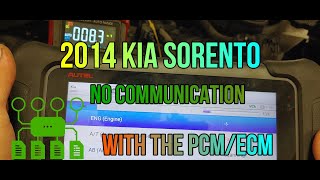
How to confirm: This is typically diagnosed by exclusion. If all power, ground, and external component checks pass, the ECM itself is condemned. 🎬 Watch: Step-by-step PCM and ECM diagnostics on a Sorento A professional shop can use advanced scan tools to attempt a module self-test or check for a valid ROM checksum.
Typical fix: Replace the ECM and have the new unit professionally programmed to the vehicle.
Est. part cost: $400-$1400 - Poor Power or Ground Supply to ECM 🟡 Medium Probability
How to confirm: Use a multimeter to test the battery and charging system; voltage should be ~12.6V with the engine off and 13.5-14.5V when running. Inspect and test the ECM's main power and ground wires for corrosion, damage, or high resistance (should be less than 0.1 ohms to chassis ground). The ECM is typically located in the engine bay near the firewall or battery.
Typical fix: Clean or repair corroded ground straps, replace faulty battery terminals, or fix damaged wiring. If the alternator is failing, it must be replaced.
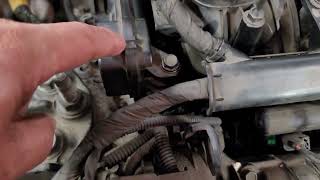
Est. part cost: $10-$500 - Faulty Intake Manifold Runner Control (IMRC) Motor ⚪ Low Probability Aftermarket part manufacturers specifically list this component failure as a cause for P0605 on this vehicle, suggesting a known electrical failure mode that can trigger the ECM error. This part is also known as a Variable Intake Solenoid.
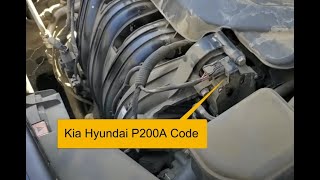
How to confirm: Inspect the IMRC motor's electrical connector for damage or corrosion. A diagnostic scanner may show related codes like P200A. The component can be tested for proper operation. 🎬 Watch: How to troubleshoot the P200A intake runner code
Typical fix: Replace the Intake Manifold Runner Control motor. The OEM part number is 28323-2GGA1.
Est. part cost: $150-$250
Rare But Worth Checking
- Corrupted ECM Software: While no specific TSB exists for this Sorento for P0605, Kia has issued software updates (reflashes) for other models and years to fix this exact code, often under a 'Service Action'. It's worth asking a dealer to check for any available software updates for your VIN before replacing the hardware, as a failed previous update can also cause this code.
Diagnosis Steps
- Verify the battery is fully charged (approx. 12.6V engine off) and the terminals are clean and tight.
- Test the alternator to ensure it is providing stable voltage (13.5-14.5V) while the engine is running. An unstable voltage can corrupt the ECM.
- Inspect all ECM power and ground connections. The ECM is typically in the engine bay. Look for any signs of corrosion, water intrusion, or physical damage to the harness and connectors.
- Visually inspect the Intake Manifold Runner Control (IMRC) motor and its wiring harness for any signs of damage or corrosion.
- If a capable scan tool is available, check for any other pending or active codes that could point to a related system, like P200A for the IMRC or U-codes for communication failures.
- If all external wiring, power, grounds, and related components check out, the fault is likely internal to the ECM.
- Contact a Kia dealership with your VIN to inquire if any software updates (reflashes or service campaigns like SC200) are available for the ECM. A failed prior update can also be a cause.
- If no software update is available or the issue persists, the ECM will need to be replaced and programmed by a qualified technician.
Parts You'll Likely Need
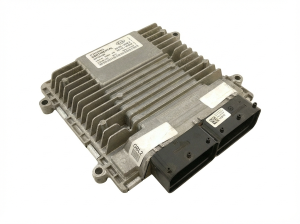
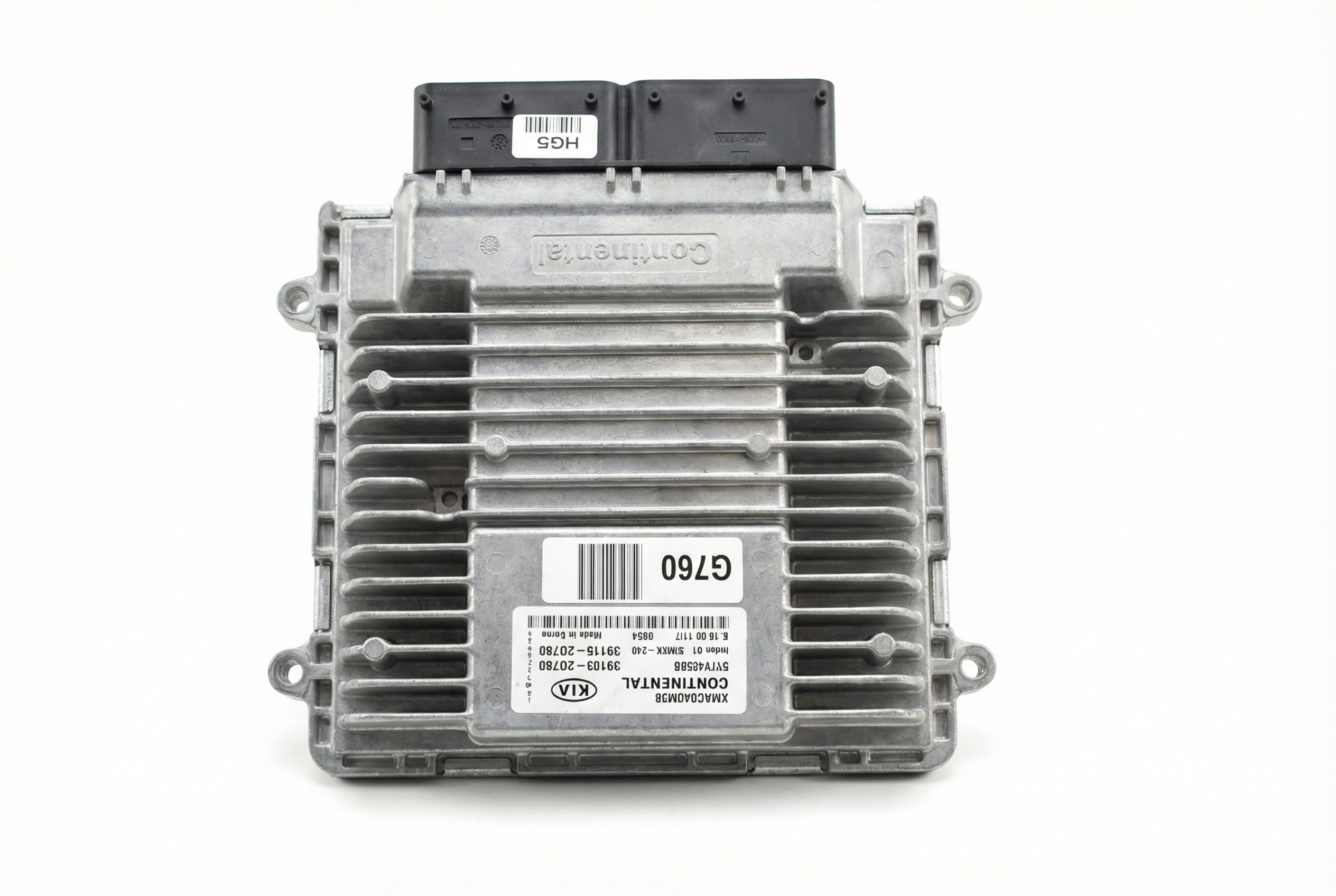
- Engine Control Module (ECM)
(OEM #39110-3CDA0 (Verify by VIN, multiple versions exist, e.g., 39110-3CXN0 for 2014 3.3L))— This is the most probable cause if all external electrical checks pass. The code directly indicates an internal failure of this component.
Trusted brands: Kia (OEM), Flagship One (Remanufactured), Dorman (Remanufactured)
OEM price range: $1400-$2100
Aftermarket price range: $400-$700 (Remanufactured) - Intake Manifold Runner Control Motor
(OEM #28323-2GGA1)— A known, vehicle-specific cause that can trigger P0605. It's a much cheaper part to replace as a diagnostic step before condemning the ECM.
Trusted brands: Dorman (911-923), SKP, Genuine Kia/Hyundai
OEM price range: $250-$350
Aftermarket price range: $150-$250
Related Codes That Often Appear With This One
- P2110 — P2110 (Throttle Actuator Control System - Forced Limited RPM) can be triggered as a direct result of the P0605 error, as the ECM enters a 'limp mode' to protect the engine when it detects a critical internal fault.
- P200A — P200A (Intake Manifold Runner Performance) may appear alongside P0605 if the Intake Manifold Runner Control motor is the root cause of the electrical fault.
- U-series codes (e.g., U0100) — Communication codes like U0100 (Lost Communication With ECM/PCM) often accompany P0605 because the internal failure prevents the ECM from communicating properly with other modules on the vehicle's network.
Technical Service Bulletins (TSBs) & Recalls
- While no TSB for P0605 on this specific model was found, Kia has issued TSB SC200 for similar year Sorentos with the 2.4L engine to install a Knock Sensor Detection System (KSDS) via an ECU software update. This shows a precedent for ECU reflashes to improve engine monitoring and protection.
- Kia Service Action SA463 for the 2021 Seltos addresses a P0605 code with a software update, confirming that Kia sometimes resolves this ROM error code via a reflash rather than hardware replacement.
Platform-Specific Known Issues
- Owner Experience: Misdiagnosis of Transmission Failure: A 2011 Sorento 3.5L V6 owner on Reddit with 69k miles reported codes P0605 and P2110. Symptoms included violent lurching, clunking sounds when shifting, and rattling on acceleration. A transmission shop misdiagnosed a 'hard part failure' and quoted $2000 for a used transmission. The symptoms were directly caused by the ECM fault putting the vehicle into limp mode, not a mechanical transmission issue.
Mechanic-Grade Diagnostic Values
- 5-Volt Reference at Sensors — expected: Approximately 5.0 Volts at the signal wire of sensors like the MAP sensor with key-on-engine-off.. Failure: A reading near zero (e.g., 27 millivolts) on multiple 5V reference circuits points to an internal failure in the ECM, which is responsible for supplying this voltage.
- ECM Power and Ground — expected: Steady 12.0-14.8V at the ECM's power pins with ignition on. Ground circuit resistance should be less than 0.1 ohms to chassis ground.. Failure: Voltage below 12V, voltage spikes during startup, or high resistance on the ground circuit can cause the ECM to set a P0605 code.
- Main Relay Ground Control — expected: The ECM provides the ground path to activate the main relay. With the key on, this ground should be present and stable.. Failure: An absent or intermittent ground signal from the ECM to the main relay will prevent power from reaching multiple critical engine components, leading to a no-start and potentially setting communication codes alongside P0605. This indicates a fault within the ECM's driver circuit.
Scan Tool Commands That Help
- Kia GDS/KDS (Dealer Tool): Module Self-Test / ROM Checksum — To verify if the ECM's internal software integrity check is failing. A checksum mismatch confirms the P0605 code's assertion of a ROM error.
- Kia GDS/KDS (Dealer Tool): VIN Writing / Programming — This is a mandatory step when installing a new or used ECM. The tool writes the vehicle's VIN into the module, allowing it to communicate with the immobilizer and other vehicle systems.
- Bench Programming Tools (e.g., FoxFlash, Hex Probe): ECU Cloning — When replacing a failed ECM with a used donor unit. This process reads all data (VIN, immobilizer, keys, firmware) from the original ECM and writes it to the replacement, creating a plug-and-play module that does not require dealer programming.
Wiring & Ground Locations
- Main Relay — Located in the engine compartment fuse/relay box.. This relay supplies power to the ECM and multiple critical sensors. A technician found that the ECM's failure to provide a ground to this relay was the root cause of a no-start condition associated with P0605-related codes. Checking the ECM's control of this relay is a key diagnostic step.
- ECM Fuses — In both the engine compartment fuse box (E/R Fuse and Relay Box) and the instrument panel fuse box (IPM).. Multiple fuses protect the power supply circuits to the ECM. A blown fuse can cause low voltage or a no-power condition, triggering internal fault codes. Check fuses labeled 'ECU', 'PCM', or similar.
Real Owner Repair Stories
- JL's Auto Solution on YouTube (2014 Kia Sorento 3.3L V6) — No-start condition, multiple communication codes (U-series), and a P0605 (Internal Control Module Memory Check Sum Error).
❌ Tried (didn't work) Initial scan showed no communication with the ECM.
✅ What actually fixed it The technician diagnosed a dead ECM by confirming the absence of a 5-volt reference at multiple sensors (reading only 27mV) and tracing the main relay's ground control back to the ECM, which was found to be faulty. Replacing the ECM resolved the issue.
OEM Part Supersession History
39110-3CDA0→Varies by VIN— Standard part revisions and updates.
Heads up: Multiple part numbers exist for this generation, such as 39110-3CXN0 for the 2014 3.3L and 39110-3CXN5 for 2013-2014 models. Always verify the correct part number with the vehicle's VIN before ordering.
Model Year Variations Within This Range
- 2014-2015: The standard V6 engine was changed from a 3.5L MPI to a 3.3L GDI. While both are in the Lambda II family, they use different ECMs with different part numbers (e.g., 39110-3CXN0 for the 3.3L). Fuse box layouts also changed slightly for the 2014 model year refresh.
Diagnostic Flowchart
Other Known Issues on This Vehicle
Issues unrelated to this code that are worth knowing about as an owner of this generation:
- Engine Bearing Failure (Rod Knock) 🔴 High — A significant concern for Theta II (4-cylinder) engines of this era, but also reported in Lambda II V6 engines, though less frequently. Often leads to catastrophic engine failure. (Ref: Multiple recalls and campaigns (e.g., SC147) were issued, primarily for the 2.4L Theta II engine, but reflect broader issues with manufacturing debris from the era.)
- Excessive Oil Consumption 🟠 Medium — More prevalent in the GDI versions of the Lambda engine, but owners of the 3.5L MPI should also monitor oil levels closely. Low oil can lead to premature wear and timing issues. (Ref: TSB ENG225 addresses oil consumption diagnosis for a wide range of Kia engines from this period.)
- Ignition Coil Failure 🟡 Low — A common maintenance item. Failure of one or more coils can cause misfires and a rough running condition. The rear bank is more labor-intensive to access due to the intake manifold.
- Headlight Bulb Burnout 🟡 Low — Owners frequently report premature and repeated failure of low-beam headlight bulbs. While easy to replace, it is a common annoyance.
- A/C Compressor Clutch Failure 🟠 Medium — The clutch on the A/C compressor can fail, resulting in no cool air even if the refrigerant level is correct. Often requires replacement of the entire compressor assembly.
Used vs. New Parts: Buying Guide for This Vehicle
When a used part is the smart pick: A used ECM is a viable and cost-effective option if your original ECM is damaged and you have access to a specialized service that can clone it. Cloning transfers all your vehicle's data (VIN, immobilizer, keys) to the used ECM, making it plug-and-play. This avoids expensive dealer programming.
Donor-vehicle mileage cap: roughly under 150000 miles for the part to have meaningful remaining life.
What to inspect on the donor part:
- Match the OEM part number on the sticker EXACTLY. Even a single digit difference can mean incompatibility.
- Source the part from a vehicle of the same year, model, engine, and transmission type.
- Inspect the donor ECM for any physical damage, corrosion on the pins, or signs of being opened or tampered with.
- Buy from a reputable recycler that offers a warranty, even if you plan to clone it immediately.
OEM-only on this vehicle (don't cheap out):
- Engine Control Module (ECM) - While remanufactured units from brands like Flagship One exist, the most reliable replacement paths are a new OEM unit programmed by a dealer or a used OEM unit that has been professionally cloned.
Aftermarket brands forum-validated for this vehicle:
- Dorman (for the related IMRC motor, part 911-923)
Brands owners have reported issues with on this vehicle:
- No-name, unverified ECM 'repair' or 'programming' services on marketplaces without extensive positive reviews specifically for Kia/Hyundai vehicles.
Real Owner Stories
Aggregated from forums and TSBs cited above. Mileages and costs reflect what owners reported in those sources.
2011 Kia Sorento LX 3.5L V6 — 69700 miles
Symptoms: Mild sudden jerks to violent backward lurches when shifting gears, accompanied by a mild clunking sound from the front. Codes P0605 and P2110 were present.
What fixed it: The issue was an ECM fault putting the vehicle into limp mode (misdiagnosed by a transmission shop as a $2,000 'hard part' transmission failure).
Source hint: reddit.com/r/Cartalk/comments/cck75y/my_2011_kia_is_acting_up_i_need_help/
Related OBD-II Codes
Frequently Asked Questions
My 2011 Sorento 3.5L is lurching and the shop says I need a $2,000 transmission. Could P0605 be the real cause?
Is there a specific part number for the IMRC motor if that's causing my P0605 code?
Does Kia TSB SC200 apply to my 3.5L V6 Sorento for the P0605 code?
Can a bad battery or alternator trigger a P0605 ROM error on this vehicle?
Where is the ECM located on the 2011-2015 Sorento 3.5L if I need to check the grounds?
Is there any software update for P0605 instead of replacing the whole ECM?
Helpful Videos
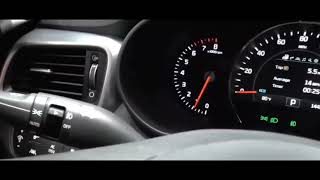
We Have This Part in Stock
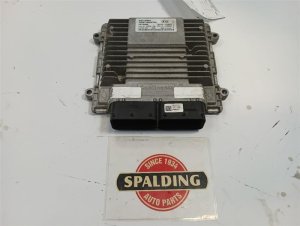
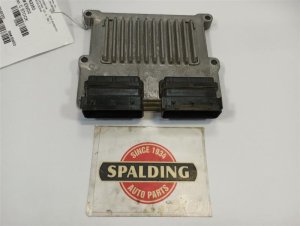
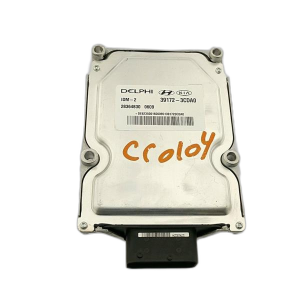

The information in this article is provided for general reference and educational purposes only. Vehicle specifications, procedures, and part compatibility can vary by production date, trim level, and region. Always consult your vehicle's factory service manual and verify part numbers before purchasing or performing repairs. Safety-critical components such as airbags, seat belts, and braking systems should be installed by a qualified professional.
- Kia Sorento:
- 🧭 Diagnostic Flowchart
- 🎬 Helpful Videos
- 🛍️ Shop This Part
- What's Unique About the 2011-2015 Kia Sorento
- Symptoms You May Notice
- Most Likely Causes
- Rare But Worth Checking
- Diagnosis Steps
- Parts You'll Likely Need
- Related Codes That Often Appear With This One
- Technical Service Bulletins (TSBs) & Recalls
- Platform-Specific Known Issues
- Mechanic-Grade Diagnostic Values
- Scan Tool Commands That Help
- Wiring & Ground Locations
- Real Owner Repair Stories
- OEM Part Supersession History
- Model Year Variations Within This Range
- Other Known Issues on This Vehicle
- Used vs. New Parts: Buying Guide for This Vehicle
- Real Owner Stories
- 2011 Kia Sorento LX 3.5L V6 — 69700 miles
- Related OBD-II Codes
- Frequently Asked Questions
- 🎟️ Get 5% Off