

P0605 on 2009-2013 Nissan Armada: ECM Failure or a Simple Brake Switch Fix?
While P0605 typically means a severe internal failure of the Engine Control Module (ECM), on the 2009-2013 Nissan Armada it is frequently caused by a misadjusted cruise control (ASCD) brake switch. Always check the switch adjustment per Nissan's technical service bulletin before considering a costly ECM replacement.
- On a 2009-2013 Nissan Armada, P0605 is often caused by a misadjusted cruise control brake switch, not a failed ECM.
- Always reference Nissan TSB NTB13-039 before authorizing an expensive ECM replacement.
- Symptoms include a check engine light, inoperative cruise control, and possible stalling or no-start conditions.
- If the ECM does need replacement, it must be programmed specifically for your vehicle's VIN.
- Check for signs of water intrusion near the ECM (behind the glove box) as this is a known failure point.
- The Nissan Titan and Infiniti QX56 of the same era share this exact issue.
What's Unique About the 2009-2013 Nissan ARMADA
For this generation of Nissan Armada and its platform-mates like the Nissan Titan and Infiniti QX56, the P0605 code has a well-documented, unique cause. Nissan issued a Technical Service Bulletin (TSB NTB13-039) advising technicians that an improperly adjusted Automatic Speed Control Device (ASCD), or cruise control, brake switch can incorrectly trigger a P0605 code. The bulletin explicitly states to check the ASCD brake switch for proper operation and adjustment *before* replacing the ECM. This turns a diagnosis that would normally point to an expensive ECM replacement into a potential simple mechanical adjustment, a scenario owners should be aware of before approving major repairs.
Diagnostic Flowchart
Tap your situation to follow the diagnostic path that matches what you're seeing on this vehicle.
Symptoms You May Notice
- Check Engine Light is on
- Cruise control does not work or is inoperative
- Engine may stall, hesitate, or run erratically
- Vehicle may crank but not start
- Transmission may not shift properly
- Illuminated ABS or Traction Control light
- "SET" indicator for cruise control may flash.
- Replacing the ECM without first checking the ASCD brake switch adjustment. This is a very expensive mistake given the known TSB.
Most Likely Causes
- Improperly Adjusted ASCD (Cruise Control) Brake Switch 🔴 High Probability → Shop Combination Switch This is a known issue documented by Nissan in TSB NTB13-039 for all 2009 and newer Nissan vehicles equipped with ASCD. The ECM logic can misinterpret a faulty or misadjusted signal from this switch as an internal memory error, leading directly to a P0605 code.
How to confirm: A technician should inspect the ASCD brake switch for proper operation and ensure the clearance gap is adjusted to the specifications in the factory service manual, as instructed by TSB NTB13-039. The switch is located on a bracket near the top of the brake pedal.
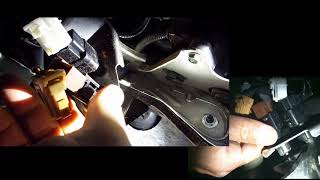
Typical fix: Adjust the switch to the correct position by loosening it, depressing the pedal, allowing the switch plunger to fully extend, and then releasing the pedal to let it self-adjust. If the switch is faulty, it will need to be replaced. Replacement involves unplugging the connector, turning the switch 45 degrees to remove it, and installing the new one in reverse. 🎬 Watch: How to replace and adjust the ASCD brake switch
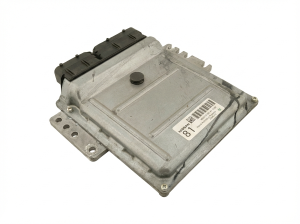
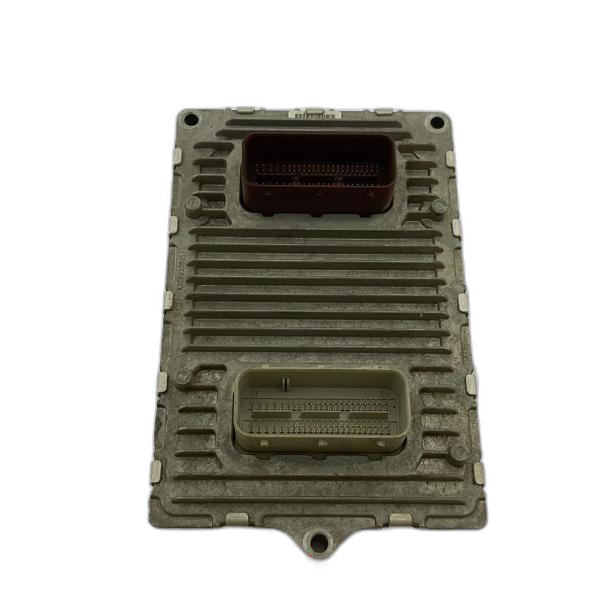
Est. part cost: $25-$60 - Failed Engine Control Module (ECM) 🟡 Medium Probability → Shop Engine Control Module (ECM) Water intrusion is a common cause of ECM failure on this platform. A clogged A/C drain or leaking windshield seal can allow water to drip onto the ECM, which is located behind the glove box, causing corrosion and failure. This should only be considered after the brake switch is confirmed to be working correctly.
How to confirm: After ruling out the ASCD switch and verifying all power and ground connections to the ECM are clean and stable, the ECM itself is the likely culprit. This is a process of elimination. A visual inspection of the ECM and its connectors for green or white corrosive powder or signs of moisture is a key step.
Typical fix: Replace the Engine Control Module. The new module must be programmed to the vehicle's VIN and specific options using a Nissan-specific diagnostic tool like CONSULT-III plus.
Est. part cost: $800-$1500 - Low Battery Voltage or Charging System Fault ⚪ Low Probability → Shop Vehicle Battery Sudden voltage drops or spikes during startup can sometimes corrupt the ECM's self-test process, leading to false internal error codes. Nissan has issued other TSBs for similar models related to no-start conditions from low voltage that require an ECM reprogram to fix, indicating a sensitivity to voltage issues.
How to confirm: Test the battery's health and voltage (should be ~12.6V off, 13.2-14.8V running). Check the alternator's output to ensure it is stable and within the correct range.
Typical fix: Replace a weak battery or faulty alternator. Clean any corroded battery terminals or cable ends.
Est. part cost: $150-$500 - Poor Electrical Connections or Damaged Wiring ⚪ Low Probability Corrosion on the ECM connectors due to moisture can cause resistance or loss of connection, triggering various faults. Poor ground connections are also a known cause for this code on Nissan vehicles.
How to confirm: Visually inspect the ECM connectors for any signs of water damage, corrosion (white or green powder), or bent pins. Check the main ECM power and ground circuits for continuity and integrity.
Typical fix: Clean the connectors with an electrical contact cleaner. If wiring is damaged, it must be repaired or the harness replaced. Ensure all ground straps from the engine to the body are clean and tight.
Est. part cost: $5-$100
Diagnosis Steps
- Verify the P0605 code is present using an OBD-II scanner.
- Check for any Technical Service Bulletins (TSBs) related to P0605 for your specific vehicle. Note TSB NTB13-039, which is the primary diagnostic path.
- Following TSB NTB13-039, locate the two switches above the brake pedal. The ASCD (cruise control) switch is one of them, often with a brown connector. Inspect and test the switch. Verify its adjustment and electrical operation per the service manual.
- If the switch is correctly adjusted and functional, proceed to test the vehicle's battery and charging system to ensure stable voltage (13.2-14.8V when running).
- Inspect the ECM's wiring harness and connectors for any signs of damage, corrosion, or water intrusion. The ECM is typically located behind the glove box.
- Verify the ECM has a clean and stable power and ground supply. Check for corroded ground straps in the engine bay.
- If all external factors have been ruled out, the ECM is likely faulty and requires replacement and programming.
Parts You'll Likely Need
- ASCD Brake Switch (Stop Lamp Switch)
(OEM #25320-AX00C (or superseding part numbers like 25320-AX10A))— This is the most likely cause of P0605 on this vehicle, as identified in Nissan TSB NTB13-039. This part number fits a wide range of Nissan vehicles including the Armada, Titan, and QX56 from this era.
Trusted brands: Nissan OE, Hitachi, Standard Motor Products
OEM price range: $40-$70
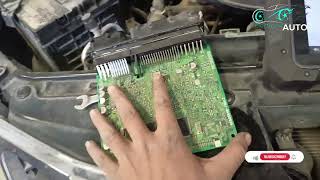
Aftermarket price range: $25-$50 - Engine Control Module (ECM) — If the ASCD switch and wiring are not the cause, the ECM itself has likely failed, which is the standard interpretation of a P0605 code. 🎬 Learn more about the causes and fixes for P0605 codes
Trusted brands: Nissan OE (Remanufactured or New)
OEM price range: $800-$1500
Aftermarket price range: N/A
Technical Service Bulletins (TSBs) & Recalls
- NTB13-039: Improper adjustment or operation of the ASCD brake switch can cause the Automatic Speed Control Device (ASCD) to "not set" and/or DTC P0605 (ECM) to store.
Platform-Specific Known Issues
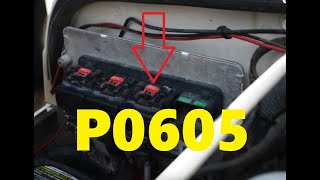
- Nissan Technical Service Bulletin NTB13-039 explicitly states that improper adjustment or operation of the ASCD brake switch can cause DTC P0605 to be stored. It advises checking this switch before replacing the ECM. 🎬 See why this Nissan code often points to the wrong part
- Owner forums for the Nissan Armada and its platform-mate, the Nissan Titan, are filled with accounts of dealers initially diagnosing a failed ECM for P0605, only for the issue to be resolved by adjusting or replacing the inexpensive brake pedal switch.
Mechanic-Grade Diagnostic Values
- ECM Main Power Supply Voltage — expected: Battery voltage (~12.6V with key on, engine off). Failure: Voltage below 12V or 0V indicates a power supply issue (fuse, relay, or wiring).
- ECM Ground Circuit Continuity — expected: Less than 1.0 ohm of resistance between the ECM ground pins (e.g., Pins 1, 115, 116 on some models) and a clean chassis ground.. Failure: High resistance or an open circuit (OL) indicates a corroded, loose, or broken ground connection.
- ASCD Brake Switch Continuity — expected: The switch should show continuity (closed circuit) in one state (plunger pressed or released) and no continuity (open circuit) in the opposite state.. Failure: If the switch is always open or always closed regardless of plunger position, it is faulty.
Scan Tool Commands That Help
- Nissan CONSULT-III: Work Support > ECM (Engine Control Module) > Data Monitor > ASCD BRAKE SW — To verify in real-time if the ECM is receiving the 'ON' and 'OFF' signals from the ASCD brake switch as the brake pedal is pressed and released. This confirms the entire circuit's integrity from the switch to the ECM.
- Nissan CONSULT-III: Reprogramming, Replace ECM — This function is mandatory after installing a new or used ECM. It programs the vehicle's VIN and security information (NATS - Nissan Anti-Theft System) into the replacement module. The vehicle will not start until this procedure is completed.
Wiring & Ground Locations
- ECM Power/Ground Pins — At the main ECM harness connector, located behind the glove compartment.. Verifying stable battery voltage at the power pins (e.g., 119, 120) and a solid ground at the ground pins (e.g., 1, 115, 116) is critical. A voltage drop or poor ground can cause the ECM to fail its internal self-test and set a P0605.
- Engine Room Ground Points — Typically found on the inner fender aprons near the battery, on the engine block itself, and on the firewall.. The main ECM grounds are often located in the engine bay. Corrosion or looseness at these points is a common cause of intermittent and difficult-to-diagnose electrical problems, including false ECM error codes.
Real Owner Repair Stories
- TitanTalk Forum Member (2011 Nissan Titan (same platform/drivetrain)) — Check Engine Light with code P0605, cruise control inoperative.
❌ Tried (didn't work) Initial diagnosis pointed towards a faulty ECM.
✅ What actually fixed it Owner found TSB NTB13-039 online. Instead of replacing the ECM, they replaced the ASCD brake switch (the brown one) located above the brake pedal. This resolved the code and restored cruise control function. - ClubArmada Forum Member (Nissan Armada (year not specified, but within the affected range)) — P0605 code present.
❌ Tried (didn't work) Dealer diagnosed a bad ECM and quoted $1,500 for replacement.
✅ What actually fixed it The owner researched the code and TSB, purchased the brake switch for approximately $40, and replaced it themselves. This cleared the P0605 code and fixed the issue, saving a significant amount of money.
When the Usual Fixes Don't Work
- Multiple owner accounts on forums for the Nissan Armada and Titan platforms strongly counter the default diagnosis of a failed ECM for a P0605 code. In many documented cases, vehicle owners were quoted over $1,000 for an ECM replacement by a dealer or repair shop. However, after finding Nissan's TSB NTB13-039, they were able to permanently resolve the code by simply adjusting or replacing the ASCD brake switch, a part costing under $60. This highlights a significant and costly common misdiagnosis that deviates from the generic definition of the code.
OEM Part Supersession History
25320-AX00A→25320-AX00C, 25320-AX00B, and in some cases 25320-3JA0A— Standard part revision and consolidation by the manufacturer.
Heads up: The listed part numbers are generally interchangeable for this application, but it is always best to verify fitment with the vehicle's VIN. The key is ensuring it is the ASCD switch (often brown connector) and not just the stop lamp switch if they are separate parts.
Helpful Videos

We Have This Part in Stock

The information in this article is provided for general reference and educational purposes only. Vehicle specifications, procedures, and part compatibility can vary by production date, trim level, and region. Always consult your vehicle's factory service manual and verify part numbers before purchasing or performing repairs. Safety-critical components such as airbags, seat belts, and braking systems should be installed by a qualified professional.
- Nissan ARMADA:
- 🧭 Diagnostic Flowchart
- 🎬 Helpful Videos
- 🛍️ Shop This Part
- What's Unique About the 2009-2013 Nissan ARMADA
- Symptoms You May Notice
- Most Likely Causes
- Diagnosis Steps
- Parts You'll Likely Need
- Technical Service Bulletins (TSBs) & Recalls
- Platform-Specific Known Issues
- Mechanic-Grade Diagnostic Values
- Scan Tool Commands That Help
- Wiring & Ground Locations
- Real Owner Repair Stories
- When the Usual Fixes Don't Work
- OEM Part Supersession History
- 🎟️ Get 5% Off