

P0605 on 2009-2013 Nissan CUBE: ECM Error or Simple Brake Switch Fix?
On a 2009-2013 Nissan CUBE, code P0605 is most often caused by a misadjusted or faulty cruise control (ASCD) brake switch, not a failed engine computer. Check and adjust the switch at the top of the brake pedal before considering an expensive ECM replacement.
- For a P0605 on a 2009-2013 Nissan CUBE, do not immediately assume the ECM has failed.
- The most probable cause is a simple and inexpensive ASCD (cruise control) brake switch that is either faulty or out of adjustment.
- Symptoms to look for are a Check Engine Light combined with the cruise control not working, and potentially a flashing 'SET' light.
- Adjusting or replacing the brake switch is a simple DIY job that can save over $1000 compared to an unnecessary ECM replacement.
- Only after ruling out the brake switch and checking ECM power/grounds should you consider replacing the ECM.
What's Unique About the 2009-2013 Nissan CUBE
For the 2009-2013 Nissan CUBE and its platform mates, the P0605 code has a very specific and unusual trigger. Nissan issued a Technical Service Bulletin (NTB13-039) stating that an improperly adjusted or faulty Automatic Speed Control Device (ASCD) brake switch is a common cause for this code. The bulletin applies to all 2009 and newer Nissan vehicles with ASCD. This is highly unusual, as an internal computer error code is rarely caused by a simple mechanical switch. This knowledge can save an owner from a very expensive and unnecessary ECM replacement.
Diagnostic Flowchart
Tap your situation to follow the diagnostic path that matches what you're seeing on this vehicle.
Symptoms You May Notice
- Check Engine Light is on
- Cruise control does not work or will not set
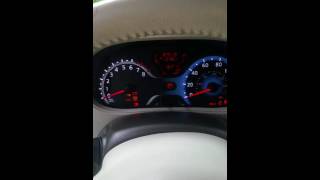
- The 'CRUISE' light on the dash may stay on while the 'SET' light flashes
- Engine may stall, hesitate, or run rough
- Vehicle may not start or have a hard time starting
- Illuminated ABS or Traction Control light
- Brake lights may not function correctly
- Replacing the Engine Control Module (ECM) without first checking the ASCD brake switch. This is a very expensive mistake given the known issue described in TSB NTB13-039.
Most Likely Causes
- Improperly Adjusted or Faulty ASCD Brake Switch 🔴 High Probability → Shop Combination Switch As documented in Nissan TSB NTB13-039, the ECM logic on this platform is sensitive to the signal from the cruise control brake switch, and a fault here can be misinterpreted as an internal ECM error. The switch itself is a simple mechanical plunger that can wear out or fall out of adjustment over time.
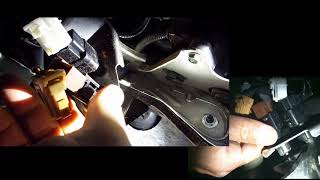
How to confirm: Check if the cruise control fails to set. Inspect the two switches located on the bracket at the top of the brake pedal arm. The ASCD switch is typically the one with a brown connector. Check for proper clearance and electrical operation. The switch is a plunger-style switch that is activated by the pedal's movement. A video guide for a Nissan Juke shows the location and replacement process, which is very similar. 🎬 Watch: How to replace the ASCD and brake switches.
Typical fix: Adjust the switch by loosening its lock nut or rotating it (it typically turns 45 degrees to unlock), ensuring its plunger is fully depressed when the pedal is released and fully released when the pedal is pressed. If adjustment doesn't work, the switch needs to be replaced. This is a simple, no-tool fix for many owners.
Est. part cost: $25-$60 - Failing Engine Control Module (ECM) ⚪ Low Probability → Shop Engine Control Module (ECM) While less common on this platform due to the brake switch issue, any ECM can fail due to age, heat, voltage spikes, or internal manufacturing defects. A failed software update can also corrupt the ROM and trigger a P0605 code.
How to confirm: This is a diagnosis of exclusion. If the ASCD brake switch is confirmed to be working and adjusted correctly, and all power and ground connections to the ECM are verified to be clean and stable, the ECM itself is the likely culprit. This was the case for an owner of a 2003 Infiniti M45 who, after much diagnosis, had to replace the ECM.
Typical fix: The ECM must be replaced and programmed to the vehicle's VIN and specific options. This typically requires a dealership or a specialized repair shop with the correct programming tools like Nissan's CONSULT.
Est. part cost: $500-$1200 - Poor ECM Power or Ground Connection ⚪ Low Probability
How to confirm: Inspect the battery terminals for corrosion and tightness. Check the main engine and chassis ground straps for corrosion or looseness. Use a multimeter to verify a stable 12V+ at the ECM power pins and less than 0.1V on the ground pins. A YouTube video demonstrates the importance of checking grounds, as a bad ground was the root cause of a P0605 code that was initially misdiagnosed as a bad ECM. 🎬 Watch: Understanding the P0605 code and common Nissan causes.
Typical fix: Clean battery terminals and cable ends. Clean or replace corroded ground straps. Repair any damaged wiring in the ECM harness.
Est. part cost: $5-$50
Diagnosis Steps
- Verify the symptoms. Confirm that the Check Engine Light is on and the cruise control does not set. Note if the 'SET' light is flashing, as this is a key indicator mentioned in the TSB.
- Scan for codes. Confirm P0605 is the primary code stored. Note any other codes present.
- Crucial Step: Inspect and test the ASCD brake switch. Locate the switch on the brake pedal bracket (it's one of two, typically the one with the brown connector). Visually inspect it for damage.
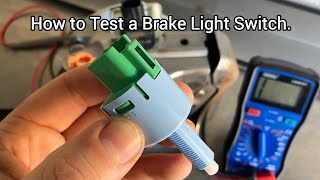
- Test the ASCD brake switch for continuity. With the switch connector unplugged, there should be continuity between its two terminals when the plunger is out (pedal pressed) and no continuity when the plunger is pushed in (pedal released).
- Adjust the ASCD brake switch. Loosen the switch by turning it counter-clockwise about 45 degrees, adjust its position relative to the pedal stop, and then lock it back in place by turning it clockwise. The goal is to ensure the switch's plunger is fully depressed with the pedal up, and fully released when the pedal is pressed even slightly.
- Clear the codes and test drive. See if the P0605 code returns and if the cruise control now functions. If the problem is resolved, the fix is complete.
- If the code returns, test the switch electrically with a multimeter to ensure it is opening and closing the circuit correctly. If it fails this test, replace it. Part number 25320-AX00E is a common replacement.
- If the switch is confirmed good and adjusted correctly, proceed to check the ECM's power and ground connections. Ensure the battery is healthy (12.6V+ off, ~14V running) and the alternator is providing stable voltage. Check and clean all major ground straps from the battery to the chassis and engine block.
- If all wiring, grounds, and the brake switch are good, the ECM is the most likely failed component and requires replacement and programming.
Parts You'll Likely Need
- ASCD (Cruise Control) Brake Switch
(OEM #25320-AX00E)— This is the most common cause of P0605 on this vehicle, as identified by Nissan's own service bulletin NTB13-039.
Trusted brands: Nissan OE, Standard Motor Products
OEM price range: $40-$60
Aftermarket price range: $25-$40 - Engine Control Module (ECM) — This is the default cause of a P0605 code if the more common brake switch issue has been ruled out.
Trusted brands: Nissan OE (Remanufactured), Flagship One, Dorman
OEM price range: $800-$1200
Aftermarket price range: $500-$800
Related Codes That Often Appear With This One
- P0507 - Idle Control System RPM Higher Than Expected
- P1705 - Throttle Position Sensor
- P0455 - EVAP System Gross Leak Detected
Technical Service Bulletins (TSBs) & Recalls
- NTB13-039 / EL13-008: States that before replacing the ECM for P0605, the ASCD brake switch must be checked for proper operation and adjustment, as it is a known cause for the code on all 2009 and newer Nissans with cruise control.
Platform-Specific Known Issues
- Nissan Technical Service Bulletin NTB13-039 directly links an improperly adjusted or failed ASCD brake switch to the P0605 ECM error code.
- A Reddit user with a 2010 Nissan Rogue experiencing P0605 was advised to check the cruise control brake switch, referencing the TSB.
- A forum thread on NICOclub for a Nissan Rogue describes how a faulty brake light switch caused limp mode and was fixed in minutes without tools, corroborating the ease of the fix.
Mechanic-Grade Diagnostic Values
- ASCD Brake Switch Continuity — expected: Continuity should exist between terminals 1 and 2 when the brake pedal is released (plunger pushed in). No continuity should exist when the brake pedal is slightly depressed (plunger out).. Failure: Continuity does not change with pedal position, or is always open/closed.
- ECM Power Supply Voltage — expected: 12.6V+ with key on, engine off. Approximately 14V+ with engine running.. Failure: Voltage is low, unstable, or drops significantly under load.
- ECM Ground Circuit Resistance — expected: Less than 0.1V or near 0 Ω resistance between the ECM ground pins and a clean chassis ground.. Failure: Voltage reading above 0.1V or higher than expected resistance, indicating a poor ground connection.
Scan Tool Commands That Help
- Nissan CONSULT-II / CONSULT-III or equivalent: Data Monitor for 'BRAKE SW 1' (ASCD Switch) and 'BRAKE SW 2' (Stop Lamp Switch) — This is a primary step to diagnose the P0605 issue. It allows you to see in real-time if the ECM is receiving the correct ON/OFF signals from both brake pedal switches as you press and release the pedal, confirming their operation without physical testing.
Wiring & Ground Locations
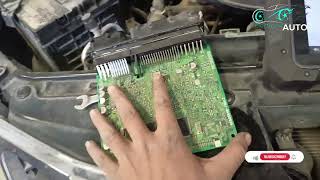
- ECM (Engine Control Module) — In the engine bay, located in the left rear of the engine room, next to the battery.. This is the computer that is reporting the internal error. Its location is critical for checking power, ground, and harness connections.
- Main Engine/Chassis Grounds — A primary ground strap often runs from the intake manifold area to the battery negative terminal or chassis. Another may connect the cylinder head (exhaust side) to the firewall. A wiring diagram shows a ground point designated 'E16' is used by the ECM.. A poor ground connection to the ECM is a known cause of P0605, as it can cause voltage irregularities that the ECM misinterprets as an internal fault.
- ASCD Brake Switch Connector — At the top of the brake pedal arm, on a bracket. It is one of two switches; the ASCD switch is often identifiable by its brown plastic connector.. This is the connector for the most likely failed part. Access is needed to test and replace the switch.
Real Owner Repair Stories
- YouTube video 'P0605 Nissan Code - Engine Control Module Fault' (Nissan vehicle (model not specified)) — P0605 code stored, initial assumption was a bad ECM.
❌ Tried (didn't work) Initial diagnosis pointed to replacing the ECM.
✅ What actually fixed it The root cause was a poor ground connection. The mechanic cleaned the main engine manifold ground, replaced a corroded body-to-engine ground strap, and added a supplementary ground wire directly from the ECM case to the battery negative terminal to ensure a stable ground. - NPORA Forums post (2005 Nissan Pathfinder) — P0605 and P0507 after installing a replacement (used) ECM.
❌ Tried (didn't work) Replacing the throttle body., Performing idle air volume relearn procedure.
✅ What actually fixed it The issue was unresolved in the thread, but highlights a critical point: replacing an ECM can still result in a P0605 code if the replacement unit is not correctly programmed or 're-flashed' to the specific vehicle's VIN and options by a dealer or specialist with the proper tools.
OEM Part Supersession History
25320-AX000, 25320-AX00A, 25320-AX00B, 25320-AX00C, 25320-AX00E→25320-AX10A— Standard part evolution and consolidation by the manufacturer.
Heads up: These part numbers are generally interchangeable for this application, but it is always recommended to verify the latest part number with a dealer using the vehicle's VIN.
Model Year Variations Within This Range
- 2009-2014: There were no significant changes to the engine, transmission, or core electrical systems within the 2009-2013 (US Market) model years that would affect the diagnosis of P0605. The primary cause (ASCD switch) and diagnostic procedure remain consistent across the entire generation.
Helpful Videos

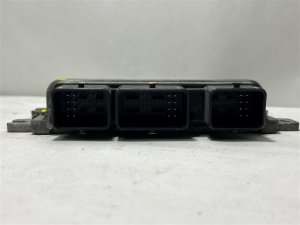
We Have This Part in Stock

The information in this article is provided for general reference and educational purposes only. Vehicle specifications, procedures, and part compatibility can vary by production date, trim level, and region. Always consult your vehicle's factory service manual and verify part numbers before purchasing or performing repairs. Safety-critical components such as airbags, seat belts, and braking systems should be installed by a qualified professional.
- Nissan CUBE:
- 🧭 Diagnostic Flowchart
- 🎬 Helpful Videos
- 🛍️ Shop This Part
- What's Unique About the 2009-2013 Nissan CUBE
- Symptoms You May Notice
- Most Likely Causes
- Diagnosis Steps
- Parts You'll Likely Need
- Related Codes That Often Appear With This One
- Technical Service Bulletins (TSBs) & Recalls
- Platform-Specific Known Issues
- Mechanic-Grade Diagnostic Values
- Scan Tool Commands That Help
- Wiring & Ground Locations
- Real Owner Repair Stories
- OEM Part Supersession History
- Model Year Variations Within This Range
- 🎟️ Get 5% Off