

P0605 on 2010-2016 Porsche Panamera: Engine Computer (DME) Failure Causes and Fixes
This code means the engine computer (DME) has an internal memory failure. It's often caused by a faulty DME, especially on 2012 models, but check for bad grounds, low battery voltage, or water leaks in the passenger footwell before replacing it. Replacement requires professional programming and is expensive.
- P0605 is a critical fault indicating the engine computer (DME) has failed an internal self-test.
- Do not immediately assume the DME is bad. Thoroughly check for water leaks in the passenger footwell, test the battery and alternator, and inspect all grounds first.
- If the car was recently tuned with aftermarket software, the tune itself is a primary suspect.
- This is not a DIY-friendly repair. Replacing the DME requires expensive, vehicle-specific programming to make the car run again.
- If you have a 2012 Panamera, be aware that there are reports of higher-than-average engine control unit failure rates for this model year.
What's Unique About the 2010-2016 Porsche Panamera
The Panamera's DME is sensitive to both software changes and environmental factors. Aftermarket engine tuning is popular for these cars and, if not performed correctly, can lead to software corruption that triggers P0605. Furthermore, like many Porsches and Cayennes of the era, the Panamera can suffer from clogged water drains (from the sunroof or windshield cowl) that allow rainwater to leak into the cabin and damage sensitive electronics. The DME and other modules are often located in the passenger footwell, a common collection point for this water, leading to corrosion and short circuits.
Generation note: The 2010-2016 range covers the first-generation Panamera (970), which had a significant facelift for the 2014 model year (becoming the 970.2). While the fundamental cause of P0605 is the same, a recall campaign (AMC2) regarding DME reprogramming specifically affects 2014 and later models within this range. One source also specifically calls out 2012 models as being prone to engine control unit faults.
Symptoms You May Notice
- Check Engine Light is on
- Engine will not start or has a long crank time
- Engine may stall unexpectedly while driving
- Noticeable loss of engine power or vehicle entering 'limp mode'
- Erratic idling or rough running
- Transmission shifting issues or PDK fault warnings
- Multiple, seemingly unrelated electrical fault messages on the dashboard
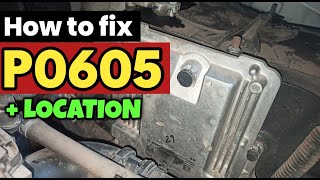
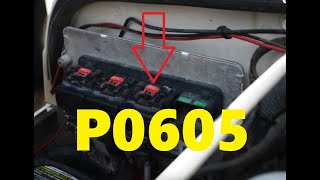
- Replacing sensors or other engine components before verifying the integrity of the DME itself. The P0605 code is specific to an internal module error, not a faulty sensor. 🎬 Watch: Causes and fixes for the P0605 code
- Mistaking symptoms of a bad DME (like stalling or rough idle) for a fuel pump issue, although fuel pump failures are also common on this platform.
Most Likely Causes
- Internal DME Failure 🔴 High Probability Some sources indicate that Panamera models, particularly from the 2012 model year, can be susceptible to premature engine control unit failures. This can be a result of aging electronic components, heat cycles, or manufacturing defects. The DME is a complex electronic unit and can fail internally without an external cause.
How to confirm: This is a diagnosis of exclusion. If all other potential causes (power, grounds, wiring, software, water intrusion) have been ruled out, the DME itself is condemned. A specialist may use a bench tester to confirm. The presence of a P0605 code is a strong indicator of an internal fault.
Typical fix: The DME must be replaced with a new or remanufactured unit, which then needs to be professionally programmed to the vehicle's VIN and security system using a PIWIS tester. 🎬 See how a failed Porsche ECU is cloned
Est. part cost: $1000-$2500 - Water Intrusion 🟡 Medium Probability Porsches are known for having complex water drainage systems for the sunroof and windshield cowl that can become clogged with leaves and debris. When these drains back up, water can leak into the passenger compartment, often dripping onto or flooding the area where control modules are located, causing short circuits and corrosion. This is a well-documented issue on forums like Rennlist and 6SpeedOnline.
How to confirm: Visually inspect the passenger side footwell carpet for dampness. Remove the glove box and/or kick panels to inspect the DME and its wiring connectors for any signs of moisture or blue/green corrosion. A user on Rennlist traced a leak to damp foam behind the glovebox. Clearing the cowl drains often requires removing the front wheel arch liner to access the rubber drain valves.
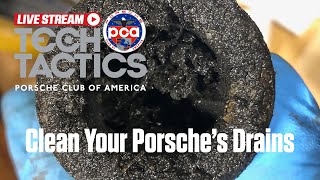
Typical fix: If corrosion is minor, cleaning the connectors with an electronic cleaner may work. If the DME is damaged, it must be replaced. The source of the leak (e.g., clogged cowl drains) must be identified and cleared to prevent recurrence. Some owners proactively modify the rubber drain ends to prevent future clogs. 🎬 Watch: How to clear your Porsche's drain tubes
Est. part cost: $0 (for cleaning) - $2500 (for DME replacement) - Software Corruption (Aftermarket Tune or Failed Update) 🟡 Medium Probability The Panamera is a popular vehicle for performance ECU tuning. An improperly applied tune, an interrupted flash process, or a glitchy software file can corrupt the DME's read-only memory, triggering a P0605 code. A failed official update at a dealership can also cause this, as highlighted in TSB AMC2, which warns that failure to maintain stable voltage (13.5-14.5V) during programming can damage the control unit.
How to confirm: This is often known from the vehicle's history. If the code appeared immediately after a tune was installed or an update was attempted, this is the likely cause. A Porsche dealer can check the software version against their records.
Typical fix: Attempt to reflash the DME with original, factory Porsche software using a PIWIS tester and a high-amperage power supply. If the DME is permanently damaged ('bricked'), it will require replacement.
Est. part cost: $200-$500 (for a reflash) - $2500 (for replacement) - Poor Power or Ground Supply ⚪ Low Probability Porsches are often not daily drivers and can suffer from low battery voltage due to sitting for extended periods. A weak battery, failing alternator, or corroded/loose ground straps can provide unstable voltage to the DME, which can cause it to fail its internal self-test and set a P0605 code, sometimes accompanied by a cascade of other electrical faults.
How to confirm: Test the battery voltage (should be >12.4V with engine off). With the engine running, check alternator output (should be 13.5V-14.5V). Inspect and test the main engine and chassis ground straps for corrosion and tightness. A user on Rennlist reported a history of broken ground cables causing widespread issues.
Typical fix: Replace the weak battery, failing alternator, or clean/replace the faulty ground straps. This is a relatively inexpensive first step before condemning the DME.
Est. part cost: $20-$800
Diagnosis Steps
- Read all fault codes from all vehicle modules using a Porsche-compatible scanner like PIWIS.
- Check and document the freeze frame data for the P0605 code.
- Test the battery and charging system. Ensure voltage is stable and within the 12.4V-14.5V range. Use a high-amperage power supply for any programming.
- Inspect all power and ground connections to the DME for tightness and corrosion. Check main ground strap locations, including those on the engine block and bell housing.
- Pull back the carpet and trim in the passenger footwell area. Inspect the DME, amplifier, and wiring harnesses for any signs of water intrusion, dampness, or corrosion.
- Check for clogged sunroof and windshield cowl drains. This can be done by removing the front wheel well liners to access the drain exits or by carefully pouring water into the cowl area and observing if it drains underneath the car.
- If the vehicle has an aftermarket tune, contact the tuning company for support. The next step may be to attempt to flash it back to the stock file.
- If all wiring, power, and grounds are good and there is no sign of water damage, the next step is to attempt a software reflash with the latest factory software using a PIWIS tester. This must be done by a qualified professional.
- If the reflash fails or the code returns immediately, the DME is faulty and must be replaced and programmed to the vehicle.
Parts You'll Likely Need
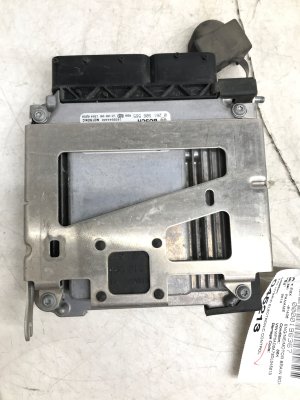
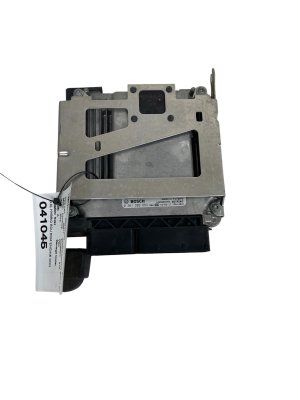
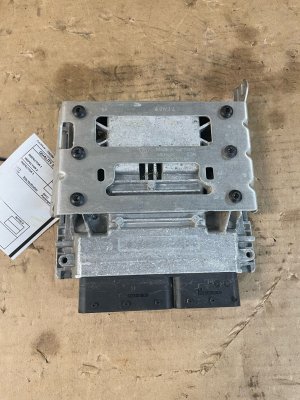
- Digital Motor Electronics (DME) / Engine Control Module (ECM)
(OEM #97061860103 (Example for V8 models, verify by VIN))— This code indicates an internal, often unrepairable, failure of the DME's memory. When software and external wiring issues are ruled out, the module itself is the cause.
Trusted brands: Bosch (OEM supplier), Porsche (Genuine)
OEM price range: $2000-$2800
Aftermarket price range: $800-$1500 (for remanufactured/programming services)
Related Codes That Often Appear With This One
- U-series codes (e.g., U0100) — If the DME is failing, it can cause a loss of communication on the CAN bus network, leading to communication codes with other modules in the vehicle.
- P17xx codes (e.g., P1775) — DME failure can sometimes impact communication with the PDK transmission control unit, leading to transmission-related fault codes.
- Alarm System 21: W Line (DME - immobilizer) Open Circuit — This dealer-level code indicates a break in the communication line between the DME and the immobilizer system, which can be a symptom or cause of DME-related faults.
- DME 1601: CAN Timeout Instrument Cluster — This indicates the DME has lost communication with the instrument cluster, a common side effect of an internal DME failure.
Technical Service Bulletins (TSBs) & Recalls
- AMC2 / 181/21ENU - Re-Programming DME and Transmission Control Unit (Recall Campaign). This applies to 2014-2018 models and involves a software update to address emissions in Sport+ mode. It contains critical warnings about maintaining voltage during the flash process.
Platform-Specific Known Issues
- TSB AMC2 - Reprogramming Warning: A recall campaign (AMC2) was issued for 2014-2018 Panamera models requiring a DME software update. The service procedure includes a strong warning that failure to maintain stable voltage (13.5V-14.5V) during programming can damage the control unit, potentially causing a P0605 code.
- Water Intrusion via Cowl Drains: The windshield cowl drains are notoriously prone to clogging with leaves and debris, causing water to overflow into the passenger footwell and damage electronics. This is a widely discussed topic in owner forums.
- 2012 Model Year Vulnerability: The 2012 Panamera model year is specifically mentioned in some sources as being prone to engine control unit faults.
- TSB WC05 - Corroded Ground Splices in Harness: For 2010-2011 models, Porsche issued a campaign to address moisture ingress into ground splice connections within the engine wiring harness. This corrosion can cause various sensor signal faults and potentially contribute to DME issues. The fix involves replacing the splices with sealed versions.
Mechanic-Grade Diagnostic Values
- Vehicle Voltage During DME Programming/Flashing — expected: Must be maintained between 13.5 and 14.5 Volts.. Failure: Voltage outside this range can cause the programming to fail and permanently damage the DME control unit.
- DME Main Relay Socket Voltage (Relay Removed) — expected: Pin 30: Constant +12V (direct from battery). Pin 86: +12V only when ignition is in 'Run' position.. Failure: Low or no voltage at Pin 30 indicates a problem with the main power feed wire to the DME circuit, not the DME itself.
Scan Tool Commands That Help
- PIWIS Tester (II or 3): Control unit replacement — This guided function is used to program a new DME to the vehicle, adapting it to the VIN, immobilizer, and country-specific settings.
- PIWIS Tester (II or 3): Automatic programming — Used to execute software updates or re-flash the DME. This process often automatically programs other modules like the PDK transmission controller as well.
- PIWIS Tester (II or 3): Throttle valve adaptation — This function is required after certain DME programming or replacement procedures to relearn the throttle body's position.
- PIWIS Tester (II or 3): Erase fault memories (with specific procedure) — If faults cannot be cleared normally after programming, TSBs instruct to switch off ignition, lock the vehicle for ~1 minute, unlock, and then attempt to clear faults again.
Wiring & Ground Locations
- DME Control Unit — Located in the plenum panel (cowl area) on the passenger side ('right wing'), under the plastic cover near the windscreen.. This is the physical location of the module that has failed. It is also an area prone to water intrusion from clogged cowl drains, which is a primary cause of failure.
- Engine Harness Ground Splices — Inside the main engine wiring harness loom. TSB WC05 addresses two specific ground splice connections within the harness for 2010-2011 models.. These internal splices can corrode from moisture, causing poor ground signals for multiple sensors and potentially creating voltage issues for the DME, leading to unpredictable faults.
- Main Engine/Transmission Ground Points — Key ground straps are located on the engine bell housing, connecting the engine/transmission assembly to the chassis.. A loose or corroded main ground strap can cause unstable voltage supply and grounding for the entire engine management system, triggering various electrical faults including P0605.
Real Owner Repair Stories
- 986 Forum user (1998 Porsche Boxster (different model, but same cause)) — Recurring P0605 Check Engine Light.
❌ Tried (didn't work) Clearing the code.
✅ What actually fixed it The code appeared immediately after an aftermarket performance flash (Fabspeed). The resolution path was to have the tuning company investigate and correct the software file. This highlights software corruption as a direct cause.
OEM Part Supersession History
97061860102→97061860103— Revision/update for Panamera V8 models (S, 4S, GTS, Turbo).
Heads up: Always verify the correct part number by VIN, as different DMEs are used for V6, V8, and Hybrid models. For example, the S E-Hybrid uses a completely different part number like 97061819801.
Model Year Variations Within This Range
- 2010-2011: These model years were subject to Workshop Campaign WC05 to rework potentially corroded ground splice connections within the engine wiring harness, which could cause electrical issues related to the DME.
- 2014-2016 (within this range): These facelift (970.2) models were included in Recall Campaign AMC2, which required a DME and transmission software update. The TSB for this campaign contains strong warnings about maintaining stable voltage during programming.
Diagnostic Flowchart
Other Known Issues on This Vehicle
Issues unrelated to this code that are worth knowing about as an owner of this generation:
- Air Suspension Failures 🔴 High — Very common as the vehicle ages (typically over 60k miles). Leaking air springs (struts) and failing compressors are frequent failure points.
- Coolant Pipe Adhesive Failure (V8 Models) 🔴 High — A known issue on early V8 models where glued-in coolant pipes can separate, causing a sudden and catastrophic loss of coolant. Later fixes involved pinning or replacing the housings. (Ref: Subject of a class-action lawsuit (Xu et al. v. Porsche Cars North America, Inc.).)
- High-Pressure Fuel Pump (HPFP) Failure 🟠 Medium — Common across both V6 and V8 engines, leading to long crank times, rough idle, and 'reduced engine power' limp mode.
- Camshaft Adjuster Bolt Failure (V8 Models 2010-2012) 🔴 High — Aluminum bolts securing the camshaft adjusters can shear, potentially leading to catastrophic engine damage. (Ref: A recall was issued to address this issue.)
- PDK Transmission Sensor/Mechatronic Faults 🔴 High — While generally robust, the PDK transmission can suffer from internal sensor failures or mechatronic unit faults, leading to expensive repairs. Dealers often recommend a full transmission replacement, though specialists can often repair the internal components.
- Carbon Buildup on Intake Valves (DFI Engines) 🟠 Medium — Direct-injection engines are prone to carbon buildup on the intake valves, typically becoming noticeable between 60k-80k miles and causing rough idle and power loss.
Used vs. New Parts: Buying Guide for This Vehicle
When a used part is the smart pick: A used DME is a viable cost-saving option ONLY if you use an ECU cloning service. This service transfers the immobilizer data, VIN, and programming from your original (faulty) DME to the used donor unit, making it plug-and-play. Buying a used DME without a cloning plan is a major risk, as it will require expensive dealer/specialist programming with a PIWIS tester and may not be compatible.
Donor-vehicle mileage cap: roughly under 100000 miles for the part to have meaningful remaining life.
What to inspect on the donor part:
- Verify the part number EXACTLY matches the original unit.
- Inspect connectors for any signs of corrosion, bent pins, or water damage.
- Ensure the casing has not been opened or tampered with.
- Source from a reputable salvage yard that can provide the donor vehicle's VIN and history if possible (e.g., confirm it's not from a flood vehicle).
OEM-only on this vehicle (don't cheap out):
- Digital Motor Electronics (DME) unit itself. While you can buy a used OEM unit, there are no new third-party aftermarket DMEs available for this platform.
Aftermarket brands forum-validated for this vehicle:
- ECU Cloning/Repair Services (e.g., ECU Doctors, Bimmerscan): These services specialize in repairing original units or cloning them to a used donor. However, forum reviews can be mixed, so research specific vendors before sending your part.
Brands owners have reported issues with on this vehicle:
- Unknown eBay/Amazon sellers offering 'unlocked' or 'virgin' DMEs without a clear programming or cloning path. These often do not work with the Porsche immobilizer system.
Real Owner Stories
Aggregated from forums and TSBs cited above. Mileages and costs reflect what owners reported in those sources.
2013 Panamera GTS
Symptoms: Drenched passenger floorboard after a car wash; previously experienced an amplifier failure due to water damage.
What fixed it: Traced the leak to damp foam behind the glovebox caused by an ingress point in the cowl area.
Source hint: Rennlist - 'Water in passenger floorboard' (2023-04-26)
2018 Panamera
Symptoms: Water leak in the passenger footwell.
What fixed it: Identified an improperly seated cabin air intake tube in the cowl area, which was allowing water to bypass the drains.
Source hint: Rennlist - 'Fixed water leak passenger footwell' (2018-01-08)
Related OBD-II Codes
Frequently Asked Questions
Does the AMC2 recall campaign apply to my 2014-2018 Panamera?
I have a 2010 Panamera with sensor faults; could it be related to the wiring harness?
Can a water leak in the passenger footwell cause a P0605 code?
Why is my 2012 Panamera showing a P0605 internal control module error?
Can I fix a P0605 by just cleaning the connectors?
Will an aftermarket tune cause this code on my Panamera?
Helpful Videos
We Have This Part in Stock

The information in this article is provided for general reference and educational purposes only. Vehicle specifications, procedures, and part compatibility can vary by production date, trim level, and region. Always consult your vehicle's factory service manual and verify part numbers before purchasing or performing repairs. Safety-critical components such as airbags, seat belts, and braking systems should be installed by a qualified professional.
- Porsche Panamera:
- 🧭 Diagnostic Flowchart
- 🎬 Helpful Videos
- 🛍️ Shop This Part
- What's Unique About the 2010-2016 Porsche Panamera
- Symptoms You May Notice
- Most Likely Causes
- Diagnosis Steps
- Parts You'll Likely Need
- Related Codes That Often Appear With This One
- Technical Service Bulletins (TSBs) & Recalls
- Platform-Specific Known Issues
- Mechanic-Grade Diagnostic Values
- Scan Tool Commands That Help
- Wiring & Ground Locations
- Real Owner Repair Stories
- OEM Part Supersession History
- Model Year Variations Within This Range
- Other Known Issues on This Vehicle
- Used vs. New Parts: Buying Guide for This Vehicle
- Real Owner Stories
- 2013 Panamera GTS
- 2018 Panamera
- Related OBD-II Codes
- Frequently Asked Questions
- 🎟️ Get 5% Off